Kirjahaku
Etsi kirjoja tekijän nimen, kirjan nimen tai ISBN:n perusteella.
1000 tulosta hakusanalla Natalie M Prigoone

Dear Readers, The biggest gift from God is life We all love our life and want to live it in the best way we can. Yet, there are times we love hope and trust in ourselves. ""ONLY ONE LIFE TO LIVE"" has short stories which tells you about different people facing difficulties in their lifes and how they overcome it with Love, Hope, Patience and Happiness. The short stories in this book are completely imaginative. The purpose of writing this book is to fill your hearts with joy and hope. To let you know that you have ""ONLY ONE LIFE TO LIVE"" so live it to the fulliest with happiness. Thank you, Happy Reading
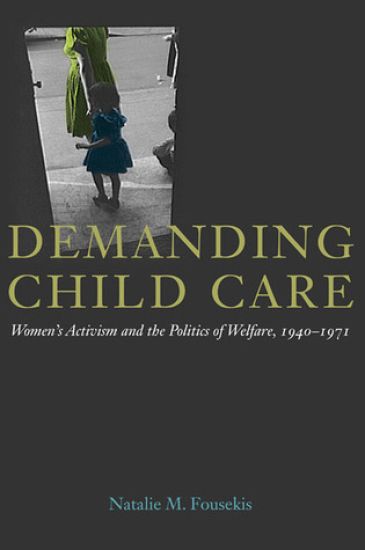
During World War II, as women stepped in to fill jobs vacated by men in the armed services, the federal government established public child care centers in local communities for the first time. When the government announced plans to withdraw funding and terminate its child care services at the end of the war, women in California protested and lobbied to keep their centers open, even as these services rapidly vanished in other states. Analyzing the informal networks of cross-class and cross-race reformers, policymakers, and educators, Demanding Child Care: Women's Activism and the Politics of Welfare, 1940–1971 traces the rapidly changing alliances among these groups. During the early stages of the childcare movement, feminists, Communists, and labor activists banded together, only to have these alliances dissolve by the 1950s as the movement welcomed new leadership composed of working-class mothers and early childhood educators. In the 1960s, when federal policymakers earmarked child care funds for children of women on welfare and children described as culturally deprived, it expanded child care services available to these groups but eventually eliminated public child care for the working poor. Deftly exploring the possibilities for partnership as well as the limitations among these key parties, Fousekis helps to explain the barriers to a publically funded comprehensive child care program in the United States.
During World War II, as women stepped in to fill jobs vacated by men in the armed services, the federal government established public child care centers in local communities for the first time. When the government announced plans to withdraw funding and terminate its child care services at the end of the war, women in California protested and lobbied to keep their centers open, even as these services rapidly vanished in other states. Analyzing the informal networks of cross-class and cross-race reformers, policymakers, and educators, Demanding Child Care: Women's Activism and the Politics of Welfare, 1940–1971 traces the rapidly changing alliances among these groups. During the early stages of the childcare movement, feminists, Communists, and labor activists banded together, only to have these alliances dissolve by the 1950s as the movement welcomed new leadership composed of working-class mothers and early childhood educators. In the 1960s, when federal policymakers earmarked child care funds for children of women on welfare and children described as culturally deprived, it expanded child care services available to these groups but eventually eliminated public child care for the working poor. Deftly exploring the possibilities for partnership as well as the limitations among these key parties, Fousekis helps to explain the barriers to a publically funded comprehensive child care program in the United States.

Digital ethnography can be understood as a method for representing real-life cultures through storytelling in digital media. Enabling audiences to go beyond absorbing facts, computer-based storytelling allows for immersion in the experience of another culture. A guide for anyone in the social sciences who seeks to enrich ethnographic techniques, Digital Ethnography offers a groundbreaking approach that utilizes interactive components to simulate cultural narratives.Integrating insights from cultural anthropology, folklore, digital humanities, and digital heritage studies, this work brims with case studies that provide in-depth discussions of applied projects. Web links to multimedia examples are included as well, including projects, design documents, and other relevant materials related to the planning and execution of digital ethnography projects. In addition, new media tools such as database development and XML coding are explored and explained, bridging the literature on cyber-ethnography with inspiring examples such as blending cultural heritage with computer games.One of the few books in its field to address the digital divide among researchers, Digital Ethnography guides readers through the extraordinary potential for enrichment offered by technological resources, far from restricting research to quantitative methods usually associated with technology. The authors powerfully remind us that the study of culture is as much about affective traits of feeling and sensing as it is about cognition-an approach facilitated (not hindered) by the digital age.
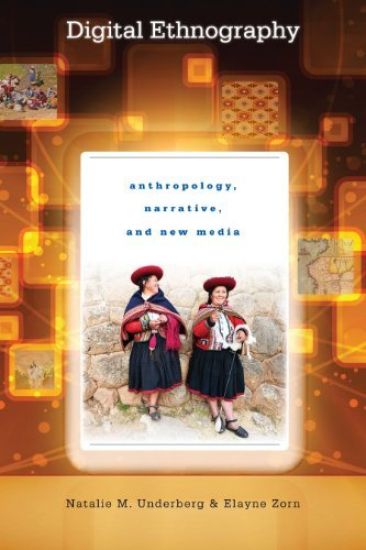
Digital ethnography can be understood as a method for representing real-life cultures through storytelling in digital media. Enabling audiences to go beyond absorbing facts, computer-based storytelling allows for immersion in the experience of another culture. A guide for anyone in the social sciences who seeks to enrich ethnographic techniques, Digital Ethnography offers a groundbreaking approach that utilizes interactive components to simulate cultural narratives.Integrating insights from cultural anthropology, folklore, digital humanities, and digital heritage studies, this work brims with case studies that provide in-depth discussions of applied projects. Web links to multimedia examples are included as well, including projects, design documents, and other relevant materials related to the planning and execution of digital ethnography projects. In addition, new media tools such as database development and XML coding are explored and explained, bridging the literature on cyber-ethnography with inspiring examples such as blending cultural heritage with computer games.One of the few books in its field to address the digital divide among researchers, Digital Ethnography guides readers through the extraordinary potential for enrichment offered by technological resources, far from restricting research to quantitative methods usually associated with technology. The authors powerfully remind us that the study of culture is as much about affective traits of feeling and sensing as it is about cognition-an approach facilitated (not hindered) by the digital age.

Purchase your copy of Author Natalie M. Lewis' book entitled To All My Sisters in the Struggle. Hear her own personal triumph from Domestic Violence, Suicide attempts, and other traps set by the Enemy to take her life. Natalie has a story of hope and encouragement to share with "All Her Sisters in the Struggle." Purchase your copy today and "Let The Healing Begin!"

This To All My Sisters in the Struggle workbook is a step by step guide on continuing the healing process of the topics discussed in the To All My Sisters in the Struggle book. The workbook is to be used with the book To All My Sisters in the Struggle. This workbook and book can be used individually or in support groups, women and young adult or singles church groups, etc. The topics discussed in this workbook include ways to create and evaluate success in personal healing from suicide attempts, depression, and domestic violence.


Learn about the importance of light in our every day lives. Discover how to make reflections, shadows, and rainbows. This is a great nonfiction read aloud book with places to stop to do activities together. If you are looking for clear, concise science books for kids, this is a perfect start

Have you ever wondered what makes magnets work? Magnets, by Natalie M. Rosinsky introduces many different kinds of magnets, such as motors, compasses, and Earth's magnetic poles. Clear text, vivid illustrations, fun facts, and simple experiments make this book a great introduction to magnets.

The rocks you see everyday can be grouped into different types, like igneous, sedimentary, or metamorphic. Some rocks are actually minerals, and you can even find fossils in some types of rocks. Complete with activities and experiments, this nonfiction science book is perfect for introducing children to geology.

Discover the world of sound in this charming nonfiction tale. Young science fans will learn how sound is created through vibrations that vary in pitch and volume and much more Alongside bright illustrations, award-winning author Natalie M. Rosinsky delivers fun, fact-filled text for an engaging read-aloud or beginning read-alone. Includes hands-on experiments

Introduce young scientists to the basics of the water cycle Through full-color photos and simple, easy-to-follow text, this nonfiction book introduces emergent readers to the importance of water, explaining evaporation and condensation, dew and frost, and the three states of water. Alongside charming illustrations, award-winning author Natalie M. Rosinsky delivers fun, fact-filled text for an engaging read-aloud or beginning read-alone. Includes hands-on experiments

Br julas, imanes, polos magn ticos y motores. V vidas ilustraciones y textos sencillos exploran la asombrosa fuerza de los imanes. Cada libro tiene un glosario, actividades pr cticas y fascinantes datos curiosos.

Early novel reading typically conjures images of rapt readers in quiet rooms, but commentators at the time described reading as a fraught activity, one occurring amidst a distracting cacophony that included sloshing chamber pots and wailing street vendors. Auditory distractions were compounded by literary ones as falling paper costs led to an explosion of print material, forcing prose fiction to compete with a dizzying array of essays, poems, sermons, and histories. In Distraction, Natalie M. Phillips argues that prominent Enlightenment authors-from Jane Austen and William Godwin to Eliza Haywood and Samuel Johnson-were deeply engaged with debates about the wandering mind, even if they were not equally concerned about the problem of distractibility. Phillips explains that some novelists in the 1700s-viewing distraction as a dangerous wandering from singular attention that could lead to sin or even madness-attempted to reform diverted readers. Johnson and Haywood, for example, worried that contemporary readers would only focus long enough to "look into the first pages" of essays and novels; Austen offered wry commentary on the issue through the creation of the daft Lydia Bennet, a character with an attention span so short she could listen only "half-a-minute." Other authors radically redefined distraction as an excellent quality of mind, aligning the multiplicity of divided focus with the spontaneous creation of new thought. Laurence Sterne's Tristram Shandy, for example, won audiences with its comically distracted narrator and uniquely digressive form. Using cognitive science as a framework to explore the intertwined history of mental states, philosophy, science, and literary forms, Phillips explains how arguments about the diverted mind made their way into the century's most celebrated literature. She also draws a direct link between the disparate theories of focus articulated in eighteenth-century literature and modern experiments in neuroscience, revealing that contemporary questions surrounding short attention spans are grounded in long conversations over the nature and limits of focus.