Natalie Shaw is an architect, and her idea of excitement is enjoying a coffee after a long day at work. Little did she know that a blood-stained map in a fortune cookie and a body in a building she designed would drag her into a dangerous mix of fraud and murder. Maps and Bodies includes two stories of Nat's first steps into a world she had never dreamed of, let alone take center stage in "The pages flew by and held me captive as I was propelled from one exciting scene to the next; there'd be no slowing down." -Peter Falk, author of the Earthbound trilogy
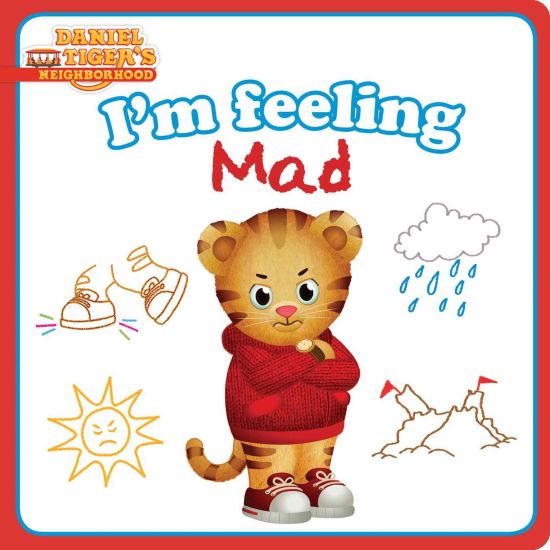
A new generation of children love Daniel Tiger's Neighborhood, inspired by the classic series Mister Rogers' Neighborhood Everyone feels mad sometimes, even Daniel Tiger What helps him feel better? Find out in this chunky board book that's part of a new Daniel Tiger's Neighborhood feelings subseries. When you feel so mad that you want to roar, take a deep breath and count to four When Daniel Tiger feels MAD, he stomps his feet and roars. Then he remembers to take a deep breath and count to four. Soon he feels better. What do you do with the mad that you feel? Come along with Daniel as he and his friends learn how to handle feeling angry. This adorable book includes tips for parents and caregivers to help guide little ones through their emotions. Look for the companion title, I'm Feeling Happy. (c) 2016 The Fred Rogers Company
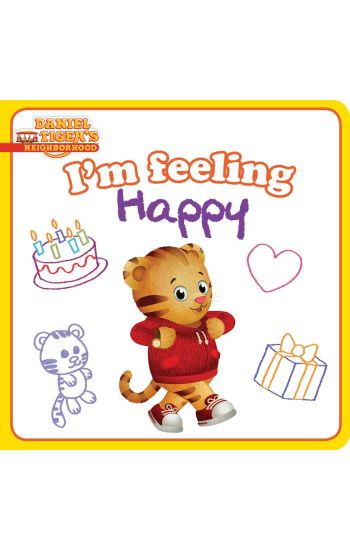
A new generation of children love Daniel Tiger's Neighborhood, inspired by the classic series Mister Rogers' Neighborhood What makes Daniel Tiger feel happy? Find out in this chunky board book part of a new Daniel Tiger's Neighborhood feelings subseries. This is my happy song; I could sing it all day long When Daniel Tiger feels HAPPY, he sings What makes you feel happy? Come along with Daniel as he and his friends learn about their feelings and what makes them happy. This adorable book includes tips for parents and caregivers to help guide little ones through their emotions. Look for the companion title, I'm Feeling Mad. (c) 2016 The Fred Rogers Company
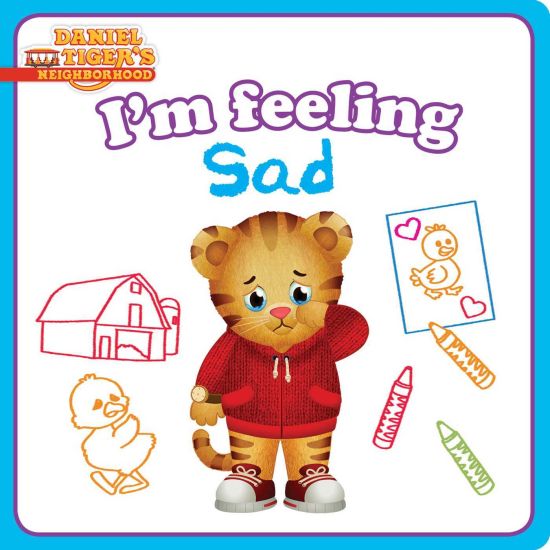
A new generation of children love Daniel Tiger's Neighborhood, inspired by the classic series Mister Rogers' Neighborhood What makes Daniel Tiger feel sad? Find out in this chunky board book that's part of a new Daniel Tiger's Neighborhood feelings subseries. It's okay to feel sad sometimes, little by little, you'll feel better again. Everyone feels sad sometimes, even Daniel Tiger. When he feels sad, he remembers that it's okay to feel that way. Soon, he'll feel better Come along with Daniel as he and his friends learn how to deal with their feelings. This adorable book includes tips for parents and caregivers to help guide little ones through their emotions. Look for the companion titles, I'm Feeling Mad, I'm Feeling Happy, and I'm Feeling Silly (c) 2016 The Fred Rogers Company.
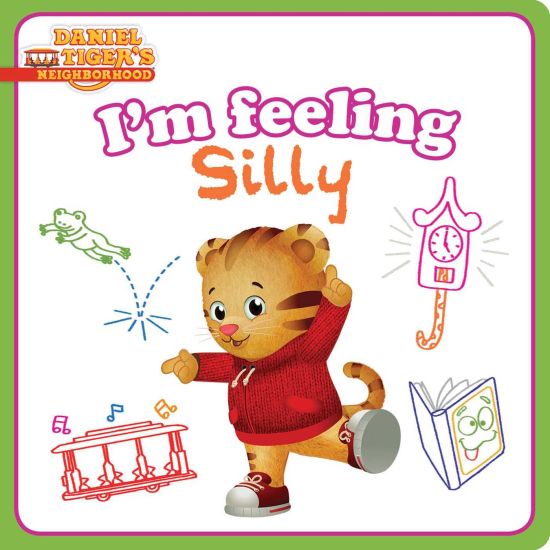
A new generation of children love Daniel Tiger's Neighborhood, inspired by the classic series Mister Rogers' Neighborhood Daniel Tiger learns that there are times to be silly and times to be calm in this chunky board book that is part of a new Daniel Tiger's Neighborhood feelings subseries. Give a squeeze, nice and slow, take a deep breath, and let it go. When Daniel Tiger feels silly and needs to calm down, he gives a squeeze, nice and slow, takes a deep breath, and lets it go. Soon, he feels better Come along with Daniel as he and his friends learn how to handle their feelings. This adorable book includes tips for parents and caregivers to help guide little ones through their emotions. Look for the companion titles, I'm Feeling Mad, I'm Feeling Happy, and I'm Feeling Sad (c) 2016 The Fred Rogers Company.
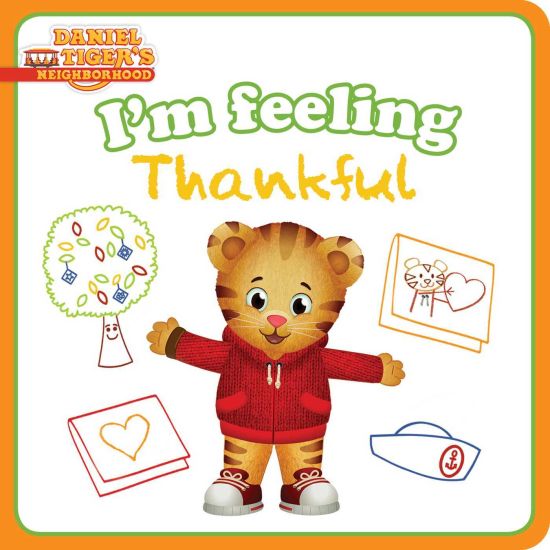
A new generation of children love Daniel Tiger's Neighborhood, inspired by the classic series Mister Rogers' Neighborhood What makes Daniel Tiger feel thankful? Find out in this chunky board book. When Daniel Tiger feels grateful, he makes sure to say "thank you" Sometimes he even makes a thank you card to show how much he cares. Who do you want to thank today? Parents will love teaching their little ones all about what it means to be thankful in this adorable book that includes tips for them to help guide kids through their emotions. Look for the companion titles, I'm Feeling Mad, I'm Feeling Happy, I'm Feeling Silly, and I'm Feeling Sad (c) 2017 The Fred Rogers Company
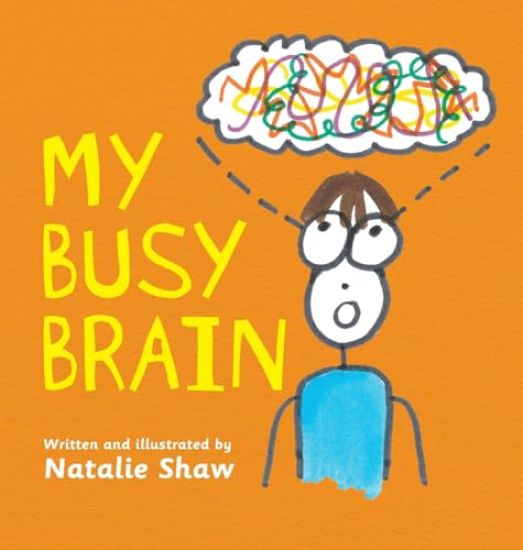
Meet Max, a child with a busy brain, big feelings, and amazing ideas. Together, you'll learn how to understand and manage ADHD with love and care. Perfect for kids aged 4-9 and their families to read and explore together
Get to know Gekko in this sweet board book based on PJ Masks, the hit preschool series airing on Disney Junior When there's trouble, Greg becomes Gekko You can help Catboy, Gekko, and Owlette go into the night to save the day and discover all the ways the littlest hero, Gekko, helps his super team in this awesome shaped board book. PJ Masks (c) Frog Box / Entertainment One UK Limited / Walt Disney EMEA Productions Limited 2014
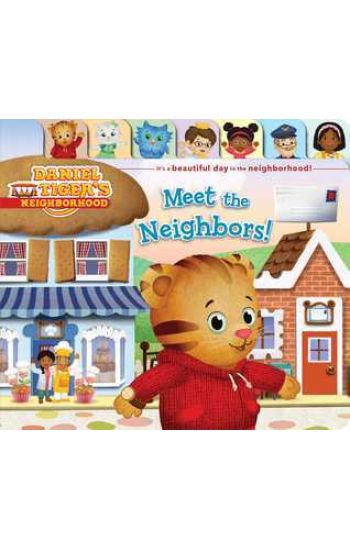
A new generation of children love Daniel Tiger's Neighborhood, inspired by the classic series Mister Rogers' Neighborhood The Neighborhood of Make-Believe is full of friendly faces. Get to know them all in this board book with tabs Get to know all of the friends in Daniel Tiger's Neighborhood Soon they'll be your friends, too This sturdy board book features a tab on every spread, each featuring a different neighbor from Daniel Tiger's world. (c) 2014 The Fred Rogers Company.
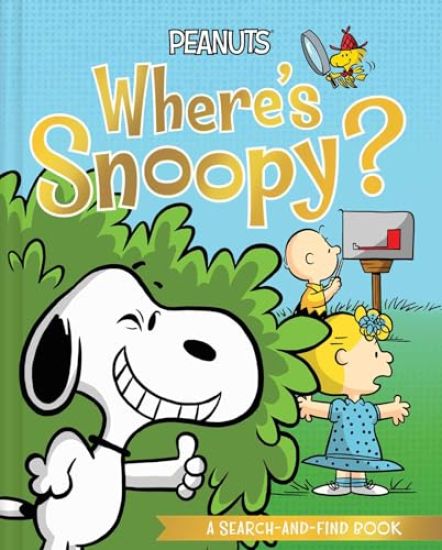
Celebrate all the happiness and joy that the Peanuts gang brings to the world with this uplifting and heartwarming gift book for fans of all ages. Happiness is...a warm puppy, fresh donuts, ice cream cones, cuddles, and kindness. It's movie nights, warm cookies, naps, and helping friends. Happiness is Snoopy getting head scratches from Charlie Brown and using his ear like an umbrella to keep Woodstock out of the rain. What makes you feel happiest? (c) 2025 Peanuts Worldwide LLC
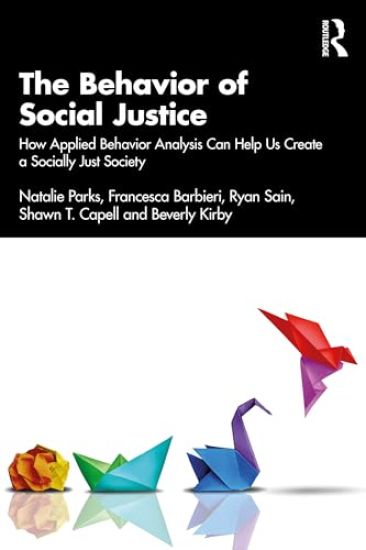
This seminal work utilizes the principles of applied behavior analysis (ABA) to understand people’s actions. It provides a framework for the study of social injustices that moves beyond just condemning others for their oppressive behaviors, outlining solutions that help work towards a more socially just society.Divided across three main sections, the book outlines the basic principles of applied behavior analysis, considers key tenets of social justice work, and examines how social justice work can be carried out on an individual and a wider institutional level. The first section focuses on the principles of behavior and how it expounds on the causes, reasons, and purposes behind one’s actions. The subsequent sections pay particular attention to how prejudice, stereotypes, and bias play out in society, and how prejudices and biases make us more likely to participate in social injustices. The third section provides a behavioral description of various -isms and discusses the difference between -isms and individual behaviors, before exploring common -isms. The book concludes with an analysis of the reasons behind their persistence, followed by solutions that can be embraced by people.Packed with case studies and reflective questions, The Behavior of Social Justice is an essential reading for students and scholars of behavioral sciences, psychology, sociology and education, as well as academics and researchers interested in the study of social justice.
This seminal work utilizes the principles of applied behavior analysis (ABA) to understand people’s actions. It provides a framework for the study of social injustices that moves beyond just condemning others for their oppressive behaviors, outlining solutions that help work towards a more socially just society.Divided across three main sections, the book outlines the basic principles of applied behavior analysis, considers key tenets of social justice work, and examines how social justice work can be carried out on an individual and a wider institutional level. The first section focuses on the principles of behavior and how it expounds on the causes, reasons, and purposes behind one’s actions. The subsequent sections pay particular attention to how prejudice, stereotypes, and bias play out in society, and how prejudices and biases make us more likely to participate in social injustices. The third section provides a behavioral description of various -isms and discusses the difference between -isms and individual behaviors, before exploring common -isms. The book concludes with an analysis of the reasons behind their persistence, followed by solutions that can be embraced by people.Packed with case studies and reflective questions, The Behavior of Social Justice is an essential reading for students and scholars of behavioral sciences, psychology, sociology and education, as well as academics and researchers interested in the study of social justice.