

Kirjahaku
Etsi kirjoja tekijän nimen, kirjan nimen tai ISBN:n perusteella.
119 tulosta hakusanalla Necati Demirci

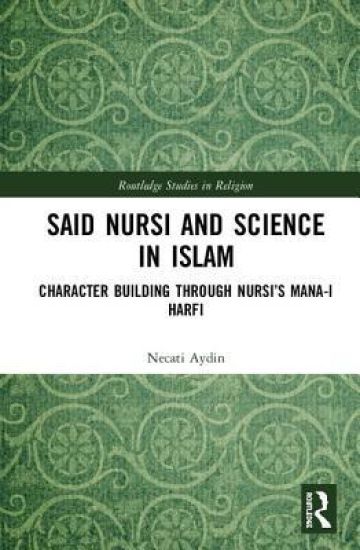
This book examines how the prominent Muslim scholar Said Nursi developed an integrative approach to faith and science known as "the other indicative" (mana-i harfi) and explores how his aim to reconcile two academic disciplines, often at odds with one another, could be useful in an educational context.The book opens by examining Nursi’s evolving thought with regards to secular ideology and modern science. It then utilizes the mana-i harfi approach to address a number of issues, including truth and certainty, the relationship between knowledge and worldview formation, and the meaning of beings and life. Finally, it offers a seven-dimensional knowledge approach to derive meaning and build good character through understanding scientific knowledge in the mana-i harfi perspective.This book offers a unique perspective on one of recent Islam’s most influential figures, and also offers suggestions for teaching religion and science in a more nuanced way. It is, therefore, a great resource for scholars of Islam, religion and science, Middle East studies, and educational studies.
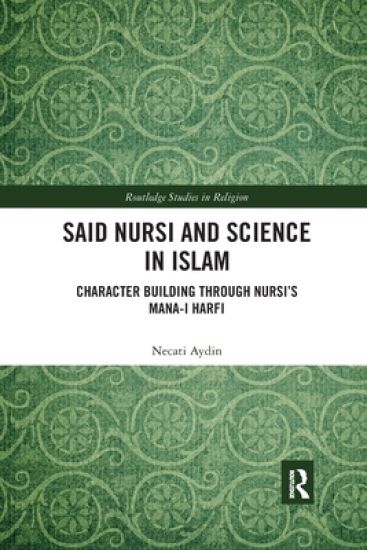
This book examines how the prominent Muslim scholar Said Nursi developed an integrative approach to faith and science known as "the other indicative" (mana-i harfi) and explores how his aim to reconcile two academic disciplines, often at odds with one another, could be useful in an educational context.The book opens by examining Nursi’s evolving thought with regards to secular ideology and modern science. It then utilizes the mana-i harfi approach to address a number of issues, including truth and certainty, the relationship between knowledge and worldview formation, and the meaning of beings and life. Finally, it offers a seven-dimensional knowledge approach to derive meaning and build good character through understanding scientific knowledge in the mana-i harfi perspective.This book offers a unique perspective on one of recent Islam’s most influential figures, and also offers suggestions for teaching religion and science in a more nuanced way. It is, therefore, a great resource for scholars of Islam, religion and science, Middle East studies, and educational studies.
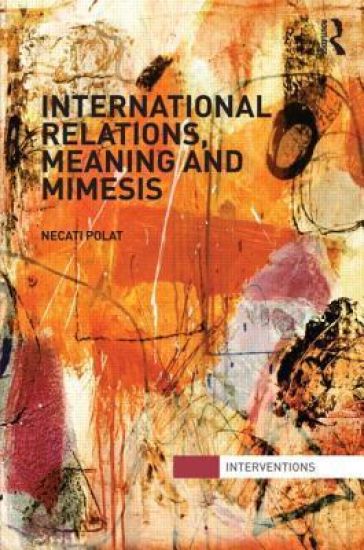
International Relations, Meaning and Mimesis is an innovative assessment of the uses of theory in making sense of international politics, opening up new pathways to thinking about the basics of the study area. Insights drawn from an interdisciplinary corpus of critical scholarship are synthesized and brought to bear on key concepts such as sovereignty, the state, peace, law, justice, ethics, and supranationality. The mainstream characteristically dismisses the narrativity that accompanies these concepts as derivative, tending to treat meaning attributable to them as static. The work shows how problematic this disdain of mimesis (exchange, reproduction, imitation) is and how this mindset effectively incapacitates conventional theorizing in both predicting phenomena and providing a normative vision. Integrating the study of international politics into debates in the wider academia over meaning and mimesis, this ambitious work is fluent and accessible at the same time, with exceptional lucidity in presenting difficult philosophical notions.A series of radical positions advanced in the book on theory and methodology not only address and call to account the mainstream imagination on international politics but also outline the implications of this critique for a host of specific issue areas, including peace research, normative theories, international law, and European studies.
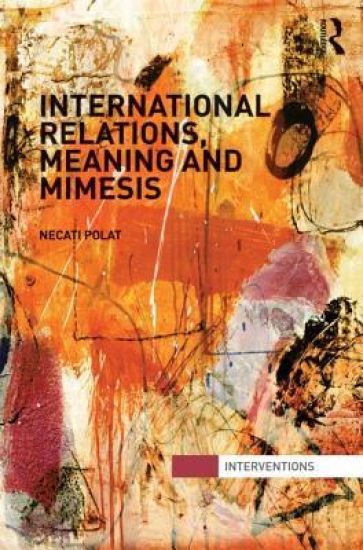
International Relations, Meaning and Mimesis is an innovative assessment of the uses of theory in making sense of international politics, opening up new pathways to thinking about the basics of the study area. Insights drawn from an interdisciplinary corpus of critical scholarship are synthesized and brought to bear on key concepts such as sovereignty, the state, peace, law, justice, ethics, and supranationality. The mainstream characteristically dismisses the narrativity that accompanies these concepts as derivative, tending to treat meaning attributable to them as static. The work shows how problematic this disdain of mimesis (exchange, reproduction, imitation) is and how this mindset effectively incapacitates conventional theorizing in both predicting phenomena and providing a normative vision. Integrating the study of international politics into debates in the wider academia over meaning and mimesis, this ambitious work is fluent and accessible at the same time, with exceptional lucidity in presenting difficult philosophical notions.A series of radical positions advanced in the book on theory and methodology not only address and call to account the mainstream imagination on international politics but also outline the implications of this critique for a host of specific issue areas, including peace research, normative theories, international law, and European studies.
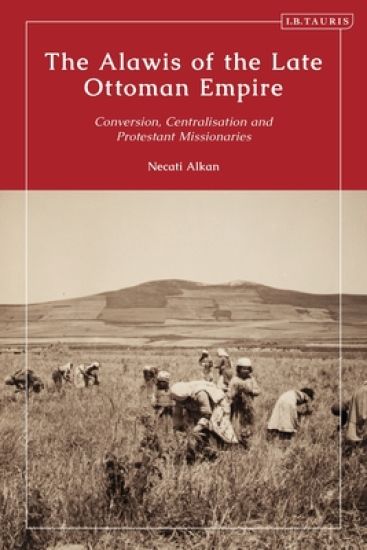
The Alawis or Alawites are a minority Muslim sect, predominantly based in Syria, Turkey and Lebanon. Over the course of the 19th century, they came increasingly under the attention of the ruling Ottoman authorities in their attempts to modernize the Empire, as well as Western Protestant missionaries. Using Ottoman state archives and contemporary chronicles, this book explores the Ottoman government's attitudes and policies towards the Alawis, revealing how successive regimes sought to bring them into the Sunni mainstream fold for a combination of political, imperial and religious reasons. In the context of increasing Western interference in the empire's domains, Alkan reveals the origins of Ottoman attempts to 'civilize' the Alawis, from the Tanzimat period to the Young Turk Revolution. He compares Ottoman attitudes to Alawis against its treatment of other minorities, including Bektashis, Alevis, Yezidis and Iraqi Shi'a.An important new contribution to the literature on the history of the Alawis and Ottoman policy towards minorities, this book will be essential reading for scholars of the late Ottoman Empire and minorities of the Middle East.
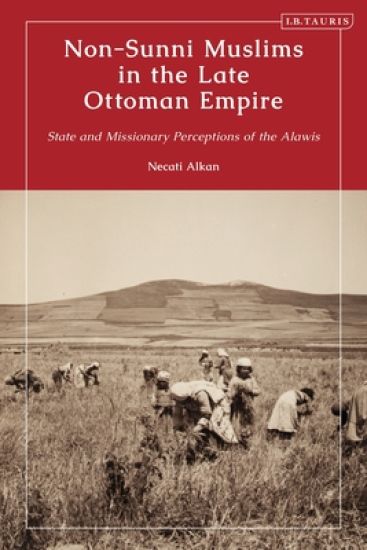
The Alawis or Alawites are a minority Muslim sect, predominantly based in Syria, Turkey and Lebanon. Over the course of the 19th century, they came increasingly under the attention of the ruling Ottoman authorities in their attempts to modernize the Empire, as well as Western Protestant missionaries. Using Ottoman state archives and contemporary chronicles, this book explores the Ottoman government's attitudes and policies towards the Alawis, revealing how successive regimes sought to bring them into the Sunni mainstream fold for a combination of political, imperial and religious reasons. In the context of increasing Western interference in the empire's domains, Alkan reveals the origins of Ottoman attempts to 'civilize' the Alawis, from the Tanzimat period to the Young Turk Revolution. He compares Ottoman attitudes to Alawis against its treatment of other minorities, including Bektashis, Alevis, Yezidis and Iraqi Shi'a.An important new contribution to the literature on the history of the Alawis and Ottoman policy towards minorities, this book will be essential reading for scholars of the late Ottoman Empire and minorities of the Middle East.
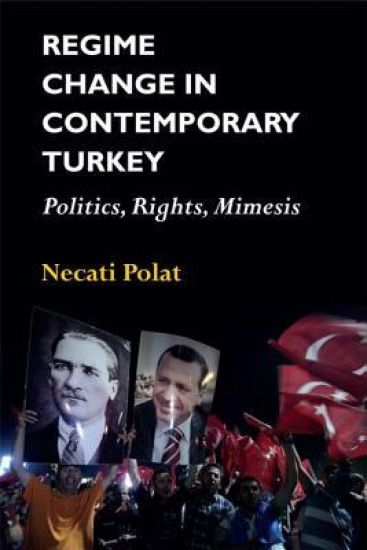
Turkey has undergone a series of upheavals in its political regime from the mid-19th century. This book details the most recent change, locating it in its broader historical setting. Beginning with the Justice and Development Party's rule from late 2002, supported by a broad informal coalition that included liberals, the book shows how the former Islamists gradually acquired full power between 2007 and 2011. It then describes the subsequent phase, looking at politics and rights under the amorphous new order.This is the first scholarly yet accessible assessment of this historic change, placing it in the larger context of political modernisation in the country over the past 150 years.

Turkey has undergone a series of upheavals in its political regime from the mid-19th century. This book details the most recent change, locating it in its broader historical setting. Beginning with the Justice and Development Party's rule from late 2002, supported by a broad informal coalition that included liberals, the book shows how the former Islamists gradually acquired full power between 2007 and 2011. It then describes the subsequent phase, looking at politics and rights under the amorphous new order.This is the first scholarly yet accessible assessment of this historic change, placing it in the larger context of political modernisation in the country over the past 150 years.

Sosyal Hizmet Uzmanlar¿nda Depresyonun Yap¿sal Nedenleri
Necati Bu¿ra Kudda¿
Lap Lambert Academic Publishing
2016
nidottu


Die Erhebung Attalus Zum Gegenkaiser Und Der Fall Roms. Motive Und Umsetzung
Necati Gunes
Grin Publishing
2015
nidottu

Steht die Intentionale Strategie unter dem Einfluss hoeherer Systeme?
Necati Gunes
Grin Verlag
2015
nidottu


Frachtvertrag im Mittelalter. Die Handelsreise mit dem Schiff
Necati Gunes
Grin Publishing
2015
nidottu

Algorithmisches Denken. Ein mathematischer Einstieg für die Mittelstufe
Necati Günes
Grin Verlag
2015
pokkari
Der Inhalt der Paulskirchenverfassung im Rahmen der Deutschen Nationalversammlung (Geschichte, 9. Klasse)
Necati Günes
Grin Publishing
2015
pokkari

Design and Implementation of an Embedded Firewall
Necati Demir; G Khan Dalk L; Gokhan Dalk L C
LAP Lambert Academic Publishing
2011
pokkari