Kirjojen hintavertailu. Mukana 11 241 044 kirjaa ja 12 kauppaa.

Kirjahaku

Etsi kirjoja tekijän nimen, kirjan nimen tai ISBN:n perusteella.

1000 tulosta hakusanalla Neil G. Robertson

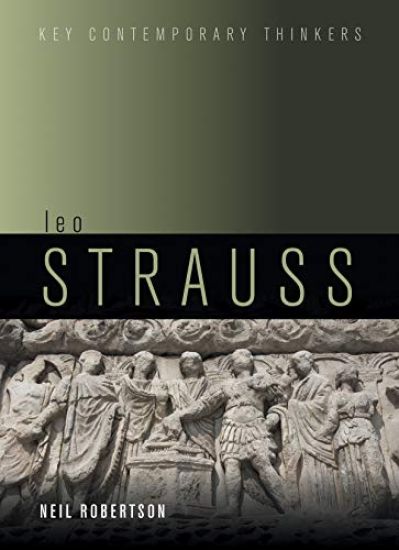
Leo Strauss

Leo Strauss

Neil G. Robertson

Polity Press
2021
sidottu
Leo Strauss’s lifelong intellectual mission was to recover ‘classical rationalism’, a pursuit that has made him a controversial figure to this day. While his critics see him as responsible for a troubling anti-democratic strain in modern politics, others argue that his thought is in fact the best defence of responsible democracy. Neil Robertson’s new introduction to Strauss aims to transcend these divides and present a non-partisan account of his thought. He shows how Strauss’ intellectual formation in Weimar Germany and flight from Nazism led him to develop a critique of modernity that tended to support a conservative politics, while embracing a radical sense of what philosophy is and can be. He examines the way in which Strauss built upon the thought of Nietzsche and Heidegger in order to show how their 'nihilism' led not to a standpoint beyond western rationality, but to a recovery of its roots. This skillful reconstruction of the coherence and unity of Strauss’ thought is the essential guide for anyone wishing to fully grasp the contribution of one of the most contentious and intriguing figures in 20th century intellectual history.
Leo Strauss

Leo Strauss

Neil G. Robertson

Polity Press
2021
nidottu
Leo Strauss’s lifelong intellectual mission was to recover ‘classical rationalism’, a pursuit that has made him a controversial figure to this day. While his critics see him as responsible for a troubling anti-democratic strain in modern politics, others argue that his thought is in fact the best defence of responsible democracy. Neil Robertson’s new introduction to Strauss aims to transcend these divides and present a non-partisan account of his thought. He shows how Strauss’ intellectual formation in Weimar Germany and flight from Nazism led him to develop a critique of modernity that tended to support a conservative politics, while embracing a radical sense of what philosophy is and can be. He examines the way in which Strauss built upon the thought of Nietzsche and Heidegger in order to show how their 'nihilism' led not to a standpoint beyond western rationality, but to a recovery of its roots. This skillful reconstruction of the coherence and unity of Strauss’ thought is the essential guide for anyone wishing to fully grasp the contribution of one of the most contentious and intriguing figures in 20th century intellectual history.
Yiddish

Yiddish

Neil G. Jacobs

Cambridge University Press
2009
pokkari
Yiddish, the language of Ashkenazic Jewry, arose some 900–1200 years ago as a result of contact with indigenous varieties of medieval German. Over the next few centuries, it grew to cover the second-largest language area in Europe, with Yiddish-speaking colonies being created in North and South America, Palestine/Israel, Australia and South Africa. It is estimated that just before the Nazi genocide in World War II, there were between 11 and 13 million Yiddish speakers worldwide. This broad yet comprehensive 2005 introduction provides an authoritative overview of all aspects of Yiddish language and linguistics. As well as looking at key features of its syntax, phonology and morphology, Neil Jacobs discusses its history, its dialectology, and the sociolinguistic issues surrounding it. Presenting linguistic data in a way that is compatible with general theoretical issues, it will be welcomed by scholars of general linguistics, Germanic linguistics, and Jewish Studies alike.
Yiddish

Yiddish

Neil G. Jacobs

Cambridge University Press
2005
sidottu
Yiddish, the language of Ashkenazic Jewry, arose some 900–1200 years ago as a result of contact with indigenous varieties of medieval German. Over the next few centuries, it grew to cover the second-largest language area in Europe, with Yiddish-speaking colonies being created in North and South America, Palestine/Israel, Australia and South Africa. It is estimated that just before the Nazi genocide in World War II, there were between 11 and 13 million Yiddish speakers worldwide. This broad yet comprehensive 2005 introduction provides an authoritative overview of all aspects of Yiddish language and linguistics. As well as looking at key features of its syntax, phonology and morphology, Neil Jacobs discusses its history, its dialectology, and the sociolinguistic issues surrounding it. Presenting linguistic data in a way that is compatible with general theoretical issues, it will be welcomed by scholars of general linguistics, Germanic linguistics, and Jewish Studies alike.
Plants for American Landscapes

Plants for American Landscapes

Neil G. Odenwald; Charles F. Fryling Jr; Thomas E. Pope

Louisiana State University Press
1996
sidottu
Plants for American Landscapes is a superb practical guide to the identification, selection, and cultivation of over a thousand of the most popular and dependable ornamental plants grown in the United States. With more than a century of collective experience in landscape architecture and horticulture, the authors share their intimate knowledge of flowers, foliage, fruit, and barks, as well as their insights concerning each plant's unique attributes. Their succinct, fact-filled, vivid descriptions present both essential material and fascinating tidbits about which plants are suited to particular environments. Eight hundred full-colour photographs display the plants in their natural settings. Homeowners, gardeners, landscape architects and designers, horticulturalists, and anyone who loves plants will find it a resource they turn to again and again.
Plants for American Landscapes

Plants for American Landscapes

Neil G. Odenwald; Charles F. Fryling Jr; Thomas E. Pope

Louisiana State University Press
2004
nidottu
Plants for American Landscapes is a superb practical guide to the identification, selection, and cultivation of over a thousand of the most popular and dependable ornamental plants grown in the United States. With more than a century of collective experience in landscape architecture and horticulture, the authors share their intimate knowledge of flowers, foliage, fruit, and barks, as well as their insights concerning each plant's unique attributes. Their succinct, fact-filled, vivid descriptions present both essential material and fascinating tidbits about which plants are suited to particular environments. Eight hundred full-color photographs display the plants in their natural settings. Homeowners, gardeners, landscape architects and designers, horticulturalists, and anyone who loves plants will find it a resource they turn to again and again.
Billy McGee & Tiny McFlea

Billy McGee & Tiny McFlea

Neil G Henderson

Gluepot Books
2019
pokkari
Who would have thought a flea would cause such a catastrophe?There are unexpected consequences when Billy McGee takes his pet flea Tiny to visit the circus. Funny, quirky and clever, Neil Henderson's rhyming book is the perfect bedtime story - just mind the bugs don't bite
Engineering Project Management

Engineering Project Management

Neil G. Siegel

Wiley-Blackwell
2019
sidottu
A hands-on guide for creating a winning engineering project Engineering Project Management is a practical, step-by-step guide to project management for engineers. The author – a successful, long-time practicing engineering project manager – describes the techniques and strategies for creating a successful engineering project. The book introduces engineering projects and their management, and then proceeds stage-by-stage through the engineering life-cycle project, from requirements, implementation, to phase-out. The book offers information for understanding the needs of the end user of a product and other stakeholders associated with a project, and is full of techniques based on real, hands-on management of engineering projects. The book starts by explaining how we perform the actual engineering on projects; the techniques for project management contained in the rest of the book use those engineering methods to create superior management techniques. Every topic – from developing a work-breakdown structure and an effective project plan, to creating credible predictions for schedules and costs, through monitoring the progress of your engineering project – is infused with actual engineering techniques, thereby vastly increasing the effectivity and credibility of those management techniques. The book also teaches you how to draw the right conclusions from numeric data and calculations, avoiding the mistakes that often cause managers to make incorrect decisions. The book also provides valuable insight about what the author calls the social aspects of engineering project management: aligning and motivating people, interacting successfully with your stakeholders, and many other important people-oriented topics. The book ends with a section on ethics in engineering. This important book: Offers a hands-on guide for developing and implementing a project management planIncludes background information, strategies, and techniques on project management designed for engineersTakes an easy-to-understand, step-by-step approach to project managementContains ideas for launching a project, managing large amount of software, and tips for ending a project Structured to support both undergraduate and graduate courses in engineering project management, Engineering Project Management is an essential guide for managing a successful project from the idea phase to the completion of the project.
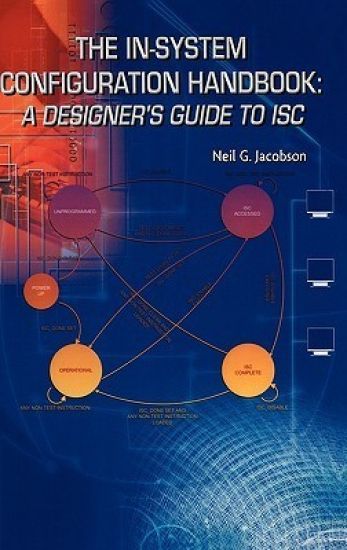
The In-System Configuration Handbook:

The In-System Configuration Handbook:

Neil G. Jacobson

Springer-Verlag New York Inc.
2003
sidottu
Programmable logic radically changed the electronic system design landscape. It reduced board space needed for random logic, state machines and system interfaces. It allowed faster design cycles, made easy late term bug fixes and gave designers greater freedom to experiment and prototype. In-system programming of these devices has had a similar revolutionary effect. The ability to change the programmed content of programmable logic while it is on the board is equivalent to being able to redesign all the hardware -without changing a single component. This allows the possibility of providing field upgrades of your product to fix problems or to introduce new functionality. It allows designing in reconfiguration as an essential function of your system with different capabilities swapped in as needed during run-time. Further it allows storage of different product profiles for retrieval as necessary to allow just-in-time configuration of systems to meet market needs. Recent developments in programmable logic have helped in making realizing reconfigurable systems more streamlined. The most significant development, though, was the introduction, approval and popularization of IEEE STD 1532, the IEEE Standard for In-System Configuration of Programmable Devices. The purpose of this text is to bring together, in a single volume, the information needed by systems designers to develop applications that include configurability. This covers the entire range of systems from the The In-System Configuration Handbook simplest implementations that merely include configurable logic to realize system functions to the most complicated that include reconfigurability as part of the application itself.
The In-System Configuration Handbook:

The In-System Configuration Handbook:

Neil G. Jacobson

Springer-Verlag New York Inc.
2012
nidottu
Programmable logic radically changed the electronic system design landscape. It reduced board space needed for random logic, state machines and system interfaces. It allowed faster design cycles, made easy late term bug fixes and gave designers greater freedom to experiment and prototype. In-system programming of these devices has had a similar revolutionary effect. The ability to change the programmed content of programmable logic while it is on the board is equivalent to being able to redesign all the hardware -without changing a single component. This allows the possibility of providing field upgrades of your product to fix problems or to introduce new functionality. It allows designing in reconfiguration as an essential function of your system with different capabilities swapped in as needed during run-time. Further it allows storage of different product profiles for retrieval as necessary to allow just-in-time configuration of systems to meet market needs. Recent developments in programmable logic have helped in making realizing reconfigurable systems more streamlined. The most significant development, though, was the introduction, approval and popularization of IEEE STD 1532, the IEEE Standard for In-System Configuration of Programmable Devices. The purpose of this text is to bring together, in a single volume, the information needed by systems designers to develop applications that include configurability. This covers the entire range of systems from the The In-System Configuration Handbook simplest implementations that merely include configurable logic to realize system functions to the most complicated that include reconfigurability as part of the application itself.
Marketing Planning for Information Technology: A step-by-step guide to producing and executing a business-to-business marketing plan for IT vendors
A step-by-step guide to producing and executing a business-to-business marketing plan for information technology IT] vendors in software, hardware or services businesses including Cloud computing.This book is designed for customization to an IT vendor who requires the same marketing plan framework to be implemented worldwide in order to reduce cost and risk, and simultaneously create the opportunity for insight by comparing the impact of strategy and tactics in different regions or markets.The book is then supported by customized training courses online or onsite. Please contact the Publisher if customization is of interest www.idlworldwide.com.