

Kirjahaku
Etsi kirjoja tekijän nimen, kirjan nimen tai ISBN:n perusteella.
1000 tulosta hakusanalla Nelson Lloyd









This work has been selected by scholars as being culturally important and is part of the knowledge base of civilization as we know it.This work is in the public domain in the United States of America, and possibly other nations. Within the United States, you may freely copy and distribute this work, as no entity (individual or corporate) has a copyright on the body of the work.Scholars believe, and we concur, that this work is important enough to be preserved, reproduced, and made generally available to the public. To ensure a quality reading experience, this work has been proofread and republished using a format that seamlessly blends the original graphical elements with text in an easy-to-read typeface.We appreciate your support of the preservation process, and thank you for being an important part of keeping this knowledge alive and relevant.
In the center of one of the most picturesque valleys in the heart of Pennsylvania lies the village and at one end of its single street stands the store. On the broad porch of this homely and ancient edifice there is a long oak bench, rough, and hacked in countless places by the knives of many generations of loungers. From this bench, looking northward across an expanse of meadows, a view is had of a low, green ridge, dotted here and there with white farm buildings. Behind that rise the mountains, along whose sides on bright days play the fanciful shadows of the clouds. Close by the store is the rumbling mill, and beyond it runs the creek, spanned by a wooden bridge whose planking now and then resounds with the beat of horses' hoofs, so that it adds its music to the roar of the mill-wheels and ring of the anvil in the blacksmith shop across the stream. One July day the stage rattled over the bridge, past the mill and drew up at the store. The G. A. R. Man, the only passenger, climbed out of the lumbering vehicle, dragging after him a shapeless, battered carpet-bag. He limped up the steps in the wake of the driver, who was helping the Storekeeper with the mail-pouch, and when on the porch stopped and nodded a greeting to the men who were sitting on the bench kicking their heels together-the Patriarch, the School Teacher, the Miller, the Tinsmith and the Chronic Loafer. The loungers gazed solemnly at the new arrival; at his broad-brimmed, black slouch hat, which though drawn down over his left temple did not hide the end of a band of court-plaster; at his blue coat, two of its brass buttons missing; at his trousers, in which there were several rents that had been clumsily sewed together.

This work has been selected by scholars as being culturally important and is part of the knowledge base of civilization as we know it.This work is in the public domain in the United States of America, and possibly other nations. Within the United States, you may freely copy and distribute this work, as no entity (individual or corporate) has a copyright on the body of the work.Scholars believe, and we concur, that this work is important enough to be preserved, reproduced, and made generally available to the public. To ensure a quality reading experience, this work has been proofread and republished using a format that seamlessly blends the original graphical elements with text in an easy-to-read typeface.We appreciate your support of the preservation process, and thank you for being an important part of keeping this knowledge alive and relevant.
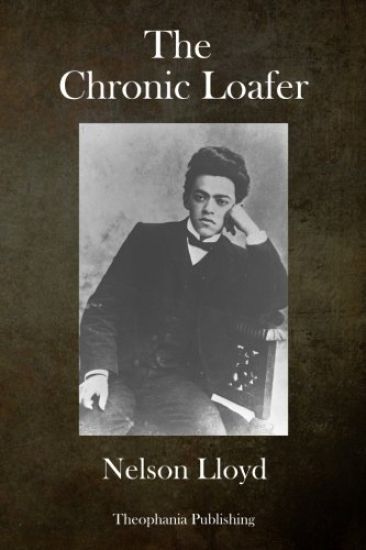
In the center of one of the most picturesque valleys in the heart of Pennsylvania lies the village and at one end of its single street stands the store. On the broad porch of this homely and ancient edifice there is a long oak bench, rough, and hacked in countless places by the knives of many generations of loungers. From this bench, looking northward across an expanse of meadows, a view is had of a low, green ridge, dotted here and there with white farm buildings. Behind that rise the mountains, along whose sides on bright days play the fanciful shadows of the clouds. Close by the store is the rumbling mill, and beyond it runs the creek, spanned by a wooden bridge whose planking now and then resounds with the beat of horses' hoofs, so that it adds its music to the roar of the mill-wheels and ring of the anvil in the blacksmith shop across the stream. One July day the stage rattled over the bridge, past the mill and drew up at the store. The G. A. R. Man, the only passenger, climbed out of the lumbering vehicle, dragging after him a shapeless, battered carpet-bag. He limped up the steps in the wake of the driver, who was helping the Storekeeper with the mail-pouch, and when on the porch stopped and nodded a greeting to the men who were sitting on the bench kicking their heels together-the Patriarch, the School Teacher, the Miller, the Tinsmith and the Chronic Loafer. The loungers gazed solemnly at the new arrival; at his broad-brimmed, black slouch hat, which though drawn down over his left temple did not hide the end of a band of court-plaster; at his blue coat, two of its brass buttons missing; at his trousers, in which there were several rents that had been clumsily sewed together.

Mrs. Radigan: her biography, with that of Miss Pearl Veal, and the memoirs of J. Madison Mudison / by Nelson Lloyd

Reproduction of the original: The Chronic Loafer by Nelson Lloyd
Reproduction of the original: Mrs. Radigan by Nelson Lloyd