William Tryon's role in the affairs of British America during the last years of the empire, and his inability to stem the collapse of that empire, makes for a fascinating story. Royal governor of North Carolina from 1765 to 1771 and then of New York from 1771 to 1780, Tryon became a general in the British army attempting to quell the American rebellion. This biography covers his life in service to the Crown through the end of the American Revolution.Paul Nelson argues that Tryon was a talented colonial administrator and a successful, even popular, governor largely because he understood American thinking on such basic constitutional issues as taxation, finance, and trade policy. British home authorities failed to follow Tryon's sage counsel regarding the governance of the colonies, advice that might have forestalled the Revolution. In particular, Tryon, like Edmund Burke and others in Parliament, could not convince British ministers that Americans would never accept internal taxes imposed upon them by London.Once the war broke out and Tryon's role changed from governing to leading Loyalist American troops, he was an advocate of harsh, retributive warfare against his former charges. Nelson follows Tryon's military career, especially his debates with colleagues such as Sir Henry Clinton on the wisdom of hard-line versus conciliatory approach to the fighting. And after the war, Nelson shows, Tryon's connections with those unfortunate Americans who came out on the losing side of the great imperial struggle retained an important place in his life. An exciting drama in its own right, Tryon's story also serves to illuminate a number of issues important to historians of the Revolutionary War. Played out on two continents and in two important American colonies, amid the stirring events that resulted in the formation of the United States of America, Tryon's life is significant for understanding many aspects of politics and society in the Anglo-American world of the eighteenth century.A UNC Press Enduring Edition -- UNC Press Enduring Editions use the latest in digital technology to make available again books from our distinguished backlist that were previously out of print. These editions are published unaltered from the original, and are presented in affordable paperback formats, bringing readers both historical and cultural value.
iSpeak is an integrated program that helps students practice, build confidence, and achieve success in public speaking. Connect Public Speaking provides students a wealth of resources to prepare and plan speeches, while LearnSmart — McGraw-Hill’s proven adaptive learning system — guides them toward mastery of key course concepts. Additionally, Connect’s highly flexible Speech Capture tool saves instructors valuable time in managing assignments and evaluating student speeches.
This book analyzes a rich and diverse body of philosophical and theological literature concerning the import of narrative for the understanding of morality. Nelson begins by examining the theses that to understand oneself, a tradition, and history as a whole, they must be understood in the context of a narrative.Recent philosophical writings on the relation of narrative to the moral concepts of social groups and individuals—including Alasdair MacIntyre's proposal for the rehabilitation of an ethic of virtue shaped by narrative—are explored. Issues discussed include the freedom of moral agents in relation to their narratives, the relation between narrative and universal moral rules, and the problem of relativism. Next, Nelson classifies theological uses of narrative as belonging to either a liberal-universalistic or postliberal-particularistic tradition and considers the implications of construing scripture as narrative for the problematic relation between scripture and ethics. The work of Stanley Hauerwas, the foremost narrativist in Christian ethics, is analyzed at length. Nelson argues that while narrative is a necessary focus, it does not exhaust the methodological agenda. Narrative is not, as its advocates sometimes suggest, a universal solvent for every theological problem and disagreement. An adequate Christian ethics must not lose sight of the universal, narrative-independent features of morality. Since the realm of the moral is an interweaving of narrative-dependent and narrative-independent features, Christian ethics stands to profit from both narrativist (coherentist) and rationalist (foundationalist) insights.The role of narrative is demonstrably a major topic of conversation across several fields in religious studies today. Particularly designed for scholars in ethics, theology, and the philosophy of religion, the book is a reliable guide to an expanding literature and a judicious introduction to these interdisciplinary discussions.
This book analyzes a rich and diverse body of philosophical and theological literature concerning the import of narrative for the understanding of morality. Nelson begins by examining the theses that to understand oneself, a tradition, and history as a whole, they must be understood in the context of a narrative.Recent philosophical writings on the relation of narrative to the moral concepts of social groups and individuals—including Alasdair MacIntyre's proposal for the rehabilitation of an ethic of virtue shaped by narrative—are explored. Issues discussed include the freedom of moral agents in relation to their narratives, the relation between narrative and universal moral rules, and the problem of relativism. Next, Nelson classifies theological uses of narrative as belonging to either a liberal-universalistic or postliberal-particularistic tradition and considers the implications of construing scripture as narrative for the problematic relation between scripture and ethics. The work of Stanley Hauerwas, the foremost narrativist in Christian ethics, is analyzed at length. Nelson argues that while narrative is a necessary focus, it does not exhaust the methodological agenda. Narrative is not, as its advocates sometimes suggest, a universal solvent for every theological problem and disagreement. An adequate Christian ethics must not lose sight of the universal, narrative-independent features of morality. Since the realm of the moral is an interweaving of narrative-dependent and narrative-independent features, Christian ethics stands to profit from both narrativist (coherentist) and rationalist (foundationalist) insights.The role of narrative is demonstrably a major topic of conversation across several fields in religious studies today. Particularly designed for scholars in ethics, theology, and the philosophy of religion, the book is a reliable guide to an expanding literature and a judicious introduction to these interdisciplinary discussions.
The Markets in Financial Instruments Directive (MiFID) is a detailed re-writing of the regulation of capital markets. To the extent those rules permit, the Financial Services Authority (FSA) is also introducing high-level 'principles-based regulation'. In response to this, Paul Nelson presents practical guidance on the regulation of the capital markets, ranging from new issues and IPOs to investment banking, broker-dealing and asset management. All laws and rules relevant to the regulation of the capital markets are explained and put into context within the economic operation of markets, institutions and products, the European Single Market, the FSA's policies and objectives, the historical evolution of the regulations and the general civil and criminal law. Drawing on 30 years' experience as a practitioner, and referring to a vast range of supporting materials, the author provides an insightful analysis and critique of the rules, the rule makers and the institutions.
We need the values of work and love both for success and happiness like Jesus proclaims to be the case Whereas I praise Nietzsche for obviously attempting to inspire a work-ethic in people, it takes more than just a work-ethic, but love inside too for others to make for a real winner in the long-run
The Markets in Financial Instruments Directive (MiFID) is a detailed re-writing of the regulation of capital markets. To the extent those rules permit, the Financial Services Authority (FSA) is also introducing high-level 'principles-based regulation'. In response to this, Paul Nelson presents practical guidance on the regulation of the capital markets, ranging from new issues and IPOs to investment banking, broker-dealing and asset management. All laws and rules relevant to the regulation of the capital markets are explained and put into context within the economic operation of markets, institutions and products, the European Single Market, the FSA's policies and objectives, the historical evolution of the regulations and the general civil and criminal law. Drawing on 30 years' experience as a practitioner, and referring to a vast range of supporting materials, the author provides an insightful analysis and critique of the rules, the rule makers and the institutions.
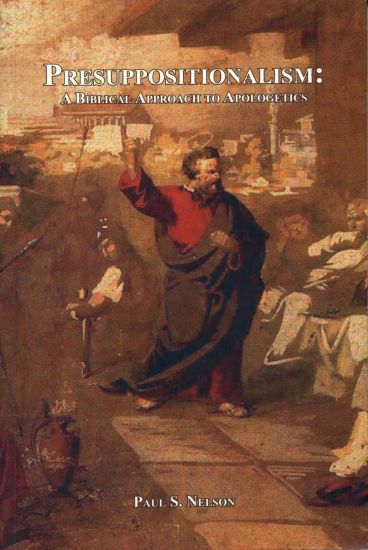
This book is a compilation of sermons, lectures and articles related to the subject of Christian apologetics. The position of the author is unabashedly presuppositional.
Travel to the past and enjoy a string quartet and an eight-course dinner in an elegant wilderness. Beginning in the 1880s, the beauty of Lake Tahoe enticed entrepreneurs to build the most opulent resort hotels in America catering to the wealthiest from California and Nevada. Baldwin's Tallac House, the Tahoe Tavern and Brockway Hot Springs Hotel fought to outdo one another as they took luxury to new heights with musical entertainment, movies, horseback excursions and five-star dining. Tahoe Tavern even featured its own private railway, while Brockway spawned America's first gambling casino resort, the Cal-Neva Lodge, where celebrities mingled with mobsters. By the 1960s, the golden era had begun to fade as the tourist demographic shifted, but a splendid legacy endures. Author Paul Nelson brings to life the intrigue and opulence of Lake Tahoe's earliest resorts.
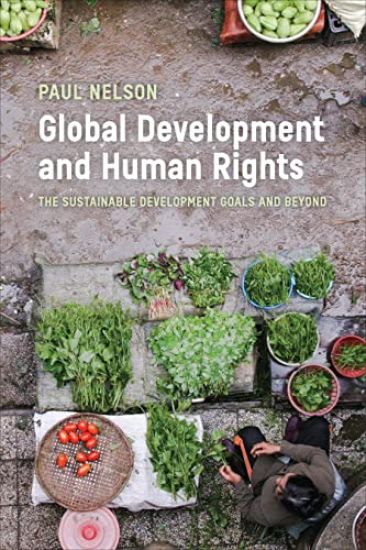
From 2000 to 2015 the Millennium Development Goals (MDGs) mobilized external aid to finance life-changing services in the global South. However, in doing so, the organization failed to meet the challenges often associated with human rights initiatives, which are to make underprivileged communities independently prosperous, equitable, and sustainable. In Global Development and Human Rights, Paul Nelson assesses the current thirty-year effort to make transformative changes in the global South by exploring how this disconnect from human rights weakened the MDGs reputation as a successful aid organization. To overcome the failings of the MDGs, the Sustainable Development Goals (SDGs) were formed in 2016 with the intention of managing the issues fundamentally ignored by the MDGs. Drawing on twenty-five years of research on development goals, human rights, and the organizations that promote them, Nelson reasons that transformative change arises out of national and local movements, and shows how human rights can offer leverage and political support that help drive transformative national initiatives.
From 2000 to 2015 the Millennium Development Goals (MDGs) mobilized external aid to finance life-changing services in the global South. However, in doing so, the organization failed to meet the challenges often associated with human rights initiatives, which are to make underprivileged communities independently prosperous, equitable, and sustainable. In Global Development and Human Rights, Paul Nelson assesses the current thirty-year effort to make transformative changes in the global South by exploring how this disconnect from human rights weakened the MDGs reputation as a successful aid organization. To overcome the failings of the MDGs, the Sustainable Development Goals (SDGs) were formed in 2016 with the intention of managing the issues fundamentally ignored by the MDGs. Drawing on twenty-five years of research on development goals, human rights, and the organizations that promote them, Nelson reasons that transformative change arises out of national and local movements, and shows how human rights can offer leverage and political support that help drive transformative national initiatives.