Kirjahaku
Etsi kirjoja tekijän nimen, kirjan nimen tai ISBN:n perusteella.
454 tulosta hakusanalla Neri Salvadori
In the aftermath of the Napoleonic Wars Britain found itself faced with a stagnant economy. Economist David Ricardo believed that the full re-integration of Britain into the world market would allow for both capital accumulation and population growth, and used arguments that anticipate ideas entertained in modern contributions to the theory of economic growth and development. However, several of these arguments have not yet been translated into the language of modern classical economics. Ricardo’s Theory of Growth and Accumulation seeks to overcome this striking lacuna.The latest entry in the Graz Schumpeter lecture series, this text explores and elaborates Ricardo’s arguments and the models utilized by those who subsequently followed in support of his work. The Ricardian system is first examined through a one-sector economy, following Kaldor’s model, and a two-sector economy, following Pasinetti’s model. These building blocks are developed through the exploration of a small open economy, which allows an analysis of the impact of international trade in exceedingly simple circumstances. This discussion expands further by considering the world economy. More sophisticated variants of the two-sector model are presented, in which commodity prices are endogenously determined by the trading interplay amongst several countries. A final analysis makes Ricardo’s case by introducing accumulation in the world economy.This book is of interest to students and scholars of Ricardo, classical economics, and – more broadly – growth theory, the theory of international economics, and globalization. The author was keen to render the analytical parts compelling to the historian and the historical parts compelling to the theorist.
The financial crisis and the economic crisis that followed triggered a crisis in the subject of economics, as it is typically being taught today especially in macroeconomics and related fields. A renewed interest in earlier authors, especially the classical economists from Adam Smith to David Ricardo and John Maynard Keynes, developed. This book may also be seen as a response to this interest. What can we learn from the authors mentioned, what we could not learn from the mainstream?This volume contains a selection of essays which deepens and widens the understanding of the classical approach to important problems, such as value and distribution, growth and technical progress, and exhaustible natural resources. It is the fourth collection in a row and reflects an on-going discussion of the fecundity of the classical approach. A main topic of the essays is a comparison between the classical approaches with modern theory and thus an identification of what can be learned by elaborating on the ideas of Smith and Ricardo and Marx above and beyond and variously in contradiction to certain mainstream view. Since the work of Piero Sraffa spurred the revival of classical economic thought, his contributions are dealt with in some detail. The attention then focuses on economic growth and the treatment of exhaustible resources within a classical framework of the analysis.
First Published in 2007. This book is the third volume of previously published essays from Heinz D. Kurz and Neri Salvadori, following Understanding Classical Economics (1998) and Classical Economics and Modern Theory (2003), both published by Routledge. This new collection can be read in isolation but perhaps more fruitfully in conjunction with the previous texts, providing modern interpretations of the classical economists and comparing their analyses with that of contemporary mainstream economics. The essays in the new volume are split between three parts, the first section dealing with classical economics and modern theory focusing specifically on the differences in the analytical structure and content of the theory of value and distribution of Ricardo, on the one hand, and Say and Walras, on the other. The second part is devoted to Piero Sraffa’s contribution, drawing from his hitherto unpublished papers. The final part assesses linear theory of production, concentrating on comparative studies of the contributions of von Neumann, Arrow-Debreu, Georgescu-Roegen and Sraffa. This new volume will be of interest to economic theorists and methodologists in Europe, Asia and America and particularly academics and researchers engaged with theories of production, value, distribution, economic growth and the history of economic thought.
The financial crisis and the economic crisis that followed triggered a crisis in the subject of economics, as it is typically being taught today especially in macroeconomics and related fields. A renewed interest in earlier authors, especially the classical economists from Adam Smith to David Ricardo and John Maynard Keynes, developed. This book may also be seen as a response to this interest. What can we learn from the authors mentioned, what we could not learn from the mainstream?This volume contains a selection of essays which deepens and widens the understanding of the classical approach to important problems, such as value and distribution, growth and technical progress, and exhaustible natural resources. It is the fourth collection in a row and reflects an on-going discussion of the fecundity of the classical approach. A main topic of the essays is a comparison between the classical approaches with modern theory and thus an identification of what can be learned by elaborating on the ideas of Smith and Ricardo and Marx above and beyond and variously in contradiction to certain mainstream view. Since the work of Piero Sraffa spurred the revival of classical economic thought, his contributions are dealt with in some detail. The attention then focuses on economic growth and the treatment of exhaustible resources within a classical framework of the analysis.
First Published in 2007. This book is the third volume of previously published essays from Heinz D. Kurz and Neri Salvadori, following Understanding Classical Economics (1998) and Classical Economics and Modern Theory (2003), both published by Routledge. This new collection can be read in isolation but perhaps more fruitfully in conjunction with the previous texts, providing modern interpretations of the classical economists and comparing their analyses with that of contemporary mainstream economics. The essays in the new volume are split between three parts, the first section dealing with classical economics and modern theory focusing specifically on the differences in the analytical structure and content of the theory of value and distribution of Ricardo, on the one hand, and Say and Walras, on the other. The second part is devoted to Piero Sraffa’s contribution, drawing from his hitherto unpublished papers. The final part assesses linear theory of production, concentrating on comparative studies of the contributions of von Neumann, Arrow-Debreu, Georgescu-Roegen and Sraffa. This new volume will be of interest to economic theorists and methodologists in Europe, Asia and America and particularly academics and researchers engaged with theories of production, value, distribution, economic growth and the history of economic thought.
Competition, Value and Distribution in Classical Economics
Heinz D. Kurz; Neri Salvadori
Routledge
2022
sidottu
Drawing in particular on the work of Sraffa, Smith, Ricardo and Marx, the essays in this volume explore the characteristic features of the Classical economists’ approach to economic problems, and the renewal of interest in that approach in modern times.In recent years, new material has been made available on both Sraffa and Marx which have made new insights and interpretations possible. The release of Sraffa’s hitherto unpublished papers and correspondence has led to reconsideration of doctrinal questions such as to what extent Sraffa built upon, or deviated from the analyses of Adam Smith, David Ricardo and other representatives of the classical British school and Karl Marx. A major theme is also to what extent we can today, equipped with Sraffa's insights and analytical tools, re-interpret and develop ideas of classical authors, which they could present only in primitive forms, on technological progress, exhaustible resources and other contemporary issues. On Marx, the publication of the MEGA2 edition of the works, papers and correspondence of Marx and Engels also gives rise to a reconsideration of this relationship, given Marx's disenchantment with some of his own work and return to ideas advocated by Ricardo, especially as regards the long-term tendency of the rate of profits. Finally, the classical notion of competition and monopoly deserve to be scrutinized carefully again and frequent misinterpretations in the literature refuted.This volume is vital reading for scholars of classical economics, Marx and Sraffa, and the history of economic thought more broadly. It also deals with issues in the areas of machinery and technical progress, joint production, and economic development and growth.
Competition, Value and Distribution in Classical Economics
Heinz D. Kurz; Neri Salvadori
TAYLOR FRANCIS LTD
2023
nidottu
Drawing in particular on the work of Sraffa, Smith, Ricardo and Marx, the essays in this volume explore the characteristic features of the Classical economists’ approach to economic problems, and the renewal of interest in that approach in modern times.In recent years, new material has been made available on both Sraffa and Marx which have made new insights and interpretations possible. The release of Sraffa’s hitherto unpublished papers and correspondence has led to reconsideration of doctrinal questions such as to what extent Sraffa built upon, or deviated from the analyses of Adam Smith, David Ricardo and other representatives of the classical British school and Karl Marx. A major theme is also to what extent we can today, equipped with Sraffa's insights and analytical tools, re-interpret and develop ideas of classical authors, which they could present only in primitive forms, on technological progress, exhaustible resources and other contemporary issues. On Marx, the publication of the MEGA2 edition of the works, papers and correspondence of Marx and Engels also gives rise to a reconsideration of this relationship, given Marx's disenchantment with some of his own work and return to ideas advocated by Ricardo, especially as regards the long-term tendency of the rate of profits. Finally, the classical notion of competition and monopoly deserve to be scrutinized carefully again and frequent misinterpretations in the literature refuted.This volume is vital reading for scholars of classical economics, Marx and Sraffa, and the history of economic thought more broadly. It also deals with issues in the areas of machinery and technical progress, joint production, and economic development and growth.
The 'classical' approach to economic problems, which can be traced back to Adam Smith and David Ricardo, has seen a remarkable revival in recent years. The essays in this collection argue that this approach holds the key to an explanation of important present day economic phenomena. Focusing on the analytical potentialities of classical economics, the contributors illustrate how an important element of understanding its approach consists of developing and using its explanatory power.
In this thought-provoking book, well known economists Kurz and Salvadori cover original findings and new vistas on old problems. They cover:alternative interpretations of classical economistsnew growth theorythe relationship between Sraffian theory and Von Neumannthe treatment of capital in neoclassical long-period theory.Incorporating cutting-edge research and new work, this book will be of great interest to those working in the field of the history of economic thought.
The 'classical' approach to economic problems, which can be traced back to Adam Smith and David Ricardo, has seen a remarkable revival in recent years. The essays in this collection argue that this approach holds the key to an explanation of important present day economic phenomena. Focusing on the analytical potentialities of classical economics, the contributors illustrate how an important element of understanding its approach consists of developing and using its explanatory power.
This compelling book contains a comprehensive analytical treatment of the theory of production in a long-period framework. Although the authors take a ‘Classical’ approach to their subject, the scope of investigation and methods employed should interest all economic theorists. Professors Kurz and Salvadori explore economic systems that are characterised by a particular kind of primary input in the production process, such as different kinds of labour and natural resources. These systems and the corresponding prices can be understood to reflect characteristic features of a capitalist market economy in an ideal way: they express the pure logic of the relationship between value and distribution in an economic system. Specific chapters deal with prices and income distribution, economic growth, joint production, fixed capital, scarce natural resources (both renewable and exhaustible), and heterogeneous labour. The historical origins of the concepts used are also discussed in considerable detail.
Lineamientos metodológicos para proyectos de investigación educativa
Enrique Salvador Neri Caballero; Patricia Vargas
Editorial Académica Española
2017
nidottu
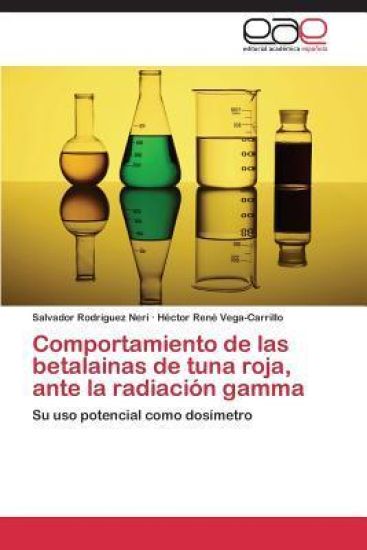
Comportamiento de las betalainas de tuna roja, ante la radiación gamma
Salvador Rodríguez Neri; Héctor René Vega-Carrillo
Editorial Academica Espanola
2013
pokkari
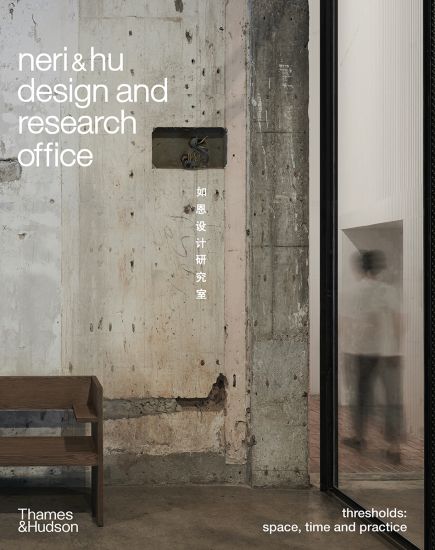
Neri&Hu Design and Research Office
Thames Hudson Ltd
2021
sidottu
Founded in 2004 by partners Lyndon Neri and Rossana Hu, Neri&Hu Design and Research Office is an inter-disciplinary architectural design practice based in Shanghai, China. Neri&Hu works internationally providing architecture, interior, master planning, graphic, and product design services. Currently working on projects in many countries, Neri&Hu is composed of multi-cultural staff who speak over thirty different languages. The diversity of the team reinforces a core vision for the practice: to respond to a global worldview incorporating overlapping design disciplines for a new paradigm in architecture. This is the most comprehensive monograph of the studio’s work, featuring around thirty projects at all scales.With 404 illustrations
Neri Oxman: Mediated Matter
Paola Antonelli; Neri Oxman; Jennifer Dunlop Fletcher; Joi Ito; Heather Davis
Museum of Modern Art
2020
nidottu
The first survey on the interdisciplinary biodesign genius of Neri Oxman, pioneer of "material ecologyThroughout her 20-year career, Neri Oxman has invented not only new ideas for materials, buildings and construction processes, but also new frameworks for interdisciplinary--and interspecies--collaborations. She coined the term "material ecology" to describe her process of producing techniques and objects informed by the structural, systemic and aesthetic wisdom of nature, from the shells of crustaceans to the flow of human breathing. Groundbreaking for its solid technological and scientific basis, its rigorous and daring experimentation, its visionary philosophy and its unquestionable attention to formal elegance, Oxman's work operates at the intersection of biology, engineering, architecture and artistic design, material science and computer science. This book--designed by Irma Boom and published to accompany a midcareer retrospective of Oxman's work--highlights the interdisciplinary nature of the designer's practice. It demonstrates how Oxman's contributions allow us to question and redefine the idea of modernism--a concept in constant evolution--and of organic design. Some of the projects featured in the book and exhibition include the Silk Pavilion, which harnesses silkworms' ability to generate a 3-D cocoon out of a single thread silk in order to create architectural constructions; Aguahoja, a water-based fabrication platform that prints structures made out of different biopolymers; and Glass, an additive manufacturing technology for 3-D printing optically transparent glass structures at architectural dimensions. Israeli American architect, designer and inventor Neri Oxman (born 1976) is professor of media arts and sciences at the Massachusetts Institute of Technology's Media Lab. Her work is in the permanent collections of the Museum of Modern Art, New York, the Cooper Hewitt Design Museum, the San Francisco Museum of Modern Art and Boston's Museum of Fine Arts, among others.
Neri and Hu Design and Research Office - Works and Projects 2004 - 2014
Lyndon Neri; Rossana Hu
Park Books
2018
sidottu
Founded in 2004 and based in Shanghai and London, neri & hu design and research office works internationally providing architecture, interior, master planning, graphic, and product design services. They work on projects in many countries with a multi-cultural staff. This diversity emphasises the firm's vision to respond to a global worldview incorporating overlapping design disciplines. This first ever book on neri & hu design and research office documents a selection of their work in architecture and product design. With a lavishly illustrated beautiful design concept, it is structured in three sections: Buildings features seven renovation projects in Shanghai, complete refurbishments as well as interior redesigns. Products presents four designs for household goods and furniture. Projects documents ongoing and unrealized architectural work in Florida, London, Shanghai, and Kuala Lumpur. An introduction and a topical essay on renovation as well as an overview of neri & hu design and research office's projects to date round out the book. Lyndon Neri studied architecture at University of California, Berkeley, and Harvard Graduate School of Design. Before founding his own firm with Rossana Hu he has been working for more than ten years with Princeton-based Michael Graves & Associates and various architectural firms in New York. Rossana Hu studied architecture and music at University of California, Berkeley, and Princeton University. She worked with Michael Graves & Associates and Ralph Lerner Architect in Princeton; Skidmore, Owings & Merrill in New York; and The Architects Collaborative (TAC) in San Francisco before founding neri & hu design and research office.