Kirjahaku
Etsi kirjoja tekijän nimen, kirjan nimen tai ISBN:n perusteella.
227 tulosta hakusanalla Neta C Crawford


The unintended deaths of civilians in war are too often dismissed as unavoidable, inevitable, and accidental. And despite the best efforts of the U.S. to avoid them, civilian casualties in Afghanistan, Iraq, and Pakistan have been a regular feature of the United States' wars after 9/11. In Accountability for Killing, Neta C. Crawford focuses on the causes of these many episodes of foreseeable collateral damage and the moral responsibility for them. The dominant paradigm of legal and moral responsibility in war today stresses both intention and individual accountability. Deliberate killing of civilians is outlawed and international law blames individual soldiers and commanders for such killing. An individual soldier may be sentenced life in prison or death for deliberately killing even a small number of civilians, but the large scale killing of dozens or even hundreds of civilians may be forgiven if it was unintentional--"incidental"--to a military operation. The very law that protects noncombatants from deliberate killing may allow many episodes of unintended killing. Under international law, civilian killing may be forgiven if it was unintended and incidental to a militarily necessary operation. Given the nature of contemporary war, where military organizations-training, and the choice of weapons, doctrine, and tactics-create the conditions for systemic collateral damage, Crawford contends that placing moral responsibility for systemic collateral damage on individuals is misplaced. She develops a new theory of organizational moral agency and responsibility, and shows how the US military exercised moral agency and moral responsibility to reduce the incidence of collateral damage in America's most recent wars. Indeed, when the U.S. military and its allies saw that the perception of collateral damage killing was causing it to lose support in the war zones, it moved to a "population centric" doctrine, putting civilian protection at heart of its strategy. Trenchant, original, and ranging across security studies, international law, ethics, and international relations, Accountability for Killing will reshape our understanding of the ethics of contemporary war.

In May 2009, American B-1B bombers dropped 2,000-pound and 500-pound bombs in the village of Garani, Afghanistan following a Taliban attack. The dead included anywhere from twenty five to over one hundred civilians. The U.S. military went into damage control mode, making numerous apologies to the Afghan government and the townspeople. Afterward, the military announced that it would modify its aerial support tactics. This episode was hardly an anomaly. As anyone who has followed the Afghanistan war knows, these types of incidents occur with depressing regularity. Indeed, as Neta Crawford shows in Accountability for Killing, they are intrinsic to the American way of warfare today. While the military has prioritized reducing civilian casualties, it has not come close to eliminating them despite significant progress in recent years, for a very simple reason: American reliance on airpower and, increasingly, drone technology, which is intended to reduce American casualties. Yet the long distance from targets, the power of the explosives, and the frequency of attacks necessarily produces civilian casualties over the course of a long war. Working from these basic facts, Crawford offers a sophisticated and intellectually powerful analysis of culpability and moral responsibility in war. The dominant paradigm of legal and moral responsibility in war today stresses both intention and individual accountability. Deliberate killing of civilians is outlawed and international law blames individual soldiers and commanders for such killing. But also under international law, civilian killing may be forgiven if it was unintended and incidental to a militarily necessary operation. Given the nature of contemporary war, though, Crawford contends that this argument is no longer satisfactory. As she demonstrates, 'unintended' deaths of civilians are too often dismissed as unavoidable, inevitable, and accidental. Yet essentially, the very law that protects noncombatants from deliberate killing allows unintended killing. An individual soldier may be sentenced life in prison or death for deliberately killing even a small number of civilians, but the large scale killing of dozens or even hundreds of civilians may be forgiven if it was unintentional-'incidental' to a military operation. She focuses on the causes of these many episodes of foreseeable collateral damage and the moral responsibility for them. Why was there so much unintended killing of civilians in the U.S. wars zones in Afghanistan, Iraq and Pakistan? Is 'collateral damage' simply an unavoidable consequence of all wars? Why, when the U.S. military tries so hard to limit collateral damage, does so much of it seem to occur? Trenchant, original, and ranging across security studies, international law, ethics, and international relations, Accountability for Killing will reshape our understanding of the ethics of contemporary war.

How the Pentagon became the world’s largest single greenhouse gas emitter and why it’s not too late to break the link between national security and fossil fuel consumption.The military has for years (unlike many politicians) acknowledged that climate change is real, creating conditions so extreme that some military officials fear future climate wars. At the same time, the U.S. Department of Defense—military forces and DOD agencies—is the largest single energy consumer in the United States and the world’s largest institutional greenhouse gas emitter. In this eye-opening book, Neta Crawford traces the U.S. military’s growing consumption of energy and calls for a reconceptualization of foreign policy and military doctrine. Only such a rethinking, she argues, will break the link between national security and fossil fuels. The Pentagon, Climate Change, and War shows how the U.S. economy and military together have created a deep and long-term cycle of economic growth, fossil fuel use, and dependency. This cycle has shaped U.S. military doctrine and, over the past fifty years, has driven the mission to protect access to Persian Gulf oil. Crawford shows that even as the U.S. military acknowledged and adapted to human-caused climate change, it resisted reporting its own greenhouse gas emissions. Examining the idea of climate change as a “threat multiplier” in national security, she argues that the United States faces more risk from climate change than from lost access to Persian Gulf oil—or from most military conflicts. The most effective way to cut military emissions, Crawford suggests provocatively, is to rethink U.S. grand strategy, which would enable the United States to reduce the size and operations of the military.

Arguments have consequences in world politics that are as real as the military forces of states or the balance of power among them. Neta Crawford proposes a theory of argument in world politics which focuses on the role of ethical arguments in fostering changes in long-standing practices. She examines five hundred years of history, analyzing the role of ethical arguments in colonialism, the abolition of slavery and forced labour, and decolonization. Pointing out that decolonization is the biggest change in world politics in the last five hundred years, the author examines ethical arguments from the sixteenth century justifying Spanish conquest of the Americas, and from the twentieth century over the fate of Southern Africa. The book also offers a prescriptive analysis of how ethical arguments could be deployed to deal with the problem of humanitarian intervention. Co-winner of the APSA Jervis-Schroeder Prize for the best book on international history and politics.
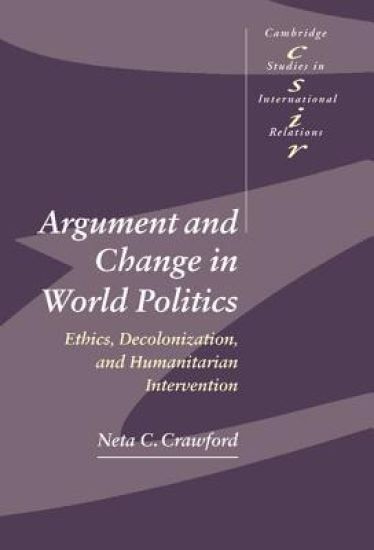
Arguments have consequences in world politics that are as real as the military forces of states or the balance of power among them. Neta Crawford proposes a theory of argument in world politics which focuses on the role of ethical arguments in fostering changes in long-standing practices. She examines five hundred years of history, analyzing the role of ethical arguments in colonialism, the abolition of slavery and forced labour, and decolonization. Pointing out that decolonization is the biggest change in world politics in the last five hundred years, the author examines ethical arguments from the sixteenth century justifying Spanish conquest of the Americas, and from the twentieth century over the fate of Southern Africa. The book also offers a prescriptive analysis of how ethical arguments could be deployed to deal with the problem of humanitarian intervention. Co-winner of the APSA Jervis-Schroeder Prize for the best book on international history and politics.
Magyarorszàg TörtÃ(c)netÃ(c)nek Forràsai
Hutson Street Press
2025
sidottu

Magyarorszàg TörtÃ(c)netÃ(c)nek Forràsai
Hutson Street Press
2025
pokkari

AdalÃ(c)kok a Thököly- Ã?s RàkÃ3czi-Kor IrodalomtörtÃ(c)netÃ(c)hez
Kàlmàn Thaly
Hutson Street Press
2025
sidottu
AdalÃ(c)kok a Thököly- Ã?s RàkÃ3czi-Kor IrodalomtörtÃ(c)netÃ(c)hez
Kàlmàn Thaly
Hutson Street Press
2025
pokkari
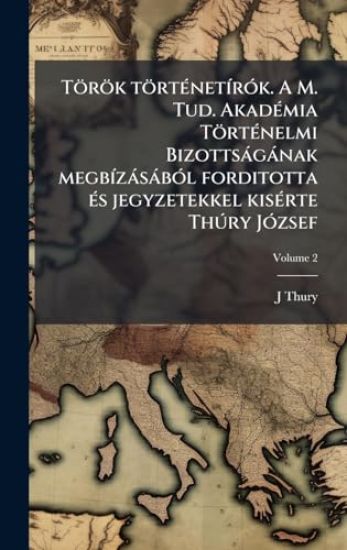

Török törtÃ(c)netÃ-rÃ3k. A M. Tud. AkadÃ(c)mia TörtÃ(c)nelmi Bizottsàgànak megbÃ-zàsàbÃ3l forditotta Ã(c)s jegyzetekkel kisÃ(c)rte Thðry JÃ3zsef
J. Thury
Hutson Street Press
2025
nidottu
A "T r k t rt net -r 3k" m sodik k tete Th ry J 3zsef ford -t s ban s jegyzeteivel a Magyar Tudom nyos Akad mia T rt nelmi Bizotts g nak megb -z s b 3l k sz 1/4lt. Ez a k tet a t r k t rt net -r 3k munk inak magyar nyelv gy jtem nye, mely betekint st ny jt a t r k t rt nelem -r sba a 19. sz zadban. A k tet c lja, hogy a magyar olvas 3k z ns g sz m ra el rhet 'v tegye azokat a forr sokat, amelyek a t r k birodalom t rt net nek meg rt s hez n lk 1/4l zhetetlenek. Th ry J 3zsef munk ja r v n a k tet nem csup n ford -t s, hanem alapos jegyzetekkel ell tott, tudom nyos ig ny kiadv ny, mely a t rt n szek s a t ma ir nt rdekl 'd 'k sz m ra egyar nt rt kes. This work has been selected by scholars as being culturally important, and is part of the knowledge base of civilization as we know it. This work was reproduced from the original artifact, and remains as true to the original work as possible. Therefore, you will see the original copyright references, library stamps (as most of these works have been housed in our most important libraries around the world), and other notations in the work. This work is in the public domain in the United States of America, and possibly other nations. Within the United States, you may freely copy and distribute this work, as no entity (individual or corporate) has a copyright on the body of the work. As a reproduction of a historical artifact, this work may contain missing or blurred pages, poor pictures, errant marks, etc. Scholars believe, and we concur, that this work is important enough to be preserved, reproduced, and made generally available to the public. We appreciate your support of the preservation process, and thank you for being an important part of keeping this knowledge alive and relevant.

A Neta Do Arcediago
Createspace Independent Publishing Platform
2013
nidottu
Consta da "Filha do Arcediago" que a filha do memor vel Leonardo Taveira, arcediago de Barroso, houvera de leg timo cons rcio com Augusto Leite uma filha, chamada A ucena.Quando Rosa Guilhermina contraiu segundas n pcias com Jos Bento de Magalh es e Castro, tinha seis anos a crian a.O filho do retroseiro n o se afei oou filha de sua mulher, conquanto a meiga menina o acarinhasse com meiguices, e lhe chamasse pai. Em pouco se conhecia a rude insensibilidade do padrasto. As menores travessuras de A ucena eram para ele o resultado do mimo demasiado que sua m e lhe dava. A esperteza, que Rosa admirava em sua filha, dizia o senhor Jos Bento que era mal cia; e, por entre dentes, resmungava que n o seria ela quem levasse a gua ao seu moinho. Era uma das suas frases favoritas este anexim, que o filho da senhora Ana Canastreira retivera na mem ria, rebelde sempre para o imperativo do verbo laudo, como em tempo competente se disse.
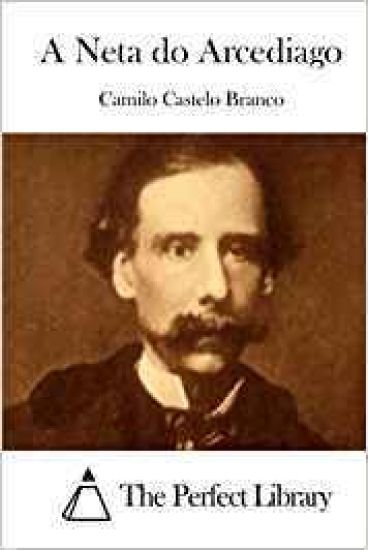
"A Neta do Arcediago" from Camilo Castelo Branco. Escritor portugu s, romancista, cronista, cr tico, dramaturgo, historiador, poeta e tradutor (1825-1890).



Utilidad neta y rentabilidad de canales de comercialización agrícolas
Víctor Eduardo Chininín Campoverde; María Isabel Ordóñez; Fanny Yolanda González
Editorial Academica Espanola
2018
pokkari
El prop sito central de este libro es llegar a establecer los canales de comercializaci n que permiten a los agricultores de la parroquia Malacatos, cant n y provincia de Loja - Ecuador, vincular la producci n de cultivos tradicionales como ma z duro seco, pimiento y fr jol fresco en vaina, con los consumidores finales. Aunque lo indicado es importante, m s lo es determinar la conveniencia financiera de los mencionados cultivos, desde los puntos de vista de la Utilidad Neta y de la Rentabilidad, esta ltima en funci n del Valor Actual Neto (VAN), de la Tasa Interna de Retorno (TIR) y de la Relaci n Beneficio / Costo (B/C).
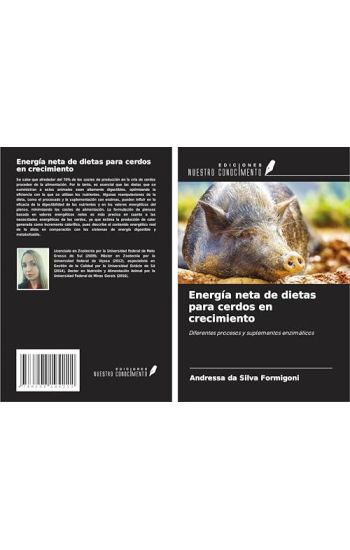
Energía neta de dietas para cerdos en crecimiento
Andressa Da Silva Formigoni
Ediciones Nuestro Conocimiento
2024
nidottu