Kirjojen hintavertailu. Mukana 12 024 155 kirjaa ja 12 kauppaa.

Kirjahaku

Etsi kirjoja tekijän nimen, kirjan nimen tai ISBN:n perusteella.

1000 tulosta hakusanalla Newton Gerard 1887- Smith

Dahlia Cultivation

Dahlia Cultivation

Newton Gerard 1887- Smith

Hassell Street Press
2021
sidottu
This work has been selected by scholars as being culturally important and is part of the knowledge base of civilization as we know it.This work is in the public domain in the United States of America, and possibly other nations. Within the United States, you may freely copy and distribute this work, as no entity (individual or corporate) has a copyright on the body of the work.Scholars believe, and we concur, that this work is important enough to be preserved, reproduced, and made generally available to the public. To ensure a quality reading experience, this work has been proofread and republished using a format that seamlessly blends the original graphical elements with text in an easy-to-read typeface.We appreciate your support of the preservation process, and thank you for being an important part of keeping this knowledge alive and relevant.
Dahlia Cultivation

Dahlia Cultivation

Newton Gerard 1887- Smith

Hassell Street Press
2021
nidottu
This work has been selected by scholars as being culturally important and is part of the knowledge base of civilization as we know it.This work is in the public domain in the United States of America, and possibly other nations. Within the United States, you may freely copy and distribute this work, as no entity (individual or corporate) has a copyright on the body of the work.Scholars believe, and we concur, that this work is important enough to be preserved, reproduced, and made generally available to the public. To ensure a quality reading experience, this work has been proofread and republished using a format that seamlessly blends the original graphical elements with text in an easy-to-read typeface.We appreciate your support of the preservation process, and thank you for being an important part of keeping this knowledge alive and relevant.
Newton

Newton

Rob Iliffe

Oxford University Press
2007
nidottu
This Very Short Introduction uses Newton's own unpublished writings to provide fascinating insight into the man who kept the Royal Society under his thumb, was Head of the Mint, and whose contributions to our understanding of the heavens and the earth are considered by many to be unparalleled. The author begins with the legends surrounding Newton before next exploring the forces that shaped his life, introducing, along the way, many of the key thinkers and politicians of the time. Although Newton's science was largely revered (his reputation reached near-immortal status with the publication of the Principia), theologically, his beliefs were very controversial. He was a fanatical Protestant, and claimed that tribes like the Goths, Vandals, and Huns had tried to save the planet from the corruption of the Catholics. He was also convinced that he was specially chosen by God to protect the original, pure form of Christianity, and viewed any criticisms directed at him as a form of persecution. Resisting the urge to show how Newton's views on alchemy, mathematics, physics, and religion complemented one another, the author instead emphasises that these were the very different obsessions of an extremely complex man whose beliefs at the time dominated England's political, religious, and intellectual landscape. ABOUT THE SERIES: The Very Short Introductions series from Oxford University Press contains hundreds of titles in almost every subject area. These pocket-sized books are the perfect way to get ahead in a new subject quickly. Our expert authors combine facts, analysis, perspective, new ideas, and enthusiasm to make interesting and challenging topics highly readable.
Newton

Newton

Patricia Fara

Columbia University Press
2002
sidottu
Isaac Newton has become an intellectual avatar for our modern age, the man who, as even children know, was inspired to codify nature's laws by watching an apple fall from a tree. Yet Newton devoted much of his energy to deciphering the mysteries of alchemy, theology, and ancient chronology. How did a man who was at first obscure to all but a few esoteric natural philosophers and Cambridge scholars, was preoccupied with investigations of millennial prophecies, and spent decades as Master of the London Mint become famous as the world's first great scientist? Patricia Fara demonstrates that Newton's reputation, surprisingly limited in his day, was carefully cultivated by devoted followers so that Newton's prestige became inseparable from the explosive growth of science itself. Newton: The Making of Genius is not a conventional biography of the man but a cultural history of the interrelated origins of modern science, the concept of genius, and the phenomenon of fame. Beginning with the eighteenth century, when the word "scientist" had not even been coined, Fara reveals how the rise of Isaac Newton's status was inextricably linked to the development of science. His very surname has acquired brand-name-like associations with science, genius, and Britishness-Apple Computers used it for an ill-fated companion to the Mac, and Margaret Thatcher has his image in her coat of arms. Fara argues that Newton's escalating fame was intertwined with larger cultural changes: promoting him posthumously as a scientific genius was strategically useful for ambitious men who wanted to advertise the power of science. Because his reputation has been repeatedly reinterpreted, Newton has become an iconic figure who exists in several forms. His image has been so malleable, in fact, that we do not even reliably know what he looked like. Newton's apotheosis was made possible by the consumer revolution that swept through the Atlantic world in the eighteenth century. His image adorned the walls, china, and ornamental coinage of socially aspiring British consumers seeking to identify themselves with this very smart man. Traditional impulses to saint worship were transformed into altogether new phenomena: commercialized fame and scientific genius, a secularized version of sanctity. Handsomely illustrated and engagingly written, this is an eye-opening history of the way Newton became a cultural icon whose ideas spread throughout the world and pervaded every aspect of life.
Newton

Newton

Patricia Fara

Columbia University Press
2004
pokkari
Isaac Newton has become an intellectual avatar for our modern age, the man who, as even children know, was inspired to codify nature's laws by watching an apple fall from a tree. Yet Newton devoted much of his energy to deciphering the mysteries of alchemy, theology, and ancient chronology. How did a man who was at first obscure to all but a few esoteric natural philosophers and Cambridge scholars, was preoccupied with investigations of millennial prophecies, and spent decades as Master of the London Mint become famous as the world's first great scientist? Patricia Fara demonstrates that Newton's reputation, surprisingly limited in his day, was carefully cultivated by devoted followers so that Newton's prestige became inseparable from the explosive growth of science itself. Newton: The Making of Genius is not a conventional biography of the man but a cultural history of the interrelated origins of modern science, the concept of genius, and the phenomenon of fame. Beginning with the eighteenth century, when the word "scientist" had not even been coined, Fara reveals how the rise of Isaac Newton's status was inextricably linked to the development of science. His very surname has acquired brand-name-like associations with science, genius, and Britishness-Apple Computers used it for an ill-fated companion to the Mac, and Margaret Thatcher has his image in her coat of arms. Fara argues that Newton's escalating fame was intertwined with larger cultural changes: promoting him posthumously as a scientific genius was strategically useful for ambitious men who wanted to advertise the power of science. Because his reputation has been repeatedly reinterpreted, Newton has become an iconic figure who exists in several forms. His image has been so malleable, in fact, that we do not even reliably know what he looked like. Newton's apotheosis was made possible by the consumer revolution that swept through the Atlantic world in the eighteenth century. His image adorned the walls, china, and ornamental coinage of socially aspiring British consumers seeking to identify themselves with this very smart man. Traditional impulses to saint worship were transformed into altogether new phenomena: commercialized fame and scientific genius, a secularized version of sanctity. Handsomely illustrated and engagingly written, this is an eye-opening history of the way Newton became a cultural icon whose ideas spread throughout the world and pervaded every aspect of life.
Newton

Newton

Andrew Janiak

Wiley-Blackwell (an imprint of John Wiley Sons Ltd)
2015
nidottu
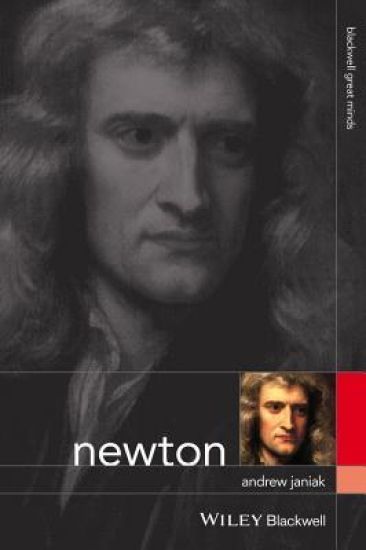
Newton is an evocative intellectual history of the life and ideas of Isaac Newton the natural philosopher, covering his influential thoughts about philosophical problems, our knowledge of nature, and even the nature of the divine. Offers a comprehensive and highly accessible introduction to the life and ideas of Isaac Newton, emphasizing his influential contributions to the field of philosophyCovers the principal philosophical topics that captivated Newton’s mind, from our knowledge of nature to the nature of the divineIncludes the most recent and innovative research regarding Newton’s views on theology and philosophyEmphasizes the philosophical importance of Newton’s work to the history of philosophy and his engagement with the ideas of both historic and contemporary figures such as Galileo and Descartes, Leibniz and Locke
Newton

Newton

Rory Tyger

Little Tiger Press
2013
nidottu
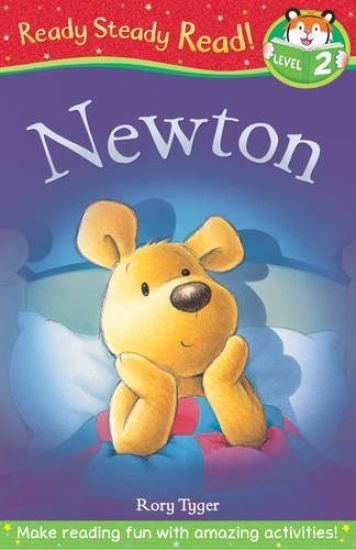
Newton keeps hearing funny noises! So he sets off in the dark, with his bravest toy, to find out what is making the scary sounds. Newton is from Level 2 of Ready Steady Read! a fantastic graded reading scheme with four reading levels from Little Tiger Press. Ready Steady Read! makes learning to read fun. Each book contains games and activities to reinforce learning and test comprehension in a way developing readers will enjoy as well as handy parent notes from Prue Goodwin, Lecturer in Literacy and Children's Books. Level 2 is suitable for developing readers. The stories will help build their confidence, opening up the world of reading and imagination to them. About Level 2: longer sentences simple vocabulary, introducing new words longer stories of up to 200 words bold design, to capture readers’ interest
Newton

Newton

Rory Tyger

Little Tiger Press
2002
nidottu
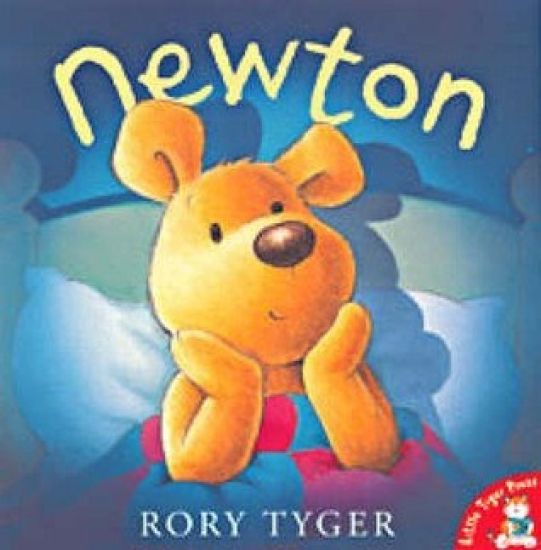
Flap! Flap! Flap! What was that noise? Was it a ghost? "Don't worry," Newton told his toys, "there's always an explanation for everything." With his bravest toy, Snappy, tucked under his arm, Newton sets out in the dark to find out.
Newton

Newton

Paul de Rémusat

Prodinnova
2024
nidottu
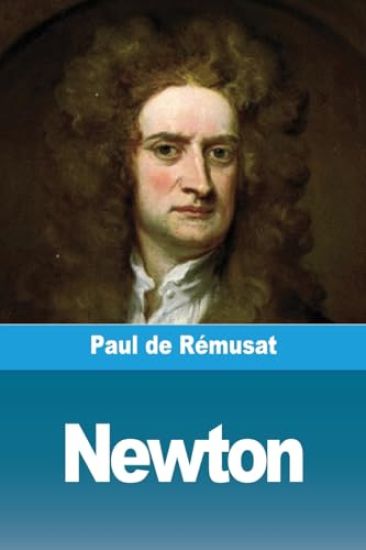
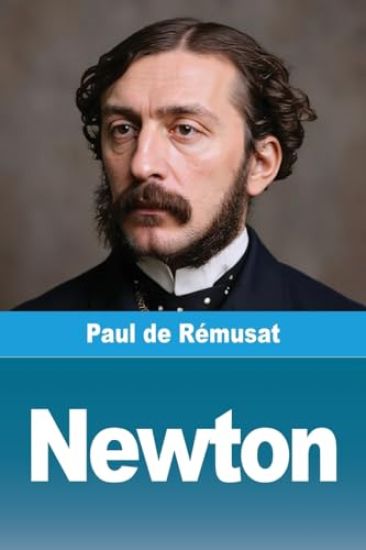
" ... quoi sert de savoir que la chute d'une pomme a mis Newton sur la voie de la gravitation ? Un tel exemple ne peut tre utile personne, et Newton, n'e t-il jamais vu de pommier, n'aurait probablement pas moins d couvert la cause du mouvement des astres. Chaque inventeur a des proc d s d'esprit diff rents, et, par cela m me qu'il est inventeur, n'emprunte rien personne. Quant la mani re de vivre, l' tude n'en peut avoir non plus de grands r sultats pratiques, car les id es, les go ts, les habitudes des grands hommes n'ont jamais t les m mes. Il serait difficile de d cider en ce sens quel est le caract re du g nie, et de choisir entre la sagesse proverbiale de Newton et les passions de Bichat. En ce genre, il n'y a pas de mod les, et si l'on n'avait que le d sir d' tre utile, il faudrait n gliger la biographie des hommes d'esprit, et ne raconter que les actions des grands citoyens..."
Newton

Newton

Irena Stepanova

Karolinum,Nakladatelstvi Univerzity Karlovy,Czech Republic
2015
nidottu
In 1936, following the sale of Newton's unpublished manuscripts at auction, the scientific world was shocked: it turned out that Newton's writings in physics and mathematics, often considered the foundations of modern science, were only a fragment of his writings, most of which were focused on theology and alchemy. In this study of Newton's work and thought, Irena stepanova argues for a Newton who was not the man of cold reason we know, but a "priest-scientist" with the life-long intention of carrying out an examination of God himself, as he revealed himself in both the world and in scriptural writings.
Newton

Newton

Kate Gordon; Wayne T. McCabe

Arcadia Publishing (SC)
1998
nidottu
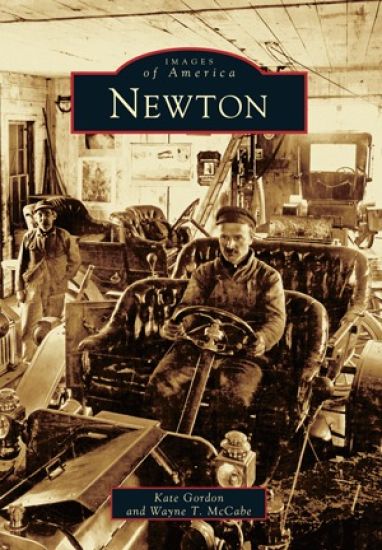
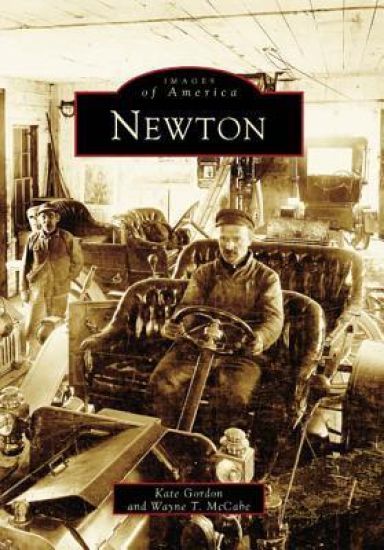
Newton presents a portrait of the county seat of Sussex County, New Jersey during the late 19th and early 20th centuries. With over 185 photographs, postcards, and other graphic images, we see Newton blossom from a small country village into a bustling commercial and industrial town. Among the never-before-published images in this book are the architect's original rendering for the Civil War monument in the county park, the interior of the working-man's bar at the Cochran House hotel, and Damian Broda at the wheel of an early Ford in his garage--the county's first automotive repair facility. View the interior of the Merriam shoe factory, as well as many of the town's commercial and residential streets. The vast majority of the images are drawn from author Wayne T. McCabe's monumental collection of postcards and photographs of Sussex County, collected over a period of nearly 20 years. Most of the photographs were made between 1860 and 1920 and reflect a time of growth and change in Newton's history. Additional images have been provided by Jan Gminder of the Nostalgia Shop in Newton, the Historical Society of Stillwater Township, and the archives of the New Jersey Herald.
Newton

Newton

Newton Historical Society; Newton Historical Society

Arcadia Publishing (SC)
1999
nidottu
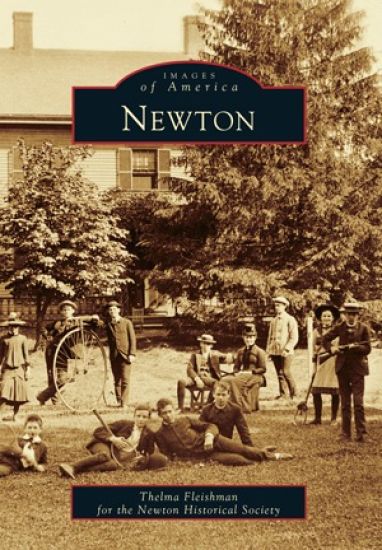
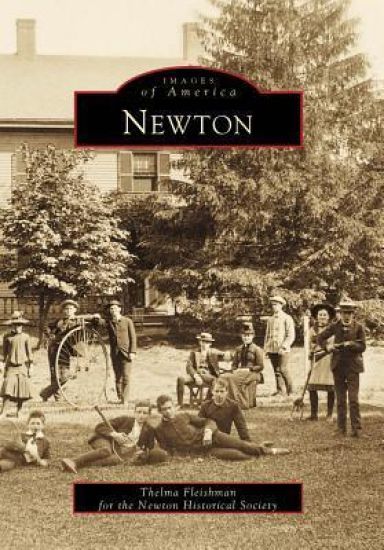
Newtown, Massachusetts is home to some of the finest examples of 19th and 20th century American architecture and has an interesting history as well. Incorporated in 1688, Newton has a history asfascinating as it is long. Newton illustrates the city's development from a community of scattered farmhouses and five small villages in the 1830s to the Garden City of the Commonwealth one hundred years later. Newton's colorful history encompasses many unique features; not only was it one of the country's first railroad suburbs, Newton was home to the Stanley brothers of Steamer fame, to Gen. William Hull, whose reputation suffered during the War of 1812, and, briefly, to Horace Mann and Nathaniel Hawthorne. Newton, however, is best known not for the famous or nearly famous who lived here, but for some of the finest examples of nineteenth- and early-twentieth-century domestic architecture in America.