Kirjojen hintavertailu. Mukana 11 244 527 kirjaa ja 12 kauppaa.

Kirjahaku

Etsi kirjoja tekijän nimen, kirjan nimen tai ISBN:n perusteella.

1000 tulosta hakusanalla Niccolò Sovilla

L'illuso disorganizzato ovvero primo viaggio nell'ovest scozzese
La pioggia insistente, la nebbia insinuante, il silenzio avvolgente, l'aspra brughiera, le gelide notti, l'amichevole fauna... Il cammino, il cammino, il cammino... LA SCOZIA O meglio, la West Highland Way: 155 km a piedi nel selvaggio ovest scozzese visti attraverso gli occhi di un semplice ragazzo d'ufficio. Non uno sportivo, non un uomo d'avventura, ma di certo un uomo di spirito e di penna con un'ironia tagliente ed un insuperabile aplomb. Niccolo Sovilla nasce nel 1995 a Belluno, dove vive, lavora, suona e scrive. L'illuso disorganizzato ovvero primo viaggio nell'ovest scozzese e il suo primo libro.
Niccolo Rising

Niccolo Rising

Dorothy Dunnett

Penguin Books Ltd
1988
pokkari
The exquisitely-researched standalone prequel series to Dorothy Dunnett's revered Lymond Chronicles, following the ancestors of Francis Crawford of Lymond in Continental Europe.Niccolo Rising is Book One in The House of Niccolo series.----------------------------- 'It began with sea, and September sunlight, and three young men lying stripped to their doublets in the Duke of Burgundy's bath . . .'Meet Caes - Nicholas vander Poele - an eighteen-year-old orphan and dyer apprentice's working for the widow Marian de Charetty in Bruges. After fetching up in jail for accidentally sinking a lighter and breaking the leg of a nobleman, his young life seems over before it is even begun.However, fate and the fifteenth century have great expectations for Nicholas and he soon finds himself leading the Charetty company into adventures and intrigues both mercantile and military, even as enemies plot their downfall.Through cunning, bravery, wit and an unexpected wisdom, Nicholas begins to lay the foundations for the House of Niccolo . . .'As brilliant and interesting as Lymond. A generous feast' Daily Telegraph'A series that will give us our fill of high Renaissance adventure and espionage' Guardian
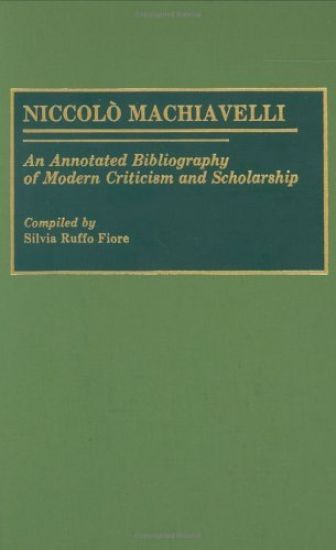
Niccolo Machiavelli

Niccolo Machiavelli

Silvia R. Fiore

Greenwood Press
1990
sidottu
This comprehensive bibliographic guide to the books, monographs, articles and editions, translations, reviews, and dissertations on this important Renaissance writer provides the much-needed, annotated research source for scholarship and criticism published between 1935 and 1985. Research published after 1985 and available in annotated or abstracted form through computer searches is cited in an appendix. Annotations cover bibliographies, biographies, general and specific criticism, and new primary materials. It is an important and significant book, sure to provide scholars with a guide through the Florentine secretary's writings for the next several decades. Peter Bondanella Professor of Italian Studies, Indiana UniversityThose studying Niccolo Machiavelli have long endured the unavailability of a single, complete, interdisciplinary bibliographic guide to the vast number of books, articles, and reviews on the Renaissance writer and thinker who profoundly influenced the development of modern thought. This monumental bibliography provides the much-needed and comprehensive annotated research source for scholarship and criticism published on the Florentine between 1935 and 1985. To make this reference as current and complete as possible, an unannotated appendix cites research published after 1985 that is available in annotated or abstracted form through computer searches. Niccolo Machiavelli surpasses both Norsa's extensive but unannotated bibliography covering the years 1740-1935 and Fido's more recent survey which omits many articles and overlooks important studies in the social sciences especially in the last thirty years.Using a systematic, uniform, and easily accessible format, the volume, which covers more than 50 years of Machiavelli criticism, presents complete descriptions of the works with all bibliographic data. The descriptive summaries encompass the entire range of modern critical and scholarly study in all languages, including bibliographies, biographies, general and specific criticism, and new primary materials such as manuscripts. Included in this wealth of materials are books, monographs, articles, editions, translations, reviews, and dissertations. Arranged chronologically by year and alphabetically within each year the bibliography's user-friendly format includes reviews immediately following the documentation for the book or article in question. Keyed to the annotations, four separate indices (author, title, subject/name, and Machiavelli's works) enhance access to the large and varied amount of work on Machiavelli. The volume will implement the research efforts of both Machiavelli scholars and those in related general and specific fields.
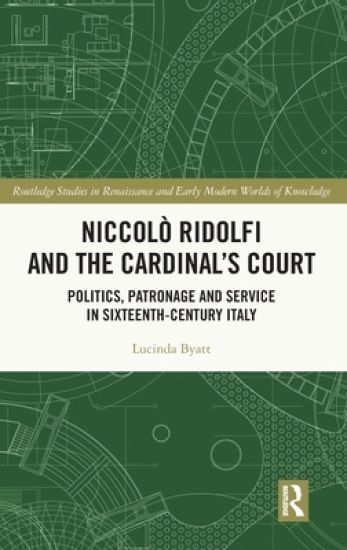
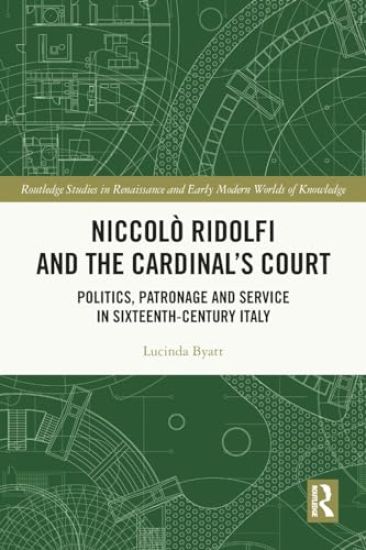
Niccolò Ridolfi and the Cardinal's Court

Niccolò Ridolfi and the Cardinal's Court

Lucinda Byatt

TAYLOR FRANCIS LTD
2022
sidottu
Niccolò Ridolfi (1501–50), was a Florentine cardinal, nephew and cousin to the Medici popes Leo X and Clement VII, and he owed his status and wealth to their patronage. He remained actively engaged in Florentine politics, above all during the years of crisis that saw the Florentine state change from republic to duchy. A widely respected patron and scholar throughout his life, his sudden death during the conclave of 1549–50 led to allegations of poison that an autopsy appears to confirm.This book examines Cardinal Ridolfi and his court in order to understand the extent to which cardinalate courts played a key part in Rome’s resurgence and acted as hubs of knowledge located on the fault lines of politics and reform in church and state, hospitable spaces that can be analysed in the context of entanglements in Florentine and Roman cultural and political patronage, and intersections between the princely court and a more professional and complex knowledge and practice of household management in the consumer and service economy of early modern Rome. Based on an array of archival sources and on three treatises whose authors were closely linked to Ridolfi’s court, this monograph explores these multidisciplinary intersections to allow the more traditional fields of church and political history to be approached from different angles.Niccolò Ridolfi and the Cardinal's Court will appeal to all those interested in the organisation of these elite establishments and their place in sixteenth-century Roman society, the life and patronage of Niccolò Ridolfi in the context of the Florentine exiles who desired a return to republicanism, and the history of the Roman Catholic Church.
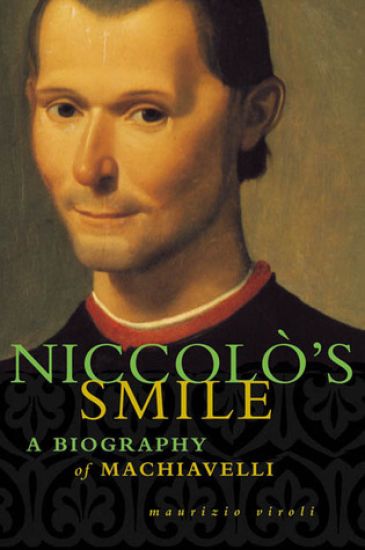
Niccolo's Smile: A Biography of Machiavelli
A vivid portrayal of the great Italian philosopher - now in paperback In Niccol 's Smile, Maurizio Viroli brings to life the fascinating writer who was the founder of modern political thought. Niccol Machiavelli's works on the theory and practice of statecraft are classics, but Viroli sugggests that his greatest accomplishment is his robust philosophy of life -- his deep beliefs about how one should conduct oneself as a modern citizen in a republic, as a responsible family member, as a good person. On these subjects Machiavelli wrote no books: the text of his philosophy is his life itself, a life that was filled with paradox, uncertainty, and tragic drama.
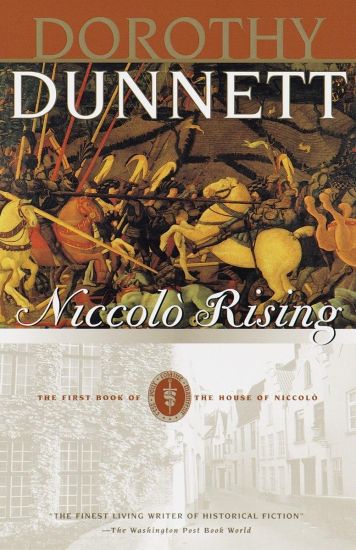
Niccolo Rising

Niccolo Rising

Dorothy Dunnett

Vintage Books
1999
nidottu
With the bravura storytelling and pungent authenticity of detail she brought to her acclaimed Lymond Chronicles, Dorothy Dunnett, grande dame of the historical novel, presents The House of Niccolò series. The time is the 15th century, when intrepid merchants became the new knighthood of Europe. Among them, none is bolder or more cunning than Nicholas vander Poele of Bruges, the good-natured dyer's apprentice who schemes and swashbuckles his way to the helm of a mercantile empire. Niccolò Rising, Book One of the series, finds us in Bruges, 1460. Jousting is the genteel pastime, and successful merchants are, of necessity, polyglot. Street smart, brilliant at figures, adept at the subtleties of diplomacy and the well-timed untruth, Dunnett's hero rises from wastrel to prodigy in a breathless adventure that wins him the hand of the strongest woman in Bruges and the hatred of two powerful enemies. From a riotous and potentially murderous carnival in Flanders, to an avalanche in the Alps and a pitched battle on the outskirts of Naples, Niccolò Rising combines history, adventure, and high romance in the tradition stretching from Alexandre Dumas to Mary Renault. "Dunnett's skill at mixing historical events and personages with fascinating fictive characters provides for high adventure, royal intrigues, war and passion.........The finest living writer of historical fiction." --The Washington Post Book World"Mrs. Dunnett's gift lies in her ability to take history's bare bones and invest them with life. She does this by creating. . .characters whose humor and pathos reach across centuries." --The Christian Science Monitor
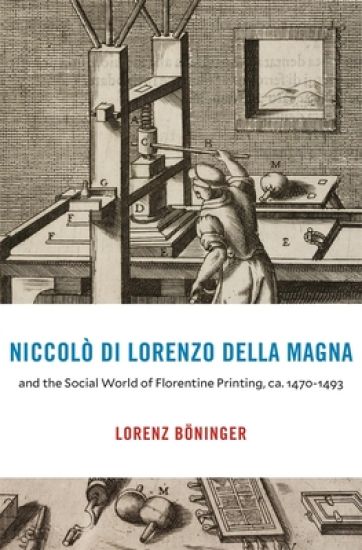
Niccolò di Lorenzo della Magna and the Social World of Florentine Printing, ca. 1470–1493
A new history of one of the foremost printers of the Renaissance explores how the Age of Print came to Italy.Lorenz Böninger offers a fresh history of the birth of print in Italy through the story of one of its most important figures, Niccolò di Lorenzo della Magna. After having worked for several years for a judicial court in Florence, Niccolò established his business there and published a number of influential books. Among these were Marsilio Ficino’s De christiana religione, Leon Battista Alberti’s De re aedificatoria, Cristoforo Landino’s commentaries on Dante’s Commedia, and Francesco Berlinghieri’s Septe giornate della geographia. Many of these books were printed in vernacular Italian.Despite his prominence, Niccolò has remained an enigma. A meticulous historical detective, Böninger pieces together the thorough portrait that scholars have been missing. In doing so, he illuminates not only Niccolò’s life but also the Italian printing revolution generally. Combining Renaissance studies’ traditional attention to bibliographic and textual concerns with a broader social and economic history of printing in Renaissance Italy, Böninger provides an unparalleled view of the business of printing in its earliest years. The story of Niccolò di Lorenzo furnishes a host of new insights into the legal issues that printers confronted, the working conditions in printshops, and the political forces that both encouraged and constrained the publication and dissemination of texts.
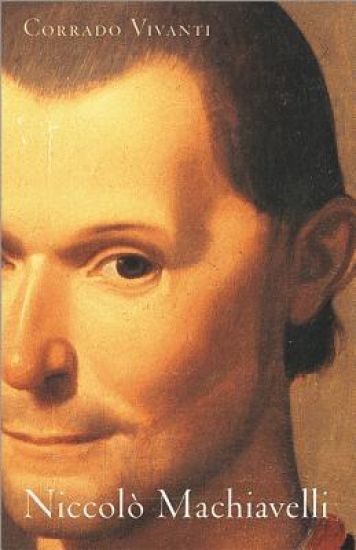
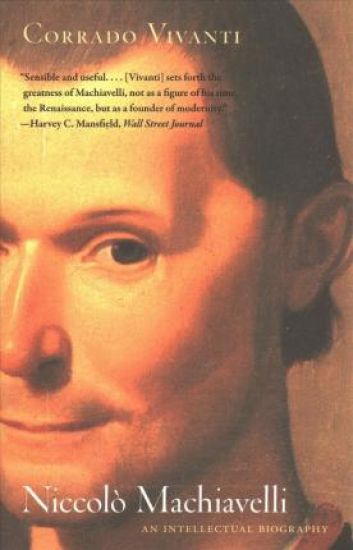
Niccolò Machiavelli

Niccolò Machiavelli

Corrado Vivanti

PRINCETON UNIVERSITY PRESS
2013
sidottu
This is a colorful, comprehensive, and authoritative introduction to the life and work of the author of The Prince--Florentine statesman, writer, and political philosopher Niccolo Machiavelli (1469-1527). Corrado Vivanti, who was one of the world's leading Machiavelli scholars, provides an unparalleled intellectual biography that demonstrates the close connections between Machiavelli's thought and his changing fortunes during the tumultuous Florentine republic and his subsequent exile. Vivanti's concise account covers not only Machiavelli's most famous works--The Prince, The Discourses, The Florentine Histories, and The Art of War--but also his letters, poetry, and comic dramas. While setting Machiavelli's life against a dramatic backdrop of war, crisis, and diplomatic intrigue, the book also paints a vivid human portrait of the man. Vivanti's narrative breaks Machiavelli's life into three parts: his career in a variety of government and diplomatic posts in the Florentine republic between 1494 and 1512, when the Medici returned from exile, seized power, and removed Machiavelli from office; the pivotal first part of his subsequent exile, when he formulated his most influential ideas and wrote The Prince; and the final decade of his life, when, having returned to Florence, he wrote The Art of War, The Florentine Histories, the satirical play The Mandrake, and other works. Along the way, the biography presents unmatched accounts of many intensely debated topics, including the precise nature of Machiavelli's cultural and intellectual background, his republicanism, his political and personal relationship to the Medici, and his ideas about religion.
Niccolò Machiavelli

Niccolò Machiavelli

Corrado Vivanti

Princeton University Press
2019
pokkari
A colorful, comprehensive, and authoritative account of Machiavelli's life and thoughtThis is a colorful, comprehensive, and authoritative introduction to the life and work of the Florentine statesman, writer, and political philosopher Niccolò Machiavelli (1469–1527). Corrado Vivanti, who was one of the world's leading Machiavelli scholars, provides an unparalleled intellectual biography that demonstrates the close connections between Machiavelli's thought and his changing fortunes during the tumultuous Florentine republic and his subsequent exile. Vivanti's concise account covers not only Machiavelli's most famous works—The Prince, The Discourses, The Florentine Histories, and The Art of War—but also his letters, poetry, and comic dramas. While setting Machiavelli's life against a dramatic backdrop of war, crisis, and diplomatic intrigue, the book also paints a vivid human portrait of the man.
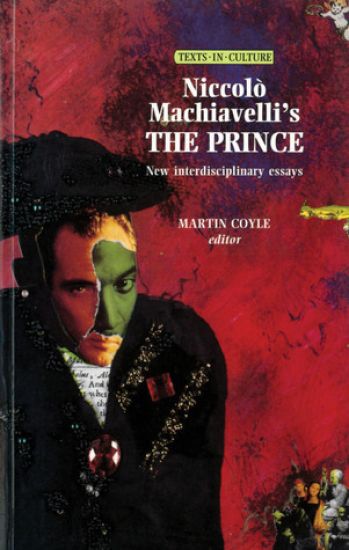
Niccolo Machiavelli's the Prince

Niccolo Machiavelli's the Prince

Manchester University Press
2013
nidottu
No text has attracted more controversy over the centuries than Machiavelli's The Prince. Placed on the Index of Prohibited Books by the Catholic Church in 1599, The Prince nevertheless proved to be the means by which Machiavelli came to be known throughout Europe, establishing his name as a byword for the cunning and unscrupulous politician.Written as the medieval world was giving way to the new dynamic of renaissance capitalism, The Prince embodies a whole series of vital issues that affect our understanding of modern politics, including power and morality, history and human nature, language and meaning, gender and government. It is these issues which the essays in this volume debate and explore from a variety of perspectives, from the original responses to The Prince through to feminist and deconstructive approaches. The result is a volume packed with ideas and insights.With contributions by international scholars and critics, a chronological table and select bibliography, this is an essential guide for anyone studying Machiavelli.
Niccolo Machiavelli

Niccolo Machiavelli

Raymond Angelo Belliotti

Lexington Books
2008
sidottu
Machiavelli is usually understood as a thinker who separated morality from politics or who championed Roman, pagan morality over conventional, Christian morality. Belliotti argues, instead, that Machiavelli's innovation is his understanding of the perhaps irresolvable moral conflicts that exist within political leaders who fulfill the duties of their offices while accepting the authority of absolute moral principles. Machiavelli is a moral pessimist who insists that politicians must 'risk their souls' when performing their public responsibilities. Politicians and military leaders must dirty their hands in service to their constituents. This is especially the case when one strong man founds a state or reforms a corrupt state. History washes away_that is, excuses_many of the horrifying deeds that are required in such cases. Belliotti does not try to domesticate Machiavelli by picturing him as a liberal humanist inclined only toward free government. Nor does he paint him as a teacher of evil. Instead, the book offers a balanced understanding of the Florentine, with special focus on his insights and his myopias. Machiavelli's view of human nature and his conclusion that international affairs have always been and will always be a series of zero-sum contests lead him to stunning discoveries and glaring errors alike.
Niccolo Machiavelli

Niccolo Machiavelli

Raymond Angelo Belliotti

Lexington Books
2010
nidottu
Machiavelli is usually understood as a thinker who separated morality from politics or who championed Roman, pagan morality over conventional, Christian morality. Belliotti argues, instead, that Machiavelli's innovation is his understanding of the perhaps irresolvable moral conflicts that exist within political leaders who fulfill the duties of their offices while accepting the authority of absolute moral principles. Machiavelli is a moral pessimist who insists that politicians must 'risk their souls' when performing their public responsibilities. Politicians and military leaders must dirty their hands in service to their constituents. This is especially the case when one strong man founds a state or reforms a corrupt state. History washes away_that is, excuses_many of the horrifying deeds that are required in such cases. Belliotti does not try to domesticate Machiavelli by picturing him as a liberal humanist inclined only toward free government. Nor does he paint him as a teacher of evil. Instead, the book offers a balanced understanding of the Florentine, with special focus on his insights and his myopias. Machiavelli's view of human nature and his conclusion that international affairs have always been and will always be a series of zero-sum contests lead him to stunning discoveries and glaring errors alike.
Niccolò Ridolfi and the Cardinal's Court

Niccolò Ridolfi and the Cardinal's Court

Lucinda Byatt

TAYLOR FRANCIS LTD
2024
nidottu
Niccolò Ridolfi (1501–50), was a Florentine cardinal, nephew and cousin to the Medici popes Leo X and Clement VII, and he owed his status and wealth to their patronage. He remained actively engaged in Florentine politics, above all during the years of crisis that saw the Florentine state change from republic to duchy. A widely respected patron and scholar throughout his life, his sudden death during the conclave of 1549–50 led to allegations of poison that an autopsy appears to confirm.This book examines Cardinal Ridolfi and his court in order to understand the extent to which cardinalate courts played a key part in Rome’s resurgence and acted as hubs of knowledge located on the fault lines of politics and reform in church and state, hospitable spaces that can be analysed in the context of entanglements in Florentine and Roman cultural and political patronage, and intersections between the princely court and a more professional and complex knowledge and practice of household management in the consumer and service economy of early modern Rome. Based on an array of archival sources and on three treatises whose authors were closely linked to Ridolfi’s court, this monograph explores these multidisciplinary intersections to allow the more traditional fields of church and political history to be approached from different angles.Niccolò Ridolfi and the Cardinal's Court will appeal to all those interested in the organisation of these elite establishments and their place in sixteenth-century Roman society, the life and patronage of Niccolò Ridolfi in the context of the Florentine exiles who desired a return to republicanism, and the history of the Roman Catholic Church.