
Kirjahaku
Etsi kirjoja tekijän nimen, kirjan nimen tai ISBN:n perusteella.
1000 tulosta hakusanalla Nichol John

This biography of Thomas Carlyle (1795–1881) was published in the first series of English Men of Letters in 1892. The author, John Nichol (1833–94), who also wrote on Byron for the series, was an author, poet and critic who was for many years professor of English literature at the University of Glasgow, and who moved in the same intellectual circles as Carlyle, though as he states in his prefatory note, he knew him only slightly. Nichol acknowledges his indebtedness in this work to J. A. Froude, Carlyle's friend, disciple and biographer, but his portrait of the 'master spirit of his time' does not attempt to gloss over the notorious difficulties of Carlyle's personality. Several chapters are devoted to the reception of his works, their influence and the likelihood of their continuing importance: Nichol concludes that Carlyle was 'in truth, a prophet, and he has left his gospels'.
George Gordon, Lord Byron (1788–1824) is regarded as one of Britain's greatest poets. As famous for his personality as he was for his poetry, he was rebellious, extravagant and controversial, his life peppered with scandal. First published in the English Men of Letters series in 1880, this biography by John Nichol (1833–94), who also wrote on Carlyle for the series, argues that while Byron did not shape the Romantic era, his work was still highly influential on his contemporaries. Setting Byron's work in an historical context, Nichol shows how the society of his time both idolised him and condemned him as a moral outcast; he was also greatly admired for his efforts for the liberation of Greece from the Ottoman Empire, during which he died. Nichol also discusses the creation of the 'Byronic hero', as much a reflection of Byron's flamboyant persona as an invented literary character.

Views of the Architecture of the Heavens
Nichol John Pringle
Cambridge University Press
2009
pokkari
John Pringle Nichol (1804–59) was a Scottish polymath whose major interests were economics and astronomy; he did much to popularise the latter by his writings. He became Regius Professor of Astronomy at Glasgow in 1836, and in the following year published Views of the Architecture of the Heavens which was immediately successful. George Eliot wrote in a letter of 1841, 'I have been revelling in Nichol's Architecture of the Heavens and Phenomena of the Solar System, and have been in imagination winging my flight from system to system, and from universe to universe ...' Nichol was a supporter of the nebular hypothesis – that stars form in massive and dense clouds of molecular hydrogen which are gravitationally unstable, and coalesce to smaller denser clumps, which then collapse and form stars – which in modified form is the model most widely accepted today.
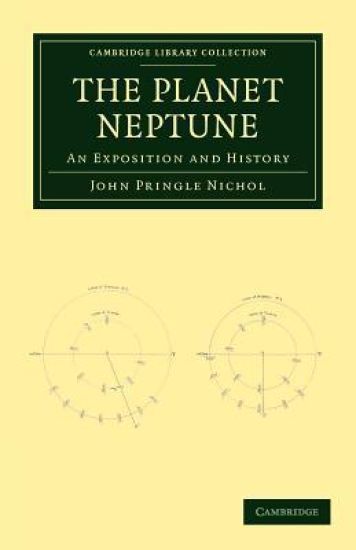
J. P. Nichol (1804–59), astronomer and political economist, was Regius Professor of Astronomy at the University of Glasgow. He brought astronomy to a non-scientific audience through his enthusiastic public lectures and astronomy books. His works include the popular Views of the Architecture of the Heavens (1837; also reissued in this series) in which he supported the nebular hypothesis, which in modified form is the model of star formation most widely accepted today. Neptune was (in 1846) the first planet to be discovered by mathematical prediction rather than empirical observation, and in this book, first published in 1855, Nichol describes that discovery to a lay readership. Part 1 is an exposition of the then current view of the solar system and the research and discoveries which led to that view; Part 2 is dedicated to Neptune; while the third part explains the controversies over the planet's discovery.




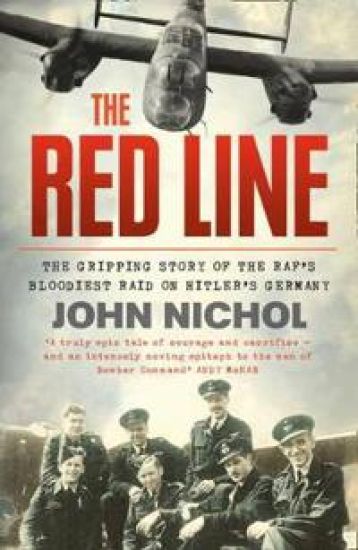
From best-selling author of Tail-End Charlie and Tornado Down comes this powerful and deeply moving account of Bomber Commandââ?¬â?¢s 1944 Nuremberg Raid ââ?¬â?? the RAFââ?¬â?¢s bloodiest night of the Second World War

(Previously published as â??After the Floodâ??) Former RAF Tornado Navigator and Gulf War veteran John Nichol sets out on a personal journey to discover what happened to 617 Squadron after the flood.
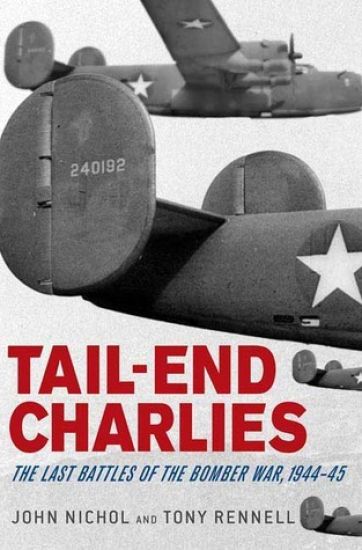
Tail-End Charlies: The Last Battles of the Bomber War, 1944-45
John Nichol; Tony Rennell
St. Martin's Griffin
2008
nidottu
In Tail-End Charlies, John Nichol and Tony Rennell tell the astonishing and deeply moving story of the controversial last battles in the skies of Germany through the eyes of the forgotten heroes who fought them. Night after night they stifled their fears and flew through flak and packs of enemy fighters to drop the bombs that would demolish the Third Reich. The airmen of the United States 8th Army Air Force American and British Bomber Command were among the greatest heroes of the Second World War, defying Hitler in the darkest early days of the war and taking the battle to the German homeland when no one else would. Toward the end of the conflict, too, they continued to sacrifice their lives to shatter an enemy sworn never to surrender. Blasted out of the sky in an instant or bailing out from burning aircraft to drop helplessly into hostile hands, they would die in their tens of thousands to ensure the enemy's defeat. Especially vulnerable were the "tail-end Charlies"---for the Americans, which meant two things: the gunners who flew countless missions in a plexiglass bubble at the back of the bomber, and the last bomber in the formation who ended up flying through the most hell, and for the British, the rear-gunners who flew operations in a Plexiglas bubble at the back of the bomber.



Thoughts On Art, Philosophy, and Religion
John Nichol; Sydney Dobell
Hutson Street Press
2025
sidottu
Thoughts On Art, Philosophy, and Religion
John Nichol; Sydney Dobell
Hutson Street Press
2025
pokkari

Tables Of Ancient Literature And History. B. C. 1500- A, Part 200
John Nichol
Hutson Street Press
2025
sidottu