Anthony Trollope's novels and stories entertain while vividly bringing the Victorian era to life. His deep empathy for the underdog led him to subvert conventions, exploring the lives of women, as well as men, and choosing as heroes and heroines outsiders who would be viewed with suspicion by his readers. Trollope's profound insight to human nature made him the first novelist in English to develop three dimensional characters and to create the novel sequence. This literary companion introduces readers to his life and work. A-to-Z entries explore Trollope's short story collections, and nonfiction contributions, as well as important themes in the works. This companion also includes fresh voices of contributors that bring in their contemporary insights to bear on Trollope's achievements, facilitating the understanding of Trollope's perspectives in relation to feminism, queer studies, and transnationalism.
The Columbine tragedy on April 20, 1999 began a new era in law enforcement as it became apparent that the police response to such mass shootings must be drastically altered. By the time the Sandy Hook Elementary School shooting occurred on December 14, 2012, outdated police response strategies had been replaced with new, aggressive tactics used by the first officers on the scene. The frequency with which these events occur remind us time and again about the importance of training and preparing for these critical situations before they occur in our own backyards.Active Shooter Events and Response is one of the first attempts to not only discuss historic active shooter events, but also to actually dissect some of them—empowering law enforcement professionals by leveraging the essential knowledge and experience of those who have gone before us. The book also offers insight into the training methodologies and strategies used to prepare our nation’s first responders to address the active shooter threat. In addition, the authors discuss the clear and present threat of terrorist organizations using these mass shooter tactics on American soil—similar to the attacks in Beslan, Russia and Mumbai, India. Written by members of the Advanced Law Enforcement Rapid Response Training (ALERRT) Center at Texas State University, this book is the culmination of more than a decade’s worth of training and research into active shooter events and represents state-of-the-art, evidence-based best practices.
This volume analyzes the literary role played by history in the works of J. R. R. Tolkien. It argues that the events of The Lord of the Rings are placed against the background of an already- existing history, both in reality and in the fictional worlds of the books. History is unfolded in various ways, both in explicitly archival annals and in stories told by characters on the road or on the fly, and in which different visions of history emerge. In addition, the history within the work can resemble, or be patterned on, histories in our world. These histories range from the deep past of prehistoric and ancient worlds to the early medieval era of the barbarian invasions and Byzantium, to the modern worlds of urbane civility and a paradoxical longing for nature, and finally to great power rivalries and global prospects. The book argues that Tolkien did not employ these histories indiscriminately or reductively. Rather, he regarded them as aspects of aesthetic and representative figuration that are above all literary. While most criticism has concentrated on Tolkien’s use of historical traditions of Northern Europe, this book argues that Tolkien also valued Southern and Mediterranean pasts and registered the Germanic and the Scandinavian pasts as they related to other histories as much as his vision of them included a primeval mythic aura.
This volume analyzes the literary role played by history in the works of J. R. R. Tolkien. It argues that the events of The Lord of the Rings are placed against the background of an already- existing history, both in reality and in the fictional worlds of the books. History is unfolded in various ways, both in explicitly archival annals and in stories told by characters on the road or on the fly, and in which different visions of history emerge. In addition, the history within the work can resemble, or be patterned on, histories in our world. These histories range from the deep past of prehistoric and ancient worlds to the early medieval era of the barbarian invasions and Byzantium, to the modern worlds of urbane civility and a paradoxical longing for nature, and finally to great power rivalries and global prospects. The book argues that Tolkien did not employ these histories indiscriminately or reductively. Rather, he regarded them as aspects of aesthetic and representative figuration that are above all literary. While most criticism has concentrated on Tolkien’s use of historical traditions of Northern Europe, this book argues that Tolkien also valued Southern and Mediterranean pasts and registered the Germanic and the Scandinavian pasts as they related to other histories as much as his vision of them included a primeval mythic aura.
This book examines literary representations of hyperlocal spaces that subvert the idea of grounded and organic spatial identities. Figures such as the pond, the scientific particle, and Wedgwood creamware often go unnoticed, but they exemplify important shifts in culture and aesthetics in the eighteenth and nineteenth centuries. The Hyperlocal in Eighteenth- and Nineteenth-Century Literary Space argues that these objects, as well as locations such as alcoves in remote shires, city inns, and mountain retreats, were portrayed by writers in the late eighteenth and early-to-mid nineteenth centuries as gambits that challenged cultural hegemonies. It shows that the hyperlocal space or object, though particular, reaches beyond itself, affording an elasticity that can allow those things that seem beneath notice to reveal broader cultural significance.
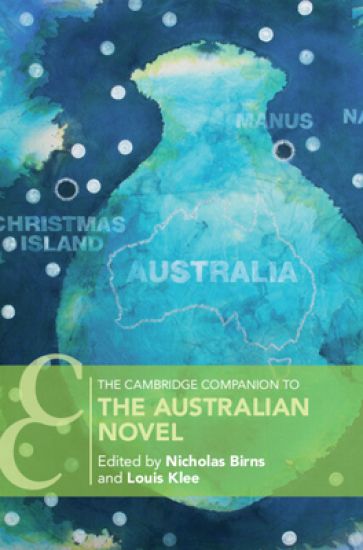
The Cambridge Companion to the Australian Novel provides a clear, lively, and accessible account of the novel in Australia. The chapters of this book survey significant issues and developments in the Australian novel, offer historical and conceptual frameworks, and demonstrate what reading an Australian novel looks like in practice. The book begins with novels by literary visitors to Australia and concludes with those by refugees. In between, the reader encounters the Australian novel in its splendid contradictoriness, from nineteenth-century settler fiction by women writers through to literary images of the Anthropocene, from sexuality in the novels of Patrick White to Waanyi writer Alexis Wright's call for a sovereign First Nations literature. This book is an invitation to students, instructors, and researchers alike to expand and broaden their knowledge of the complex histories and crucial present of the Australian novel.
The Cambridge Companion to the Australian Novel provides a clear, lively, and accessible account of the novel in Australia. The chapters of this book survey significant issues and developments in the Australian novel, offer historical and conceptual frameworks, and demonstrate what reading an Australian novel looks like in practice. The book begins with novels by literary visitors to Australia and concludes with those by refugees. In between, the reader encounters the Australian novel in its splendid contradictoriness, from nineteenth-century settler fiction by women writers through to literary images of the Anthropocene, from sexuality in the novels of Patrick White to Waanyi writer Alexis Wright's call for a sovereign First Nations literature. This book is an invitation to students, instructors, and researchers alike to expand and broaden their knowledge of the complex histories and crucial present of the Australian novel.
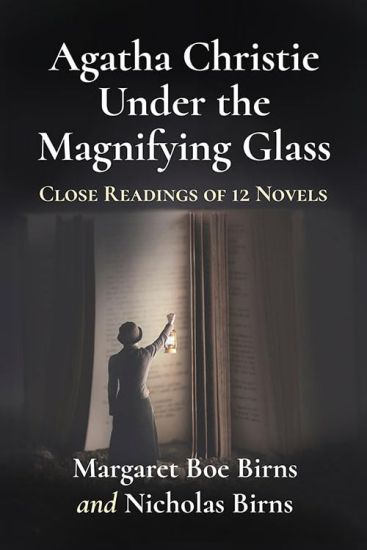
Fifty years after her death, Agatha Christie remains one of the most popular writers worldwide, as adaptations and new modes of appreciation have made her work a permanent part of literature and culture. This is the first book to closely read a representative range of Agatha Christie's detective novels. Treating Christie's murder mysteries as serious examples of literary art, the book situates her work in the context of the twentieth century and shows how it still resonates today. As Christie's great detectives, Hercule Poirot, Miss Marple, Tommy and Tuppence, and Superintendent Battle, solve seemingly impossible puzzles, they also traverse details of setting, character, plot, and motivation which Christie scrupulously maps out in ways that matter to the reader. This book explores those details with attention, care, and discernment. Studying the entire sweep of Christie's long career from the 1920s to the 1970s, from early brain-twisters such as The Murder of Roger Ackroyd to the psychologically infused portraits of modern London in At Bertram's Hotel and Third Girl, this book reveals why Christie remains such a treasured author and opens the ingenious construction of Christie's novels to the admiring reader.
Theory After Theory provides an overview of developments in literary theory after 1950. It is intended both as a handbook for readers to learn about theory and an intellectual history of the recent past in literary criticism for those interested in seeing how it fits in with the larger culture. Accessible but rigorous, this book provides a wealth of historical and intellectual context that allows the reader to make sense of the movements in recent literary theory.
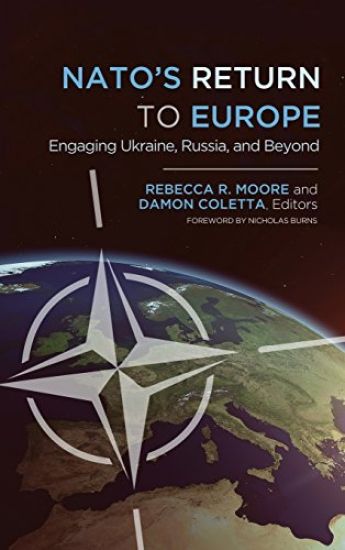
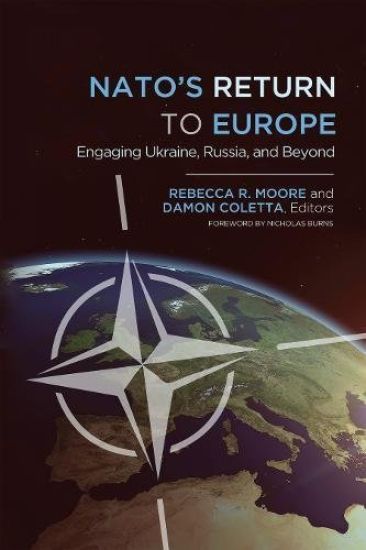
NATO's 2010 Strategic Concept officially broadened the alliance's mission beyond collective defense, reflecting a peaceful Europe and changes in alliance activities. NATO had become an international security facilitator, a crisis-manager even outside Europe, and a liberal democratic club as much as a mutual-defense organization. However, Russia's re-entry into great power politics has changed NATO's strategic calculus. Russia's aggressive annexation of Crimea in 2014 and its ongoing military support for Ukrainian separatists dramatically altered the strategic environment and called into question the liberal European security order. States bordering Russia, many of which are now NATO members, are worried, and the alliance is divided over assessments of Russia's behavior. Against the backdrop of Russia's new assertiveness, an international group of scholars examines a broad range of issues in the interest of not only explaining recent alliance developments but also making recommendations about critical choices confronting the NATO allies. While a renewed emphasis on collective defense is clearly a priority, this volume's contributors caution against an overcorrection, which would leave the alliance too inwardly focused, play into Russia's hand, and exacerbate regional fault lines always just below the surface at NATO. This volume places rapid-fire events in theoretical perspective and will be useful to foreign policy students, scholars, and practitioners alike.
NATO's 2010 Strategic Concept officially broadened the alliance's mission beyond collective defense, reflecting a peaceful Europe and changes in alliance activities. NATO had become an international security facilitator, a crisis-manager even outside Europe, and a liberal democratic club as much as a mutual-defense organization. However, Russia's re-entry into great power politics has changed NATO's strategic calculus. Russia's aggressive annexation of Crimea in 2014 and its ongoing military support for Ukrainian separatists dramatically altered the strategic environment and called into question the liberal European security order. States bordering Russia, many of which are now NATO members, are worried, and the alliance is divided over assessments of Russia's behavior. Against the backdrop of Russia's new assertiveness, an international group of scholars examines a broad range of issues in the interest of not only explaining recent alliance developments but also making recommendations about critical choices confronting the NATO allies. While a renewed emphasis on collective defense is clearly a priority, this volume's contributors caution against an overcorrection, which would leave the alliance too inwardly focused, play into Russia's hand, and exacerbate regional fault lines always just below the surface at NATO. This volume places rapid-fire events in theoretical perspective and will be useful to foreign policy students, scholars, and practitioners alike.
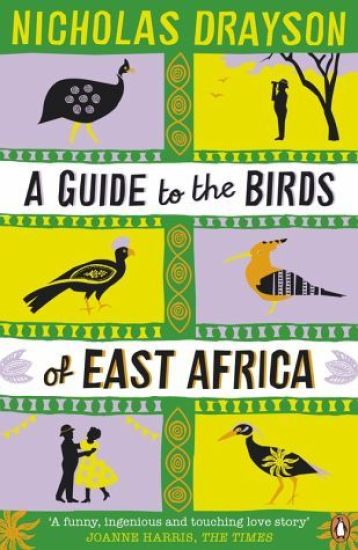
For lovers of Alexander McCall Smith, Nicholas Drayson introduces the charming Mr Malik and the East African Ornithological Society in A Guide to the Birds of East Africa.Reserved, honourable Mr Malik. You wouldn't notice him in a Nairobi street - except, perhaps, to comment on his carefully sculpted comb-over - but beneath his unprepossessing exterior lie a warm heart and a secret passion. Not even his closest friends know it, but Mr Malik is head-over-heels in love with the leader of the local Tuesday-morning bird walk, Rose Mbikwa.Little can he imagine the hurdles that lie before him. Even as he plucks up the courage to ask for Rose's hand, thieves, potential kidnappers and corrupt officials, not to mention one particularly determined love rival, seem destined to thwart Mr Malik's chances.Will an Indian gentleman in the heart of Africa be defeated by the many obstacles that stand between him and his heart's desire? Or will honour and decency prevail?'A funny, ingenious and touching love story' Joanne Harris, The Times'A delightful comedy... It invites comparison to The No.1 Ladies' Detective Agency books, but it's original and, if anything, has more depth' Daily Mail'Sweet, charming and utterly wonderful on the subject of birds' MetroNicholas Drayson was born in England and has lived in Australia since 1982, where he studied zoology and a PhD in 19th century Australian natural history writing. He has worked as a journalist in the UK, Kenya and Australia, writing for publications such as the Daily Telegraph and Australian Geographic. He is the author of three other novels, Confessing a Murder, Love and the Platypus and A Guide to the Beasts of East Africa.
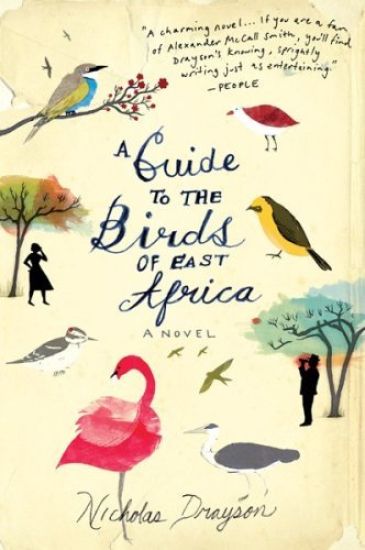
A beguiling novel that does for contemporary Kenya and its 1,000 species of birds what Alexander McCall Smith's Ladies Detective series does for Botswana For the past three years, the widower Mr. Malik has been secretly in love with Rose Mbikwa, a woman who leads the weekly bird walks sponsored by the East African Ornithological Society. Reserved and honorable, Malik wouldn't be noticed by a bystander in a Nairobi street--except perhaps to comment on his carefully sculpted combover. But beneath that unprepossessing exterior lies a warm heart and a secret passion. But just as Malik is getting up the nerve to invite Rose to the Nairobi Hunt Club Ball (the premier social occasion of the Kenyan calendar), who should pop up but his nemesis from his school days. The jokester Harry Khan, good-looking in a flashy way and quick of foot, has also become enraptured with the object of Malik's affection. So begins the competition cooked up by fellow members of the Asadi club: whoever can identify the most species of birds in one week's time gets the privilege of asking Ms. Mbikwa to the ball. Set against the lush Kenyan landscape rich with wildlife and political intrigue, this irresistible novel has been sold in eight countries and is winning fans worldwide.
The British Expeditionary Force sent to France in the late summer of 1914 has been referred to as the 'Best British Army Ever Sent to War' as it was one of the most highly trained and disciplined forces in the world. It was also the 'Best Birdwatching Army Ever Sent to War' for among its ranks were hundreds of both amateur and professional ornithologists. When not fighting, many soldiers turned to birdwatching as a way of whiling away the long hours spent on guard duty or watching over 'no man's land'. The list of birds seen by them serving in all the theatres of war was truly impressive, ranging from the common like sparrows, skylarks and swallows to the exotic like golden orioles, hoopoes and bee-eaters. It was not just at the battle front that birds found themselves in the firing line but also on the home front. For the Foreign Secretary, Edward Grey, who worked tirelessly to preserve peace but ended up convincing the House of Commons to go to war, birds were his hinterland. But as well as declaring war on Germany on 4 August 1914, the government also declared war on the humble house sparrow, farmers falsely accusing it of destroying Britain's dwindling wheat and oat supplies. From the outset the slaughter was opposed by the Royal Society for the Protection of Birds who eventually triumphed over the Board of Agriculture, becoming the powerful voice for conservation we know today. When the guns finally fell silent on 11 November 1918 and the Great War came to an ignoble end, a generation of birdwatchers lay dead. Among them were scientists, researchers, lords, librarians, artists, authors, professors, poets, lawyers, surgeons and explorers, many young men with great promise. Had they lived, the science of ornithology and the hobby of birdwatching would have undoubtedly been much the richer. In commemoration of their sacrifice a selection of them is included in the Ornithological Roll of Honour at the back of this book.
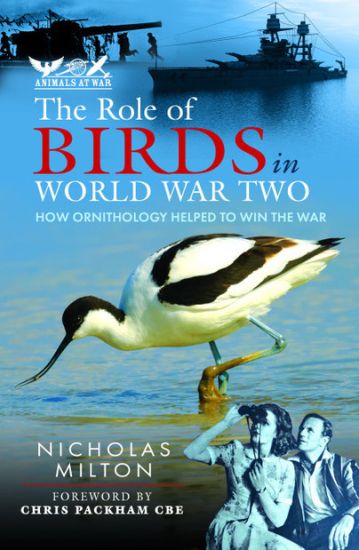
A love of birds has always been an important part of the British way of life but in wartime birds came into their own, helping to define our national identity. One the most popular bird books ever, Watching Birds, was published in 1940 while songs like There'll be Bluebirds over the White Cliffs of Dover epitomized the blitz spirit. Birds even featured in wartime propaganda movies like the 1941 classic The First of the Few starring Leslie Howard where they inspired the design of the Spitfire. Along the coast flooding to prevent a German invasion helped the avocet make a remarkable return while the black redstart found an unlikely home in our bombed-out buildings. As interesting as the birds were some of the people who watched them. Matthew Rankin and Eric Duffey counted seabirds while looking for U-boats. Tom Harrisson, the mastermind behind Mass Observation, watched people 'as if they were birds' while POW Guy Madoc wrote a truly unique book on Malayan birds, typed on paper stolen from the Japanese commandant's office. For Field Marshall Alan Brooke, Britain's top soldier, filming birds was his way of coping with the continual demands of Winston Churchill. In comparison Peter Scott was a wildfowler who was roused by Adolf Hitler before the war but after serving with distinction in the Royal Navy became one of the greatest naturalists of his generation. With a foreword by Chris Packham CBE The Role of Birds in World War Two is the story of how ornithology helped to win the war.
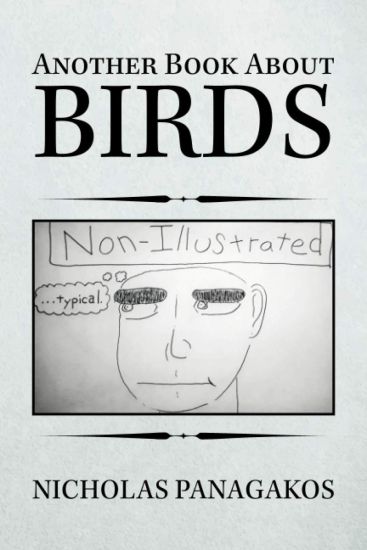
Another Book About Birds is about birds. Sometimes. Sometimes it isn't about birds. Not all the time, but frequently. What the Hell do I know, anyway. I wrote the damn thing and now they want me to write this thing. I'm not supposed to use "I" language because it makes it sound more official. Like some guy with a mustache and a fancy hat wrote this. Somebody that reads the New Yorker, or something. Somebody with stocks. Somebody who defends Ayn Rand. AYN RAND Well this ain't that, jack. Your guess is as good as mine. Sometimes it's fun, sometimes it's a bummer, but I like it. I think you will, too. If you don't, keep it round. Books make you look smart.