
Kirjahaku
Etsi kirjoja tekijän nimen, kirjan nimen tai ISBN:n perusteella.
1000 tulosta hakusanalla Nicholas P. Burgh

Rules for the Proportions of Modern Engines and Boilers for Land and Marine Purposes
Nicholas P. Burgh
Kessinger Pub
2007
pokkari

Rules for the Proportions of Modern Engines and Boilers for Land and Marine Purposes
Nicholas P. Burgh
Kessinger Pub
2007
sidottu

Burghersh revealed as conscientious diocesan; new light on his involvement in invasion of Isabella and Mortimer in 1326. Henry Burghersh, bishop of Lincoln from 1320 until 1340, has not been treated kindly by historians. The largely hostile view expressed by early fourteenth-century chroniclers gives us a portrait of a man promoted to the office ofbishop solely as a result of family influence and royal intervention, but who subsequently betrayed the monarch who had favoured him, lending support to the rebellion of Thomas of Lancaster in 1322 and plotting with Queen Isabellato overthrow her husband. This edition of Burghersh's episcopal register reveals a different character. The bishop emerges as a conscientious diocesan and an administrator of considerable ability, while the evidence of his itinerary throws new light on the question of his involvement in the invasion of Isabella and Mortimer in 1326. The volume includes the first part of Burghersh's institution register, comprising admissions of clergy to parochial benefices, appointments of heads of religious houses, and ordinations of vicarages and chantrys, in the archdeaconries of Lincoln, Stow and Leicester. Dr NICHOLAS BENNETT is Vice-Chancellor and Librarian of Lincoln Cathedral.

A Practical Treatise On the Condensation of Steam
Nicholas Procter Burgh
Hutson Street Press
2025
sidottu
A Practical Treatise On the Condensation of Steam
Nicholas Procter Burgh
Hutson Street Press
2025
pokkari

Modern Screw-Propellers Practically Considered (1869)
Nicholas Procter Burgh
KESSINGER PUBLISHING, LLC
2010
sidottu

The Slide Valve: Practically Considered (1865)
Nicholas Procter Burgh
KESSINGER PUBLISHING, LLC
2008
nidottu

A Practical Treatise on Boilers and Boiler-Making is an unchanged, high-quality reprint of the original edition of 1873. Hansebooks is editor of the literature on different topic areas such as research and science, travel and expeditions, cooking and nutrition, medicine, and other genres. As a publisher we focus on the preservation of historical literature. Many works of historical writers and scientists are available today as antiques only. Hansebooks newly publishes these books and contributes to the preservation of literature which has become rare and historical knowledge for the future.

A Voyage Round the World
George Forster; Nicholas Thomas; Oliver Berghof
University of Hawai'i Press
2000
sidottu
George Forster's A Voyage Round the World presents a wealth of geographic, scientific, and ethnographic knowledge uncovered by Cook's second journey of exploration in the Pacific (1772-1775). Accompanying his father, the ship's naturalist Johann Reinhold Forster, on the voyage, George proved a knowledgeable and adept observer. The lively, elegant prose and critical detail of his account, based loosely on his father's journal, make it one of the finest works of eighteenth-century travel literature and an account of prime importance in the history of European contact with Pacific peoples. The Forsters' publications reveal the sophistication and enthusiasm they brought to their observation of Polynesian peoples as well as a sensitivity to the moral ambiguities of contact.The two volumes of George Forster's work include substantially richer descriptions of encounters with island inhabitants than either his father's classic work (Observations Made during a Voyage round the World, UH Press, 1996) or Cook's official narrative, and its confident, even visionary, style incorporates a good deal of polemic, particularly in its criticism of the treatment of islanders by Cook's crew. In addition to the range and depth of its anthropological considerations, it provides a thrilling account of life aboard one of Cook's vessels.In its author's German translation, this work becomes a classic of natural history writing, but its original English version has long been neglected by anglophone scholars. This new scholarly edition makes this important book readily available for the first time since its initial publication more than two centuries ago. But it also presents the work in fresh terms, making it more accessible and relevant to a contemporary audience. The valuable introduction and annotations draw on the wide range of anthropological and ethnohistorical scholarship published since the 1960s and contextualize the book in relation to both the cultures of Oceania documented by the Forsters and the history of European voyaging in the Pacific. Appendixes include a translation of the introduction to the German edition and the polemical pamphlets by George Forster and the ship's astronomer William Wales, in which some of the book's more controversial claims were debated.A Voyage Round the World brings the disciplines of history and anthropology to bear on Cook's voyages in an illuminating and readable fashion. This edition will help complete the corpus of basic documents on Cook's voyages--a crucial resource for researchers in cultural, Pacific, and maritime history; archaeologists, anthropologists, and art historians; and most recently for scholars engaged in revisionist interpretations of eighteenth-century exploration and colonization.

The Request: A Fable by Nicholas Martinez
Nicholas P. Martinez
Createspace Independent Publishing Platform
2016
nidottu

Rise of Yeast: How the Sugar Fungus Shaped Civilization
Nicholas P. Money
Oxford Univ Pr
2018
sidottu
The great Victorian biologist Thomas Huxley once wrote, "I know of no familiar substance forming part of our every-day knowledge and experience, the examination of which, with a little care, tends to open up such very considerable issues as does yeast." Huxley was right. Beneath the very foundations of human civilization lies yeast--also known as the sugar fungus. Yeast is responsible for fermenting our alcohol and providing us with bread--the very staples of life. Moreover, it has proven instrumental in helping cell biologists and geneticists understand how living things work, manufacturing life-saving drugs, and producing biofuels that could help save the planet from global warming. In The Rise of Yeast, Nicholas P. Money--author of Mushroom and The Amoeba in the Room--argues that we cannot ascribe too much importance to yeast, and that its discovery and controlled use profoundly altered human history. Humans knew what yeast did long before they knew what it was. It was not until Louis Pasteur's experiments in the 1860s that scientists even acknowledged its classification as a fungus. A compelling blend of science, history, and sociology The Rise of Yeast explores the rich, strange, and utterly symbiotic relationship between people and yeast, a stunning and immensely readable account that takes us back to the roots of human history.
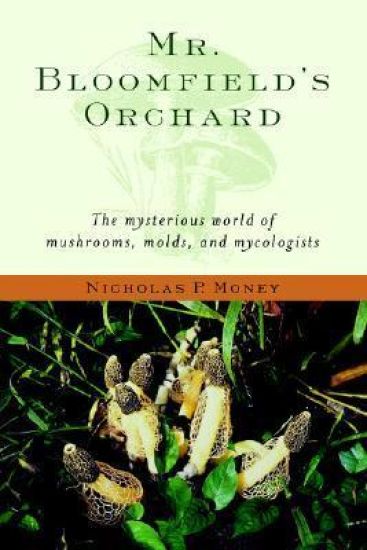
Stinkhorns, puffballs, the "corpse finder," deadly Galerina, Satan's bolete, birch conks, black mold, the old man of the woods--the world of fungi is infinitely varied and not a little weird. Now, in Mr. Bloomfield's Orchard, Nicholas Money introduces readers to a dazzling array of fungi, from brewer's yeast and Penicillium to the highly lethal death cap. We learn of Madurella, which can erode bones until they look moth-eaten; Cordyceps, which wracks insects with convulsions, kills them, then sends a stalk out of the insect's head to release more infectious spores; and Claviceps, the poisonous ergot fungus, which causes hallucinations. Money also showcases the lives of famed mycologists--including Reginald Buller who wore horse blinders as he walked to work, the better to study luminescent fungi in his dark lab, and Charles Tulasne, the Audubon of fungi, whose illustrations of specimens border on art. And he recounts his own childhood introduction to fungi in Mr. Bloomfield's orchard, where trees and fruit were devoured by a rogue's gallery of bitter rot, canker, rust, powdery mildew, rubbery wood, and scab. Replete with historical photographs and simple yet effective illustrations, told with a refreshing sense of humor,Mr. Bloomfield's Orchard will fascinate anyone interested in the natural world.
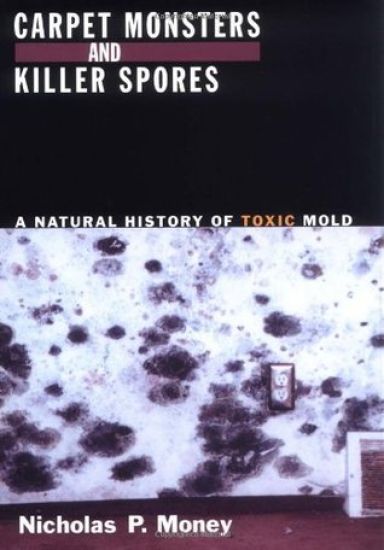
Molds are everywhere: we inhale their microscopic spores from birth to death. But when an investigation in Ohio revealed that babies suffering from a serious lung illness had been exposed to a toxic black mold in their homes, millions of Americans became nervous about patches of mold in their own basements and bathrooms. Before long, lawsuits were filed by the residents of mold-contaminated homes in every state. By failing to address water damage, building contractors, plumbers, and insurance agents were held liable for exposing families to an unprecedented microbiological hazard. The mold crisis soon developed into a fully-fledged media circus. In Carpet Monsters and Killer Spores, Nicholas Money explores the science behind the headlines and courtroom dramas, and profiles the toxin-producing mold that is a common inhabitant of water-damaged buildings. Nicholas Money tells the most important mycological story since potato blight, with his inimitable style of scientific clarity and dark humor.
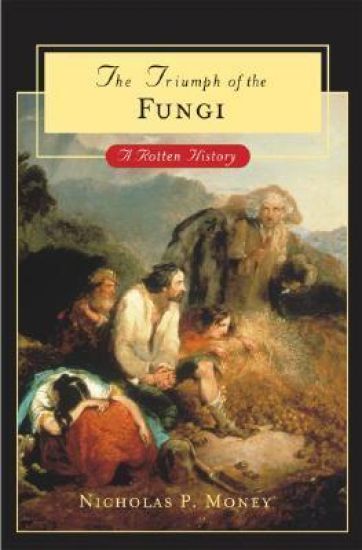
This book is concerned with the most devastating fungal diseases in history. These are the plagues of trees and crop plants, caused by invisible spores that have reshaped entire landscapes and decimated human populations. The Triumph of the Fungi focuses on the fascinating biology of the well- and lesser-known diseases, and also tells the stories of the scientists involved in their study, and of the people directly impacted by the loss of forest trees like the chestnut, and cash crops such as coffee and cacao. In a surprisingly brief time, human knowledge of the fungi that infect plants has evolved from Biblical superstition, to the recognition of the true nature of plant disease, and, more recently, to a sense of awe for the sophistication of these microbes. The crucial issue of human culpability in these fungal epidemics is addressed in the books closing chapter.

Christian evangelism was the ostensible motive for much of the early European interaction with the indigenous population of America. The religious orders of the Catholic Church were the front-line representatives of Western culture and the ones who met indigenous America face-to-face. They were also the primary agents of religious change. In this book, Nicholas Cushner provides the first comprehensive overview and analysis of the American missionary activities of the Jesuits. From the North American encounter with the Indians of Florida in 1565, through Mexico, New France, the Paraguay Reductions, Andean Perus, to contact with Native Americans in Maryland on the eve of the American Revolution, members of the order interacted with both native elites and colonizers. Drawing on the abundant documentation of and scholarship about these encounters, Cushner examines how the Jesuits behaved toward the indigenous population and analyzes the way in which native belief systems were replaced by Christianity. He seeks to understand how and why the initial European-Indian encounter changed not only the religion of the natives, but also their material culture, economic activity, social organization, and even their sexual behavior. Always sensitive to the influence of European "cultural filters" on Jesuit accounts, Cushner attempts as far as possible to discover the authentic voices of the Native Americans with whom they interacted. The result is a fascinating and highly accessible introduction to the earliest colonial encounters in the Americas.

From breakfast toast to evening wine, yeast is the microscopic thing that we cannot live without. We knew what yeast did as an invisible brewer and baker long before we had a clue about the existence of microorganisms. Ten thousand years ago, our ancestors abandoned bush meat and wild fruit in favor of farming animals and cultivating grain. Leaving the forests and grasslands, our desire for beer and wine produced by the fungus was a major stimulus for agricultural settlement. It takes a village to run a brewery or tend a vineyard. We domesticated wild yeast and yeast domesticated us. With the inevitable escape of the fungus from beer vats into bread dough, our marriage with yeast was secured by an appetite for fresh loaves of leavened bread. Over the millennia, we have adapted the technologies of brewing, winemaking, and baking and have come to rely on yeast more and more. Yeast produces corn ethanol and other biofuels and has become the genetically-modified darling of the pharmaceutical business as a source of human insulin and a range of life-saving medicines. These practical uses of yeast have been made possible by advances in our understanding of its biology, and the power of genetic engineering has been used to modify the fungus to do just about anything we wish. We know more about yeast than any other organism built from complex cells like our own. To understand yeast is to understand life. In this book Nicholas P. Money offers a celebration of our favorite microorganism.