Here is a paperback edition of the definitive account of the Valley of the Kings, visited by millions and famous throughout the world as the burial place of the great New Kingdom pharaohs. Reeves and Wilkinson, both world authorities on the valley, bring together the art, archaeology and history in an exciting narrative to create both an essential sourcebook and an entertaining guide for tourists, scholars, students and all armchair travellers.
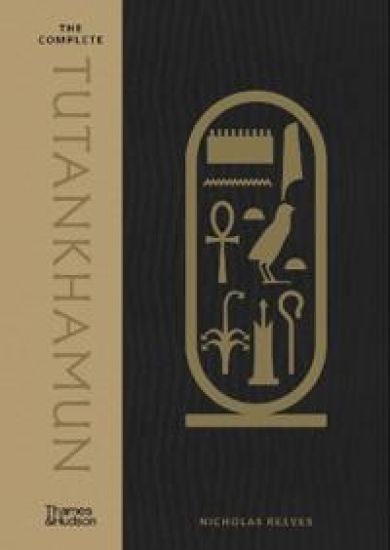
A fully updated and revised edition of a classic bestseller: the definitive guide to Tutankhamun and his tomb – what it contained, why, and what it means today. On 4 November 1922, Lord Carnarvon and Howard Carter’s long search in Egypt’s Valley of the Kings drew to a triumphant close: Tutankhamun’s tomb had been found. As news of the discovery spread, and as images of the breathtaking treasures began to circulate, this once-obscure pharaoh would capture the imagination of the entire world. A hundred years on, and both the fascination and the drama continue. Scientific research has pushed forward, and the results have been impressive: the tomb’s ground-plan and setting are now fully remapped; CT-scanning and aDNA have begun to shed their unique light on Tutankhamun in life and in death; super-accurate recordings have been secured of the Burial Chamber’s decorated walls; and we possess at last high-quality photography of Pharaoh’s possessions. Our access to Carnarvon and Carter’s extraordinary find is greater today than it has ever been, and from this fuller evidence comes one new realization among many – that both the tomb and its treasures had been intended for someone else. In this new edition of his landmark book Egyptologist Nicholas Reeves revisits Tutankhamun in the context of his time, the excavators in the context of theirs, and every aspect, old and new, of the tomb’s discovery, archaeology, architecture and art. If what was discovered in 1922 had the ability to amaze, then what has been discovered since will simply astonish.
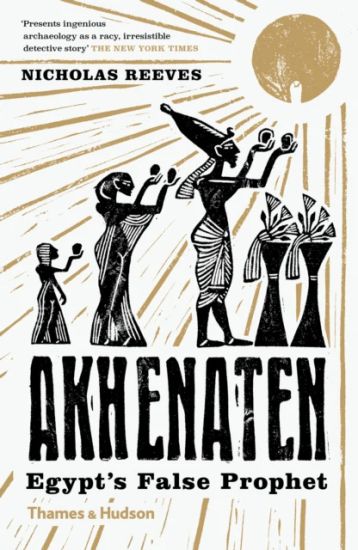
One of the most compelling and controversial figures in history, Akhenaten has captured the imagination like no other Egyptian pharaoh. Known today as a heretic, Akhenaten sought to impose upon Egypt and its people the worship of a single god – the sun – and in so doing changed the country in every way. In this immensely readable re-evaluation, Nicholas Reeves takes issue with the existing view of Akhenaten, presenting an entirely new perspective on the turbulent events of his seventeen-year reign. Reeves argues that, far from being the idealistic founder of a new faith, Akhenaten cynically used religion for purely political ends in a calculated attempt to reassert the authority of the king. Backed up by abundant archaeological and documentary evidence, Reeves’s closely written narrative also provides many new insights into questions that have baffled scholars for generations – the puzzle of the body in Tomb 55 in the Valley of the Kings; the fate of Nefertiti, Akhenaten’s beautiful wife, and the identity of the mysterious successor, Smenkhkare; and the theory that Tutankhamun, Akhenaten’s son and true heir, was murdered.
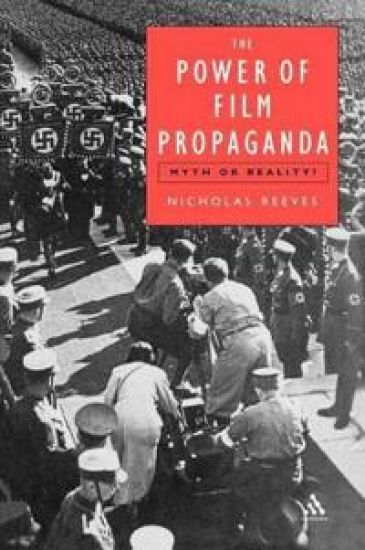
Explores five case studies in Britain, the USSR, Germany and Italy to determine whether or not propaganda films reached the audiences at which they were targeted, and where they did, whether the films made the impact on those audiences that the propagandists had expected.
Sir Philip Sidney’s comic technique, in particular the comic characters in the second version of his pastoral romance, is the subject of this ably written essay. Robert Nicholas Reeves begins with a re-examination of comic theory in Sidney’s Defense of Poesy, and proceeds to a reading of the humorous in the Arcadia as a happy kind of moral teaching. He discusses devices employed—irony, ridicule, deflation—and the relation of the low comic figures to the delightful elements of the main plot.
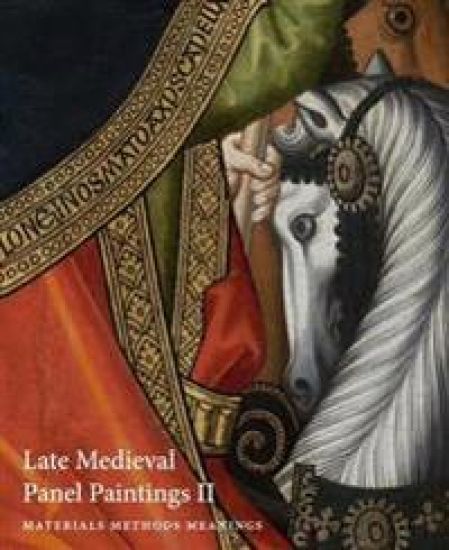
This beautiful and extensively illustrated catalogue presents in-depth case studies of twenty-four rare and remarkable Late Medieval panel paintings, many from the German-speaking regions of Europe, but also from Spain, France and the Southern Netherlands. These works – often fragments of larger altarpieces designed for liturgical performance and communal or private devotion – can be monumental and dramatic or small and intimate, but all on close examination prove to be rich in meaning – even in cases where the painters remain anonymous, and the precise contexts of their creation have become obscured or fragmented. The collected essays will encompass a broad spectrum of artistic styles, techniques, and interests, including in some instances the works’ original frames, and the attendant meanings they give to the imagery housed within. The group will also be augmented by a rare and important small-scale tapestry altarpiece with close links to panel painting. The inclusion of such a piece, one of the many newly resurfaced works to be included in the catalogue, will offer an innovative approach to the scholarship of Medieval paintings, and enrich our understanding of the cross-pollination of ideas between mediums and the role played by painters in tapestry production at the turn of the sixteenth century. The book, a follow-up to Susie Nash’s important 2011 catalogue, considers the physical history, original form, condition and technique of the assembled works, using wood analysis and dendrochronology, paint samples, infrared, x-rays and macro photography to document the materials and methods involved in their making and the alterations and transformations they have undergone with time. This new information is combined with close readings of their imagery and its presentation to explore issues of meaning, creative process, patronal intervention and artistic intention, leading in many cases to new reconstructions, attributions, dates and iconographic readings. The text is extensively illustrated with a series of images of all of the works, along with technical photographs and comparative material.
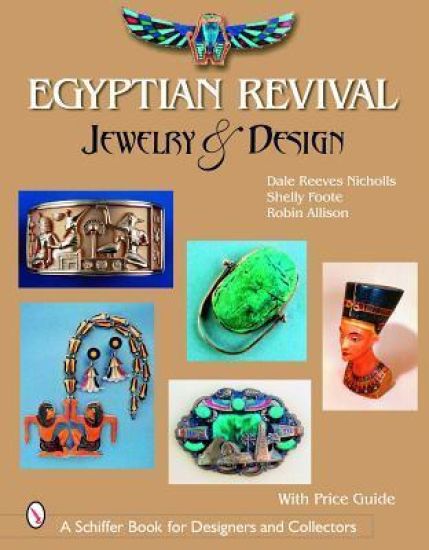
Jewelry and decorative manufactured goods in Egyptian Revival style capitalized on public fascination resulting from the rediscovery of Egyptian monuments and artifacts in the late 19th and early 20th centuries. Museum exhibitions, movies, and political events popularized Egyptian architectural designs throughout the world. This is the first book of its kind to focus on revival consumer goods inspired by the ancient culture, including jewelry. Over 400 color photographs and line drawings depict beautiful examples with symbols and images of Egyptian design. Bold colors of natural pigments created the pallets that modern manufacturers used. Images of sylized insects, hieroglyphics, sphinx, royal symbols, and geometric patterns are explored. The manufacturers are introduced with pertinent information that collectors will reference. A chronology of Egyptian history identifies the kingdoms and their relevant styles. This should be an important reference for designers, historians, and ornamental collectors alike. The values with the captions reflect the market today, and the glossary and index are useful for all.
College rule (also known as medium ruled paper) is the most common lined paper in use in the United States. It is generally used in middle school through to college and is also popular with adults. This is a good choice for teen or adult notebooks and composition books (known as exercise books outside the US).
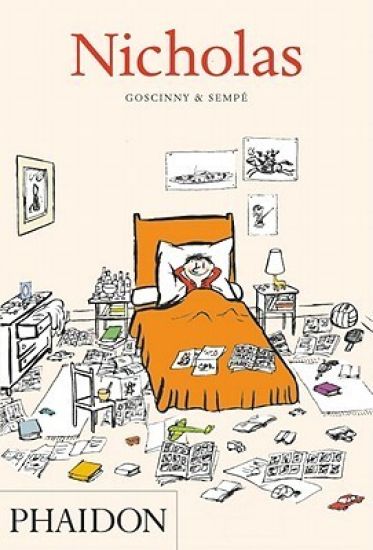
Nicholas is the first in a series of five books, that bring to life the day-to-day adventures of a young school boy - amusing, endearing and always in trouble. An only child, Nicholas appears older at school than he does at home; his touchingly naive reactions to different situations cut through the preconceptions of adults to result in a formidable sequence of escapades. This first book in the series contains a collection of 19 individual stories in which, despite trying to be good, Nicholas and his friends always seem to end up in some sort of mischief. In the school room, at home and in the playground, their exuberance often takes over and the results are calamitous - at least for their teachers and parents. Whether confusing the photographer hired to take the class picture, rescuing a 'stray' dog, or trying desperately to help the teacher when the school inspector pays a visit, Nicholas always manages to make matters worse. This hilarious and heart-warming book will ignite laughter in children and adults alike. These stories of Nicholas' cureless antics blend a wonderfully imaginative sense of humour with a refreshing take on life, to leave a lingering aftertaste of ageless romantic charm in any reader.
Set as a fairy-tale in a small friendly village, we follow the story of Sophie and her two younger sisters, a kind hearted boy called Nicholas, and his cruel father, the landlord. Written as a children's short story, or to be read to younger children, this tale explores some of the mythical origins of our favourite Christmas traditions. Why do we have trimmings? Where did the idea for Christmas stockings and chocolate coins come from? And of course - Who is Santa Claus? Well, dear reader ... one version of events is here, in this book.
Any female unmated and of age with any sense did her best toremain undesirable and inconspicuous, she kept her head low andher mouth shut. If you didn't attract attention, perhaps what mightbe your future mate wouldn't see you. Wouldn't notice you. Youmight survive another year.
Nicholas Craigdon always thought the reason he was continuously overlooked by his father was because he's the fourth-born son. Now he's discovered the truth. Henry Craigdon treated him so unfairly because Henry always believed Nicholas wasn't his. Now Henry has issued the final insult on his deathbed. He's given the family company Nicholas put his heart and soul into to someone else.Logan Craigdon has never had any interest in his uncle's company. He's as shocked as anyone when Henry leaves the company to him. Logan knows how much the company means to his cousin. He agrees to hand over the day-to-day running of Craigdon Enterprises to Nicholas.Grateful for the opportunity afforded by Logan, Nicholas is determined to put his own stamp on the company. Going through some of his father's papers, he's disturbed to discover his father had a practice of buying social housing apartments with a view to redeveloping them. Henry dealt with the existing tenants by raising the rents to levels they couldn't afford and would then forcibly evict them.Harper Wyburn grew up in one of the social housing apartments Henry Craigdon purchased. At the age of fourteen, she and her mother were evicted. They spent years living on the streets. Eventually her mother died. Harper blamed Henry for her death.Determined to get her revenge on the man who destroyed her life, Harper tracks down Henry Craigdon and demands retribution. Henry laughs in her face. Incensed, Harper vows to destroy him. When Henry dies unexpectedly, Harper's plan is momentarily sent awry. Then she comes up with a new plan. She'll destroy the company Henry Craigdon loved so much. The same company Nicholas has just taken over control.When Harper meets Nicholas, she's immediately attracted to his good-looking, quiet strength. But he's the son of Henry Craigdon. Nothing else matters. He must pay for his father's sins...The Craigdon Family Dynasty series follows the lives and loves of the Craigdon Family and the fallout they all experience when the patriarch of the family dies. Henry Craigdon was worth billions. He was also a man with many secrets. He's divided up his estate between his wife and six children, but not all of them have been treated fairly...Come on an adventure filled with drama and intrigue with USA Today bestselling author Chris Taylor and ride the highs and lows of a family in turmoil, the secrets, the deception, the lies...and the inevitable ties of love and loyalty that bind this family together, no matter what.
Heir to the Bellefonte earldom, Nicholas Haddonfield has made a promise to his dying father that he'll marry before the Season's over. When Nick meets Lady Leah Lindsey, he realizes he's found not only a damsel in need of rescuing, but also a perfect countess of convenience. Then he spoils everything by falling in love with his wife...the one woman he can never, ever have.