Kirjahaku
Etsi kirjoja tekijän nimen, kirjan nimen tai ISBN:n perusteella.
1000 tulosta hakusanalla Nick Chater
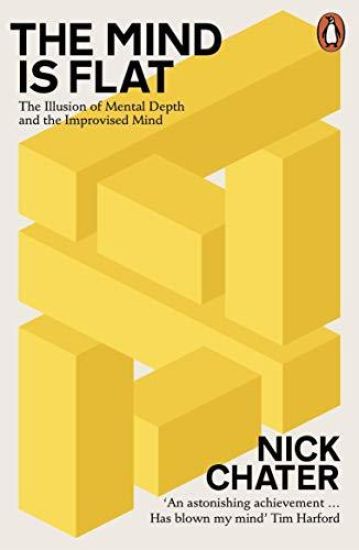
A radical reinterpretation of how your mind works - and why it could change your life 'An astonishing achievement. Nick Chater has blown my mind' Tim Harford'A total assault on all lingering psychiatric and psychoanalytic notions of mental depths ... Light the touchpaper and stand well back' New ScientistWe all like to think we have a hidden inner life. Most of us assume that our beliefs and desires arise from the murky depths of our minds, and, if only we could work out how to access this mysterious world, we could truly understand ourselves. For more than a century, psychologists and psychiatrists have struggled to discover what lies below our mental surface.In The Mind Is Flat, pre-eminent behavioural scientist Nick Chater reveals that this entire enterprise is utterly misguided. Drawing on startling new research in neuroscience, behavioural psychology and perception, he shows that we have no hidden depths to plumb, and unconscious thought is a myth. Instead, we generate our ideas, motives and thoughts in the moment. This revelation explains many of the quirks of human behaviour - for example why our supposedly firm political beliefs, personal preferences and even our romantic attractions are routinely proven to be inconsistent and changeable. As the reader discovers, through mind-bending visual examples and counterintuitive experiments, we are all characters of our own creation, constantly improvising our behaviour based on our past experiences. And, as Chater shows us, recognising this can be liberating.
Empiricism and Language Learnability
Nick Chater; Alexander Clark; John A. Goldsmith; Amy Perfors
Oxford University Press
2015
nidottu
This interdisciplinary new work explores one of the central theoretical problems in linguistics: learnability. The authors, from different backgrounds---linguistics, philosophy, computer science, psychology and cognitive science-explore the idea that language acquisition proceeds through general purpose learning mechanisms, an approach that is broadly empiricist both methodologically and psychologically. For many years, the empiricist approach has been taken to be unfeasible on practical and theoretical grounds. In the book, the authors present a variety of precisely specified mathematical and computational results that show that empiricist approaches can form a viable solution to the problem of language acquisition. It assumes limited technical background and explains the fundamental principles of probability, grammatical description and learning theory in an accessible and non-technical way. Different chapters address the problem of language acquisition using different assumptions: looking at the methodology of linguistic analysis using simplicity based criteria, using computational experiments on real corpora, using theoretical analysis using probabilistic learning theory, and looking at the computational problems involved in learning richly structured grammars. Written by four researchers in the full range of relevant fields: linguistics (John Goldsmith), psychology (Nick Chater), computer science (Alex Clark), and cognitive science (Amy Perfors), the book sheds light on the central problems of learnability and language, and traces their implications for key questions of theoretical linguistics and the study of language acquisition.
‘A stirring call to action’ – TIM HARFORD ‘A masterclass’ – DARON ACEMOGLU 'An excellent book' – NASSIM NICHOLAS TALEB Two decades ago, behavioral economics burst from academia to the halls of power, on both sides of the Atlantic, with the promise that correcting individual biases could help transform society. The hope was that governments could deploy a new approach to addressing society’s deepest challenges, from inadequate retirement planning to climate change—gently, but cleverly, nudging people to make choices for their own good and the good of the planet. It was all very convenient, and false. As behavioral scientists Nick Chater and George Loewenstein show in It’s On You, nudges rarely work, and divert us from policies that do. For example, being nudged to switch to green energy doesn’t cut carbon, and it distracts from the real challenge of building a low-carbon economy. It’s on You shows how the rich and powerful have repeatedly used a clever sleight of hand: blaming individuals for social problems, with behavioral economics an unwitting accomplice, while lobbying against the systemic changes that could actually help. As two original proponents of the nudge principle, Nick and George now argue that rather than trying to “fix” the victims of bad policies, real progress requires rewriting the social and economic rulebook for the common good.
It's on You: How Corporations and Behavioral Scientists Have Convinced Us That We're to Blame for Society's Deepest Problems
Nick Chater; George Loewenstein
Basic Venture
2026
sidottu
Two leading behavioral scientists argue we should reject "nudge" policies and stop blaming personal failure for society's failures Two decades ago, behavioral economics burst from academia to the halls of power, claiming that correcting individual irrationalities could transform society. The claim, championed by the Obama administration, was that almost any severe societal problem--from retirement planning to climate change--could be healed with the right behavioral bandage. All we had to do was nudge. It was all very convenient, and false. As behavioral scientists Nick Chater and George Loewenstein show in It's on You, nudge policies rarely work, and divert us from policies that do. For example, nudge-inspired "opt-out" 401(k) programs turn out not to boost saving, and distract from the real source of the retirement crisis: the systematic destruction of pensions. It's on You shows how across a wide range of issues--from pensions to obesity to climate change--the rich and powerful have pulled off a sleight of hand: blaming individuals for social problems while lobbying to shape the rules in their own favor, with behavioral economics an unwitting accomplice. If we want to solve those problems, we must rewrite the rules for the common good, rather than try to "fix" the victims of bad policies.
Are people rational? This question was central to Greek thought and has been at the heart of psychology and philosophy for millennia. This book provides a radical and controversial reappraisal of conventional wisdom in the psychology of reasoning, proposing that the Western conception of the mind as a logical system is flawed at the very outset. It argues that cognition should be understood in terms of probability theory, the calculus of uncertain reasoning, rather than in terms of logic, the calculus of certain reasoning.
Are people rational? This question was central to Greek thought; and has been at the heart of psychology and philosophy for millennia. This book provides a radical and controversial reappraisal of conventional wisdom in the psychology of reasoning, proposing that the Western conception of the mind as a logical system is flawed at the very outset. It argues that cognition should be understood in terms of probability theory, the calculus of uncertain reasoning, rather than in terms of logic, the calculus of certain reasoning.
The definitive introduction to Bayesian cognitive science, written by pioneers of the field. How does human intelligence work, in engineering terms? How do our minds get so much from so little? Bayesian models of cognition provide a powerful framework for answering these questions by reverse-engineering the mind. This textbook offers an authoritative introduction to Bayesian cognitive science and a unifying theoretical perspective on how the mind works. Part I provides an introduction to the key mathematical ideas and illustrations with examples from the psychological literature, including detailed derivations of specific models and references that can be used to learn more about the underlying principles. Part II details more advanced topics and their applications before engaging with critiques of the reverse-engineering approach. Written by experts at the forefront of new research, this comprehensive text brings the fields of cognitive science and artificial intelligence back together and establishes a firmly grounded mathematical and computational foundation for the understanding of human intelligence. The only textbook comprehensively introducing the Bayesian approach to cognitionWritten by pioneers in the fieldOffers cutting-edge coverage of Bayesian cognitive science's research frontiers Suitable for advanced undergraduate and graduate students and researchers across the sciences with an interest in the mind, brain, and intelligence Features short tutorials and case studies of specific Bayesian models
A work that reveals the profound links between the evolution, acquisition, and processing of language, and proposes a new integrative framework for the language sciences.Language is a hallmark of the human species; the flexibility and unbounded expressivity of our linguistic abilities is unique in the biological world. In this book, Morten Christiansen and Nick Chater argue that to understand this astonishing phenomenon, we must consider how language is created: moment by moment, in the generation and understanding of individual utterances; year by year, as new language learners acquire language skills; and generation by generation, as languages change, split, and fuse through the processes of cultural evolution. Christiansen and Chater propose a revolutionary new framework for understanding the evolution, acquisition, and processing of language, offering an integrated theory of how language creation is intertwined across these multiple timescales.Christiansen and Chater argue that mainstream generative approaches to language do not provide compelling accounts of language evolution, acquisition, and processing. Their own account draws on important developments from across the language sciences, including statistical natural language processing, learnability theory, computational modeling, and psycholinguistic experiments with children and adults. Christiansen and Chater also consider some of the major implications of their theoretical approach for our understanding of how language works, offering alternative accounts of specific aspects of language, including the structure of the vocabulary, the importance of experience in language processing, and the nature of recursive linguistic structure.
The Language Game: How Improvisation Created Language and Changed the World
Morten H. Christiansen; Nick Chater
BASIC BOOKS
2022
sidottu
Forget the language instinct--this is the story of how we make up language as we go Language is perhaps humanity's most astonishing capacity--and one that remains poorly understood. In The Language Game, cognitive scientists Morten H. Christiansen and Nick Chater show us where generations of scientists seeking the rules of language got it wrong. Language isn't about hardwired grammars but about near-total freedom, something like a game of charades, with the only requirement being a desire to understand and be understood. From this new vantage point, Christiansen and Chater find compelling solutions to major mysteries like the origins of languages and how language learning is possible, and to long-running debates such as whether having two words for "blue" changes what we see. In the end, they show that the only real constraint on communication is our imagination.
'Marvellously clear... playfully persuasive' Richard Dawkins'Full of Fascinating details. A delight to read.' Tim Harford'Highly original and convincing ... a delight to read!' - Daniel EverettWhat is language?Why do we have it?Why does that matter?Language is perhaps humanity's most astonishing accomplishment and one that remains poorly understood.Upending centuries of scholarship (including, most recently, Chomsky and Pinker) The Language Game shows how people learn to talk not by acquiring fixed meanings and rules, but by picking up, reusing, and recombining countless linguistic fragments in novel ways.Drawing on entertaining and persuasive examples from across the world the book explains:· How our short-lived memory copes with the on-rushing deluge of sound that is everyday speech.· Why it is that language is such a challenge for language scientists but learnt effortlessly by toddlers.· Why the languages of the world are so spectacularly varied---and why no two people speak quite the same language.· Why humans have language, but chimps don't.· How language gave us a big brain and changed the course of evolution.· How language doesn't limit, but does shape, how we think.·And ultimately, why all we know about language should give us hope.Christiansen and Chater's The Language Game draws on a fascinating range of examples to show the way language works, has shaped our evolution and is critical to our future.
Leading researchers across a range of disciplines provide a state-of-the-art view of imitation, integrating the latest findings and theories with reviews of seminal work, and revealing why imitation is a topic of such intense current scientific interest.
John Howard's victory over Paul Keating in 1996 was the start of a quiet revolution that changed Australia forever. His critics told us he was a white-picket-fence conservative, Little Johnnie, Lazarus with a triple bypass. Instead, Howard has driven a decade of reform, reinventing conservative politics and redefining the national debate. In this long-overdue assessment of the Howard years, some of The Australian's leading commentators chart the seismic shift in politics, society, workplaces, culture, the economy, trade and foreign affairs. They describe how Howard has redrawn the political map, turning the conservatives into reformers and forcing the progressives to defend the status quo.
The Liberal Party has dominated politics in Australia since its formation in 1944. The Road to Freedom tells the fascinating story of the Party's beginnings and how values fed the aspirations of a vibrant middle class to create one of the world's most free and prosperous nations.
The perfect coloring book for every child that loves caterpillars. 40 coloring pages filled with caterpillars.Art is like a rainbow, never-ending and brightly colored. Feed the creative mind of your child and have fun Each picture is printed on its own 8.5 x 11 inch page so no need to worry about smudging.
Cross a road, take a train, or get on an airplane and you put your life in the hands of a stranger -- every bit as screwed up, every bit as fallible and as human as you are. Then the person turns out not to be a stranger at all, and suddenly it's much worse.In America and Britain and the sky in between, an apparently disparate group of people is connected, whether intimately or by chance, to the tragic death of a stowaway on board flight AF266.As the action veers across countries and time zones, the stowaway's real identity is revealed through stolen black box recordings, answering machine messages, sitcom outtakes, and court transcripts. Told in a shifting, circular narrative, the interwoven lives make up a jolting and layered puzzle that builds to a heart-stopping, chilling climax.An intelligent and invigorating novel with a bizarre menu of dysfunctional characters, Blackbox is the story of an attempt to erase a life on tape.
Minecraft Stonesword Saga Chapter Book Boxed Set (Minecraft Stonesword Saga)
Nick Eliopulos
Random House Books for Young Readers
2024
sidottu
This chapter is open access under a CC BY license. It is from The Criminal Act: The Role and Influence of Routine Activity Theory, edited by Martin A. Andresen and Graham Farrell. The full volume provides a unique collection of essays in honour of the work of Marcus Felson and his notable contribution to routine activity theory, environmental criminology and the discipline more broadly. This work was published by Saint Philip Street Press pursuant to a Creative Commons license permitting commercial use. All rights not granted by the work's license are retained by the author or authors.
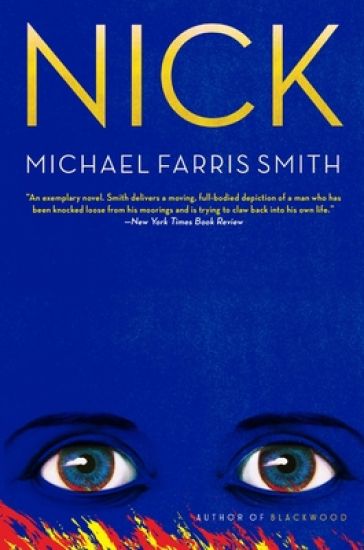
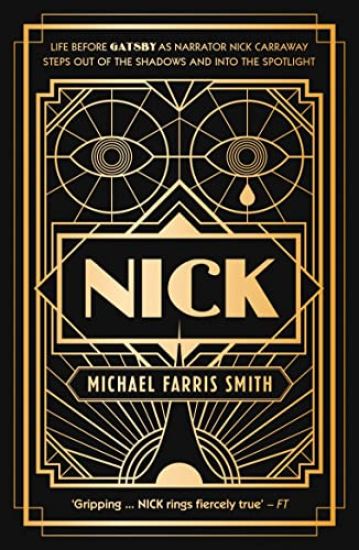
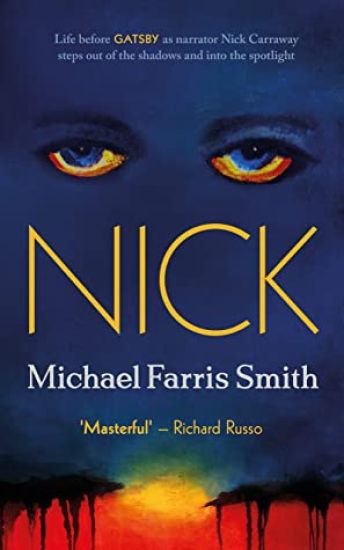
A critically acclaimed novelist pulls Nick Carraway out of the shadows and into the spotlight in this "masterful" look into his life before Gatsby (Richard Russo, Pulitzer Prize-winning author of Empire Falls and Chances Are).Before Nick Carraway moved to West Egg and into Gatsby's periphery, he was at the center of a very different story-one taking place along the trenches and deep within the tunnels of World War I. Floundering in the wake of the destruction he witnessed firsthand, Nick delays his return home, hoping to escape the questions he cannot answer about the horrors of war. Instead, he embarks on a transcontinental redemptive journey that takes him from a whirlwind Paris romance-doomed from the very beginning-to the dizzying frenzy of New Orleans, rife with its own flavor of debauchery and violence. An epic portrait of a truly singular era and a sweeping, romantic story of self-discovery, this rich and imaginative novel breathes new life into a character that many know but few have pondered deeply. Charged with enough alcohol, heartbreak, and profound yearning to paralyze even the heartiest of golden age scribes, Nick reveals the man behind the narrator who has captivated readers for decades.
Critically acclaimed novelist Michael Farris Smith pulls Nick Carraway out of the shadows and into the spotlight in this exhilarating imagination of his life before The Great Gatsby...