

Kirjahaku
Etsi kirjoja tekijän nimen, kirjan nimen tai ISBN:n perusteella.
1000 tulosta hakusanalla Nicolas Pitsos
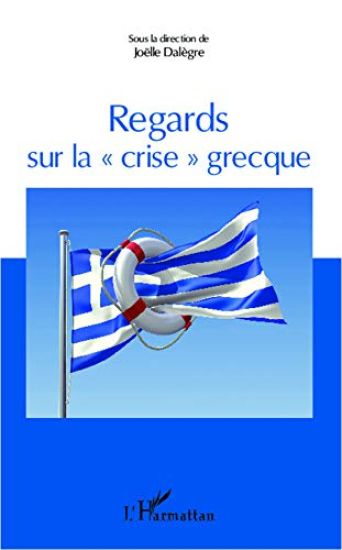
Regards sur la "crise" grecque
Nicolas Pitsos; Vincent Gouzi; Michel Calapodis
Editions L'Harmattan
2020
nidottu
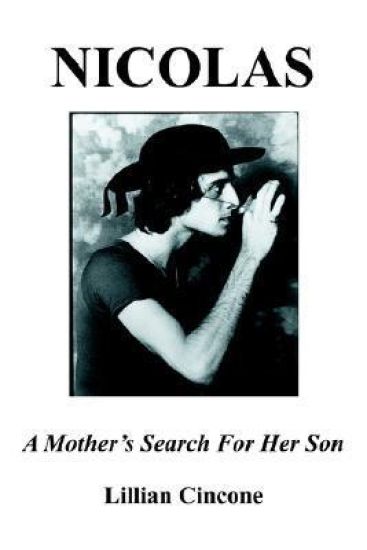
Brings to life the Sixties through the voices of teen-agers. They thought they could change the world by changing themselves, changing the way they lived. Were they successful? You be the judge. Accompany a mother on her search into her son's life, where she learns a great deal, and comes to understand that one can never know another completely.


Burdened with grief, confusion, and anger, Pascal Girard explores the childhood passing of his five-year-old brother. Girard delves into the emotional repercussions of this life-changing trauma, from his memories as a nine-year old struggling to understand up until present day, twenty-five years after the shattering loss. At the heart of Nicolas lies the question shared by most undergoing bereavement: why? This confusion multiplies for a young boy with few answers to his questions, lacking even a basic explanation of the cause of his brother's departure. As sorrow and guilt are muffled by time and the flurry of even the most typical childhood and adolescence, this is a story of grief not grieved, and a glimpse into the ongoing process of reckoning. Pascal struggles to reconcile the magnitude of this tragedy with the minutiae of his daily experience of loss. Nicolas is a delicate, minimalist portrait of the many faces of mourning, identified with surprising humor and pathos by an artist who knows them intimately. Originally published in a micro-run ten years ago, Girard creates new comics and an introduction that contemplate the larger effect of Nicolas's death on his current behaviors and habits. With masterful visual restraint, Girard pens a work of great honesty and integrity: Nicolas resonates long after the book is closed, the weight of the story echoing closely the heft of the personal loss.

Dialogue Entre Un Juge de Paix Récemment Nommé, Et Un Laboureur Appelé Nicolas, Électeur À Ussel
Nicolas
Hachette Livre - BNF
2018
pokkari


Composer and cultural official Nicolas Nabokov (1903-78) led an unusual life even for a composer who was also a high-level diplomat. Nabokov was for nearly three decades an outstanding and far-sighted player in international cultural exchanges during the Cold War, much admired by some of the most distinguished minds of his century for the range of his interests and the breadth of his vision. Nicolas Nabokov: A Life in Freedom and Music follows Nabokov's life through its fascinating details: a privileged Russian childhood before the Revolution; exile, first to Germany, then to France; the beginnings of a promising musical career, launched under the aegis of Diaghilev and his Ballets Russes with Ode in 1928; his twelve-year "American exile" during which he occupied several academic positions; his return to Europe after the war to participate in the denazification of Germany; his involvement in anti-Stalinist causes in the first years of the Cold War; his participation in the Congress for Cultural Freedom; his role as cultural adviser to the Mayor of Berlin and director of the Berlin Festival in the early 1960s; the resumption of his American academic and musical career in the late 1960s and 1970s. Nabokov is unique not only in that he was involved on a high level in international cultural politics, but also in that his life intersected at all times with a vast array of people within, and also well beyond, the confines of classical music. Drawing on a vast array of primary sources, Vincent Giroud's first-ever biography of Nabokov will be of interest readers interested in twentieth-century music, Russian music, Russian emigration, and the Cold War, particularly in its cultural aspects. Musicians and musicologists interested in Nabokov as a composer, or in twentieth century Russian composers in general, will find in the book information not available anywhere else.
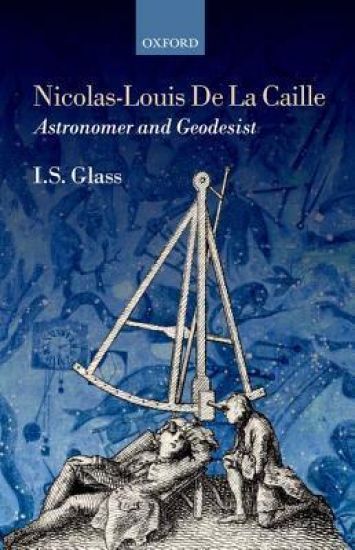
Nicolas-Louis De La Caille, Astronomer and Geodesist
Ian Stewart Glass
Oxford University Press
2012
sidottu
La Caille was one of the observational astronomers and geodesists who followed Newton in developing ideas about celestial mechanics and the shape of the earth. He provided data to the great 18th-century mathematicians involved in understanding the complex gravitational effects that the heavenly bodies have on one another. Observing from the Cape of Good Hope, he made the first ever telescopic sky survey and gave many of the southern constellations their present-day names. He measured the paths of the planets and determined their distances by trigonometry. In addition, he made a controversial measurement of the radius of the earth that seemed to prove it was pear-shaped. On a practical level, La Caille developed the method of `Lunars' for determining longitudes at sea. He mapped the Cape. As an influential teacher he propagated Newton's theory of universal gravitation at a time when it was only beginning to be accepted on the European continent. This book gives the most comprehensive overview so far available of La Caille's life and work, showing how he interacted with his often difficult colleagues. It places special emphasis on his life at, and his observations and comments on, the Cape of Good Hope, where he spent the years 1751-53.
Lettre de Nicolas de Bonneville, avocat au Parlement de Paris; a Mr. le Marquis de Condorcet.
Nicolas De Bonneville
Wentworth Press
2018
pokkari
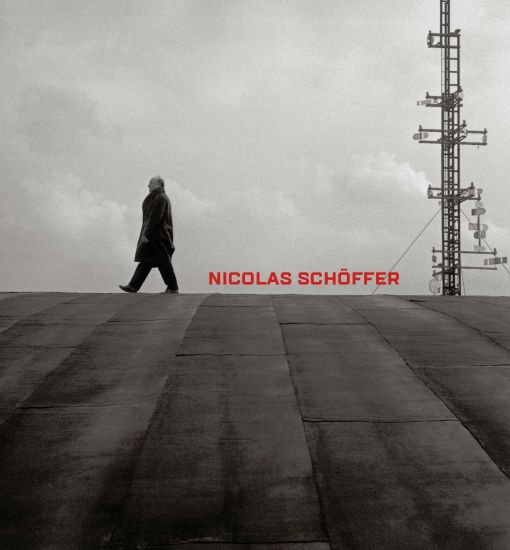
Nicolas Schöffer
Arnauld Pierre; Sébastien Delot; Pauline Mari; Dominique Trudel
Yale University Press
2018
sidottu
Hungarian-born French artist Nicolas Schöffer (1912–1992), though relatively unknown today, was during his lifetime a significant presence in the art world. His 1956 piece CYSP 1 is considered the first cybernetic sculpture, making use of motors, microphones, and photo-electric cells to create a work based on feedback loops and responsiveness to its environment. For Schöffer, cybernetics enabled a crucial artistic exploration of the boundary between the living and the technological. This important reevaluation of Schöffer’s work features sculptures, paintings, and drawings, including unpublished pieces from the artist’s studio and archive, as well as documentation of his interdisciplinary and experimental collaborations with architects, musicians, choreographers, scientists, and industrialists. Particular attention is paid to the innovative work he created between 1945 and 1975, which takes on particular resonance in our current, digitally saturated world. Distributed for MercatorfondsExhibition Schedule:Lille Métropole Museum of Modern, Contemporary and Outsider Art (02/23/18–05/20/18)

Nicolas Flamel
Routledge
2019
sidottu
Published in 1994: Nicolas Flamel: His Exposition of the Hieroglyphicall Figures is a narrative of the life of Nicolas Flamel.

Nicolas Flamel
Routledge
2020
nidottu
Published in 1994: Nicolas Flamel: His Exposition of the Hieroglyphicall Figures is a narrative of the life of Nicolas Flamel.
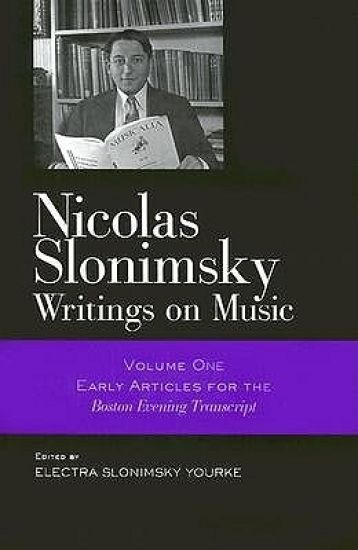
Nicolas Slonimsky (1894-1995) was an influential and celebrated writer on music. Born in St. Petersburg, Russia in 1894, in his 101 years he taught and coached music; conducted the premieres of several 20th century masterpieces; composed works for piano and voice; and oversaw the 5th-8th editions of the classic Baker's Biographical Dictionary of Musicians. Beginning in 1926, Slonimsky resided in the United States. From his arrival, he wrote provocative articles on contemporary music and musicians, many of whom were his personal friends. Working as a freelance author, he built a large file of reviews, articles, and even manuscripts for books that were never published. This is the first volume of a 4 volume collection on the best of this material.
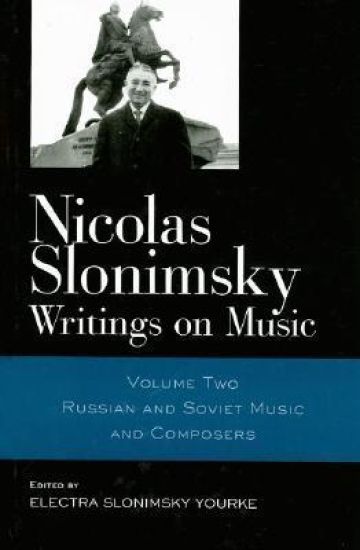
Nicolas Slonimsky (1894-1995) was an influential and celebrated writer on music. Born in St. Petersburg, Russia in 1894, in his 101 years he taught and coached music; conducted the premieres of several 20th century masterpieces; composed works for piano and voice; and oversaw the 5th-8th editions of the classic Baker's Biographical Dictionary of Musicians . Beginning in 1926, Slonimsky resided in the United States. From his arrival, he wrote provocative articles on contemporary music and musicians, many of whom were his personal friends. Working as a freelance author, he built a large file of reviews, articles, and even manuscripts for books that were never published. This is the second volume of a 4 volume collection on the best of this material.
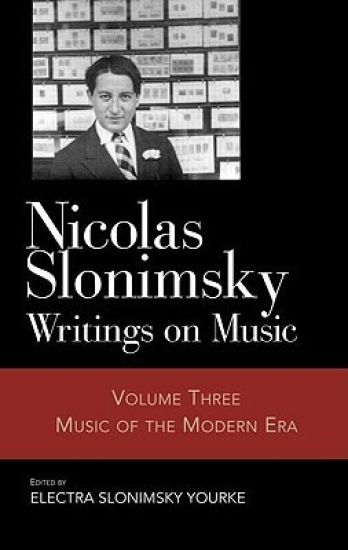
Nicolas Slonimsky (1894-1995) was an influential and celebrated writer on music. Born in St. Petersburg, Russia in 1894, in his 101 years he taught and coached music; conducted the premieres of several 20th century masterpieces; composed works for piano and voice; and oversaw the 5th-8th editions of the classic Baker'sBiographical Dictionary of Musicians. Beginning in 1926, Slonimsky resided in the United States. From his arrival, he wrote provocative articles on contemporary music and musicians, many of whom were his personal friends. Working as a freelance author, he built a large file of reviews, articles, and even manuscripts for books that were never published. This is the third volume of a 4 volume collection on the best of this material.