

Kirjahaku
Etsi kirjoja tekijän nimen, kirjan nimen tai ISBN:n perusteella.
1000 tulosta hakusanalla Nicole Egger

Bergli Book's Hoi Guides are the best-selling Swiss German guides of all time, now with over 50,000 copies in print. The original English-Swiss German survival guide has been completely updated for this tenth anniversary edition, which features a larger format and all new-cartoons. Now you too can enjoy speaking Swiss German. With this survival guide's over 200 cartoons and 2000 words and phrases, it's not just easy, it is downright fun.
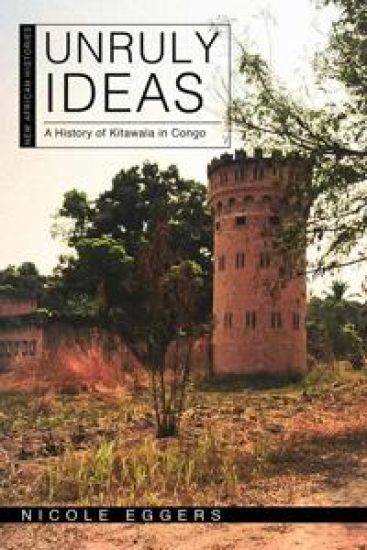
Unruly Ideas: A History of Kitawala in Congo recounts the multifaceted history of the Congolese religious movement Kitawala from its colonial beginnings in the 1920s through its continued practice in some of the most conflict-riven parts of the eastern Democratic Republic of Congo today. Drawing on a rich body of original oral, ethnographic, and archival research, Nicole Eggers uses Kitawala as a lens through which to address the complex relationship between politics, religion, healing, and violence in central African history. Kitawala, which has roots in the African Watchtower (Jehovah’s Witness) movement, has long been viewed both by scholars and by popular historians as a form of male-dominated, anticolonial insurgency. But just as Kitawalists were never exclusively male, their teachings and activities were never directed solely at the Belgian colonial state, and their yearnings for self-rule were never entirely about the secular realms of authority. A more comprehensive look at the oral and archival evidence reveals they were and are concerned with the morality of power more broadly: on state, communal, and individual levels. Moreover, Kitawalist doctrine is itself unruly, and its preachers, prophets, and practitioners have articulated innumerable interpretations-most quite different from Watchtower Christianity-across space and time. More than a case study of a particular religious movement, Unruly Ideas is a conceptual history of power that investigates how communities and individuals in the region have historically imagined power, sought to access it, wielded it, and policed the morality of its uses. By focusing on power and its intellectual and social history in Congo, Unruly Ideas creates an analytical space in which readers can understand the differing manifestations of Kitawala-from its overtly political and sometimes violent moments to those more aptly characterized as individual quests for spiritual and physical therapy-as varying themes in the same story: the pursuit of wellness in the context of malady. On a more practical level, the book raises important questions about the project of writing histories of places like eastern Congo: a region where the repercussions of decades of political neglect, upheaval, and violence force us to reconsider how we can think about and use oral and archival sources. Finally, the book investigates the embodied and gendered nature of field research and interrogates the intersubjective and reciprocal nature of knowledge production.

Unruly Ideas: A History of Kitawala in Congo recounts the multifaceted history of the Congolese religious movement Kitawala from its colonial beginnings in the 1920s through its continued practice in some of the most conflict-riven parts of the eastern Democratic Republic of Congo today. Drawing on a rich body of original oral, ethnographic, and archival research, Nicole Eggers uses Kitawala as a lens through which to address the complex relationship between politics, religion, healing, and violence in central African history. Kitawala, which has roots in the African Watchtower (Jehovah’s Witness) movement, has long been viewed both by scholars and by popular historians as a form of male-dominated, anticolonial insurgency. But just as Kitawalists were never exclusively male, their teachings and activities were never directed solely at the Belgian colonial state, and their yearnings for self-rule were never entirely about the secular realms of authority. A more comprehensive look at the oral and archival evidence reveals they were and are concerned with the morality of power more broadly: on state, communal, and individual levels. Moreover, Kitawalist doctrine is itself unruly, and its preachers, prophets, and practitioners have articulated innumerable interpretations-most quite different from Watchtower Christianity-across space and time. More than a case study of a particular religious movement, Unruly Ideas is a conceptual history of power that investigates how communities and individuals in the region have historically imagined power, sought to access it, wielded it, and policed the morality of its uses. By focusing on power and its intellectual and social history in Congo, Unruly Ideas creates an analytical space in which readers can understand the differing manifestations of Kitawala-from its overtly political and sometimes violent moments to those more aptly characterized as individual quests for spiritual and physical therapy-as varying themes in the same story: the pursuit of wellness in the context of malady. On a more practical level, the book raises important questions about the project of writing histories of places like eastern Congo: a region where the repercussions of decades of political neglect, upheaval, and violence force us to reconsider how we can think about and use oral and archival sources. Finally, the book investigates the embodied and gendered nature of field research and interrogates the intersubjective and reciprocal nature of knowledge production.

The Indispensable Illustrated Dictionary To Swiss German
Sergio J. Lievano; Nicole Egger
BERGLI BOOKS LTD
2022
sidottu




She thought she could fix it, but her parents still didn't love each other. She thought she could fix it, but her parents still didn't love each other.
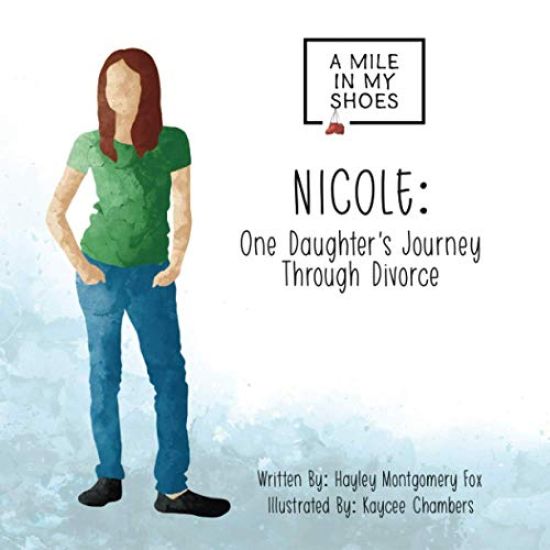
She thought she could fix it, but her parents still didn't love each other.

People need a place to record their thoughts and desires. They want to write down their plans and secrets too. This is where Nicole records hers.

Nicole knew one thing...This stifled, small-town existence was killing herWould the Big City help satisfy her dreams or put her on a trajectory towards disaster? When she becomes a victim of crime, she fears for her safety. But when an undeniable temptation lures her to an opportunity too good to miss, will she ignore all the warning signs? You'll love the Prequel of this Mystery Series because everyone adores an innocent young woman trying to find her way in a troublesome world.

Das Leben könnte so schön sein! Wären da nicht die Männer und die mit ihnen zwingend verknüpften Themen wie Schönheit, Eitelkeit, Diäten, Emotionen und und und&. Auch Nicole wird tagtäglich mit diesen Themen konfrontiert. Doch ist die Lage noch so misslich, Nicole lässt sich nichts anmerken, denn Nicole hat "ALLES IM GRIFF!" In Gestalt der Comic-Figur Nicole hat die Autorin in ihrem Erstlingswerk die alltäglichen Eindrücke, Erlebnisse und Emotionen zu Papier gebracht. Ob Nicole schlussendlich wirklich alles im Griff hat&? Lesen Sie selbst!

A lavish 18th century-set Erotic historicalIt's September 1792 and France is in the throes of violent revolution. Young actress Nicole Chabrier came to Paris four years earlier to seek fame and fortune with the Paris Opera but now her life is in danger from the hordes who are venting their anger on the decadent aristocracy. Rescued by a handsome stranger who has been badly wronged by the nobility, Nicole soon becomes ruled by her passion for this man. Together they seek a reversal of fortune using their charm, good looks and sexual magnetism.
This book is a critical summary and exegesis of the work of Nicole Rafter, who was a leading scholar of the history of biological theories of crime causation as well as a profound theorist of the role of history within criminology. It introduces Rafter’s key works and assesses her contributions to the fields of feminist criminology, cultural criminology, visual criminology and historical criminology. It also explores her theorization of criminology’s identity, scientific status, and possible futures. While many books on criminological theory explain and historically contextualize theory, they do not interrogate the production of theory or the epistemological assumptions behind it. Drawing on the world of Nicole Rafter, this book offers an accessible handbook to her extensive historical studies and to how her work demonstrated the importance of historical theory to criminological knowledge. Furthermore, the author brings Rafter’s historical research to life and shows how it speaks to contemporary issues in criminology and punishment.Written in a clear and direct style, this book will appeal to students and scholars of criminological theory, intellectual history, sociology, comparative criminology, and feminist criminology.
This book is a critical summary and exegesis of the work of Nicole Rafter, who was a leading scholar of the history of biological theories of crime causation as well as a profound theorist of the role of history within criminology. It introduces Rafter’s key works and assesses her contributions to the fields of feminist criminology, cultural criminology, visual criminology and historical criminology. It also explores her theorization of criminology’s identity, scientific status, and possible futures. While many books on criminological theory explain and historically contextualize theory, they do not interrogate the production of theory or the epistemological assumptions behind it. Drawing on the world of Nicole Rafter, this book offers an accessible handbook to her extensive historical studies and to how her work demonstrated the importance of historical theory to criminological knowledge. Furthermore, the author brings Rafter’s historical research to life and shows how it speaks to contemporary issues in criminology and punishment.Written in a clear and direct style, this book will appeal to students and scholars of criminological theory, intellectual history, sociology, comparative criminology, and feminist criminology.

'Pleasure,' Jennifer Moxley writes in her introduction to this volume, 'is the word that first comes to mind at the mention of Nicole Brossard's poetry.' This volume provides English-language readers with an overview of the life and work of Nicole Brossard, poet, novelist, and essayist, who is widely recognized in her native Quebec and throughout the French-speaking world as one of the greatest writers of her generation. Brossard's poetry is rooted in her investigations of language, her abiding commitment to a feminist consciousness, and her capacity for renewing meaning as a virtual space of desire. The reader enters a poetic world in which the aesthetic is joined with the political, and the meaning of both is enriched in the process. The selections in this volume include translations of some of Brossard's best-known works - "Lovhers", "Ultra Sounds", "Museum of Bone and Water", "Notebook of Roses and Civilization" - along with short prose works, an interview with Brossard, and a bibliography of works in French and English, and constitute the most substantial English-language sampling published to date of one of Canada's greatest living poets.
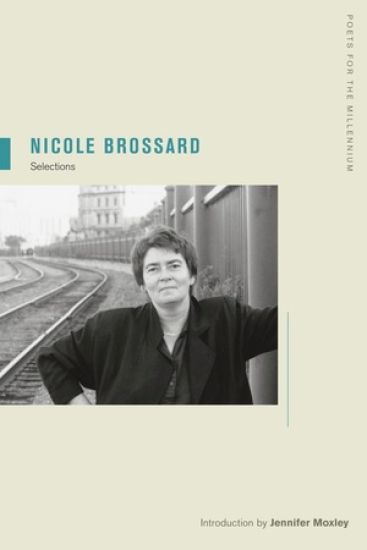
'Pleasure,' Jennifer Moxley writes in her introduction to this volume, 'is the word that first comes to mind at the mention of Nicole Brossard's poetry.' This volume provides English-language readers with an overview of the life and work of Nicole Brossard, poet, novelist, and essayist, who is widely recognized in her native Quebec and throughout the French-speaking world as one of the greatest writers of her generation. Brossard's poetry is rooted in her investigations of language, her abiding commitment to a feminist consciousness, and her capacity for renewing meaning as a virtual space of desire. The reader enters a poetic world in which the aesthetic is joined with the political, and the meaning of both is enriched in the process. The selections in this volume include translations of some of Brossard's best-known works - "Lovhers", "Ultra Sounds", 'Museum of Bone and Water", "Notebook of Roses and Civilization" - along with short prose works, an interview with Brossard, and a bibliography of works in French and English, and constitute the most substantial English-language sampling published to date of one of Canada's greatest living poets.

Nicole is smart successful married to a hot guy-and unapologetically fat. But her formerly fat now obsessively thin mom Helen fixates on Nicole's weight. When Nicole visits her hometown for her best friend's baby shower and reveals that she's also pregnant mom and daughter are forced to confront how Helen's difficulty accepting Nicole's body-and her own-has shaped their relationship. A deeply felt irreverent comedy about motherhood anti-fatness and the emotional legacy we pass on to our children.
