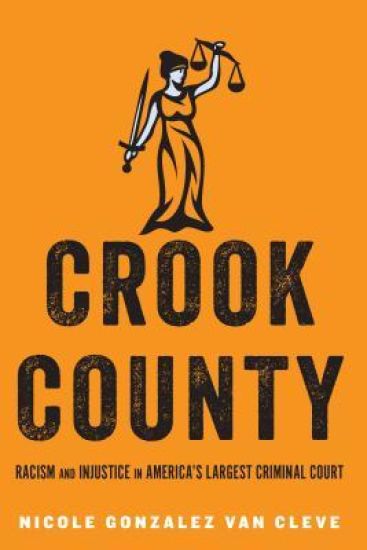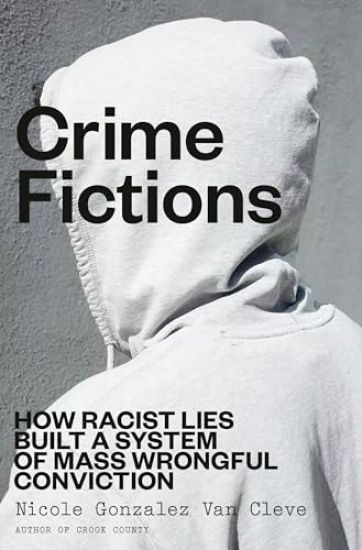
From award-winning sociologist Nicole Gonzalez Van Cleve comes the first account of mass wrongful conviction in America, indicting a system purposefully designed to ensnare Black youth in order to close cases Wrongful convictions have long been dismissed as rare exceptions to an otherwise well-oiled criminal justice machine. But, after years spent investigating the largest criminal courthouse in the nation, Chicago's Cook County, Dr. Nicole Gonzalez Van Cleve began to uncover a far more chilling truth. Wrongful convictions are not accidental, nor anomalous: There are at least hundreds of cases indicting innocent Black youth of crimes they didn't commit. Arresting and incarcerating kids is the point--the "evidence" is tailored to fit. In a suspenseful narrative account based on years of interviews, archival research, and the excavation of hidden documents, Gonzalez Van Cleve presents an ironclad "howdunit," illustrating the steps that our supposed system of justice takes to "find" criminals, coerce confessions, and bury evidence. A clear pattern emerges as Lee Hester, a disabled fourteen-year-old boy, is branded a "super predator" and convicted of killing his teacher. At just seven years old, Romarr Gipson is charged with a murder that is physically impossible for him to commit. Groups of boys like the Roscetti Four and Dixmoor Five are characterized as "wolf packs" in a pattern that connects them to the Central Park Five. These "crime fictions" are actively produced, perfected by police, enshrined in our legal records by the courts, and reinforced by the media. Placing the exonerated boys at the center of their own story, Crime Fictions is a devastating, systemic account that leaves us to wonder just how many innocent souls have been claimed by the racist lies police tell.
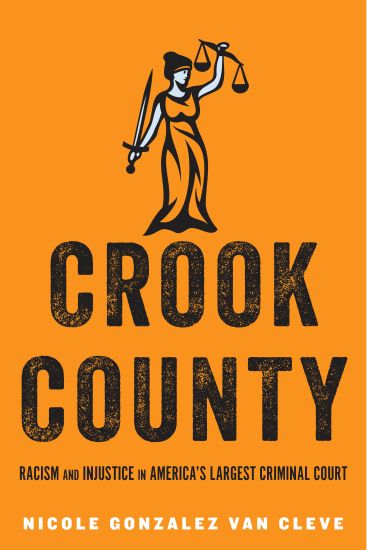
Winner of the 2017 Eduardo Bonilla-Silva Outstanding Book Award, sponsored by the Society for the Study of Social Problems. Finalist for the C. Wright Mills Book Award, sponsored by the Society for the Study of Social Problems. Winner of the 2017 Oliver Cromwell Cox Book Award, sponsored by the American Sociological Association's Section on Racial and Ethnic Minorities. Winner of the 2017 Mary Douglas Prize for Best Book, sponsored by the American Sociological Association's Sociology of Culture Section. Honorable Mention in the 2017 Book Award from the American Sociological Association's Section on Race, Class, and Gender. NAACP Image Award Nominee for an Outstanding Literary Work from a debut author. Winner of the 2017 Prose Award for Excellence in Social Sciences and the 2017 Prose Category Award for Law and Legal Studies, sponsored by the Professional and Scholarly Publishing Division, Association of American Publishers. Silver Medal from the Independent Publisher Book Awards (Current Events/Social Issues category). Americans are slowly waking up to the dire effects of racial profiling, police brutality, and mass incarceration, especially in disadvantaged neighborhoods and communities of color. The criminal courts are the crucial gateway between police action on the street and the processing of primarily black and Latino defendants into jails and prisons. And yet the courts, often portrayed as sacred, impartial institutions, have remained shrouded in secrecy, with the majority of Americans kept in the dark about how they function internally. Crook County bursts open the courthouse doors and enters the hallways, courtrooms, judges' chambers, and attorneys' offices to reveal a world of punishment determined by race, not offense. Nicole Gonzalez Van Cleve spent ten years working in and investigating the largest criminal courthouse in the country, Chicago–Cook County, and based on over 1,000 hours of observation, she takes readers inside our so-called halls of justice to witness the types of everyday racial abuses that fester within the courts, often in plain sight. We watch white courtroom professionals classify and deliberate on the fates of mostly black and Latino defendants while racial abuse and due process violations are encouraged and even seen as justified. Judges fall asleep on the bench. Prosecutors hang out like frat boys in the judges' chambers while the fates of defendants hang in the balance. Public defenders make choices about which defendants they will try to "save" and which they will sacrifice. Sheriff's officers cruelly mock and abuse defendants' family members. Delve deeper into Crook County with related media and instructor resources at www.sup.org/crookcountyresources. Crook County's powerful and at times devastating narratives reveal startling truths about a legal culture steeped in racial abuse. Defendants find themselves thrust into a pernicious legal world where courtroom actors live and breathe racism while simultaneously committing themselves to a colorblind ideal. Gonzalez Van Cleve urges all citizens to take a closer look at the way we do justice in America and to hold our arbiters of justice accountable to the highest standards of equality.
What if someone told you that you had the power to change your life? Grasping your emotions, understanding your health and body, building deeper connections with others, overcoming anxiety, and discovering your self-confidence... it's all attainable. You just need some guidance to get there.In The Book Every Teen Should Read, Nicole Gonzalez introduces you to the power of personal development along with dozens of strategies on how to grow into your best self. Being a teen can be a really challenging time without the tools to enhance your quality of life. Nicole knows this all too well, which is why she wrote down all the tips and tricks you need to get through your teenage years with ease.In this groundbreaking workbook, Nicole entertainingly discusses the things that aren't taught in school: how to maintain your physical and emotional health; exploring your identity; manifesting the life you desire; embracing change; and discovering how amazing you truly are. You are destined for more, my friend. It's time you believe it yourself The Book Every Teen Should Read is an indispensable book--a must read now
"Fen siempre se ha dedicado a expresar todo lo que ve y siente. Su poes a requiere de una autenticidad que muchos sabemos y valoramos. La idiotez humana siempre le ha llamado la atenci n por lo tanto toma cada gesto y cada rol social que se vive ac ." -Alejandro Avil s "La cr tica social, normalmente se refleja en situaciones espec ficas. No pasa en este poemario. Aqu se podr a decir mucho bla bla bla, acerca de lo jodido que esta Puerto Rico y como me siento al respecto, pero una de las cosas que m s me lleno cuando le esta poes a es que this guy menciona hasta los detalles m s "insignificantes" (para algunos, claro est ) y te da por donde m s duele." -Nicole Gonz lez D az
Co-quí, co-quí! The coquí frogs sing to Elena from her family’s beloved mango tree - their calls so familiar that they might as well be singing, “You are home, you are safe.” But home is suddenly not safe when a hurricane threatens to destroy everything that Elena knows. As time passes, Elena, alongside her community, begins to rebuild her home, planting seeds of hope along the way. When the sounds of the coquíes gradually return, they reflect the resilience and strength of Elena, her family, and her fellow Puerto Ricans.
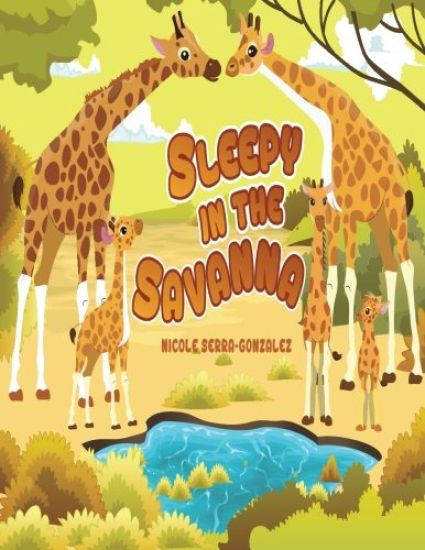
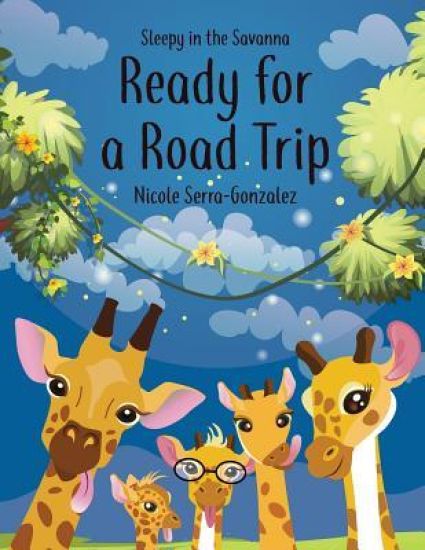
What happens when the giraffes go on a road trip? Join them in this hysterical adventure as they journey from the savanna to a magical forest. Find out who joins their adorable family in, Sleepy in the Savanna's Ready for a Road Trip.
el resultado de la investigaci n realizada, mediante la utilizaci n de diferentes m todos de investigaci n, sobre la vinculaci n de la ense anza-aprendizaje de la Historia de Angola con la historia local. Se exponen los fundamentos te rico-metodol gicos que conjuntamente con los resultados de las indagaciones emp ricas realizadas, posibilitaron la elaboraci n e implementaci n de una concepci n did ctica para el proceso de ense anza-aprendizaje de la asignatura. La concepci n did ctica se caracteriza por establecer el v nculo entre la Historia de Angola y la historia local y su interdisciplinariedad con la Antropolog a, lo que contribuye al proceso de ense anza-aprendizaje en el Instituto Superior de Servicio Social. La concepci n did ctica se someti a criterio de especialistas y se llev a la pr ctica mediante un pre-experimento con resultados positivos en su aplicaci n.