Kirjojen hintavertailu. Mukana 12 390 323 kirjaa ja 12 kauppaa.

Kirjahaku

Etsi kirjoja tekijän nimen, kirjan nimen tai ISBN:n perusteella.

1000 tulosta hakusanalla Nicole Tonkovich

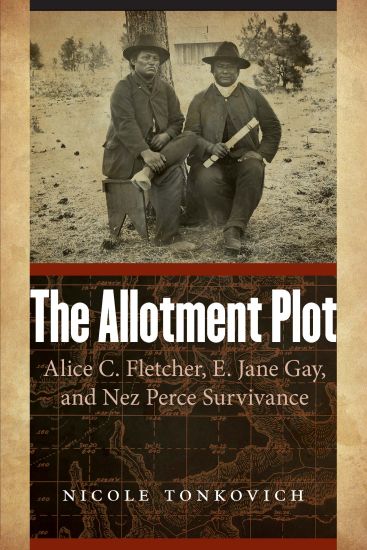
The Allotment Plot

The Allotment Plot

Nicole Tonkovich

University of Nebraska Press
2012
sidottu
Named the 2013 Caroline Bancroft History Prize Honor Book by the Denver Public LibraryThe Allotment Plot reexamines the history of allotment on the Nez Perce Reservation from 1889 to 1892 to account for and emphasize the Nez Perce side of the story. By including Nez Perce responses to allotment, Nicole Tonkovich argues that the assimilationist aims of allotment ultimately failed due in large part to the agency of the Nez Perce people themselves throughout the allotment process. The Nez Perce were actively involved in negotiating the terms under which allotment would proceed and were simultaneously engaged in ongoing efforts to protect their stories and other cultural properties from institutional appropriation by the allotment agent, Alice C. Fletcher, a respected anthropologist, and her photographer and assistant, E. Jane Gay. The Nez Perce engagement in this process laid a foundation for the long-term survival of the tribe and its culture. Making use of previously unexamined archival sources, Fletcher’s letters, Gay’s photographs and journalistic accounts, oral tribal histories, and analyses of performances such as parades and verbal negotiations, Tonkovich assembles a masterful portrait of Nez Perce efforts to control their own future and provides a vital counternarrative of the allotment period, which is often portrayed as disastrous to Native polities.
Dividing the Reservation

Dividing the Reservation

Nicole Tonkovich

Washington State University Press
2016
pokkari
Alice Cunningham Fletcher was both formidable and remarkable. A pioneering ethnologist who penetrated occupations dominated by men, she was the first woman to hold an endowed chair at Harvard's Peabody Museum of American Archaeology and Ethnology--during a time the institution did not admit female students. She helped write the Dawes General Allotment Act of 1887 that reshaped American Indian policy, and became one of the first women to serve as a federal Indian agent, working with the Omahas, the Winnebagos, and finally the Nez Perces.Charged with supervising the daunting task of resurveying, verifying, and assigning nearly 757,000 acres of the Nez Perce Reservation, Fletcher also had to preserve land for transportation routes and restrain white farmers and stockmen who were claiming prime properties. She sought to "give the best lands to the best Indians," but was challenged by the Idaho terrain, the complex ancestries of the Nez Perces, and her own misperceptions about Native life. A commanding presence, Fletcher worked from a specialized tent that served as home and office, traveling with copies of laws, rolls of maps, and blank plats. She spent four summers on the project, completing close to 2,000 allotments.This book is a collection of letters and diaries Fletcher wrote during this work. Her writing illuminates her relations with the key players in the allotment, as well as her internal conflicts over dividing the reservation. Taken together, these documents offer insight into how federal policy was applied, resisted, and amended in this early application of the Dawes General Allotment Act.
The Allotment Plot

The Allotment Plot

Nicole Tonkovich

University of Nebraska Press
2022
pokkari
Named the 2013 Caroline Bancroft History Prize Honor Book by the Denver Public LibraryThe Allotment Plot reexamines the history of allotment on the Nez Perce Reservation from 1889 to 1892 to account for and emphasize the Nez Perce side of the story. By including Nez Perce responses to allotment, Nicole Tonkovich argues that the assimilationist aims of allotment ultimately failed due in large part to the agency of the Nez Perce people themselves throughout the allotment process. The Nez Perce were actively involved in negotiating the terms under which allotment would proceed and were simultaneously engaged in ongoing efforts to protect their stories and other cultural properties from institutional appropriation by the allotment agent, Alice C. Fletcher, a respected anthropologist, and her photographer and assistant, E. Jane Gay. The Nez Perce engagement in this process laid a foundation for the long-term survival of the tribe and its culture. Making use of previously unexamined archival sources, Fletcher’s letters, Gay’s photographs and journalistic accounts, oral tribal histories, and analyses of performances such as parades and verbal negotiations, Tonkovich assembles a masterful portrait of Nez Perce efforts to control their own future and provides a vital counternarrative of the allotment period, which is often portrayed as disastrous to Native polities.
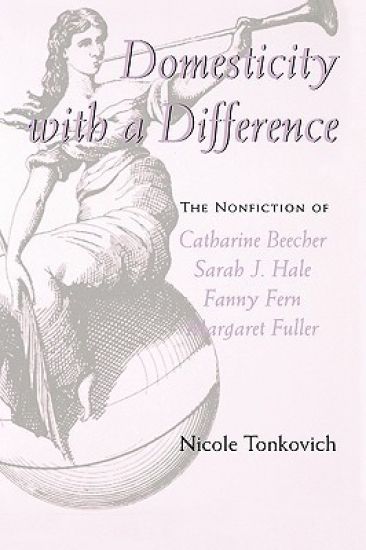
Domesticity with a Difference

Domesticity with a Difference

Nicole Tonkovich

University Press of Mississippi
2010
nidottu
This study of nonfiction written by four of nineteenth-century Ameri-ca's first professional women writers investigates the paradoxes posed by the conflict of their texts with their lives. They were not homemakers, yet in their works they prescribed ideal domesticity for the women of their day. They were not professional educators, yet they wrote authoritatively about educational theory and practice. They were not involved with organized political agitation for women's rights, yet their writings advanced thoughtful, radical revisions to existing social and political structures, particularly the heterosexual family. Comparable home, school, and community backgrounds prepared Catharine Beecher, Sarah Josepha Hale, Fanny Fern, and Margaret Fuller to write for the public. Their nonfiction texts expose the contradictions be-tween what they prescribed for other women and how they themselves chose to live outside the traditional domestic world. Class, race, age, and geography determined the focus of nineteenth-century women's writing, and as Hale, Beecher, Fern, and Fuller promoted and critiqued one another, they profited reciprocally from the others' work, teachings, and examples. As this study shows, by attending to details of womanly behavior such as language, dress, and manners, their writings contributed to altering women's traditional roles in home, school, and community. No previous study has grouped Hale, Beecher, Fern, and Fuller together because each promoted differing political goals. While respecting these differences, this focus on their nonfiction reveals their strong professional links and demonstrates the similar effects of their writings, which prescribed domesticity for the lives of other women while justifying their own professionalism. Nicole Tonkovich is an assistant professor of literature at University of California, San Diego.
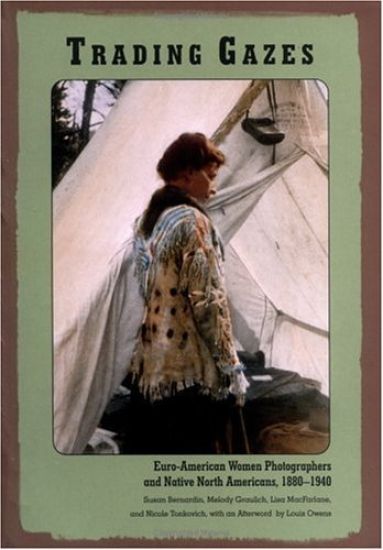
Trading Gazes

Trading Gazes

Susan Bernardin; Melody Graulich; Lisa MacFarlane; Nicole Tonkovich

Rutgers University Press
2003
nidottu
The story of westering Americans in the late nineteenth and early twentieth centuries has been told most notably through photographs of American Indians. Unlike this vast archive, produced primarily by male photographers, which depicted American Indians as either vanishing or domesticated, the lesser-known images by the women featured in Trading Gazes provide new ways of seeing the intersecting histories of colonial expansion and indigenous resistance. Four unconventional women-Jane Gay, who documented land allotment to the Nez Perces; Kate Cory, an artist who lived for years in a Hopi community; Grace Nicholson, who purchased cultural items from the Karuk and other northern California tribes; and Mary Schaffer, who traveled among the Stoney and Métis of Alberta, Canada-used cameras to document their cross-cultural encounters.Trading Gazes reconstructs the rich biographical and historical contexts explaining these women's presence in different Native communities of the North American West. Their photographs not only record the unprecedented opportunities available for Euro-American women eager to shed gender restrictions, but also reveal how women's newfound mobility depended on the increasing restrictions placed on Native Americans in this era. By tracing the complex, often unexpected relationships forged between these women, their cameras, and the Native subjects of their photographs, Trading Gazes offers a new focus for recovering women's histories in the West while bringing attention to the complicated legacies of these images for Native and non-Native viewers.
Nicole

Nicole

Hayley Fox

Gatekeeper Press
2020
sidottu
She thought she could fix it, but her parents still didn't love each other. She thought she could fix it, but her parents still didn't love each other.
Nicole

Nicole

Bif Ramone

Independently Published
2019
nidottu
People need a place to record their thoughts and desires. They want to write down their plans and secrets too. This is where Nicole records hers.
Nicole

Nicole

Maren Hill

Canada
2022
pokkari
Nicole knew one thing...This stifled, small-town existence was killing herWould the Big City help satisfy her dreams or put her on a trajectory towards disaster? When she becomes a victim of crime, she fears for her safety. But when an undeniable temptation lures her to an opportunity too good to miss, will she ignore all the warning signs? You'll love the Prequel of this Mystery Series because everyone adores an innocent young woman trying to find her way in a troublesome world.
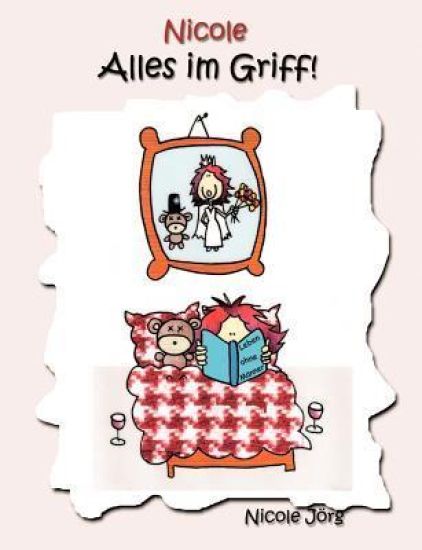
Nicole

Nicole

Nicole Jörg

Books on Demand
2005
pokkari
Das Leben könnte so schön sein! Wären da nicht die Männer und die mit ihnen zwingend verknüpften Themen wie Schönheit, Eitelkeit, Diäten, Emotionen und und und&. Auch Nicole wird tagtäglich mit diesen Themen konfrontiert. Doch ist die Lage noch so misslich, Nicole lässt sich nichts anmerken, denn Nicole hat "ALLES IM GRIFF!" In Gestalt der Comic-Figur Nicole hat die Autorin in ihrem Erstlingswerk die alltäglichen Eindrücke, Erlebnisse und Emotionen zu Papier gebracht. Ob Nicole schlussendlich wirklich alles im Griff hat&? Lesen Sie selbst!
Nicole's Revenge

Nicole's Revenge

Lisette Allen

Black Lace
2005
pokkari
A lavish 18th century-set Erotic historicalIt's September 1792 and France is in the throes of violent revolution. Young actress Nicole Chabrier came to Paris four years earlier to seek fame and fortune with the Paris Opera but now her life is in danger from the hordes who are venting their anger on the decadent aristocracy. Rescued by a handsome stranger who has been badly wronged by the nobility, Nicole soon becomes ruled by her passion for this man. Together they seek a reversal of fortune using their charm, good looks and sexual magnetism.
Nicole Rafter

Nicole Rafter

Chase Burton

Routledge
2021
sidottu
This book is a critical summary and exegesis of the work of Nicole Rafter, who was a leading scholar of the history of biological theories of crime causation as well as a profound theorist of the role of history within criminology. It introduces Rafter’s key works and assesses her contributions to the fields of feminist criminology, cultural criminology, visual criminology and historical criminology. It also explores her theorization of criminology’s identity, scientific status, and possible futures. While many books on criminological theory explain and historically contextualize theory, they do not interrogate the production of theory or the epistemological assumptions behind it. Drawing on the world of Nicole Rafter, this book offers an accessible handbook to her extensive historical studies and to how her work demonstrated the importance of historical theory to criminological knowledge. Furthermore, the author brings Rafter’s historical research to life and shows how it speaks to contemporary issues in criminology and punishment.Written in a clear and direct style, this book will appeal to students and scholars of criminological theory, intellectual history, sociology, comparative criminology, and feminist criminology.
Nicole Rafter

Nicole Rafter

Chase Burton

TAYLOR FRANCIS LTD
2023
nidottu
This book is a critical summary and exegesis of the work of Nicole Rafter, who was a leading scholar of the history of biological theories of crime causation as well as a profound theorist of the role of history within criminology. It introduces Rafter’s key works and assesses her contributions to the fields of feminist criminology, cultural criminology, visual criminology and historical criminology. It also explores her theorization of criminology’s identity, scientific status, and possible futures. While many books on criminological theory explain and historically contextualize theory, they do not interrogate the production of theory or the epistemological assumptions behind it. Drawing on the world of Nicole Rafter, this book offers an accessible handbook to her extensive historical studies and to how her work demonstrated the importance of historical theory to criminological knowledge. Furthermore, the author brings Rafter’s historical research to life and shows how it speaks to contemporary issues in criminology and punishment.Written in a clear and direct style, this book will appeal to students and scholars of criminological theory, intellectual history, sociology, comparative criminology, and feminist criminology.
Nicole Brossard

Nicole Brossard

Nicole Brossard

University of California Press
2010
sidottu
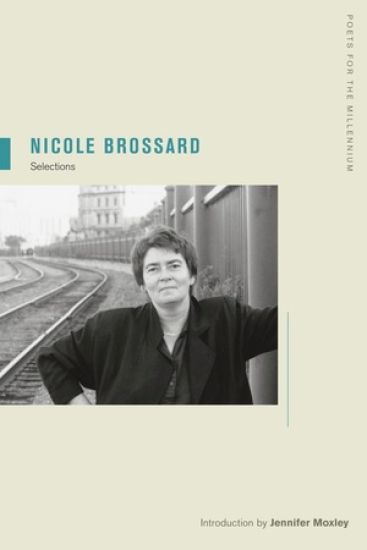
'Pleasure,' Jennifer Moxley writes in her introduction to this volume, 'is the word that first comes to mind at the mention of Nicole Brossard's poetry.' This volume provides English-language readers with an overview of the life and work of Nicole Brossard, poet, novelist, and essayist, who is widely recognized in her native Quebec and throughout the French-speaking world as one of the greatest writers of her generation. Brossard's poetry is rooted in her investigations of language, her abiding commitment to a feminist consciousness, and her capacity for renewing meaning as a virtual space of desire. The reader enters a poetic world in which the aesthetic is joined with the political, and the meaning of both is enriched in the process. The selections in this volume include translations of some of Brossard's best-known works - "Lovhers", "Ultra Sounds", "Museum of Bone and Water", "Notebook of Roses and Civilization" - along with short prose works, an interview with Brossard, and a bibliography of works in French and English, and constitute the most substantial English-language sampling published to date of one of Canada's greatest living poets.
Nicole Brossard

Nicole Brossard

Nicole Brossard

University of California Press
2010
pokkari
'Pleasure,' Jennifer Moxley writes in her introduction to this volume, 'is the word that first comes to mind at the mention of Nicole Brossard's poetry.' This volume provides English-language readers with an overview of the life and work of Nicole Brossard, poet, novelist, and essayist, who is widely recognized in her native Quebec and throughout the French-speaking world as one of the greatest writers of her generation. Brossard's poetry is rooted in her investigations of language, her abiding commitment to a feminist consciousness, and her capacity for renewing meaning as a virtual space of desire. The reader enters a poetic world in which the aesthetic is joined with the political, and the meaning of both is enriched in the process. The selections in this volume include translations of some of Brossard's best-known works - "Lovhers", "Ultra Sounds", 'Museum of Bone and Water", "Notebook of Roses and Civilization" - along with short prose works, an interview with Brossard, and a bibliography of works in French and English, and constitute the most substantial English-language sampling published to date of one of Canada's greatest living poets.
Nicole Clark Is Having a Baby

Nicole Clark Is Having a Baby

Morgan Gould

SAMUEL FRENCH LTD
2023
pokkari
Nicole is smart successful married to a hot guy-and unapologetically fat. But her formerly fat now obsessively thin mom Helen fixates on Nicole's weight. When Nicole visits her hometown for her best friend's baby shower and reveals that she's also pregnant mom and daughter are forced to confront how Helen's difficulty accepting Nicole's body-and her own-has shaped their relationship. A deeply felt irreverent comedy about motherhood anti-fatness and the emotional legacy we pass on to our children.