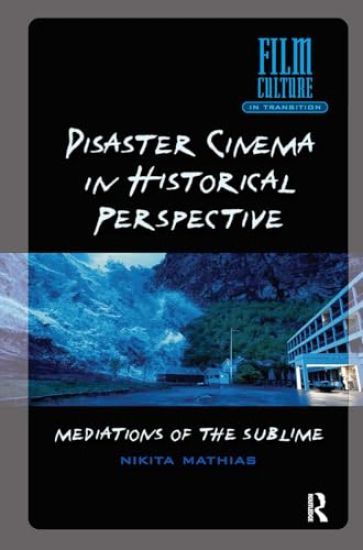
How do we experience disaster films in cinema? And where does disaster cinema come from? The two questions are more closely related than one might initially think. For the framework of the cinematic experience of natural disasters has its roots in the mid-eighteenth century when the aesthetic category of the sublime was re-established as the primary mode for appreciating nature's violent forces. In this book, the sublime is understood as a complex and culturally specific meeting point between philosophical thought, artistic creation, social and technical development, and popular imagination. On the one hand, the sublime provides a receptive model to uncover how cinematic disaster depictions affect our senses, bodies and minds. On the other hand, this experiential framework of disaster cinema is only one of the most recent agents within the historical trajectory of sublime disasters, which is traced in this book among a broad range of media: from landscape and history painting to a variety of pictorial devices like Eidophusikon, Panorama, Diorama, and, finally, cinema.
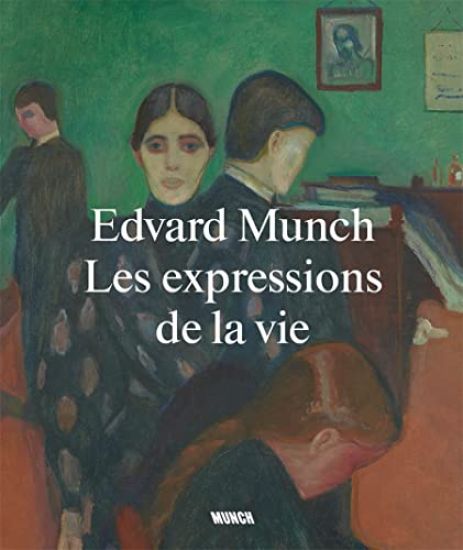
Edvard Munch (1863–1944) is one of the most influential figures in modern art. His career spanned more than 60 years, from his debut in the 1880s right up until his death in 1944. Munch was part of the Symbolist movement in the 1890s and was a key forerunner of the Expressionist movement that emerged at the start of the 20th century. His continually experimental approach to painting, printmaking, drawing, sculpture and photography earned him a unique position in Norwegian and international art history. Munch bequeathed almost all the artworks in his possession at the time of his death to the City of Oslo. This bequest, which comprised approximately 26,500 original works, became the basis of the Munch Museum’s collection. The museum opened in 1963, one hundred years after Munch’s birth. Today the collection includes more than half of all Munch’s paintings and examples of almost all his original prints. This book contains posters of 16 paintings that were of crucial importance in Edvard Munch’s artistic career, accompanied by brief but informative texts. Iconic images such as The Scream, Madonna and The Vampire are just some of the pictures you can hang on your wall.
Edvard Munch (1863-1944) was a visionary and obsessive artist who would not rest until he had captured human existence in its entirety, both in its beauty and in its inner conflicts and contradictions. Today, paintings such as Madonna, The Scream, and Vampire are known worldwide and shared online and on social media in the millions. Munch has become a part of popular culture. This book gives a concise, accessible and illuminating introduction to Munch’s life and art. It is generously illustrated, including a large selection of images from all stages of Munch’s career.
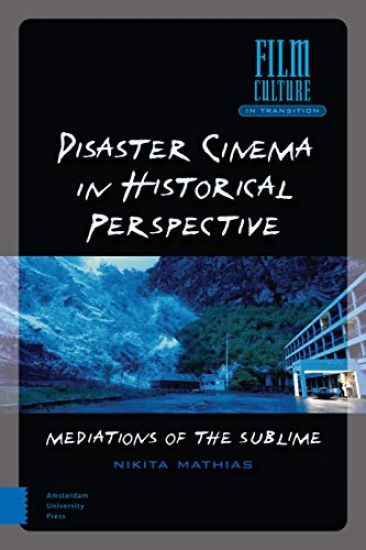
How do we experience disaster films in cinema? And where does disaster cinema come from? The two questions are more closely related than one might initially think. For the framework of the cinematic experience of natural disasters has its roots in the mid-eighteenth century when the aesthetic category of the sublime was re-established as the primary mode for appreciating nature's violent forces. In this book, the sublime is understood as a complex and culturally specific meeting point between philosophical thought, artistic creation, social and technical development, and popular imagination. On the one hand, the sublime provides a receptive model to uncover how cinematic disaster depictions affect our senses, bodies and minds. On the other hand, this experiential framework of disaster cinema is only one of the most recent agents within the historical trajectory of sublime disasters, which is traced in this book among a broad range of media: from landscape and history painting to a variety of pictorial devices like Eidophusikon, Panorama, Diorama, and, finally, cinema.
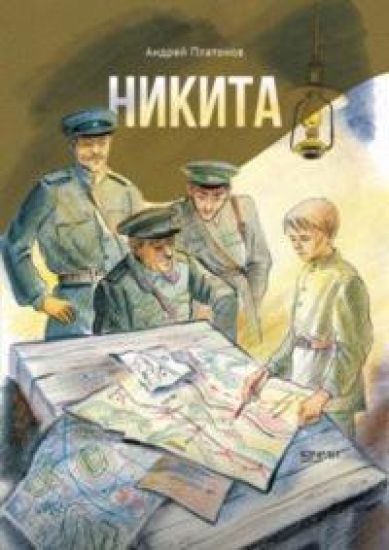
Gerojam rasskazov klassika russkoj literatury, frontovika Andreja Platonova, sovsem malo let. V mirnoe vremja oni by tolko nachali khodit v shkolu, pisat slova "mama" i "Rodina", no u voennogo vremeni svoi obstojatelstva i svoi zakony, strashnye, surovye. I protivopostavit im mozhno tolko odno - teplo chelovecheskogo serdtsa. Tolko dobrota, poroj sovsem chuzhikh ljudej, mozhet protivostojat i gorechi sirotstva, i strakhu odinochestva.Dlja detej mladshego shkolnogo vozrasta.
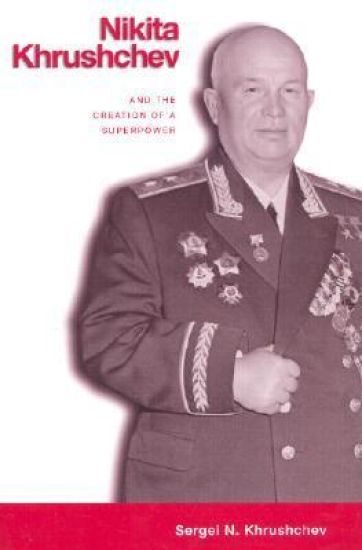
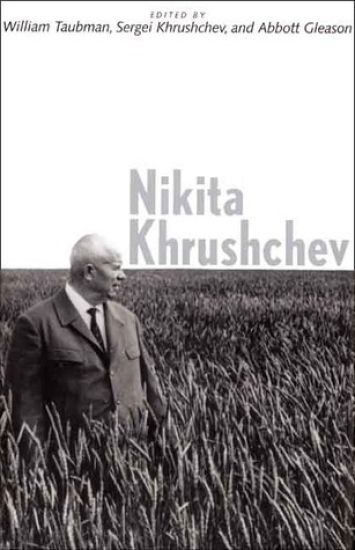
More is known about Nikita Khrushchev than about many former Soviet leaders, partly because of his own efforts to communicate through speeches, interviews, and memoirs. (A partial version of his memoirs was published in three volumes in 1970, 1974, and 1990, and a complete version was published in Russia in 1999 and will appear in an English translation to be published by Penn State Press.) But even with the opening of party and state archives in 1991, as William Taubman points out in his Foreword, many questions remain unanswered. "How did Khrushchev manage not only to survive Stalin but to succeed him? What led him to denounce his former master [an event that some interpreters herald as the first act in the drama that led to the end of the USSR]? How could a man of minimal formal education direct the affairs of a vast intercontinental empire in the nuclear age? Why did Khrushchev’s attempt to ease East-West tensions result in two of the worst crises of the Cold War in Berlin and Cuba? To resolve these and other contradictions, we need more than policy documents from archives and memoirs from associates. We need firsthand testimony by family members who knew Khrushchev best, especially by his only surviving son, Sergei, in whom he often confided."As Sergei says, "During the Cold War our nations lived on opposite sides of the Iron Curtain, and not only was it an Iron Curtain but it was also a mirror: one side perceived the other as the 'evil empire,' and vice versa; so, too, each side feared the other would start a nuclear war. Neither side could understand the real reasons behind many decisions because Americans and Russians, representing different cultures, think differently. The result was a Cold War filled with misperceptions that could easily have led to tragedy, and we are lucky it never happened. And still, after the Cold War, American-Russian relations are based on many misunderstandings." In this book Sergei tells the story of how the Cold War happened in reality from the Russian side, not from the American side, and this is his most important contribution.Sergei N. Khrushchev was born in 1935 when his father was Moscow party chief. He accompanied his father on major foreign trips—to Great Britain in 1956, East Germany in 1958, the United States in 1959, Egypt in 1964, among many others. After he became a control systems engineer and went to work for leading Soviet missile designer Vladimir Chelomei, Sergei attended many meetings at which his father transacted business with key leaders in the Soviet defense establishment. He has received many awards and honors for his work in computer science, missile design, and space research. Besides his many technical publications, he has published widely on political and economic issues. In 1991 Little Brown published his memoir about his father’s last years, Khrushchev on Khrushchev. In that same year he received an appointment to the Center for Foreign Policy Development of the Thomas J. Watson Institute for International Studies at Brown University, where he is today. He and his wife, Valentina Nikolayevna, applied for U. S. citizenship in 1999, an event widely covered in the media.
More is known about Nikita Khrushchev than about many former Soviet leaders, partly because of his own efforts to communicate through speeches, interviews, and memoirs. (A partial version of his memoirs was published in three volumes in 1970, 1974, and 1990, and a complete version was published in Russia in 1999 and will appear in an English translation to be published by Penn State Press.) But even with the opening of party and state archives in 1991, as William Taubman points out in his Foreword, many questions remain unanswered. "How did Khrushchev manage not only to survive Stalin but to succeed him? What led him to denounce his former master [an event that some interpreters herald as the first act in the drama that led to the end of the USSR]? How could a man of minimal formal education direct the affairs of a vast intercontinental empire in the nuclear age? Why did Khrushchev’s attempt to ease East-West tensions result in two of the worst crises of the Cold War in Berlin and Cuba? To resolve these and other contradictions, we need more than policy documents from archives and memoirs from associates. We need firsthand testimony by family members who knew Khrushchev best, especially by his only surviving son, Sergei, in whom he often confided."As Sergei says, "During the Cold War our nations lived on opposite sides of the Iron Curtain, and not only was it an Iron Curtain but it was also a mirror: one side perceived the other as the 'evil empire,' and vice versa; so, too, each side feared the other would start a nuclear war. Neither side could understand the real reasons behind many decisions because Americans and Russians, representing different cultures, think differently. The result was a Cold War filled with misperceptions that could easily have led to tragedy, and we are lucky it never happened. And still, after the Cold War, American-Russian relations are based on many misunderstandings." In this book Sergei tells the story of how the Cold War happened in reality from the Russian side, not from the American side, and this is his most important contribution.Sergei N. Khrushchev was born in 1935 when his father was Moscow party chief. He accompanied his father on major foreign trips—to Great Britain in 1956, East Germany in 1958, the United States in 1959, Egypt in 1964, among many others. After he became a control systems engineer and went to work for leading Soviet missile designer Vladimir Chelomei, Sergei attended many meetings at which his father transacted business with key leaders in the Soviet defense establishment. He has received many awards and honors for his work in computer science, missile design, and space research. Besides his many technical publications, he has published widely on political and economic issues. In 1991 Little Brown published his memoir about his father’s last years, Khrushchev on Khrushchev. In that same year he received an appointment to the Center for Foreign Policy Development of the Thomas J. Watson Institute for International Studies at Brown University, where he is today. He and his wife, Valentina Nikolayevna, applied for U. S. citizenship in 1999, an event widely covered in the media.
What was known about Soviet premier Nikita Khrushchev during his career was strictly limited by the secretive Soviet government. Little more information was available after he was ousted and became a “non-person” in the ussr in 1964. This pathbreaking book draws for the first time on a wealth of newly released materials—documents from secret former Soviet archives, memoirs of long-silent witnesses, the full memoirs of the premier himself—to assemble the best-informed analysis of the Khrushchev years ever completed. The contributors to this volume include Russian, Ukrainian, American, and British scholars; a former key foreign policy aide to Khrushchev; the executive secretary of a Russian commission investigating Soviet-era repressions and rehabilitations; and Khrushchev’s own son Sergei.The book presents and interprets new information on Khrushchev’s struggle for power, public attitudes toward him, his role in agricultural reform and cultural politics, and such foreign policy issues as East-West relations, nuclear strategy, and relations with Germany. It also chronicles Khrushchev’s years in Ukraine where he grew up and began his political career, serving as Communist party boss from 1938 to 1949, and his role in mass repressions of the 1930s and in destalinization in the 1950s and 1960s. Two concluding chapters compare the regimes of Khrushchev and Gorbachev as they struggled to reform Communism, to humanize and modernize the Soviet system, and to answer the haunting question that persists today: Is Russia itself reformable?
Kali has suffered some pretty terrible tragedies in her life. She is the only one of her friends who surfs, and her life can be the worst kind of lonely. One day she goes surfing at her favorite beach, and she has a run-in with the best surfer in town, and the most popular guy in school, Zack. Zack is not the person everyone thinks he is. It is true that he is popular, and also suffered a terrible tragedy in his life, but more importantly he is also holding onto a secret that is tearing him apart. This specific secret, connects Kali to Zack, long before they actually met, but Kali knows nothing about it, and Zack needs to protect her from it. When Kali and Zack first meet, Zack has two best friends, Damien and Joel. The trio adopt Kali as their prot g , but all four friends have something in their life that holds them back, and all four friends need each other's support, just to be able to grow up. At the same time, they are all drawn to the one place that will fully let them do that, Hawaii. Zack and Kali have a tumultuous ride over seven years, of pulling each other closer, and pushing each other away. The story is a long journey to see if they can find what they are looking for, or hopefully see if they can get what they always dreamed of.
When Nikita Khrushchev toured America in 1959—the first Russian leader ever to set foot in the Western Hemisphere, let alone the United States—the country was enjoying a period of unprecedented prosperity, just as the Cold War and the possibility of thermonuclear annihilation were causing widespread, bone-deep dread throughout the land. This book for the first time fully explores Khrushchev's journey as a reflection of a critical moment in US life. Deeply researched and deftly written, Nikita Khrushchev's Journey into America captures that moment in all its complexity and implications, describing not only the Russian leader's occasionally surreal itinerary (a tantrum at being denied entry into Disneyland, for instance, or a near-riot upon wandering into a grocery store in San Francisco) but also the tenor of the crowds and the country along the way.Following Khrushchev from his arrival in the nation's capital to the eerily silent greeting of hundreds of thousands of spectators to his tickling of pigs, kissing of babies, and glad-handing of union workers and farm laborers in rural Iowa to his encounter with President Dwight Eisenhower, Nelson and Schoenbachler's work offers glimpses of the clash between a true believer in the Soviet system and the icons of capitalism and visions of prosperity he repeatedly confronted on his trip. At the same time the book shows us the American people of the time coming to terms with who they were even as they confronted the embodiment of everything they believed they weren't: atheistic, socialist, and ideological.As the narrative unfolds, Khrushchev's visit can be understood as easily the most democratic event of the Cold War, one that laid bare the depth of ideological commitments on both sides of the geopolitical divide as well as the key role of religion in shaping Americans' reactions to the Soviet leader and to the Cold War itself.
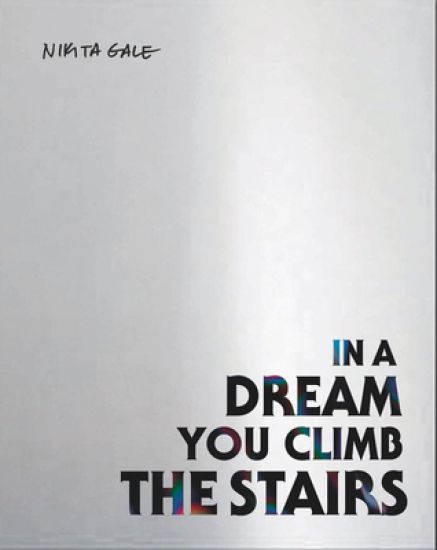
Chisenhale Gallery launches the second title in its Chisenhale Books series, Nikita Gale: IN A DREAM YOU CLIMB THE STAIRS. Marking the finale of Gale’s Chisenhale exhibition, her first artist’s book contains an intergenerational conversation with conceptual artist Barbara Kruger and a short meditation by Pulitzer Prize-winning writer Hilton Als. These feature alongside contributions by artist and Chisenhale Gallery alum P. Staff and Dr. Bénédicte Boisseron, author of Afro-Dog: Blackness and the Animal Question. Through the lens of a multifaceted practice, Gale examines themes of invisibility and audibility, interrogating the dynamic between performer and spectator, structure, and decay. Produced with great care, this extraordinary book is reflective of the artist’s practice. Four visual essays, hand-annotated by Gale – ‘Absence’, ‘Ruin’, ‘Silence’, ‘Dog’ – explore themes central to the work. Nikita Gale: IN A DREAM YOU CLIMB THE STAIRS deploys throw-outs, gatefolds, five different types of papers, and a subtly disruptive design to delve into Nikita Gale’s art. Text by Zoé Whitley, P.Staff, Hilton Als, Barbara Kruger and Dr. Bénédicte Boisseron. Book Design & Creative Direction by Billie Temple.
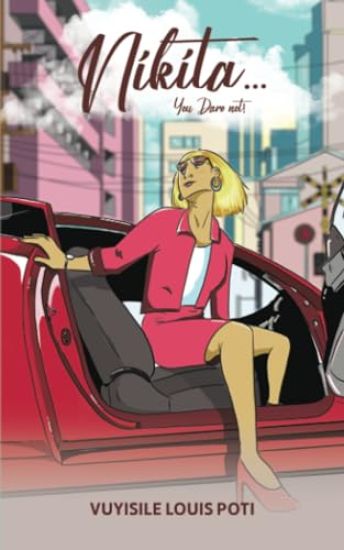
'Enough is enough ' How often have those desperate pleas for help gone unheard, with dreadful consequences? Life can be merciless. Nikita seemed to have it all: a happy working-class family and an idyllic life. The passing of her father drew them even closer together. But his death also unearthed the family's darkest secrets, driving them apart. Nikita's world collapsed. The lovely woman and pretty angel transformed into an angel of vengeance, turning her pain outward. As if that was not enough, auditory hallucinations crept in, the voices promoting her into the very devil himself. She was both icy cool and deadly, elusive yet always a step ahead, with an uncanny ability to read situations and minds. From police headquarters to the mafia underworld, she had mastered every trick and skill needed to survive and thrive, learning from the best. Nikita's late father was an untouchable spy and criminal virtuoso. Straddling two worlds, Nikita was both friend and helper to the police as well as admired by crooks. But this delicate balancing act couldn't last forever. As she jestingly observed, 'The problem with a slice of bread is, it always falls on the buttered side, so handle it with care...'
'Enough is enough ' How often have those desperate pleas for help gone unheard, with dreadful consequences? Life can be merciless. Nikita seemed to have it all: a happy working-class family and an idyllic life. The passing of her father drew them even closer together. But his death also unearthed the family's darkest secrets, driving them apart. Nikita's world collapsed. The lovely woman and pretty angel transformed into an angel of vengeance, turning her pain outward. As if that was not enough, auditory hallucinations crept in, the voices promoting her into the very devil himself. She was both icy cool and deadly, elusive yet always a step ahead, with an uncanny ability to read situations and minds. From police headquarters to the mafia underworld, she had mastered every trick and skill needed to survive and thrive, learning from the best. Nikita's late father was an untouchable spy and criminal virtuoso. Straddling two worlds, Nikita was both friend and helper to the police as well as admired by crooks. But this delicate balancing act couldn't last forever. As she jestingly observed, 'The problem with a slice of bread is, it always falls on the buttered side, so handle it with care...'