
Kirjahaku
Etsi kirjoja tekijän nimen, kirjan nimen tai ISBN:n perusteella.
1000 tulosta hakusanalla Niklas Maak
If data is the greatest collective treasure of a digital society, basic material for business and politics: Why are the places where it is stored still so invisible? Niklas Maak, architectural critic and Professor for Architecture at Städelschule Frankfurt, explores this question in his new publication and envisions radical solutions for the future.






I en verden hvor tilgang på informasjon er ubegrenset, endres bibliotekets rolle. Oslos nye hovedbibliotek, Deichman Bjørvika, representerer en nyskapende tolkning av hva et bibliotek kan romme. I motsetning til den tradisjonelle oppfatningen av biblioteket som et arkiv, er bygningen som de to arkitektkontorene Lundhagem og Atelier Oslo har tegnet, blitt en levende møteplass for alle - en ny type offentlig rom. Med et imponerende og variert innhold har Deichman Bjørvika på kort tid etablert seg som et kulturelt og sosialt knutepunkt. I denne rikt illustrerte boken følger vi design- og byggeprosessen fra arkitektenes første tanker og skisser, til åpningen av det ferdigstilte hovedbiblioteket. Gjennom tekster av forfatteren Elif Shafak og Liv Sæteren, mangeårig biblioteksjef ved Deichmanske bibliotek, tematiseres bibliotekenes betydning som integrerende sosial kraft. Niklas Maak, professor i arkitekturhistorie, diskuterer det nye biblioteket i en arkitekturhistorisk kontekst. Fotoessays av Iwan Baan, Einar Aslaksen og Hélène Binet fanger det nye hovedbibliotekets arkitektur, atmosfære og hvordan publikum har tatt i bruk byens nye felles rom.
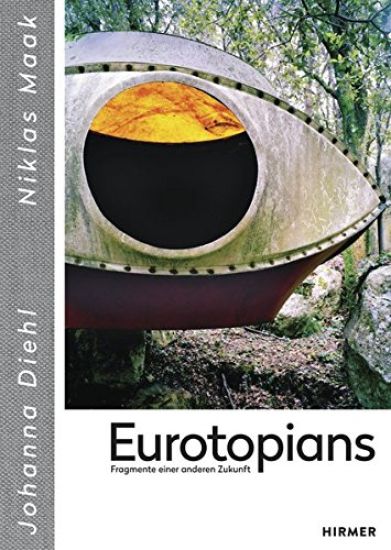
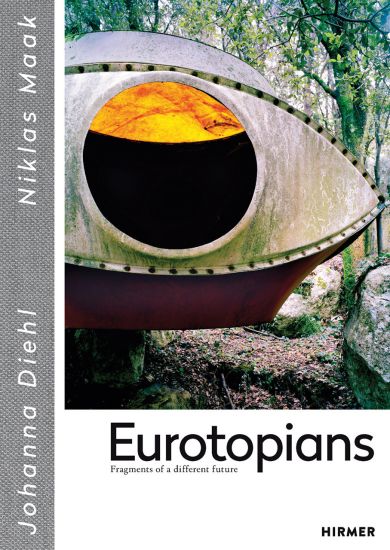
How do we want to live? How shall we build? Where can we find ideas for the houses and cities of the future? Niklas Maak and Johanna Diehl focus their attention on these highly topical questions in their joint project “Eurotopians”. In times of change this volume casts its backward gaze on the work of European utopians in order to find visions for the present. During the 1960s and 1970s visionary architecture was created in Europe which raised fundamental questions about our current ideas of how we should live. Many of these buildings are in ruins and their architects forgotten – although they still live there. Maak visited them and created an “archaeology of the utopian”, which shows that important ideas for the world of tomorrow can be found in the ruins. Johanna Diehl has taken impressive photographs of great intensity. In the ruins of these utopias of the modern age she discovered pictures of revolutionary approaches to life which seem surprisingly topical.

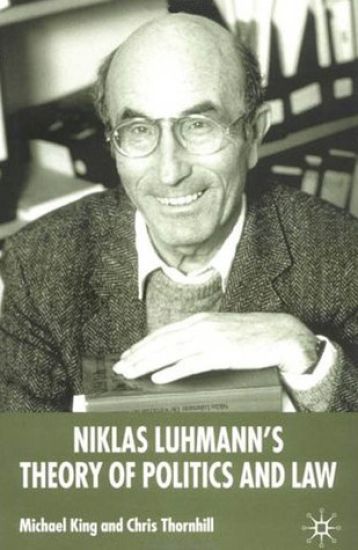
Niklas Luhmann's social theory stands in direct opposition to the dominant 'anthropocentric' traditions of legal and political analysis. King and Thornhill now offer the first comprehensive, critical examination of Luhmann's highly original theory of the operations of the legal and political systems. They describe how from the perspective of his 'sociological enlightenment' Luhmann continually calls to account the certainties, the ambitions and rational foundations of The Enlightenment and the idealized versions of law and politics which they have produced.

Niklas Luhmann: Law, Justice, Society presents the work of sociologist Niklas Luhmann in a radical new light. Luhmann’s theory is here introduced both in terms of society at large and the legal system specifically, and for the first time, Luhmann’s texts are systematically read together with theoretical insights from post-structuralism, deconstruction, phenomenology, radical ethics, feminism and post-ecologism. In his far-reaching book, Andreas Philippopoulos-Mihalopoulos distances Luhmann’s theory from its misrepresentations as conservative, rigorously positivist and disconnected from empirical reality, and firmly locates it in a sphere of post-ideological jurisprudence.The book operates both as a detailed explanation of the theory’s concepts and as the locus of a critique which brings forth Luhmann’s radical credentials. The focal points are Luhmann’s concept of society and the law’s paradoxical connection to justice. However, these concepts are also transgressed in order to show how the law deals with the illusion of its identity, and more broadly how the theory itself deals with its limitations. This is illustrated by examples drawn from human rights, constitutional theory and ecological thinking. On the whole, Niklas Luhmann: Law, Justice, Society serves both as an introductory text and as a critical response to Luhmann’s theory, and is recommended reading for students and researchers in sociology, law, social sciences, politics and whoever is interested in seeing the influential work of Niklas Luhmann from a critical new perspective.
Niklas Luhmann offers an accessible introduction to one of the most important sociologists of our time. It presents the key concepts within Luhmann’s multifaceted theory of modern society, and compares them with the work of other key social theorists such as Jürgen Habermas, Michel Foucault, and Zygmunt Bauman.The book pays particular attention to introducing and discussing Luhmann’s original sociological systems theory. It presents a thorough investigation into the different phases of his oeuvre, through which both the shifting emphases as well as the continuities in his thinking are shown. The primary focus of this text is Luhmann’s theory of modern society as being differentiated into a plethora of ‘function systems’ – such as politics, law, and economy – which operate according to their own distinct logics and which cannot interfere with one another. For Luhmann, this functional differentiation works as a bulwark against totalitarian rule, and as such is a key foundation of modern democracy. Furthermore, the book critically examines the implications of this functional differentiation for inclusion and exclusion dynamics, as well as for the understanding of power and politics.This is a key text for both undergraduate and postgraduate students of areas including contemporary social theory, political sociology, and sociology.
Niklas Luhmann offers an accessible introduction to one of the most important sociologists of our time. It presents the key concepts within Luhmann’s multifaceted theory of modern society, and compares them with the work of other key social theorists such as Jürgen Habermas, Michel Foucault, and Zygmunt Bauman.The book pays particular attention to introducing and discussing Luhmann’s original sociological systems theory. It presents a thorough investigation into the different phases of his oeuvre, through which both the shifting emphases as well as the continuities in his thinking are shown. The primary focus of this text is Luhmann’s theory of modern society as being differentiated into a plethora of ‘function systems’ – such as politics, law, and economy – which operate according to their own distinct logics and which cannot interfere with one another. For Luhmann, this functional differentiation works as a bulwark against totalitarian rule, and as such is a key foundation of modern democracy. Furthermore, the book critically examines the implications of this functional differentiation for inclusion and exclusion dynamics, as well as for the understanding of power and politics.This is a key text for both undergraduate and postgraduate students of areas including contemporary social theory, political sociology, and sociology.

Niklas Luhmann: Law, Justice, Society presents the work of sociologist Niklas Luhmann in a radical new light. Luhmann’s theory is here introduced both in terms of society at large and the legal system specifically, and for the first time, Luhmann’s texts are systematically read together with theoretical insights from post-structuralism, deconstruction, phenomenology, radical ethics, feminism and post-ecologism. In his far-reaching book, Andreas Philippopoulos-Mihalopoulos distances Luhmann’s theory from its misrepresentations as conservative, rigorously positivist and disconnected from empirical reality, and firmly locates it in a sphere of post-ideological jurisprudence.The book operates both as a detailed explanation of the theory’s concepts and as the locus of a critique which brings forth Luhmann’s radical credentials. The focal points are Luhmann’s concept of society and the law’s paradoxical connection to justice. However, these concepts are also transgressed in order to show how the law deals with the illusion of its identity, and more broadly how the theory itself deals with its limitations. This is illustrated by examples drawn from human rights, constitutional theory and ecological thinking. On the whole, Niklas Luhmann: Law, Justice, Society serves both as an introductory text and as a critical response to Luhmann’s theory, and is recommended reading for students and researchers in sociology, law, social sciences, politics and whoever is interested in seeing the influential work of Niklas Luhmann from a critical new perspective.
This book is an introduction to the nature of modernity as envisioned by Germany's leading social theorist of the late twentieth century, Niklas Luhmann. For Luhmann, modernity is neither an Enlightenment project nor a ludic rejection of that project, but rather the pre-condition of all our deliberations, the structure within which our semantics makes sense, even as we think we celebrate (or mourn) its passing. Rather than viewing modernity as a disease for which we seek a cure, Luhmann poses it as a question to which we continually devise incomplete and partial answers. When we grow impatient with the contingency and indeterminacy that is thus forced upon us and seek solace in community, religion (orthodox or civic), consensus, and a universal vision of the good life, we grow impatient with modernity itself. The book injects concepts derived from Luhmann's influential systems theory (complexity, contingency, and enforced selectivity; system differentiation, self-referential closure, and autopoiesis) into debates about modernity and postmodernity, constructivist and foundationalist epistemologies, the relationship between politics and ethics, and the possibilities of interdisciplinary work that spans the great divide between science and the humanities. Delighting in Luhmann's provocatively cool and dispassionate bursting of cherished balloons, the book stages challenging engagements with such thinkers as Jürgen Habermas, Jacques Derrida, Jean-François Lyotard, Drucilla Cornell, Judith Butler, Michel Serres, N. Katherine Hayles, and such political theorists as Chantal Mouffe and Carl Schmitt. The irrepressibility of paradox emerges as a stubborn feature of all of these confrontations. The book closes with two interviews: one a discussion with Luhmann and Hayles on epistemology, the other with Luhmann on the functional differentiation of modern society.

This book is an introduction to the nature of modernity as envisioned by Germany's leading social theorist of the late twentieth century, Niklas Luhmann. For Luhmann, modernity is neither an Enlightenment project nor a ludic rejection of that project, but rather the pre-condition of all our deliberations, the structure within which our semantics makes sense, even as we think we celebrate (or mourn) its passing. Rather than viewing modernity as a disease for which we seek a cure, Luhmann poses it as a question to which we continually devise incomplete and partial answers. When we grow impatient with the contingency and indeterminacy that is thus forced upon us and seek solace in community, religion (orthodox or civic), consensus, and a universal vision of the good life, we grow impatient with modernity itself. The book injects concepts derived from Luhmann's influential systems theory (complexity, contingency, and enforced selectivity; system differentiation, self-referential closure, and autopoiesis) into debates about modernity and postmodernity, constructivist and foundationalist epistemologies, the relationship between politics and ethics, and the possibilities of interdisciplinary work that spans the great divide between science and the humanities. Delighting in Luhmann's provocatively cool and dispassionate bursting of cherished balloons, the book stages challenging engagements with such thinkers as Jürgen Habermas, Jacques Derrida, Jean-François Lyotard, Drucilla Cornell, Judith Butler, Michel Serres, N. Katherine Hayles, and such political theorists as Chantal Mouffe and Carl Schmitt. The irrepressibility of paradox emerges as a stubborn feature of all of these confrontations. The book closes with two interviews: one a discussion with Luhmann and Hayles on epistemology, the other with Luhmann on the functional differentiation of modern society.

Niklas Luhmann's social theory stands in direct opposition to the dominant 'anthropocentric' traditions of legal and political analysis. King and Thornhill now offer the first comprehensive, critical examination of Luhmann's highly original theory of the operations of the legal and political systems. They describe how from the perspective of his 'sociological enlightenment' Luhmann continually calls to account the certainties, the ambitions and rational foundations of The Enlightenment and the idealized versions of law and politics which they have produced.

Niklas Rogers, now 12, has always known that he was different from the other kids. Through a twist of events, some tragic, some bizarre and some mystical, he discovers that he posses a very special gift. In Niklas' own words, he tells a tale about his life and the days leading up to his magical discovery. His love for nature, takes on a whole new meaning.