
Kirjahaku
Etsi kirjoja tekijän nimen, kirjan nimen tai ISBN:n perusteella.
1000 tulosta hakusanalla Nikolaus Mikulaschek

Nachhaltigkeitsmanagement - Zwischen Kennzahlen und Organisationskultur
Nikolaus Mikulaschek
Grin Publishing
2013
pokkari
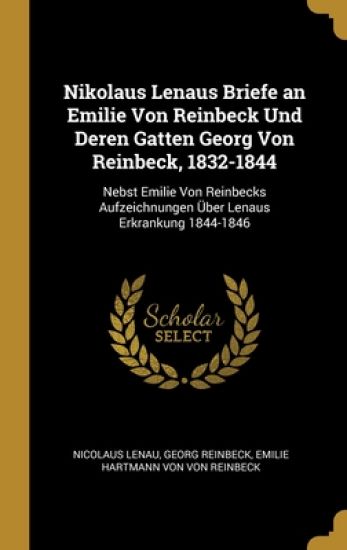
Nikolaus Lenaus Briefe an Emilie Von Reinbeck Und Deren Gatten Georg Von Reinbeck, 1832-1844
Nicolaus Lenau; Georg Reinbeck; Emilie Hartmann Von Von Reinbeck
Wentworth Press
2018
sidottu
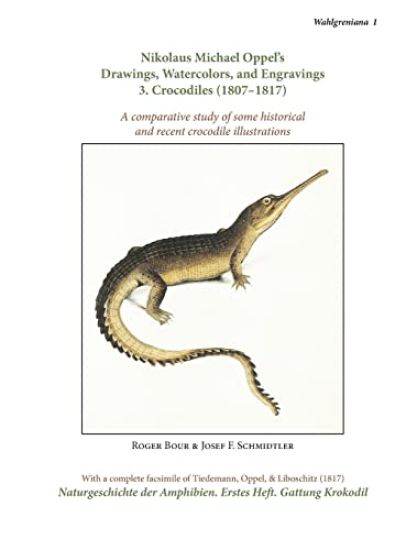
Nikolaus Michael Oppel's Drawings, Watercolors, and Engravings 3. Crocodiles (1807-1817)
Roger Bour; Josef Schmidtler
ISHBH
2022
sidottu
Nicholas Michael Oppel was a systematist, with a special interest in Reptiles, and an artist, as draftsman, painter, and engraver-the latter talent having led to his death. But unfortunately he had no possibility to make full use of his gifts. His taxonomic work in Munich was thwarted because of his rivalry with Johann Baptist Spix, and his "war chest", nearly 400 plates drawn and painted during his stay in Paris, remained unpublished due to lack of funds. During the last ten years of his short life Oppel had by necessity an "ordinary" life without brilliance, giving lessons and painting or engraving objects of natural history for some colleagues. This volume examines Oppel's work on Crocodilians, particularly his illustrations. Oppel's illustrations are compared to contemporary and modern illustrations of the same species with special emphasis on their scientific accuracy. In addition, a complete facsimile of Tiedemann, Oppel, & Liboschitz (1817) Naturgeschichte der Amphibien. Erstes Heft. Gattung Krokodil is reprinted, including the fifteen plates which were published separately by the authors. This book and it's atlas, are exceedingly rare and have not been reprinted previously.
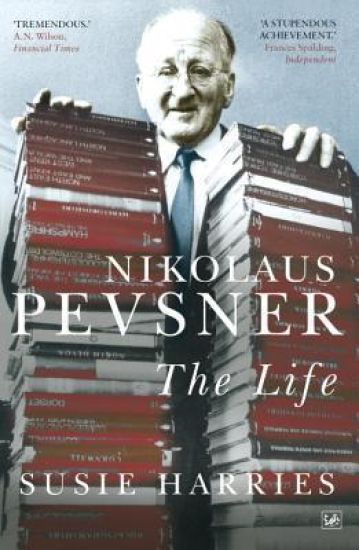
Born Nikolai Pewsner into a Russian-Jewish family in Leipzig in 1902, Nikolaus Pevsner was a dedicated scholar who pursued a promising career as an academic in Dresden and Göttingen. When, in 1933 Jews were no longer permitted to teach in German universities, he lost his job and looked for employment in England. Here, over a long and amazingly industrious career, he made himself an authority on the exploration and enjoyment of English art and architecture, so much so that his magisterial county-by-county series of 46 books on The Buildings of England (first published 1951 - 74) is usually referred to simply as 'Pevsner'. As a critic, academic and champion of Modernism, Pevsner became a central figure in the architectural consensus that accompanied post-war reconstruction; as a 'general practitioner' of architectural history, he covered an astonishing range, from Gothic cathedrals and Georgian coffee houses to the Festival of Britain and Brutalist tower blocks.Susie Harries explores the truth about Nikolaus Pevsner's reported sympathies with elements of Nazi ideology, his internment in England as an enemy alien and his sometimes painful assimilation into his country of exile. His Heftchen - secret diaries he kept from the age of 14 for another sixty years - reveal hidden aspirations and anxieties, as do his numerous letters (he wrote to his wife, Lola, every day that they were apart).Harries is the first biographer to have read Pevsner's private papers and, through them, to have seen into the workings of his mind.Her definitive biography is not only rich in context and far-ranging, but is also brought to life by quotations from Pevsner himself. He was born a Jew but converted to Lutheranism; trained in the rigour of German scholarship, he became an Everyman in his copious commissions, publications, broadcasts and lectures on art, architecture, design, education, town planning, social housing, conservation, Mannerism, the Bauhaus, the Victorians, Zeitgeist, Englishness and how a nation's character may, or must, be reflected in its art. His life - as an outsider yet an insider at the heart of English art history - illuminates both the predicament and the prowess of the continental émigrés who did so much to shape British culture after 1945.
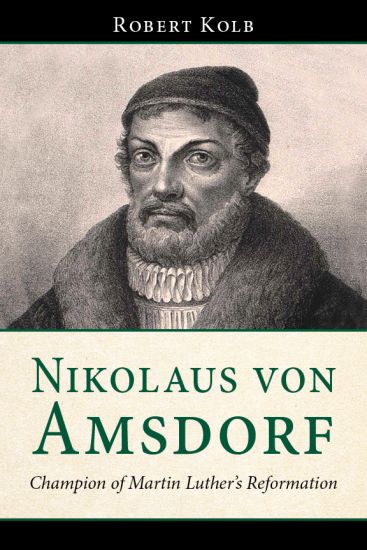
Martin Luther called him "a theologian by nature." He was Luther's close friend and contemporary-born three weeks after Luther but living two decades longer. He was the only nobleman in Luther's inner circle and one of the first Evangelical bishops. Known by his colleagues as a "fierce enemy of all corruption and adulteration of true Lutheran, Evangelical truth," his contributions during the theological controversies after Luther's death shaped numerous articles of the Formula of Concord. Yet few people today have ever heard of Nikolaus von Amsdorf, let alone his influence on Lutheran theology.In this thoroughly revised and updated edition of the 1978 book Nikolaus von Amsdorf: Popular Polemics in the Preservation of Luther's Legacy, Robert Kolb opens the life and work of Amsdorf to readers of all experiences and backgrounds. Dr. Kolb reveals how this mostly unknown champion of Luther's Reformation helped set the future of Lutheran theology on its course, prioritizing above all the radically simple and clear Gospel Luther proclaimed: salvation by grace alone through faith in Christ alone.
Nikolaus Ernst Kleemanns Reisen Von Wien Ã?ber Belgrad Bis Kilianova ... In Die Crimm ... In Den Jahren 1768, 1769 And 1770
Miklã3s Ernö Kleeman
Hutson Street Press
2025
sidottu
Jacquin, N: Nikolaus Joseph Edlen Von Jacquin's Anfangsgrund
Nikolaus Joseph Edlen Von Jacquin
KESSINGER PUBLISHING, LLC
2010
nidottu
Nikolaus Von Cusa Und Marius Nizolius ALS Vorlauser Der Neueren Philosophie
Michael Glossner; Glossner M 1835-1909
Nabu Press
2011
pokkari
Nikolaus Von Kues
De Gruyter
1966
sidottu
Nikolaus Lenau im Vormärz und seine Rezeption in den Revolutionen von 1848/49
Nils Marvin Schulz
GRIN Verlag
2019
nidottu
Nikolaus von Kues. Ein Vermittler zwischen Islam und Christentum?
Annalena Mich
GRIN Verlag
2020
pokkari
Unver nderter Nachdruck der Originalausgabe von 1902.

Unver nderter Nachdruck der Originalausgabe von 1902.