A gripping story of one of the engineering marvels of both the nineteenth and the twentieth centuries, the Ferris wheel. The Ferris wheel, perhaps more than any other amusement ride, symbolizes all that is magic about amusement parks and county fairs. Towering above the carousel, hot dog stands, and kiddie rides, the Ferris wheel lifts young and old alike for never-to-be forgotten views. Few passengers forget their first ride on the queen of the midway and the sensations they felt when the rapidly spinning wheel carried them over the top.
In many parts of Africa three different systems of laws are concurrently applied – the imported "Colonial" law, the indigenous customary law and Islamic law. In some countries the customary and the Islamic law are kept separate and distinct, while in others they are fused into a single system. This volume represents a unique survey of the extent to which Islamic law is in fact applied in those parts of East and West Africa which were at one time under British administration. It examines the relevant legislation and case law, much of which has never appeared in any Law Reports; the judges and courts which apply it and the problems to which its application give rise.
Norman D Gutter, now in his second year of his career as a civil engineer, seems to go from one difficult situation to another-except most of it is humorous. Norman tries to find the humor as the company he works with incompetent contractors, and deals with fun-loving, joke-making fellow employees. Splitting time between the office and construction sites, Norman never seems to catch a break as events spin around him. The company he works for, I.C.E. Engineering, is crazy busy, and the things that irked Norman in his first year are still there in his second. There's no time to just sit back enjoy the world of getting things designed and built. Volume 2 picks up where Volume 1 left off. Two small characters, Maggie and Itchy, make a cameo appearance. We'll see other characters who featured prominently in Volume 1, such as Norman's supervisor Ned O. Justice, Uriah Serpe, the ever-flirtatious Malinda Mayes, and, of course, the unforgettable I.C.E. purchasing manager Youkin Stuffet. You'll meet several new characters, such as the attorney Ira Hertzhugh and his junior attorney B. Allen Dumas, landscape architect Sage Mapleton, and the I.C.E. chief financial officer Monty Grubber. I.C.E. is growing, and they shoehorn in a new engineer, but this new guy and Norman lock horns in a game of practical joke one-upmanship. And, Norman continues to dream about Togerther The Great, who goes back in time to solve engineering problems in the ancient world. Come along on Norman's wild adventure in the world of civil engineering.
This book is designed for people with a working knowledge of APL who would like to increase their fluency in the wide range of extra facilities offered by second-generation APL products. Although the primary product in view is IBM's APL2 as implemented on mainframe, PC and RS/6000, the language fea tures covered share considerable common ground with APL *PLUS II and Oyalog APL. This is a book about skills rather than knowledge, and an acquaintance with some variety of APL on the reader's part is assumed from the start. It is designed to be read as a continuous text, interspersed with exer cises designed to give progressively deeper insight into what the authors conceive as the features which have the greatest impact on programming techniques. It would also be suitable as a text-book for a second course in APL2, although experience suggests that most programming language learning is now by self study, so that this volume is more likely to provide follow-up reading to more elementary texts such as "APL2 at a Glance" by Brown, Pakin and Polivka. Material is discussed more informally than in a language manual - in this book textual bulk is in proportion to difficulty and importance rather than to the extent of technical details. Indeed, some APL2 extensions are not covered at all where the technicalities pose no great problems in understanding and can be readily assimilated from the language manuals.
The idea for this book grew out of proposals at the APL86 con ference in Manchester which led to the initiation of the I-APL (International APL) project, and through it to the availability of an interpreter which would bring the advantages of APL within the means of vast numbers of school children and their teachers. The motivation is that once school teachers have glimpsed the possibilities, there will be a place for an "ideas" book of short programs which will enable useful algorithms to be brought rapidly into classroom use, and perhaps even to be written and developed in front of the class. A scan of the contents will show how the conciseness of APL makes it possible to address a huge range of topics in a small number of pages. There is naturally a degree of idiosyncrasy in the choice of topics - the selection I have made reflects algo rithms which have either proved useful in real work, or which have caught my imagination as candidates for demonstrating the value of APL as a mathematical notation. Where appropriate, notes on the programs are intended to show the naturalness with which APL deals with the mathematics concerned, and to estab lish that APL is not, as is often supposed, an unreadable lan guage written in a bizarre character set.
The big question in the science of psychology is: why is human cognition and behavior so different from the capabilities of every other animal species on Earth - including our close genetic relations, the chimpanzees? This book provides a coherent answer by examining those aspects of the human brain that have made triadic forms of perception and cognition possible. Mechanisms of dyadic association sufficiently explain animal perception, cognition and behavior, but a three-way associational mechanism is required to explain the human talents for language, tool-making, harmony perception, pictorial depth perception and the joint attention that underlies all forms of social cooperation.
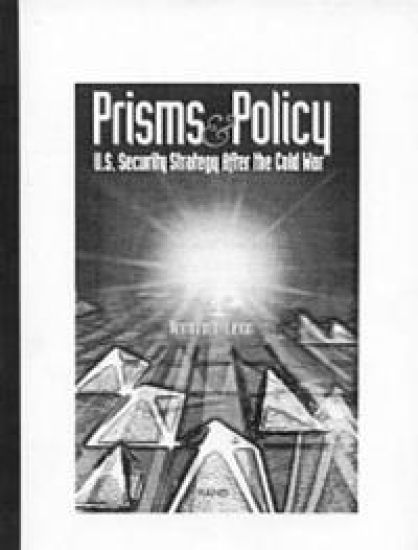
This report reflects the efforts of a group of RAND researchers to think about the implications of recent global and domestic changes for future U.S. national security challenges in great detail--"realism," "multinational security," "democratic internationalism," and "strategic independence." Although the differences between these strategies are profound, the commonalities provide some ground for identifying potential strategy components around which a future U.S. strategy might be developed: redefining the U.S. role in world affairs to deal with a perceived need for continuing U.S. engagement; reformulating U.S. military requirements to meet some core U.S. security concerns (e.g., protecting the security of the United States and of its citizens abroad and impeding the spread of weapons of mass destruction); and ensuring a greater linkage between U.S. foreign policy goals and domestic, especially economic, objectives. The report concludes with three overarching challenges the Administration will face in building a new national security strategy.
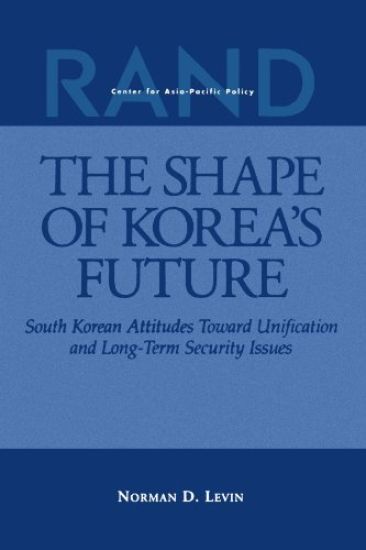
South Koreans are moving beyond both the historical and Cold War legacies in their thinking about Korea's long-time security. This major conclusion, which emerges from this report analyzing South Korean attitudes toward unification and long-term security
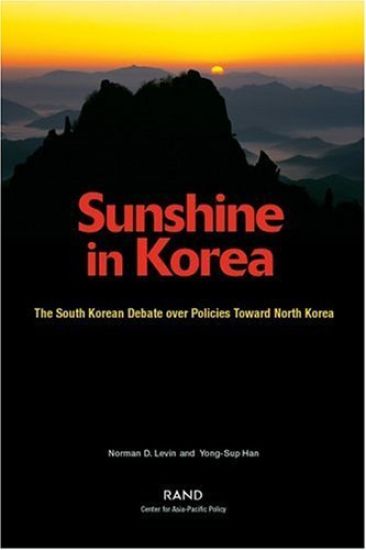
Provides a better understanding of the sources of controversy over the South Korean government's approach toward North Korea and what implications of the controversy might be for South Korea and the United States. The debate in South Korea over the government's engagement policy toward North Korea (the 'sunshine' policy) did not start with Pyongyang's recent admission that it has been secretly pursuing a nuclear weapons program in violation of multiple international commitments. However, the evolution of the debate will be an important determinant of how the South Korean and broader international response to this latest North Korean challenge ultimately ends. This book provides a framework for viewing South Korean responses to this challenge, examining the South Korean debate over policies toward the North, analysing the sources of controversy, and assessing their implications.
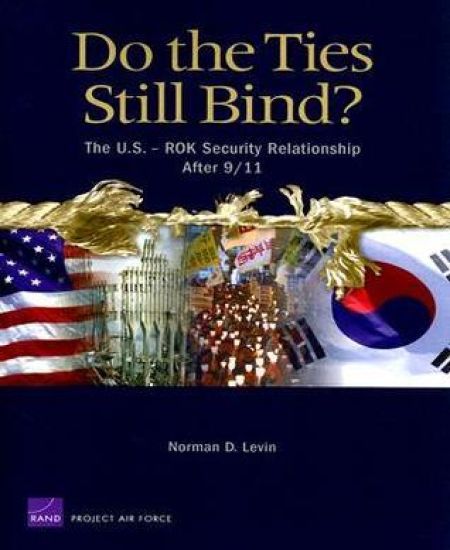
The United States and South Korea enjoy many benefits from close security cooperation but the relationship, although not currently endangered, is shifting. Although Korea is assuming more military responsibilities, action is needed to address Korea's desire for a more equal partnership. Even if the United States makes an effort to give Koreans a greater sense of ownership, Korea itself must act like an equal partner if it wants to be treated as one. It should make renewed efforts to reaffirm the value of the alliance and the importance of the U.S. military presence in its country.