Kirjojen hintavertailu. Mukana 12 414 369 kirjaa ja 12 kauppaa.

Kirjahaku

Etsi kirjoja tekijän nimen, kirjan nimen tai ISBN:n perusteella.

1000 tulosta hakusanalla Norman E. Saul

Distant Friends

Distant Friends

Norman E. Saul

University Press of Kansas
1991
sidottu
In the initial volume of a three-volume study, historian Norman Saul presents a comprehensive survey of early Russian-American relations. Drawing upon more than two decades of research in secondary and documentary publications as well as archival materials from the United States, the Soviet Union and Britain, he reveals new details about contacts between the two countries between the American Revolutionary War and the purchase of Alaska in 1867. His conclusion is that the early relationships - diplomatic, cultural, scientific, economic and personal - between the two countries were more extensive than had been reported before, more important and more congenial. In the 18th and 19th centuries the US and Russia had a lot in common, Saul notes, and many of those similarities persist today. Both countries, in part because of geographic size, faced problems in developing their natural resource. Both countries were economically dependent on systems of forced labour - slavery in the US and serfdom in Russia. Reform resulted in freedom without land for American slaves, and land without freedom for the serfs. Then, as now, Russia looked to the US for help with technology. Saul shows that differences also persist. The United States was geographically isolated and developed in relative peace, while Russia developed within the reach of the European powers and, consequently, worried more about defence. As is still the case, the Russian goverment seemed autocratic to those whose rights were guaranteed by the US Constitution, and deal-making between citizens of the two countries was hampered by the Russian belief that Americans were materialistic and deceitful and by the American notion that Russians were slow, bureaucratic and expected to be bribed. At a time when United States-Soviet relations have taken yet another dramatic turn, it is more important than ever to trace - and to understand - the history of the relationship of these two countries. As Saul shows, parallel developments of the late 18th to mid 19th centuries in some ways foreshadow parallel developments into the two superpowers in the mid 20th.
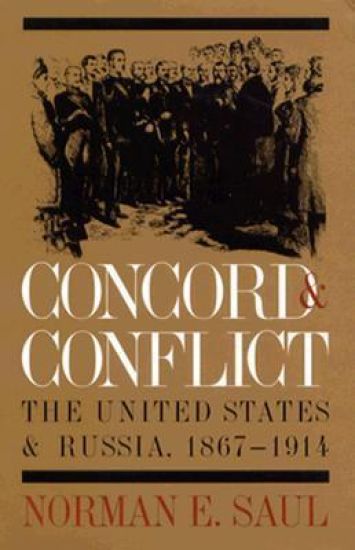
Concord and Conflict

Concord and Conflict

Norman E. Saul

University Press of Kansas
1996
sidottu
An investigation into the transformational and fateful era of 1867-1914 in Russian-American relations. The book explores the fluctuation of economic, diplomatic, social and cultural affairs, personal and professional conflicts, and the evolution of each country's perception of the other.
War and Revolution

War and Revolution

Norman E. Saul

University Press of Kansas
2001
sidottu
For Russia, it was a time of troubles: war, famine, and social upheaval the likes of which the world had never seen before. World War I, two revolutions in 1917, and the subsequent civil war and Allied intervention completely eradicated one regime and replaced it with a radically new one. Now an award-winning diplomatic historian ties these events together to reveal their far-reaching consequences for the future of not only the new Soviet Union but of the United States as well. In War and Revolution, Norman Saul offers a fresh analysis of this troubled era in Russia and of the American reaction to it. Tracing the events surrounding America's entry into the European conflict and its encouragement of continued Russian participation even in the face of domestic unrest, he shows how those circumstances adversely affected relations between two nations and shaped their futures in the century ahead. Drawing on rarely accessed military and diplomatic archives in both countries, Saul reaches beyond official actions to give readers a vivid sense of those times. He surveys the vast panorama of events while providing not only detailed accounts of the activities of consular, diplomatic, and military staffs but also colorful vignettes of ordinary Americans in Russia involved in humanitarian relief and other activities. Businessmen and artists, Red Cross volunteers and journalists - all were caught up in the immediacy of war and revolution, and all contributed to the shifting sentiments of two nations. War and Revolution is the third volume in Saul's sweeping history of U.S.-Russian relations, already hailed for setting ""a new standard for how the history of international relations ought to be written"" (TLS). Here he further develops the theme of ""mirrorimaging,"" describing ways in which Americans and Russians saw themselves as having a common relationship distinguished from other European or Asian nations. Despite the turmoil of this era, he explains, Russians continued to look to America for ideas and models while Americans expected Russians to follow their lead in developing resources and reforming institutions. By 1921, Americans were in a quandary about Russia as its former friend pursued a hostile course beyond U.S. control. Saul's account of those years clearly shows how this parting of the ways came about - and how it set the stage for a cold war that would test both country's wills later in the century.
Friends or Foes?

Friends or Foes?

Norman E. Saul

University Press of Kansas
2006
sidottu
With ""Friends or Foes?"" Norman Saul continues his monumental multivolume magnum opus on U.S.-Russian relations over the course of 200 years. This fourth volume provides the first comprehensive study in any language of an era that shaped the rest of the century and captures the major changes in relations between two nations on the verge of becoming dominant global powers. Among other things, Saul examines the rationale for America's failure to recognize the Soviet government through the early 1930s, analyzing the impact of the Red Scare and the roles of the State Department, Russian emigres, religious groups, and key individuals - like Charles Evans Hughes, Robert Kelley, Herbert Hoover, Boris Skvirsky, Olga Kameneva, and Maxim Litvinov - on the policy process. In addition, he recalls the American Relief Administration's gigantic effort to help Russian peasants and garners new material from American business records on concession arrangements and commerce and on Soviet responses during the first Five Year Plan. He also records travelers' impressions, cultural exchange, and the role of academia in each country - particularly the contribution of Russian emigre scholars to American education and the contributions of American journalists in Russia. Saul's prodigious research in the Hoover Presidential Library, the Franklin Roosevelt Library, and the Hoover Institution at Stanford University - incorporating overlooked Diplomat Post Records and featuring an interview with George Kennan on his diplomatic role - has yielded a wealth of new insights into what really happened during a period in the history of the relations between the two countries that remains mysterious and controversial. Breaking new ground in diplomatic, economic, social, and cultural history, ""Friends or Foes?"" illuminates both the mutual fascination that briefly permitted peaceful coexistence (and eventual alliance) and the ideological battles that ultimately led to the Cold War.
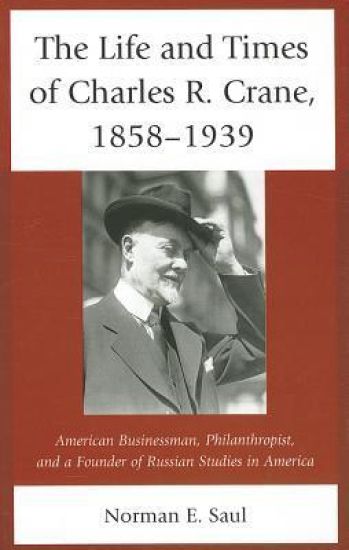
The Life and Times of Charles R. Crane, 1858–1939
In The Life and Times of Charles R. Crane, Norman E. Saul analyzes the contributions of Charles R. Crane, world traveler, businessman, diplomat, and philanthropist in the setting of his times. Crane acquired his appreciation for Russian culture and life through travel in the country, making a total of twenty-four trips to Russia. He developed friendships and professional relationships with many prominent Russians in political, cultural, and artistic spheres in addition to his connections to important figures in American history such as Woodrow Wilson. As the son of a Chicago industrialist with little formal education, Charles R. Crane enjoyed remarkable success serving as a financial backer and advisor to the Woodrow Wilson administration, founding member of the 1917 Root Commission to Russia, minister to China, and establishing a factory in Russia to manufacture air brakes for the Russian railroad. He devoted a considerable amount of his own time and resources to educating Americans about the Russian people. He sponsored visiting lecturers, subsidized publications, and commissioned works by Russian artists. Charles Crane was arguably the first true American globalist. His activities involved Russia, China, and the Middle East, but Saul emphasizes his travels in Russia and his role in the development and promotion of Russian studies in America. Crane represented the United States becoming a world power in business and diplomacy, and fostered an American appreciation and knowledge of Russian, Asian, and Middle Eastern societies. By studying this unusual man, Saul explores the world in which he lived and traveled. The relationship between America and Russia has always been a complex and fascinating one, and Saul shines light on a pivotal period in that relationship.
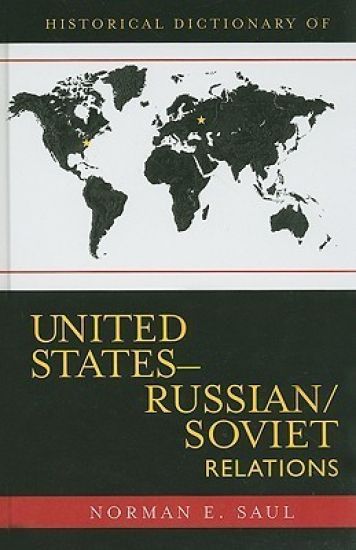
Historical Dictionary of United States-Russian/Soviet Relations
For more than 200 years the United States and Russia have shared a multi-faceted relationship. Because of the rise of power the two countries enjoyed in the late 19th and through the 20th century, Russian-American relations have dominated much of recent world history. Prior to World War II the two countries had relatively friendly contacts in culture, commerce, and diplomacy, however, as they contested for supremacy during the Cold War relations turned hostile and competitive. With the apparent end of the Cold War with the collapse of the Soviet Union and of communism in 1991, the relationship continues to evolve and the future looks uncertain but promising. The Historical Dictionary of United States-Russian/Soviet Relations identifies the key issues, individuals, and events in the history of U.S.-Russian/Soviet relations and places them in the context of the complex and dynamic regional strategic, political, and economic processes that have fashioned the American relationship with Russia. This is done through a chronology, a bibliography, an introductory essay, and several hundred cross-referenced dictionary entries on key persons, places, events, institutions, and organizations.
Historical Dictionary of Russian and Soviet Foreign Policy

Historical Dictionary of Russian and Soviet Foreign Policy

Norman E. Saul

Rowman Littlefield Publishers
2014
sidottu
The conduct of the foreign relations of the Russian state in its several contexts—Kiev Rus, Muscovy, Russian Empire, Provisional Government, Union of Soviet Socialist Republics, and Russian Federation—were unique in its common currents from the beginning to the present. Geography was certainly a key factor, located in the center of the world's largest land mass and surrounded by often hostile forces. “All of the Russias” had to confront the problems of open frontiers and the conduct of relations with a number of adjacent states of different ethnicity, and with many that were more distant. No other nation states had to face such complex and divergent circumstances over their histories. Most other Great Powers were neighbors of similar states in culture and historical background, whereas Russia had to deal with Asian, as well as European countries. The Historical Dictionary of Russian and Soviet Foreign Policy covers the history through a chronology, an introductory essay, appendixes, and an extensive bibliography. The dictionary section has over 700 cross-referenced entries on important individuals, events, and other aspects of the foreign policy of this important country. This book is an excellent access point for students, researchers, and anyone wanting to know more about Russian foreign policy.
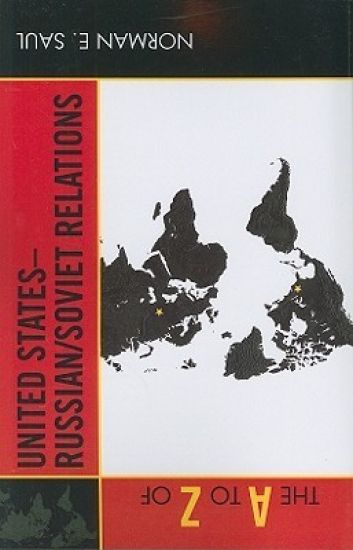
The A to Z of United States-Russian/Soviet Relations
For more than 200 years the United States and Russia have shared a multi-faceted relationship. Because of the rise of power the two countries enjoyed in the late 19th and through the 20th century, Russian-American relations have dominated much of recent world history. Prior to World War II the two countries had relatively friendly contacts in culture, commerce, and diplomacy, however, as they contested for supremacy during the Cold War relations turned hostile and competitive. With the apparent end of the Cold War with the collapse of the Soviet Union and of communism in 1991, the relationship continues to evolve and the future looks uncertain but promising. The A to Z of United States-Russian/Soviet Relations identifies the key issues, individuals, and events in the history of U.S.-Russian/Soviet relations and places them in the context of the complex and dynamic regional strategic, political, and economic processes that have fashioned the American relationship with Russia. This is done through a chronology, a bibliography, an introductory essay, and several hundred cross-referenced dictionary entries on key persons, places, events, institutions, and organizations.
Warfare Along the Mississippi: The Letters of Lieutenant Colonel George E. Currie

Warfare Along the Mississippi: The Letters of Lieutenant Colonel George E. Currie

George E. Currie; Norman E. Clarke

Literary Licensing, LLC
2011
sidottu
Warfare Along The Mississippi: The Letters Of Lieutenant Colonel George E. Currie is a book that contains a collection of letters written by Lieutenant Colonel George E. Currie during the American Civil War. The letters were written between 1862 and 1865 and provide a firsthand account of the military operations and battles that took place along the Mississippi River. Currie was a Union officer who served in the 54th Illinois Infantry Regiment and later in the 6th Missouri Cavalry Regiment. His letters describe the challenges and hardships faced by soldiers during the war, including disease, hunger, and fatigue. He also provides detailed descriptions of the battles he fought in, including the Siege of Vicksburg and the Battle of Nashville.The book includes an introduction by the editor, Mark A. Weitz, which provides historical context for the letters and explains their significance. The letters themselves are presented in chronological order and are accompanied by explanatory notes that provide additional information and context.Overall, Warfare Along The Mississippi: The Letters Of Lieutenant Colonel George E. Currie provides a valuable firsthand account of the American Civil War and the experiences of the soldiers who fought in it. It is a must-read for anyone interested in this period of American history.This scarce antiquarian book is a facsimile reprint of the old original and may contain some imperfections such as library marks and notations. Because we believe this work is culturally important, we have made it available as part of our commitment for protecting, preserving, and promoting the world's literature in affordable, high quality, modern editions, that are true to their original work.
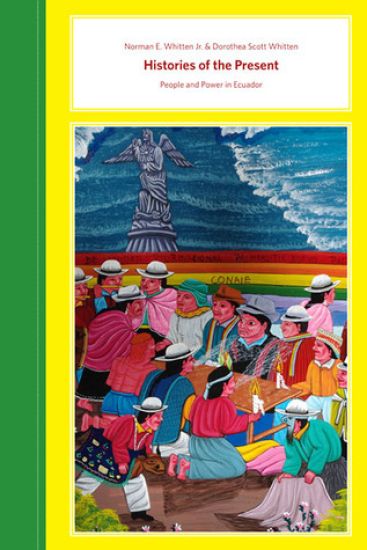
Histories of the Present

Histories of the Present

Norman E. Whitten; Dorothea Scott Whitten

University of Illinois Press
2011
sidottu
The wellspring of critical analysis in this book emerges from Ecuador's major Indigenous Uprising of 1990 and its ongoing aftermath in which indigenous and Afro-Ecuadorian action transformed the nation-state and established new dimensions of human relationships. The authors weave anthropological theory with longitudinal Ecuadorian ethnography to produce a unique contribution to Latin American studies.
Puyo Runa

Puyo Runa

Norman E. Whitten; Dorothea Scott Whitten

University of Illinois Press
2007
nidottu
The Andean nation of Ecuador derives much of its revenue from petroleum that is extracted from its vast Upper Amazonian rain forest, which is home to ten indigenous nationalities. Norman E. Whitten Jr. and Dorothea Scott Whitten have lived among and studied one such people, the Canelos Quichua, for nearly forty years. In Puyo Runa, they present a trenchant ethnography of history, ecology, imagery, and cosmology to focus on shamans, ceramic artists, myth, ritual, and political engagements. Canelos Quichua are active participants in national politics, including large-scale movements for social justice for Andean and Amazonian people. Puyo Runa offers readers exceptional insight into this cultural world, revealing its intricacies and embedded humanisms.
Histories of the Present

Histories of the Present

Norman E. Whitten; Dorothea Scott Whitten

University of Illinois Press
2011
nidottu
The wellspring of critical analysis in this book emerges from Ecuador's major Indigenous Uprising of 1990 and its ongoing aftermath in which indigenous and Afro-Ecuadorian action transformed the nation-state and established new dimensions of human relationships. The authors weave anthropological theory with longitudinal Ecuadorian ethnography to produce a unique contribution to Latin American studies.
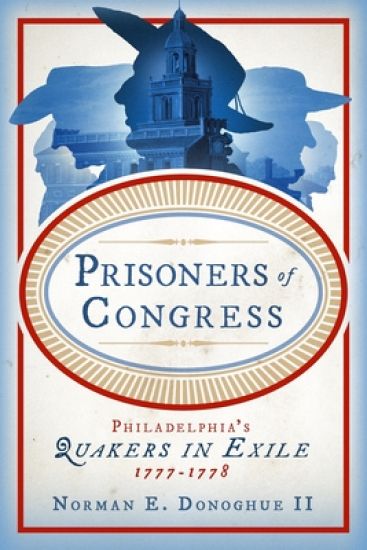
Prisoners of Congress

Prisoners of Congress

Norman E. Donoghue II

Pennsylvania State University Press
2023
sidottu
In 1777, Congress labeled Quakers who would not take up arms in support of the War of Independence as “the most Dangerous Enemies America knows” and ordered Pennsylvania and Delaware to apprehend them. In response, Keystone State officials sent twenty men—seventeen of whom were Quakers—into exile, banishing them to Virginia, where they were held for a year.Prisoners of Congress reconstructs this moment in American history through the experiences of four families: the Drinkers, the Fishers, the Pembertons, and the Gilpins. Identifying them as the new nation’s first political prisoners, Norman E. Donoghue II relates how the Quakers, once the preeminent power in Pennsylvania and an integral constituency of the colonies and early republic, came to be reviled by patriots who saw refusal to fight the English as borderline sedition. Surprising, vital, and vividly told, this narrative of political and literal warfare waged by the United States against a pacifist religious group during the Revolutionary War era sheds new light on an essential aspect of American history. It will appeal to anyone interested in learning more about the nation’s founding.
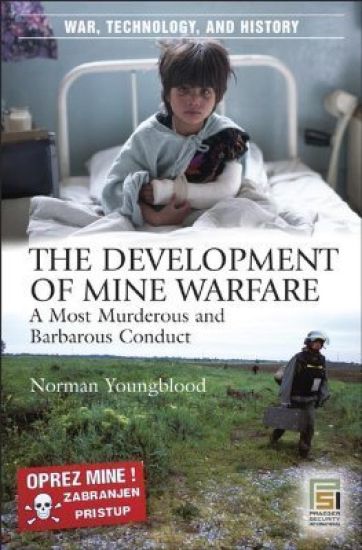
The Development of Mine Warfare

The Development of Mine Warfare

Norman E. Youngblood

Praeger Publishers Inc
2006
sidottu
In 1997, the International Campaign to Ban Landmines (ICBL) coordinated the Convention on the Prohibition of the Use, Stockpiling, Production, and Transfer of Anti-Personnel Mines and on their Destruction. As of mid-2005, 145 states had signed the agreement. The ICBL's efforts were in large part a response to the careless use of landmines in the previous fifty years. The history of mine use in warfare, however, goes back much further than the World Wars of the 20th century and includes both land and sea use. This first comprehensive study traces the technical, tactical, and ethical developments of mine warfare, from ancient times to the present. Beginning with mine warfare's roots in ancient Assyria and China, Youngblood takes the reader through the centuries of debate about how these hidden weapons should be used. A look at 19th-century developments explores the intertwined development of land and sea mines and the inventors behind them, including Robert Fulton, Samuel Colt, and Immanuel Nobel, father of Alfred Nobel. Subsequent chapters examine the use of mines in the American Civil War, the Russo-Japanese War, both World Wars, and the battlefields of the Cold War, and chart key battles and technical innovations, such as the development of air-delivered munitions. Finally, the author addresses the ethical concerns raised by the careless mining, namely the impact on civilians and the difficulties of de-mining, and the treaties that regulate landmine use.