Kirjojen hintavertailu. Mukana 11 244 527 kirjaa ja 12 kauppaa.

Kirjahaku

Etsi kirjoja tekijän nimen, kirjan nimen tai ISBN:n perusteella.

1000 tulosta hakusanalla Norman Jacobs; John Chaplin

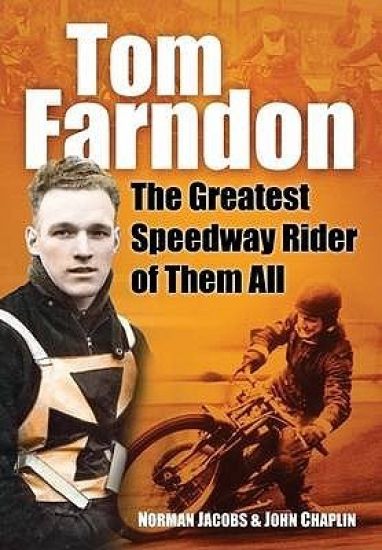
Tom Farndon

Tom Farndon

Norman Jacobs; John Chaplin

The History Press Ltd
2010
nidottu
Tom Farndon, a shy young man from Coventry, set out on the road to speedway stardom in 1929. Within five years he had reached celebrity status matched only by today's sporting idols. His skill, daring and remarkable ability had seen him achieve a fame and fortune unsurpassed on the speedway track. His good looks and sheer charisma brought him a huge fan following, particularly among young women, and his incredible talent for speedway racing brought him not only the admiration of his peers but the solid achievement of winning every dirt-track championship there was to be won. In 1935, just as he had reached the height of his fame, tragedy struck; he was killed in a track accident at the age of just twenty-four. To this day, Farndon is still revered throughout the speedway world as arguably the greatest rider of all time.Written by respected speedway historians Norman Jacobs and John Chaplin, and with the support and aid of his family, this is the story of Tom Farndon’s remarkable life and his unquenchable spirit of adventurous youth; a must-have for any fan of speedway and its heroes.

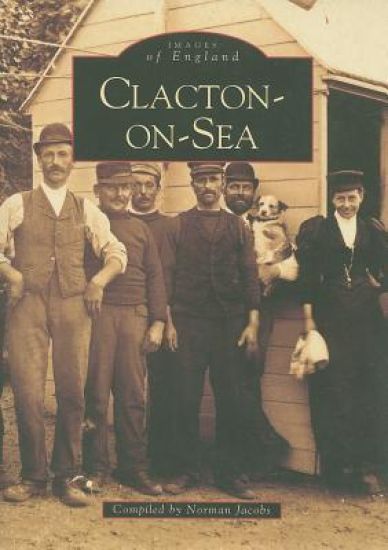
Clacton-on-Sea

Clacton-on-Sea

Norman Jacobs

The History Press Ltd
2000
nidottu
Clacton-on-Sea's motto Lux, Salubritas, Felicitas (Light, Health and Happiness), sums up the main reason for the town's existence. Born in 1871, the brainchild of Victorian entrepreneur Peter Bruff, it was created from nothing to become one of the country's leading seaside resorts. Its name derives from the ancient farming village of Great Clacton, about a mile inland from the then desolate area known as Clacton Beach. with a short acknowledgement to its mother village, this book deals mainly with the growth of its lusty offspring from its earliest days to its height as a seaside resort from the 1920s to the 1970s. The fact that the entire history of Clacton-on-Sea falls within the lifetime of the camera means that every part of Clacton's history has been charted by the photographer. This book brings together than exceptional selection of photographs, and great majority being published for the first time, to illustrate that history. All aspects of the town are here: its streets, its shops, its beach, the Pier, its entertainers, the events that shaped it and the people who moulded it. All are recorded in this compelling photographic record which is certain to evoke many memories for older residents and visitors while at the same time conjuring up the past for those new to the area and those visiting for the first time. The illustrations in this book are drawn mainly from the author's own collection, from those of the Clacton District Local History Society, of which he is the chairman, and from the archives of Tendring District Council.
Speedway in London

Speedway in London

Norman Jacobs

NPI Media Group
2001
nidottu
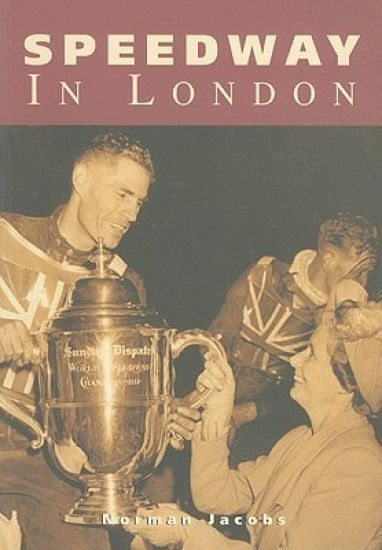
In the years on either side of the Second World War, London was the center of the speedway world at a time when the sport was seriously challenging soccer. This affectionate history looks at Wembley, West Ham, New Cross, Haringay, and all the other famous tracks, and chronicles the sport's development in the city.
Speedway in the South-East

Speedway in the South-East

Norman Jacobs

The History Press Ltd
2002
nidottu
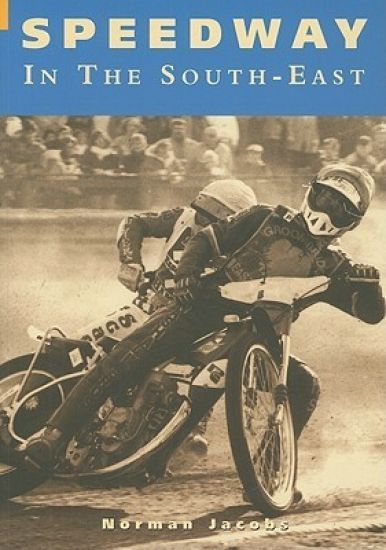
Speedway first saw the light of day in Great Britain on 19 February 1928 at High Beech. Since then, speedway has spread throughout the country, but the South-East remains the heart of the sport. This book relates the history of the region's many famous tracks, recounting classic races and famous riders.
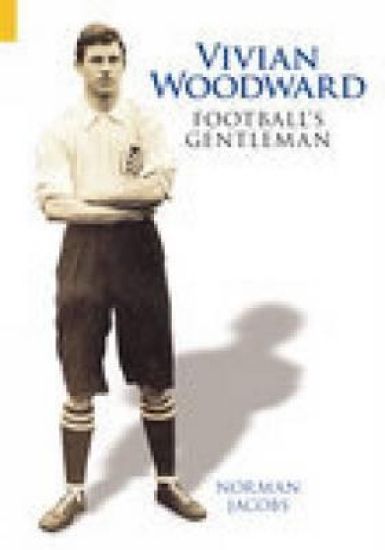
Vivian Woodward

Vivian Woodward

Norman Jacobs

The History Press Ltd
2005
sidottu
One of the true greats of English football, Vivian Woodward led England to victory in both the 1908 and 1912 Olympic Games. An amateur throughout his career, he was famous for his sportsmanship and as an embodiment of the Corinthian spirit.
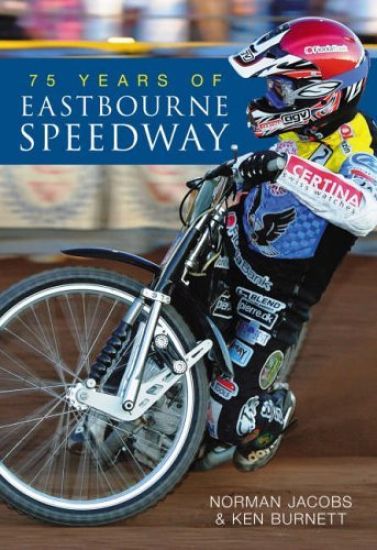
75 Years of Eastbourne Speedway

75 Years of Eastbourne Speedway

Norman Jacobs

The History Press Ltd
2006
nidottu
From an inconspicuous beginning in 1928, Eastbourne Speedway is one of the most popular and well-supported speedway tracks in the country which proudly takes its place among the Elite League clubs. Meant for those interested in the history of the sport, this illustrated volume presents the story of Eastbourne speedway.
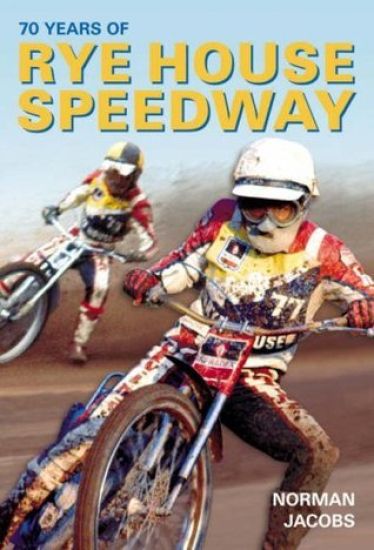
70 Years of Rye House Speedway

70 Years of Rye House Speedway

Norman Jacobs

The History Press Ltd
2007
nidottu
In its early days, Rye House was known as a track where riders could learn their trade under 'Queensberry' rules, but where the rigidity of the rulebook was occasionally sacrificed in the name of an enjoyable day's racing. This is the story of the first seventy years of Rye House speedway and the personalities associated with the track.
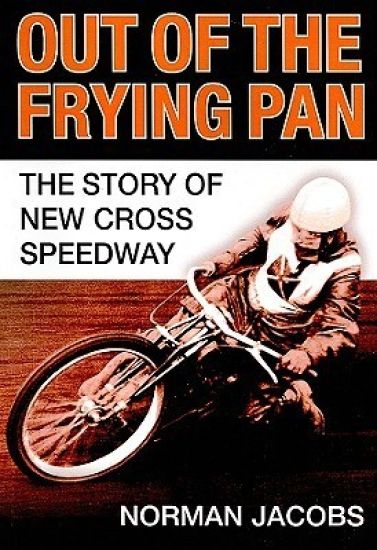
Out of the Frying Pan

Out of the Frying Pan

Norman Jacobs

The History Press Ltd
2008
nidottu
In 1926 two men, Fred Mockford and Cecil Smith, operating as London Motor Sports Ltd, introduced speedway racing to Crystal Palace. Path racing was an immediate draw to the general public who initially flooded to the track to witness the likes of Triss Sharp and Joe Francis hurtling around the track in the flesh. However, following disagreements with the Trustees of the Crystal Palace itself, Mockford and Smith found it necessary to relocate the team to the greyhound track at New Cross.Thus speedway had its home at New Cross for nearly thirty years and enjoyed a tumultuous but successful existence in all. The American rider, Jack Milne, was triumphant in the Speedway World Championship in 1937, and resides in the New Cross annals along with Johnnie Hoskins, George Newton, Tom Farndon, Ron Johnson and the Roger brothers, Bert and Cyril.
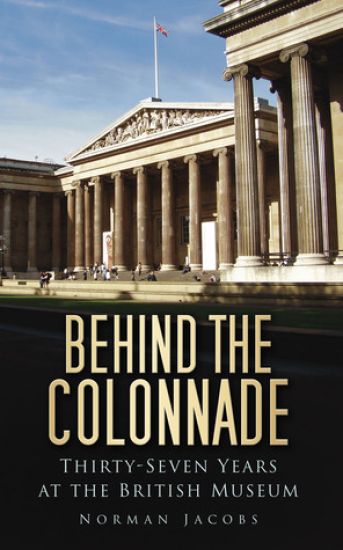
Behind the Colonnade

Behind the Colonnade

Norman Jacobs

The History Press Ltd
2010
nidottu
Norman Jacobs worked at the British Museum for thirty-seven years, during the period of its greatest change. He was intimately involved in a number of the key decisions and projects affecting the Museum, such as the separation of the British Library, the building of the Great Court and the controversy over free admission. He was also involved in a number of the scandals that made headlines in the newspapers, such as the 'Hypocrisy at the Top' story that caught the press and the public's imagination in the early 1980s. But this book is much more than just a look at the major issues affecting the Museum. It is also an affectionate and light-hearted peek behind the scenes at some of the great characters of the past forty years, and the amusing incidents that make up the day-to-day life of one of Britain's best-known and best-loved institutions.
Clacton-on-Sea: A Pictorial History

Clacton-on-Sea: A Pictorial History

Norman Jacobs

Phillimore Co Ltd
1993
nidottu
Clacton-on-Sea is a comparatively new town, founded as recently as 1871. It takes its name from the ancient and peaceful village of Great Clacton, having been built on an area known as Clacton Beach, then occupied only by three Martello towers and a scattering of coastguard cottages. This book deals with its first beginnings to its height as one the country’s leading seaside resorts in the 1920s and ’30s, with a superb selection of old pictures, capturing its streets, beach, its famous pier, paddle steamers and the Great Eastern Railway.
Frinton and Walton: A Pictorial History

Frinton and Walton: A Pictorial History

Norman Jacobs

Phillimore Co Ltd
1995
nidottu
Frinton-on-Sea and Walton-on-the-Naze have been bound up with one another for many years, together with the associated villages of Great Holland, Kirby-le-Soken and Kirby Cross. A century and a half ago, they were all small agricultural villages, but for Frinton and Walton, the change since that time has been dramatic. Frinton became a select resort for those in pursuit of a quiet vacation, while Walton, in contrast, catered with its pier, cinemas and amusement arcades for a livelier, family holiday. Change has been more gradual in Kirby and Great Holland.
Mass Media in Modern Society

Mass Media in Modern Society

Norman Jacobs

Routledge
2024
sidottu
In this lively and yet scholarly book, creative artists, people who direct channels of communications, and social scientists present their numerous positions and deeply felt disagreements. Originally released thirty years ago under the rubric Culture for the Millions, the work discusses whether or not American culture is in a state of rise or decline; whether mass media dilutes the arts or provides more art for more people; whether cultural leaders are in touch with their audiences, and other such issues. This volume brings together outstanding artists, scholars, and media executives who present their wide-ranging and deeply felt positions and disagreements. Mass Media in Modern Society remains a classic, not only for what it represents as a historical document, but also because of the centrality of its discussions about the nature of cultural participation and aesthetics hi modern society. The contributions include: Paul F. Lazarsfeld, "Mass Culture Today," Edward Shils, "Mass Society and Its Culture," Leo Lowenthal, "A Historical Preface to the Popular Culture" Debate," Hannah Arendt, "Society and Culture," Ernest van den Haag, "A Dissent from the Consensual Society," Oscar Handlin, "Comments on Mass and Popular Culture," Leo Rosten, "The Intellectual and the Mass Media," Frank Stanton, "Parallel Paths," James Johnson Sweeney, "The Artist and the Museum hi a Modern Society," Randall Jarrell, "A Sad Heart at the Supermarket," Arthur Asa Berger, "Notes on the Plight of the American Composer," James Baldwin, "Mass Culture and the Creative Artist," Stanley Edgar Hyman, "Ideals, Dangers, and Limitations of Mass Culture," H. Stewart Hughes, "Mass Culture and Social Criticism," Arthur Schlesinger, Jr., "Notes on a National Cultural Policy."
Mass Media in Modern Society

Mass Media in Modern Society

Norman Jacobs

Transaction Publishers
1992
nidottu
In this lively and yet scholarly book, creative artists, people who direct channels of communications, and social scientists present their numerous positions and deeply felt disagreements. Originally released thirty years ago under the rubric Culture for the Millions, the work discusses whether or not American culture is in a state of rise or decline; whether mass media dilutes the arts or provides more art for more people; whether cultural leaders are in touch with their audiences, and other such issues. This volume brings together outstanding artists, scholars, and media executives who present their wide-ranging and deeply felt positions and disagreements. Mass Media in Modern Society remains a classic, not only for what it represents as a historical document, but also because of the centrality of its discussions about the nature of cultural participation and aesthetics hi modern society. The contributions include: Paul F. Lazarsfeld, "Mass Culture Today," Edward Shils, "Mass Society and Its Culture," Leo Lowenthal, "A Historical Preface to the Popular Culture" Debate," Hannah Arendt, "Society and Culture," Ernest van den Haag, "A Dissent from the Consensual Society," Oscar Handlin, "Comments on Mass and Popular Culture," Leo Rosten, "The Intellectual and the Mass Media," Frank Stanton, "Parallel Paths," James Johnson Sweeney, "The Artist and the Museum hi a Modern Society," Randall Jarrell, "A Sad Heart at the Supermarket," Arthur Asa Berger, "Notes on the Plight of the American Composer," James Baldwin, "Mass Culture and the Creative Artist," Stanley Edgar Hyman, "Ideals, Dangers, and Limitations of Mass Culture," H. Stewart Hughes, "Mass Culture and Social Criticism," Arthur Schlesinger, Jr., "Notes on a National Cultural Policy."
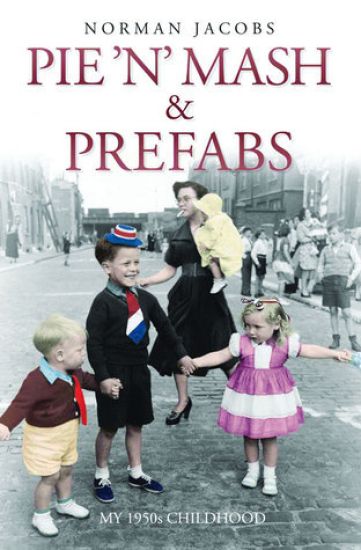
Pie 'n' Mash and Prefabs - My 1950s Childhood

Pie 'n' Mash and Prefabs - My 1950s Childhood

Norman Jacobs

John Blake Publishing Ltd
2015
nidottu
The Blitz had made many families in the East End of London homeless. One solution was to erect prefabs on fields and open spaces to give temporary accommodation to those who had been bombed out. It was in one of these 'modern' boxes that young Norman Jacobs grew up through the 1950s and 1960s. In a lively, detailed and humorous picture of a postwar Hackney childhood, Norman takes us back to an age of rationing, bomb sites, street markets, colourful characters and camaraderie. And in reminiscing about stodgy school food, jumpers for goalposts, Listen with Mother, greyhound racing, pie 'n' mash, holiday camps, and the advent of American-style burger bars, he provides a glimpse into a way of life that has vanished for ever. Set against a backdrop of Rock 'n' Roll, the Cuban Missile Crisis and the assassination of President Kennedy, funny, poignant and sometimes sad, Norman's is a story full of innocence and happiness that will take you back to the best of times - the days we thought would never end.
Cracked Eggs and Chicken Soup - A Memoir of Growing Up Between The Wars
In this revealing memoir of childhood, the author shows not only what affected his family, but also reveals a large slice of social history concerning the lives of all ordinary working-class people struggling to live in the slums of the East End of London in those pre-Welfare State days. He writes with sympathy, and sometimes anger, of the overcrowded houses with families of anything up to eight children, as his own had, living in just two or three rooms with outside W.C. and water tap; of the reliance on charity and the soup kitchen for food; of trying to eke out what little income they had by buying stale bread and cracked eggs or other cheap food from the many itinerant street sellers.Yet this is also a chronicle of what was a turbulent time in British history, and especially in the East End, with its then still large Jewish and Irish populations. So here too is an eyewitness account of the Depression, and of the provocative marches by Sir Oswald Mosley's British Union of Fascists through the area, culminating in the Battle of Cable Street that saw the marchers turned back by the efforts of Jewish, Irish, communist and socialist protestors. Above all, however, Norman Jacobs writes with affection of the area and its extraordinary mix of peoples, as well as the now-vanished aspects of everyday life, such as the music hall, the two-valve radio, and the first Cup Final to be played at Wembley.
Clacton Past with Holland-on-Sea and Jaywick

Clacton Past with Holland-on-Sea and Jaywick

Norman Jacobs

Phillimore Co Ltd
2002
nidottu
Though the nearby village of Great Clacton is an ancient Saxon settlement, Clacton-on-Sea is a comparatively new town, born in 1871. Paradoxically, it is one of the oldest known sites of human habitation in Britain, as evidenced by a 400,000-year-old spearhead discovered in the cliff below Clacton Hospital, and many other archaeological finds. In his latest and most comprehensive book on Clacton, the author traces the town’s past, from prehistoric time to the present day, in a well-researched narrative, richly illustrated with maps, photographs and other pictures.
Speedway's Classic Meetings

Speedway's Classic Meetings

Norman Jacobs; Chris Broadbent

The History Press Ltd
2002
nidottu
The post-war era was British speedway's golden age. Ten million spectators passed through the turnstiles of a record number of tracks at the sport's peak. With league gates as high as 80,000, speedway offered a colourful means of escape from the grim austerity of the times. A determinedly clean image, with no betting and rival fans mingling on the terraces, made speedway the family night out of choice. The sport thrived despite punitive taxation and Government threats to close down the speedways as a threat to industrial productivity. A three-division National League stretched from Exeter to Edinburgh and the World Championship Final attracted a capacity audience to Wembley. Test matches against Australia provided yet another international dimension. Even at the height of its popularity, speedway was a sporting edifice built on unstable foundations. These crumbled alarmingly as the 1950s progressed and Britain's economic and social recovery brought competing attractions like television. Although many tracks, including famous venues like Wembley, fell by the wayside, the surviving clubs continued to attract large and enthusiastic crowds and the period saw the maturing careers of some of the sport's legendary stars, including Peter Craven, Ronnie Moore, Ove Fundin and Barry Briggs.