Kirjojen hintavertailu. Mukana 11 244 527 kirjaa ja 12 kauppaa.

Kirjahaku

Etsi kirjoja tekijän nimen, kirjan nimen tai ISBN:n perusteella.

1000 tulosta hakusanalla Oliver Leaman

Eastern Philosophy: Key Readings

Eastern Philosophy: Key Readings

Oliver Leaman

Routledge
2000
sidottu
Through key readings from primary and secondary sources this book communicates at first hand the principal features of a remarkable range of Eastern thought - from Buddhism, Confucianism, and Hinduism to Islam, Shinto, and Zoroastrianism. Passages from key texts guide the reader through over ninety major terms, from abhidharma to Zen. Material is drawn not only from such cornerstone texts as the Bhagavad-gita and the Lao-tzu, but also from modern writings on Eastern philosophy and religion.
Eastern Philosophy: Key Readings

Eastern Philosophy: Key Readings

Oliver Leaman

Routledge
2000
nidottu
Through key readings from primary and secondary sources this book communicates at first hand the principal features of a remarkable range of Eastern thought - from Buddhism, Confucianism, and Hinduism to Islam, Shinto, and Zoroastrianism. Passages from key texts guide the reader through over ninety major terms, from abhidharma to Zen. Material is drawn not only from such cornerstone texts as the Bhagavad-gita and the Lao-tzu, but also from modern writings on Eastern philosophy and religion.
Key Concepts in Eastern Philosophy

Key Concepts in Eastern Philosophy

Oliver Leaman

Routledge
1999
sidottu
Key Concepts in Eastern Philosophy provides an extensive glossary of the main terms and concepts used in Eastern philosophy. The book includes definitions of philosophical ideas linked to the national traditions of:* Persia* India* Islamic world* China* Japan* Tibetincluding concepts from:* Zoroastrianism* Hinduism* Sufism* Islam * Confucianism* Shintoism* Taoism* BuddhismEach entry includes a guide for further reading and critical analysis, and is cross-referenced with associated concepts and is in easy-to-use A-Z format.
Key Concepts in Eastern Philosophy

Key Concepts in Eastern Philosophy

Oliver Leaman

Routledge
1999
nidottu
Key Concepts in Eastern Philosophy provides an extensive glossary of the main terms and concepts used in Eastern philosophy. The book includes definitions of philosophical ideas linked to the national traditions of:* Persia* India* Islamic world* China* Japan* Tibetincluding concepts from:* Zoroastrianism* Hinduism* Sufism* Islam * Confucianism* Shintoism* Taoism* BuddhismEach entry includes a guide for further reading and critical analysis, and is cross-referenced with associated concepts and is in easy-to-use A-Z format.
Jewish Thought

Jewish Thought

Oliver Leaman

Routledge
2006
sidottu
This fresh and contemporary introduction to the Jewish faith, its philosophies and worldviews, explores debates which have preoccupied Jewish thinkers over the centuries and examines their continuing influence in contemporary Judaism.Written by Oliver Leaman, a leading figure in the field, the book surveys the central controversies in Judaism, including the protracted arguments within the religion itself. Topics range from the relations between Judaism and other religions, such as Islam and Christianity, to contemporary issues such as sex, gender and modernity. Central themes such as authority and obedience, the relations between Jewish and Greek thought, and the position and status of the State of Israel are also considered. The debates are further illustrated by reference to the Bible, as a profoundly realistic text in describing the long interaction between the Jews, their ancestors and God, as well as discussions about major thinkers, and passages from the ancient texts: The Mishnah, Talmud and Midrash.Oliver Leaman’s lively approach and light touch makes Jewish Thought ideal reading for anyone who wants to understand more about the Jewish faith and its outlook, past and present.
Jewish Thought

Jewish Thought

Oliver Leaman

Routledge
2006
nidottu
This fresh and contemporary introduction to the Jewish faith, its philosophies and worldviews, explores debates which have preoccupied Jewish thinkers over the centuries and examines their continuing influence in contemporary Judaism.Written by Oliver Leaman, a leading figure in the field, the book surveys the central controversies in Judaism, including the protracted arguments within the religion itself. Topics range from the relations between Judaism and other religions, such as Islam and Christianity, to contemporary issues such as sex, gender and modernity. Central themes such as authority and obedience, the relations between Jewish and Greek thought, and the position and status of the State of Israel are also considered. The debates are further illustrated by reference to the Bible, as a profoundly realistic text in describing the long interaction between the Jews, their ancestors and God, as well as discussions about major thinkers, and passages from the ancient texts: The Mishnah, Talmud and Midrash.Oliver Leaman’s lively approach and light touch makes Jewish Thought ideal reading for anyone who wants to understand more about the Jewish faith and its outlook, past and present.
Controversies in Contemporary Islam
This book helps to deepen our understanding of the varieties of contemporary Islam and the issues that are of most concern to Muslims today. Oliver Leaman explores some of the controversies and debates that exist within Islam and between Islam and other religions. He considers how the religion can be defined by looking at the contrast between competing sets of beliefs, and arguments amongst Muslims themselves over the nature of the faith. Areas covered include: Qur’anic interpretation, gender, finance, education, and nationalism. Examples are taken from a range of contexts and illustrate the diversity of approaches to Islam that exists today.
Controversies in Contemporary Islam
This book helps to deepen our understanding of the varieties of contemporary Islam and the issues that are of most concern to Muslims today. Oliver Leaman explores some of the controversies and debates that exist within Islam and between Islam and other religions. He considers how the religion can be defined by looking at the contrast between competing sets of beliefs, and arguments amongst Muslims themselves over the nature of the faith. Areas covered include: Qur’anic interpretation, gender, finance, education, and nationalism. Examples are taken from a range of contexts and illustrate the diversity of approaches to Islam that exists today.
Evil and Suffering in Jewish Philosophy

Evil and Suffering in Jewish Philosophy

Oliver Leaman

Cambridge University Press
1997
pokkari
The problems of evil and suffering have been extensively discussed in Jewish philosophy, and much of the discussion has centred on the Book of Job. In this study Oliver Leaman poses two questions: how can a powerful and caring deity allow terrible things to happen to obviously innocent people, and why have the Jewish people been so harshly treated throughout history, given their status as the chosen people? He explores these issues through an analysis of the views of Philo, Saadya, Maimonides, Gersonides, Spinoza, Mendelssohn, Hermann Cohen, Buber, Rosenzweig, and post-Holocaust thinkers, and suggests that a discussion of evil and suffering is really a discussion about our relationship with God.
An Introduction to Classical Islamic Philosophy

An Introduction to Classical Islamic Philosophy

Oliver Leaman

Cambridge University Press
2001
sidottu
Islamic philosophy is a unique and fascinating form of thought, and particular interest lies in its classical (Greek-influenced) period, when many of the ideas of Greek philosophy were used to explore the issues and theoretical problems which arise in trying to understand the Qur'an and Islamic practice. In this revised and expanded 2001 edition of his classic introductory work, Oliver Leaman examines the distinctive features of Classical Islamic philosophy and offers detailed accounts of major individual thinkers. In contrast to many previous studies that have treated this subject as only of historical interest, he offers analysis of the key arguments within Islamic philosophy so that the reader can engage with them and assess their strengths and weaknesses. His book will interest a wide range of readers in philosophy, religious studies and Islamic studies.
An Introduction to Classical Islamic Philosophy

An Introduction to Classical Islamic Philosophy

Oliver Leaman

Cambridge University Press
2001
pokkari
Islamic philosophy is a unique and fascinating form of thought, and particular interest lies in its classical (Greek-influenced) period, when many of the ideas of Greek philosophy were used to explore the issues and theoretical problems which arise in trying to understand the Qur’an and Islamic practice. In this revised and expanded edition of his classic introductory work, Oliver Leaman examines the distinctive features of Classical Islamic philosophy and offers detailed accounts of major individual thinkers. In contrast to many previous studies that have treated this subject as only of historical interest, he offers analysis of the key arguments within Islamic philosophy so that the reader can engage with them and assess their strengths and weaknesses. His book will interest a wide range of readers in philosophy, religious studies and Islamic studies.
Friendship East and West

Friendship East and West

Oliver Leaman

RoutledgeCurzon
1996
sidottu
There has been renewed interest in the concept of friendship in contemporary philosophy. Many of the existing treatments of the topic have been limited to Western notions of friendship, yet there is a far wider perspective available to us through an examination of a more extended cultural examination of the topic. Cultures other than those in Christian Europe have had important and interesting observations to make on the nature of friendship, and in this collection there is treatment not only of Greek and Christian ideas of friendship, but also of Islamic, Jewish, Chinese, Japanese and Indian perspectives. A rich and extended view of the concept of friendship results from these various examinations.
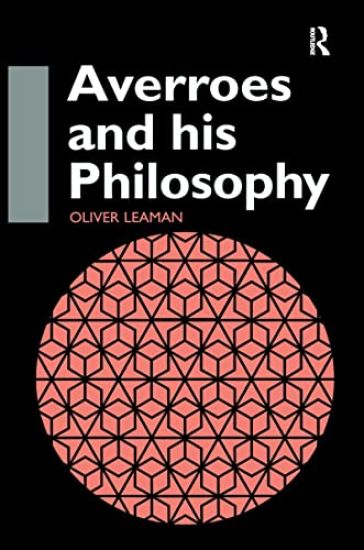
Averroes and His Philosophy

Averroes and His Philosophy

Oliver Leaman

RoutledgeCurzon
1997
nidottu
Despite his important stature in the history of philosophy, Averroes is a thinker whose work has been left largely unexplored in this century. It is the aim of this book to rectify this omission, and to argue that his philosophical output is of considerable philosophical as well as historical significance.
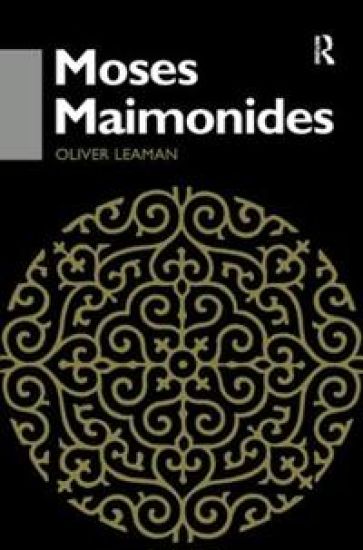
Moses Maimonides

Moses Maimonides

Oliver Leaman

RoutledgeCurzon
1997
nidottu
Moses Maimonides (1135--1204) is recognized both as a leading Jewish thinker and as one of the most radical philosophers of the Islamic world. The study reveals the significance of Maimonides to contemporary philosophical and theological problems.
Islamic Philosophy

Islamic Philosophy

Oliver Leaman

Polity Press
2009
sidottu
Although Islamic philosophy represents one of the leading philosophical traditions in the world, it has only recently begun to receive the attention it deserves in the non-Islamic world. This important text provides a concise and accessible introduction to the major movements, thinkers and concepts within that tradition, from the foundation of Islam to the present day. Ever since the growth of Islam as a religious and political movement, Muslim thinkers have sought to understand the theoretical aspects of their faith by using philosophical concepts. Leaman outlines this history and demonstrates that, although the development of Islamic philosophy is closely linked with Islam itself, its form is not essentially connected to any particular religion, and its leading ideas and arguments are of general philosophical significance. The author illustrates the importance of Islamic thought within philosophy through the use of many modern examples. He describes and contrasts the three main movements in Islamic philosophy ? Peripatetic, Sufi and Illuminationist ? and examines the Persian as well as the Arabic traditions. Wide coverage is given to key aspects of Islamic philosophy, including epistemology, ontology, politics, ethics and philosophy of language, providing readers with a balanced view of the discipline. The second edition has been thoroughly revised and updated throughout, including the addition of two new chapters on recent debates surrounding Islam's need for an enlightenment, and on the future of Islamic philosophy. The new edition of Islamic Philosophy will continue to be essential reading for students and scholars of the subject, as well as anyone wanting to learn more about one of the most significant and influential philosophical traditions in the world today.
Islamic Philosophy

Islamic Philosophy

Oliver Leaman

Polity Press
2009
nidottu
Although Islamic philosophy represents one of the leading philosophical traditions in the world, it has only recently begun to receive the attention it deserves in the non-Islamic world. This important text provides a concise and accessible introduction to the major movements, thinkers and concepts within that tradition, from the foundation of Islam to the present day. Ever since the growth of Islam as a religious and political movement, Muslim thinkers have sought to understand the theoretical aspects of their faith by using philosophical concepts. Leaman outlines this history and demonstrates that, although the development of Islamic philosophy is closely linked with Islam itself, its form is not essentially connected to any particular religion, and its leading ideas and arguments are of general philosophical significance. The author illustrates the importance of Islamic thought within philosophy through the use of many modern examples. He describes and contrasts the three main movements in Islamic philosophy ? Peripatetic, Sufi and Illuminationist ? and examines the Persian as well as the Arabic traditions. Wide coverage is given to key aspects of Islamic philosophy, including epistemology, ontology, politics, ethics and philosophy of language, providing readers with a balanced view of the discipline. The second edition has been thoroughly revised and updated throughout, including the addition of two new chapters on recent debates surrounding Islam's need for an enlightenment, and on the future of Islamic philosophy. The new edition of Islamic Philosophy will continue to be essential reading for students and scholars of the subject, as well as anyone wanting to learn more about one of the most significant and influential philosophical traditions in the world today.

Islamic Aesthetics

Islamic Aesthetics

Oliver Leaman

Edinburgh University Press
2004
sidottu
Is there something unique about Islamic art? This book argues that there is not -- that Islam does not play an leading role in the aesthetic judgements that we should make about objects created in the Islamic world. It is often argued that a very special sort of consciousness went into creating Islamic art, that it is very different from other forms of art, that Muslims are not allowed to portray human beings in their art, and that calligraphy is the supreme Islamic art form. Oliver Leaman challenges all these ideas, showing them to be misguided. Instead he suggests that the sort of criteria we should apply to Islamic art are identical to the criteria applicable to art in general, and that the attempt to put Islamic art into a special category is a result of orientalism Key Features: *Criticises the influence of Sufism on Islamic aesthetics *Deals with issues arising in painting, calligraphy, architecture, gardens, literature, films, and music *Pays close attention to the Qur'an *Argument includes examples from history, art, philosophy, theology and the artefacts of the Islamic world The reader is invited to view Islamic art as no more and no less than ordinary art, neither better nor worse than anything else that counts as art. It follows that there are no special techniques required in Islamic aesthetics as compared with any other form of aesthetics.
Islamic Aesthetics

Islamic Aesthetics

Oliver Leaman

Edinburgh University Press
2004
nidottu
Is there something unique about Islamic art? This book argues that there is not -- that Islam does not play an leading role in the aesthetic judgements that we should make about objects created in the Islamic world. It is often argued that a very special sort of consciousness went into creating Islamic art, that it is very different from other forms of art, that Muslims are not allowed to portray human beings in their art, and that calligraphy is the supreme Islamic art form. Oliver Leaman challenges all these ideas, showing them to be misguided. Instead he suggests that the sort of criteria we should apply to Islamic art are identical to the criteria applicable to art in general, and that the attempt to put Islamic art into a special category is a result of orientalism Key Features: *Criticises the influence of Sufism on Islamic aesthetics *Deals with issues arising in painting, calligraphy, architecture, gardens, literature, films, and music *Pays close attention to the Qur'an *Argument includes examples from history, art, philosophy, theology and the artefacts of the Islamic world The reader is invited to view Islamic art as no more and no less than ordinary art, neither better nor worse than anything else that counts as art. It follows that there are no special techniques required in Islamic aesthetics as compared with any other form of aesthetics.
Averroes and His Philosophy

Averroes and His Philosophy

Oliver Leaman

Routledge
2016
sidottu
Despite his important stature in the history of philosophy, Averroes is a thinker whose work has been left largely unexplored in this century. It is the aim of this book to rectify this omission, and to argue that his philosophical output is of considerable philosophical as well as historical significance.
Moses Maimonides

Moses Maimonides

Oliver Leaman

Routledge
2017
sidottu
Moses Maimonides (1135--1204) is recognized both as a leading Jewish thinker and as one of the most radical philosophers of the Islamic world. The study reveals the significance of Maimonides to contemporary philosophical and theological problems.