There's a new set of twin boys on the scene, and like Sammie and Charlie, these twins are almost identical. Charlie's friends, and the popular kids, are quick to accept the cuter boy. But when a bonfire on the beach gets out of control, Charlie's group blames it on the other twin. Both Sammie and Charlie know he isn't the boy to blame, but will they have the courage to come forward to tell the truth and double-cross the popular kids?
Tiger and Luna return to the fantastic frame to enter the famous dotted world of Georges Seurat’s painting, A Sunday Afternoon on the Island of La Grande Jatte. After arriving dripping wet on the shore of the pleasant scene, they dash through Paris, get captured by police, and encounter one misadventure after another. And of course, Tiger and Luna must return to the real world to avoid getting trapped in the painting before time runs out! Praise for Danger! Tiger Crossing: “Ten-year-old Tiger Brooks and his neighbour, Luna Lopez, get up-close and personal with Henri Rousseau’s ’Tiger in a Tropical Storm’ in this action-driven first book in the Fantastic Frame series.” - Publishers Weekly \ “Oliver keeps the plot itself snappy and peppy.” - Kirkus
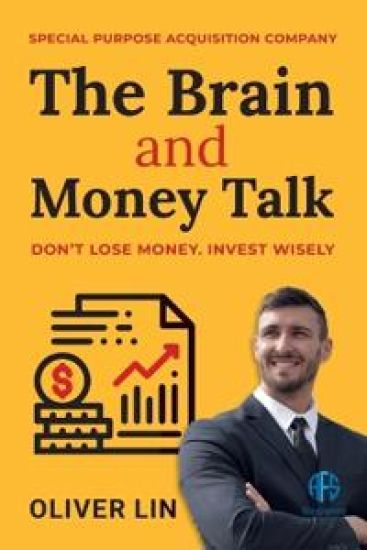
Every day millions of people dream of becoming a millionaire. They want to be part of the world's foremost exciting financial center, Wall Street, in America. They look for the opportunity to own a Special Purpose Acquisition Company (SPAC), become a president of a U.S. public company or invest in listed securities - all to make money and get rich. Based on facts and hypothetical cases like real life, The Brain and Money Talk provides you with the tactical approach to investing in SPAC, inspirational and rational. With Covid-19 around, DON'T LOSE MONEY. INVEST WISELY. The guidance notes are so irresistible that they wake you up, evaluate the opportunity and avoid or reduce your investment risk. Take a position and be a striker on the playing field in SPAC investing.
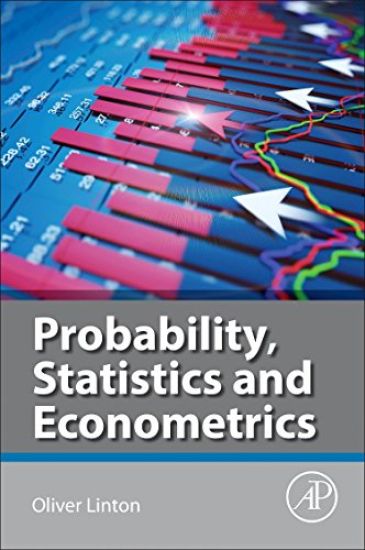
Probability, Statistics and Econometrics provides a concise, yet rigorous, treatment of the field that is suitable for graduate students studying econometrics, very advanced undergraduate students, and researchers seeking to extend their knowledge of the trinity of fields that use quantitative data in economic decision-making. The book covers much of the groundwork for probability and inference before proceeding to core topics in econometrics. Authored by one of the leading econometricians in the field, it is a unique and valuable addition to the current repertoire of econometrics textbooks and reference books.
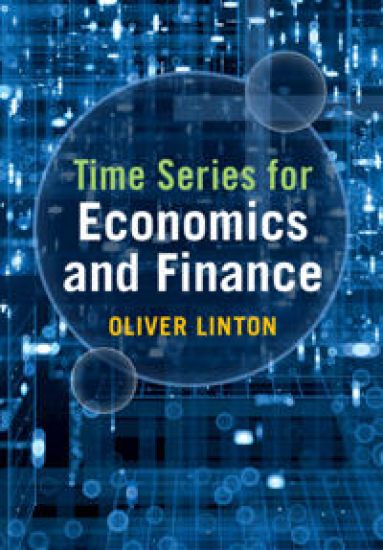
Focusing on methods for data that are ordered in time, this textbook provides a comprehensive guide to analyzing time series data using modern techniques from data science. It is specifically tailored to economics and finance applications, aiming to provide students with rigorous training. Chapters cover Bayesian approaches, nonparametric smoothing methods, machine learning, and continuous time econometrics. Theoretical and empirical exercises, concise summaries, bolded key terms, and illustrative examples are included throughout to reinforce key concepts and bolster understanding. Ancillary materials include an instructor's manual with solutions and additional exercises, PowerPoint lecture slides, and datasets. With its clear and accessible style, this textbook is an essential tool for advanced undergraduate and graduate students in economics, finance, and statistics.
Focusing on methods for data that are ordered in time, this textbook provides a comprehensive guide to analyzing time series data using modern techniques from data science. It is specifically tailored to economics and finance applications, aiming to provide students with rigorous training. Chapters cover Bayesian approaches, nonparametric smoothing methods, machine learning, and continuous time econometrics. Theoretical and empirical exercises, concise summaries, bolded key terms, and illustrative examples are included throughout to reinforce key concepts and bolster understanding. Ancillary materials include an instructor's manual with solutions and additional exercises, PowerPoint lecture slides, and datasets. With its clear and accessible style, this textbook is an essential tool for advanced undergraduate and graduate students in economics, finance, and statistics.
Empirical Finance: Theory and Application offers a modern, data-driven introduction to the field of finance, tailored for undergraduate students and practitioners seeking to bridge theory with real-world evidence. In an era defined by abundant data and computational power, this book emphasizes hands-on learning by integrating financial theory, empirical analysis, and practical implementation using Python and R. Each chapter balances intuitive explanations with mathematical rigor, ensuring that readers not only understand key concepts but also learn how to test them with actual data. Structured in two parts, the book begins with a thorough review of essential quantitative tools—optimization, probability, and statistics—providing the foundation needed for empirical work. The second part applies these tools to core topics in finance, including asset pricing, portfolio choice, market efficiency, event studies, and volatility modeling. Real-world examples and case studies—such as testing the Efficient Markets Hypothesis, analyzing stock splits, and evaluating the equity premium—bring the material to life and illustrate how empirical methods can validate or challenge economic intuition. A distinctive feature of this text is its emphasis on reproducibility and application. Code snippets, exercises, and datasets enable readers to replicate results and develop their own analyses. Topics like time-series properties of returns, portfolio management and behavioral finance are treated with both theoretical and empirical depth, preparing students for quantitative internships, graduate studies, or roles in the financial industry. Ideal for courses in Empirical Finance, Financial Econometrics, or Quantitative Finance, this book stands out for its clear exposition, relevance to contemporary practice, and commitment to evidence-based reasoning. It empowers a new generation of finance students to think critically, work with data, and understand markets not as a set of abstract rules, but as a dynamic interplay of economics, data, and technology. Key Features: · Seamlessly integrates hands-on coding in both Python and R with financial theory, enabling readers to replicate results and conduct their own empirical analysis. · Strikes a unique balance between financial intuition, mathematical clarity, and real-world application, avoiding the common extremes of abstract theory or mere data manipulation. · Structured in two distinct parts—first building essential quantitative tools (optimization, probability, statistics) before applying them to core finance topics—ensuring a solid foundation for empirical work. · Uses contemporary, relevant examples throughout, such as testing market anomalies, analyzing cryptocurrency returns, and conducting event studies on recent scandals. · Emphasizes a data-centric approach to validate or challenge economic reasoning, teaching students to treat finance as a dynamic, evidence-based discipline.
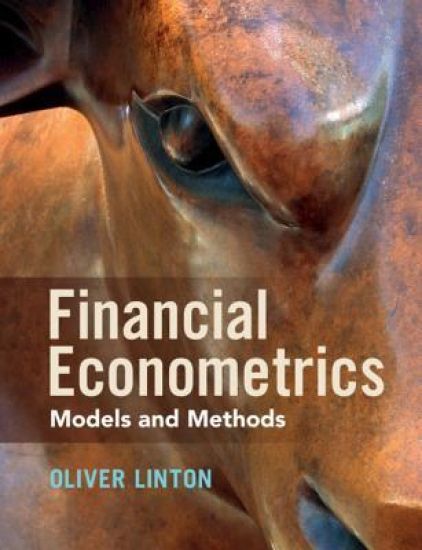
This is a thorough exploration of the models and methods of financial econometrics by one of the world's leading financial econometricians and is for students in economics, finance, statistics, mathematics, and engineering who are interested in financial applications. Based on courses taught around the world, the up-to-date content covers developments in econometrics and finance over the last twenty years while ensuring a solid grounding in the fundamental principles of the field. Care has been taken to link theory and application to provide real-world context for students. Worked exercises and empirical examples have also been included to make sure complicated concepts are solidly explained and understood.
This book attempts to explain the central mysteries of Quantum Theory in a simple way without pulling any punches. A novel interpretation of that theory is suggested which provides insights into the nature of reality and which may point the way forward towards an eventual understanding of the nature of human consciousness.
This is a thorough exploration of the models and methods of financial econometrics by one of the world's leading financial econometricians and is for students in economics, finance, statistics, mathematics, and engineering who are interested in financial applications. Based on courses taught around the world, the up-to-date content covers developments in econometrics and finance over the last twenty years while ensuring a solid grounding in the fundamental principles of the field. Care has been taken to link theory and application to provide real-world context for students. Worked exercises and empirical examples have also been included to make sure complicated concepts are solidly explained and understood.
Published to coincide with the 60th anniversary of liberation of Hong Kong and VJ Day, this is the authoritative account of how the British, Canadian, Indian and Chinese defenders surrendered Hong Kong to the Japanese after 18 days of intense fighting, on Christmas Day, 1941. The nightmare of the Japanese invasion of Hong Kong and a remarkable story of endurance and courage under appalling conditions, with vivid descriptions of life as a prisoner of the Japanese. Illuminated by a then architectural student's extraordinary story: a 'civilian's' insight of war although pitch-forked into battles as a young subaltern in the Royal Engineers. The award of one VC and four George Crosses in one small theatre of war is unique. A story of espionage, betrayal and heroism - was the senior British Intelligence office helping the Japanese? Thoroughly researched, with exceptional access to war diaries and graphically written personal accounts, superbly told by an expert authority. The book also covers the activities of the British Army Aid Group (BAAG), the cover name of those spying in Southeast Asia; their extraordinarily successful activities suddenly collapsed with catastrophic repercussions for many.
In this remarkable study of the Far Eastern War, Oliver Lindsay and John R Harris have provided the most thorough and searching enquiry into the debacle which led to over 12,000 British, Canadian, Indian and Chinese defenders surrendering Hong Kong on Christmas Day 1941. The authors have made use of a mass of unpublished material - part of it drawn from the original war diaries which have never before been in the public domain. Although it is over 60 years since Hong Kong was liberated from the Japanese, numerous important questions regarding the war in the East and occupation of the Colony from 1941 to 1945 have not been explored until now. To what extent, for example, were Churchill and the successive Chiefs of the Imperial General Staff responsible for abandoning this outpost, which could not be reinforced when attacked or defended adequately? Is it true that fine leadership prolonged the fighting, inflicting serious casualties on the highly experienced Japanese when they struck in 1941? How useful was Britain's spying organization in China, which led to catastrophic repercussions for the POWs and Internees? What form did the Japanese atrocities take upon the helpless captives? This detailed and authoritative account of the campaign will provide a particularly compelling read for those interested in the Second World War or the history of the Far East.
What are fractals? Why are they such fun? How do you make one? Why is a dripping tap not as random as it seems? What is chaos? Is the Mandelbrot Set really the most complex object in mathematics? In this beautifully illustrated book, fractal-hunter Oliver Linton takes us on a fascinating journey into the mathematics of fractals and chaos, diving into many kinds of self- similar structures to reveal some of the most recently discovered and intriguing patterns in science and nature. WOODEN BOOKS are small but packed with information. "Fascinating" FINANCIAL TIMES. "Beautiful" LONDON REVIEW OF BOOKS. "Rich and Artful" THE LANCET. "Genuinely mind-expanding" FORTEAN TIMES. "Excellent" NEW SCIENTIST. "Stunning" NEW YORK TIMES. Small books, big ideas.
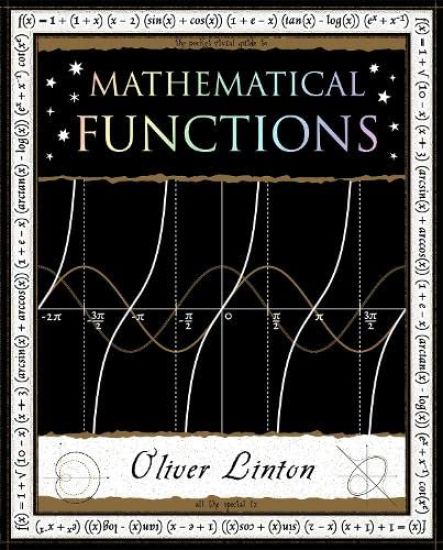
What is a mathematical function? Why are they so important? How does plotting the graph of a function help us understand it? And where do gradients, differentials and calculus fit in? In this unique little book, packed with equations and their graphs, mathematics teacher Oliver Linton reveals the secrets of polynomial functions, polar functions, inverse functions, complex functions, vector functions and many more. Lines will never look the same again!
Why does time pass more slowly when you travel fast? Do speeding objects really get shorter and heavier? How can you reach a star which is four lights years away in only three years? Is space really curved? In this brilliant little book, illustrated with numerous worked examples and helpful original diagrams, physicist Oliver Linton reveals the truly astonishing nature of the spacetime continuum we all inhabit. If you have ever wanted to think like Einstein, this is the book for you.
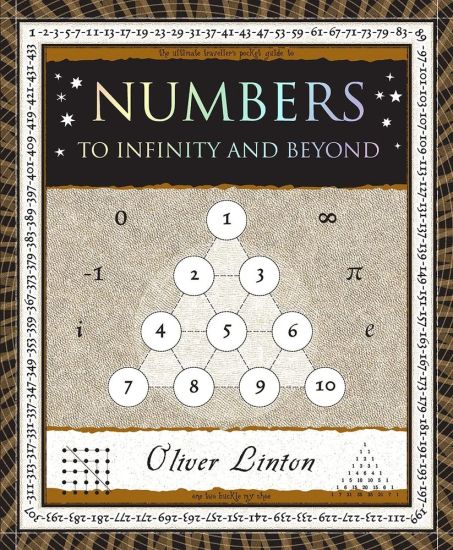
What are numbers? Where do they come from? Are there different kings of number? Why was Pythagoras fascinated by triangular and square numbers? Is there a link between perfect numbers and primes? In this enlightening illustrated pocket book, mathemagician Oliver Linton reveals the wonderful world of numbers, visiting the questions and answers of great number theorists along the way, from Euclid to Euler, Fibonacci to Fermat, and Archimedes to Gauss. No calculator needed.