Kirjojen hintavertailu. Mukana 11 244 527 kirjaa ja 12 kauppaa.

Kirjahaku

Etsi kirjoja tekijän nimen, kirjan nimen tai ISBN:n perusteella.

1000 tulosta hakusanalla Orson Welles; Simon Callow

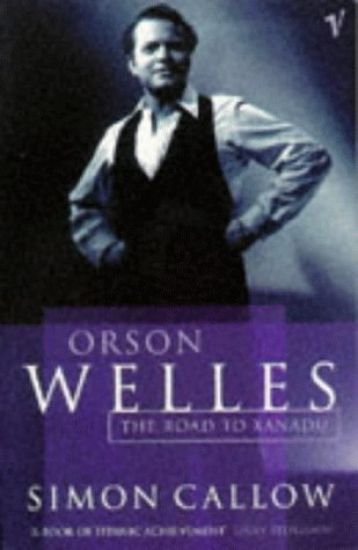
Orson Welles, Volume 1

Orson Welles, Volume 1

Simon Callow

Vintage
1996
pokkari
A brilliant biography of the young Orson Welles, from his prodigious childhood and youth, his triumphs with the Mercury Theatre, to the making of Citizen Kane. Vivid, vastly entertaining, this is the definitive Welles biography.
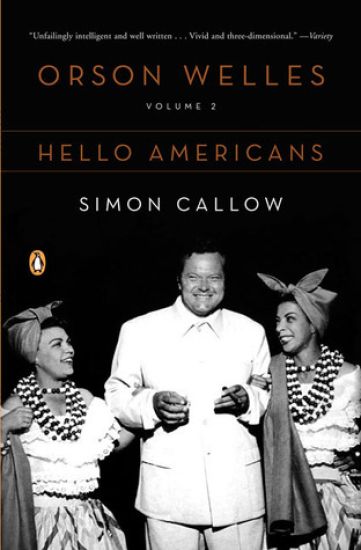
Orson Welles, Volume 2

Orson Welles, Volume 2

Simon Callow

Random House Usa Inc
2007
pokkari
The reason for the decline of Orson Welles's career is a hotly debated issue, but decline it certainly did. But instead of marking the beginning of a triumphant career in Hollywood, the film still regularly voted the greatest ever made proved to be an exception in Welles's life and work.
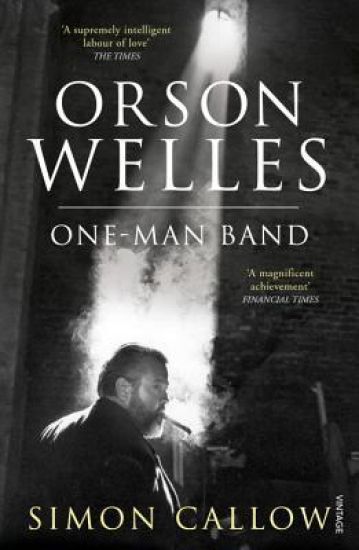
Orson Welles, Volume 3

Orson Welles, Volume 3

Simon Callow

Vintage Publishing
2016
pokkari
An epic survey of Orson Welles' life and work. It shows what it was like to be around Welles, and, what it was like to be him, in which lies the answer to the old riddle: whatever happened to Orson Welles?
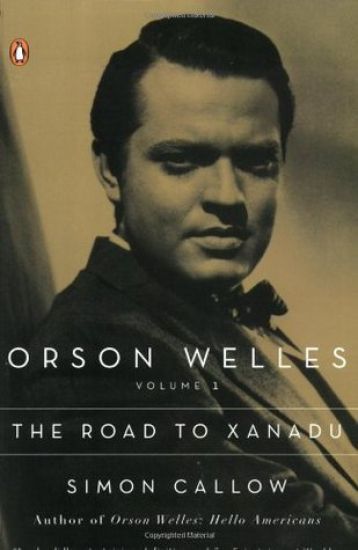
Orson Welles, Volume 1: The Road to Xanadu
"A splendidly entertaining, definitive work."--Entertainment Weekly In this first installment of his masterful biography, Simon Callow captures the chameleonic genius of Orson Welles as only an actor/director deeply rooted in the entertainment industry could. Here is Welles's prodigious childhood; his youth in New York, with its fraught partnership with John Houseman and the groundbreaking triumph of his all-black Macbeth; the pioneering radio work that culminated in the notorious 1938 broadcast of War of the Worlds; and finally, his work in Hollywood, including an authoritative account of the making of Citizen Kane. Rich in detail and insight, this is far and away the definitive look at Orson Welles--a figure even more extraordinary than the myths that have surrounded him.
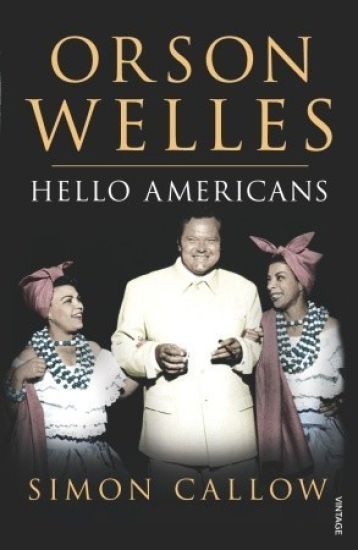
Orson Welles, Volume 2: Hello Americans
"Unfailingly intelligent and well written . . . Vivid and three-dimensional."--Variety The first volume of Simon Callow's magisterial biography of Orson Welles was praised as a "splendidly entertaining, definitive work" by Entertainment Weekly. Now, this eagerly anticipated second volume examines the years following Citizen Kane up to the time of Macbeth, in which Welles's Hollywood film career unraveled. In close and colorful detail, Callow offers a scrupulous analysis of the factors involved, revealing the immense and sometimes self-defeating complexities of Welles's temperament as well as some of the monstrous personalities with whom he had to contend.
Marching Song

Marching Song

Orson Welles; Simon Callow

Rowman Littlefield
2019
sidottu
Before The Cradle Will Rock, before War of the Worlds, before Citizen Kane—there was Marching Song. At the age of 25 Orson Welles co-wrote, directed, and starred in Citizen Kane, widely regarded as one of the greatest films of all time. But this was not the first achievement in the young artist’s career. A few years earlier he terrorized America with his radio broadcast of War of the Worlds. And even before he conquered the airwaves, Welles had made a name for himself in New York theatre, with his dynamic stagings of Shakespeare classics and the politically charged musical The Cradle Will Rock. But before all of these there was Marching Song—a play about abolitionist John Brown—that Welles had co-written at the age of 17. While attending the Todd School for Boys, Welles collaborated with Roger Hill, the schoolmaster at Todd, to produce this full-length drama. Marching Song: A Play is a work by one of America’s true geniuses at an early stage of his creative growth. Steeped in historical detail, the play chronicles Brown’s fight against slavery, his raid on Harper’s Ferry, his capture, his conviction for treason, and his execution. In addition to the entire text of the play, this volume features a biographical sketch of Welles and Hill—written by Hill’s grandson—during their days together at Todd. A fascinating dramatization of a pivotal event in American history, this play also demonstrates Welles’ burgeoning development as social commentator and an advocate for human rights, particularly on behalf of African Americans. Featuring a foreword by noted Welles biographer, Simon Callow, Marching Song: A Play is an important work by an American icon.
Orson Welles Portfolio

Orson Welles Portfolio

Simon Braund

Titan Books Ltd
2019
sidottu
A lavish hardback containing Orson Welles' Portfolio, much of which has never been seen before. Orson Welles, famous as an accomplished actor, writer, producer and visionary director, had originally aspired to become a musician or artist. Having studied at the Art Institute of Chicago for one summer, he continued to draw and paint throughout his life. The majority of his artwork, including costume and set designs and caricatures, has been unavailable to the public. Until now.
Orson Welles

Orson Welles

Chris Wade

Lulu.com
2018
pokkari
Writer, musician and filmmaker Chris Wade examines the directorial career of ORSON WELLES, the maverick pioneer of American cinema. Accompanied by pictures from Welles' life, Wade explores the two book ends of Welles' filmography; the miraculously brilliant Citizen Kane and the mythical and posthumous enigma, The Other Side of the Wind, as well as every other film Welles directed in between. Including new reflections from those who worked with Welles, Journey Of A Filmmaker is an affectionate homage to one of film's true originals.
Orson Welles

Orson Welles

Brett Wood

Greenwood Press
1990
sidottu
This new work contains the most comprehensive bibliography of Orson Welles' work and material written on Welles. It presents a concise history of Welles' life and career, paying special attention to the ways he was presented by the media. At different points in his career, he was portrayed as a young genius, a spoiled brat, a European playboy, a political rebel, and both a consistent failure as well as a consistent master of the arts. The book examines the material which led to such public impressions and determines how and why these materials presented him in such a way, while comparing it to the truth of Orson Welles: the man, the artist, and the showman. Following the biographical sketch on Welles in the opening section, the next section of the book presents a brief yet precise analysis of each of Welles' projects, with particular emphasis on the works he was unable to complete and those which have been diminished by outside editing or since lost. The third and final section is a comprehensive bibliography of Welles' writings, productions, and appearances. It also includes a complete listing of material devoted to Welles, with notes determining which are of greatest value in the study of Welles' life and career. This book is an indispensable tool in the study of Welles' career. It also serves as a valuable reference source for use in courses in broadcasting, theater, and especially film.
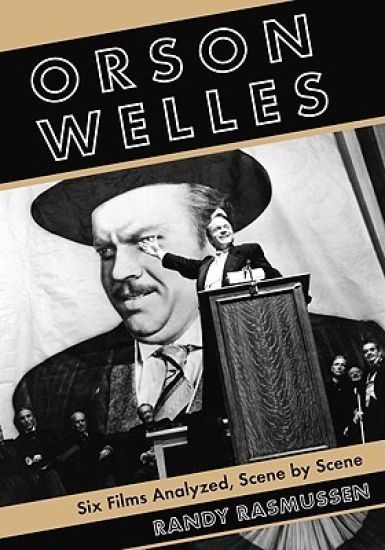
Orson Welles

Orson Welles

Randy Rasmussen

McFarland Co Inc
2006
pokkari
"Six major Welles films-Citizen Kane, The Magnificent Ambersons, The Lady from Shanghai, Touch of Evil, The Trial, and Chimes at Midnight-receive a scene by scene analysis in this critical study. From a viewer's perspective it illuminates the dramatic rhythms of each film as they unfold on screen and the soundtrack"--Provided by publisher.
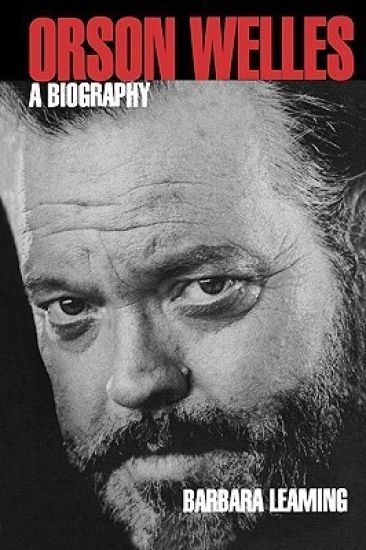
Orson Welles

Orson Welles

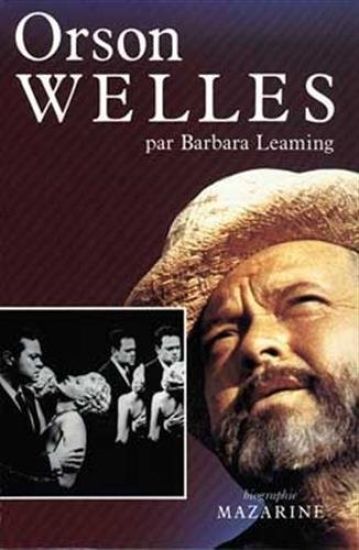
Barbara Leaming

Limelight Editions
1995
pokkari
...âAã beautifully researched valuable study of one of America's most influential and mysterious artists. ...âWhatã makes this book remarkable is Welles's own contribution. His comments opinions interviews cut in and out of the narrative with an almost cinematic force. ä Patricia Bosworth
Orson Welles

Orson Welles

Michael B Druxman

Createspace Independent Publishing Platform
2011
pokkari
ORSON WELLES is a one-person play in two acts about the life and times of Orson Welles. Acting Edition]Some say that Orson Welles was a genius, but he always denied that. He did give us CITIZEN KANE, considered by most critics to be the best film ever made, but after that, his career took one long downward plunge.The play finds Welles trying to find the financing for one of his film projects. It's a difficult task, since most of the Hollywood community considers him to be a "screwball".Pondering his life with his "other self," he tells us about his alcoholic father, his lonely years as a "gifted child," his rise as the "boy genius" of Broadway and the "War of the Worlds" radio broadcast that panicked America and made his name a household word.But "genius" can be self-destructive -- as was the case with Welles. Time after time, with a new post-KANE success within his grasp, he would knowingly make the wrong move, thereby destroying everything he'd built.Containing wry stories about William Randolph Hearst, Columbia Pictures' Harry Cohn, and Rita Hayworth, Michael B. Druxman's ORSON WELLES is the "boy genius" at his best.
Orson Welles

Orson Welles

John R. Taylor

Applause Books
2000
nidottu
(Applause Books). At the age of twenty-six, Orson Welles made the film which remains immovable at the top of the critics' polls for the ten best films of all time Citizen Kane . John Russell Taylor's riveting biography of Welles examines the way the Welles legend has been constructed through the years, and how his death has shattered some of the illusions of not only his friends but his enemies. (Taylor is film critic for the London Times and the authorized biographer of Alfred Hitchcock.)
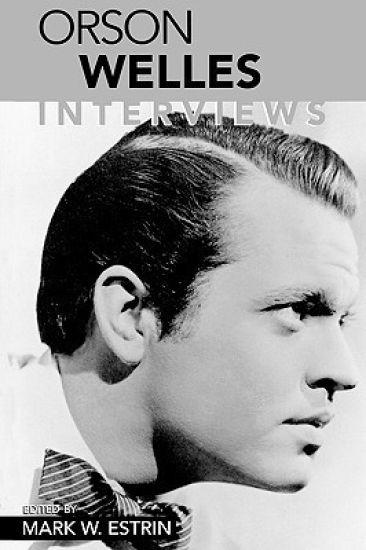
Orson Welles

Orson Welles

University Press of Mississippi
2002
nidottu
This book brings together an exceptional array of interviews, profiles, and press conferences tracing the half century that Orson Welles (1915- 1985) was in the public eye. Originally published or broadcast between 1938 and 1989 in worldwide locations, these pieces confirm that Welles's career was multidimensional and thoroughly inter-woven with Welles's persona.Several of them offer vivid testimony to his grasp on the public imagination in Welles's heyday, including accounts of his War of the Worlds broadcast. Some interviews appear in English for the first time. Two transcriptions of British television interviews have never before appeared in print. Interviewers include Kenneth Tynan, French critic André Bazin, and Gore Vidal.The subjects center on the performing arts but also embrace philosophy, religion, history, and, especially, American society and politics. Welles confronts painful topics: the attempts to suppress Citizen Kane, RKO's mutilation of The Magnificent Ambersons, his loss of directorial authority, his regret at never having run for political office, and his financial struggles. ""I would have sold my soul"" to play Marlon Brando's role as Don Corleone in The Godfather, he tells a BBC interviewer.Welles deflates the notion of the film director's omnipotence, insisting that it is only in the editing studio that he possesses ""absolute control."" With scholarly erudition, Welles revels in the plays of Shakespeare and discusses their adaptation to stage and screen. He assesses rival directors and eminent actors, offers penetrating analyses of Citizen Kane, Touch of Evil, Chimes at Midnight, and The Third Man, and declares that he never made a film that lacked an ethical point-of-view. These conversations reveal the majestic mind and talent of Welles from a fresh perspective.
Orson Welles's Citizen Kane

Orson Welles's Citizen Kane

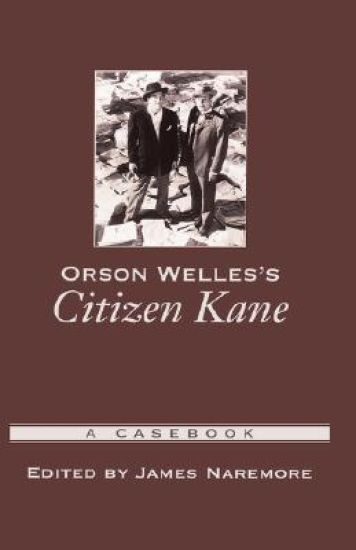
James Naremore

Oxford University Press Inc
2004
sidottu
Citizen Kane is arguable the most admired and significant film since the advent of talking pictures. To study it even briefly is to learn a great deal about American history, motion-picture style, and the literary aspects of motion-picture scripts. This volume will represent the essential writings on Kane. It gives the reader a lively set of critical interpretations, together with the necessary production information, historical background, and technical understanding to comprehend the film's larger cultural significance.
Orson Welles's Citizen Kane

Orson Welles's Citizen Kane

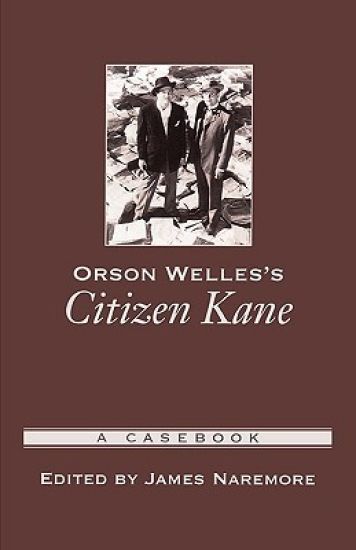
James Naremore

Oxford University Press Inc
2004
nidottu
Citizen Kane is arguably the most admired and significant film since the advent of talking pictures. No other film is quite so interesting from both artistic and political points of view. To study it even briefly is to learn a great deal about American history, motion-picture style, and the literary aspects of motion-picture scripts. Rather than a sterile display of critical methodologies, James Naremore has gathered a set of essays that represent the essential writings on the film. It gives the reader a lively set of critical interpretations, together with the necessary production information, historical background, and technical understanding to comprehend the film's larger cultural significance. Selections range from the anecdotal -- Peter Bogdanovich's interview with Orson Welles -- to the critical, with discussions on the scripts and sound track, and a discussion of what accounts for the film's enduring popularity. Contributors include James Naremore, Peter Bogdanovich, Jonathan Rosenbaum, Robert L. Carringer, François Thomas, Michael Denning, Laura Mulvey, Peter Wollen, and Paul Arthur.
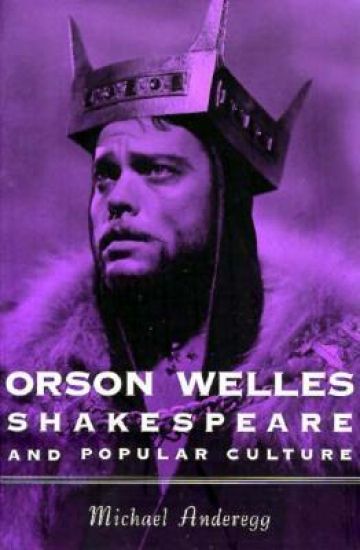
Orson Welles, Shakespeare, and Popular Culture

Orson Welles, Shakespeare, and Popular Culture

Michael Anderegg

Columbia University Press
1998
pokkari
From the earliest days of radio to the golden age of television and beyond, Orson Welles has occupied a unique place in American culture. In Orson Welles, Shakespeare, and Popular Culture, Michael Anderegg considers Welles's influence as an interpreter of Shakespeare for twentieth-century American popular audiences. Exploring his works on stage, radio, and in film, Anderegg reveals Welles's unique position as an artist of both high and popular culture. At once intellectually respected and commercially viable, the Shakespeare Welles gave the American public reflects his unique genius as a writer, director, and actor. From early plays in school to the Everybody's Shakespeare books and the Mercury Text Records adaptations, Anderegg illustrates how Welles tried to transcend the barriers between the classical and the popular. He argues that "Welles the Shakespearean" sought to be a restorer as well as an innovator by drawing on his knowledge of the abundant, lowbrow popularity of Shakespeare in nineteenth-century America. Welles's three film adaptations of Shakespeare, Macbeth, Othello, and Chimes at Midnight, are examined. From his peculiarly "Scottish" version of Macbeth, to his postmodern reading of the history plays in Chimes at Midnight, Welles's interpretive strategies--and the public's reception of them--are considered. In the final chapter, Anderegg surveys Welles's work as an actor--his legacy and myth--and reexamines the common view that he squandered his talents in the era after Citizen Kane. Taking into account his non-Shakespearean roles, Anderegg shows Welles to have been a markedly "Shakespearean" actor and, in his versions of the Bard's plays, a key arbiter of culture.