Kirjojen hintavertailu. Mukana 11 627 064 kirjaa ja 12 kauppaa.

Kirjahaku

Etsi kirjoja tekijän nimen, kirjan nimen tai ISBN:n perusteella.

898 tulosta hakusanalla Osamu Dazai

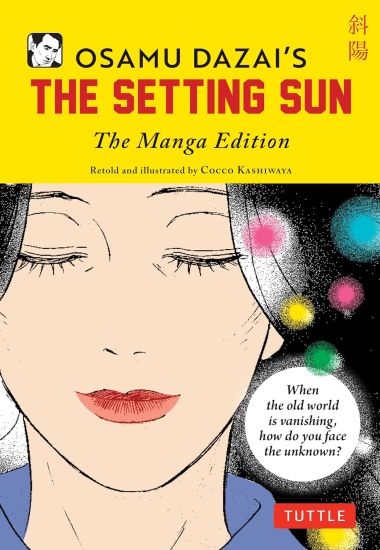
Osamu Dazai's The Setting Sun

Osamu Dazai's The Setting Sun

Osamu Dazai

TUTTLE PUBLISHING
2024
nidottu
A classic of Japanese literature, brought to life in English & manga for the first time!This is the first manga edition in English of The Setting Sun, Osamu Dazai's classic novel, often considered his masterpiece.Set in the aftermath of World War II, this is the story of Kazuko, a strong-willed young woman from an aristocratic family that has fallen into poverty since the war. The book follows Kazuko's journey as she and her family struggle to survive and adapt to the harsh new conditions. In addition to having to move from Tokyo to the countryside, where she is forced to work in the fields to support the family, she has to deal with a difficult divorce, the birth of a stillborn child, and the return of her drug-addicted brother from the war. This gripping and inspiring portrait of one woman's determination to survive in a society that is in the grip of a social and moral crisis tells one story in a fast-changing world, with universal themes that resonates with readers today.After Soseki Natsume, Osamu Dazai is Japan's most popular writer. Dazai is enjoying a surge in interest among young people today thanks to the success of the manga, anime and film series Bungo Stray Dogs, whose protagonist, a detective named Osamu Dazai, is based on the real-life author.**Recommended for readers ages 16+ due to mature themes and graphic content**
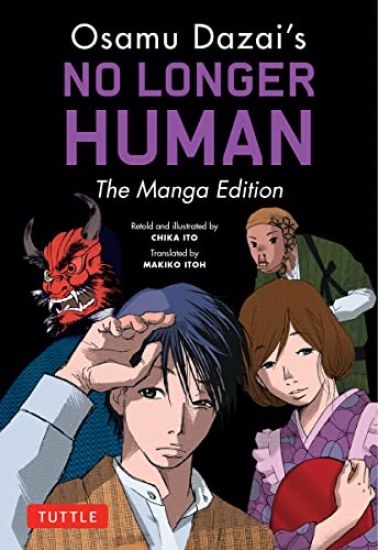
Osamu Dazai's No Longer Human

Osamu Dazai's No Longer Human

Osamu Dazai

TUTTLE PUBLISHING
2023
nidottu
"I've led a life full of shame. Human beings are a complete mystery to me."This manga version of novelist Osamu Dazai's masterpiece NO LONGER HUMAN—the #2 bestselling novel of all time in Japan—tells the story of Yozo Oba, a young man growing up in Japan in the immediate aftermath of World War II, who finds himself caught between the disintegration of the traditions of his aristocratic provincial family and the impact of the new postwar world.Oba is tormented by a failure to find any value in himself or in human relationships, despite being surrounded by women who love him. He creates the persona of a buffoon who mocks himself while entertaining others. But inside he is tortured, and as he moves from childhood to adulthood he becomes addicted to sex and alcohol. Largely autobiographical, No Longer Human explores Dazai's own sense of failure and alienation which drove him to self-destruct with alcohol and numerous suicide attempts.Osamu Dazai (1909—1948) is Japan's second most popular novelist (after Soseki), and his works are seeing a huge surge in popularity among young people worldwide thanks to the success of the recent manga, anime and film series Bungo Stray Dogs, whose protagonist, a detective called Osamu Dazai, has similar character traits to Yozo Oba. Fans of manga and anime are turning to the original No Longer Human novel, whose themes of alienation from society and an inability to reconcile social appearances with inner self—told with great wit, irony and pathos—strike a deep chord among readers today.**Recommended for readers ages 16+ due to mature themes and graphic content**
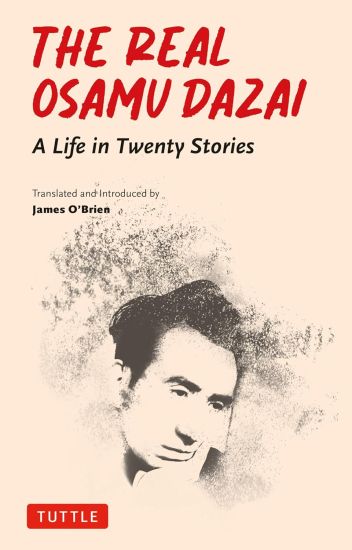
The Real Osamu Dazai

The Real Osamu Dazai

Osamu Dazai

TUTTLE PUBLISHING
2024
nidottu
"Dazai's brand of egoistic pessimism dovetails organically with the emo chic of this cultural moment and with the inner lives of teenagers of all eras." —Andrew Martin, The New York Times"… translator O'Brien excels, his unembellished use of language allowing the comically dry but fraught moments of Dazai's prose to flourish." —Asian Review of BooksBest-known for his novels No Longer Human and The Setting Sun, Dazai was also an acclaimed writer of short stories, experimenting with a wide variety of styles and bringing to each work a sophisticated sense of humor, a broad empathy for the human condition and a tremendous literary talent. The twenty stories in this collection include:Memories — An autobiographical tale in which Dazai relates episodes from his own childhood and adolescence, showing his relationship with his family and his tendency towards introspection and self-dramatizationOn the Question of Apparel — A comic tour-de-force in which Dazai examines the hold that fashion has over him and how it relates to his own pathetic self-imageA Poor Man's Got His Pride — A retelling of a story by 18th-century master of burlesque fiction Ihara Saikaku, about a fallen samurai who lives in povertyThe Sound of Hammering — A love story set against the backdrop of the rebuilding of Tokyo after the city was totally destroyed during World War TwoAnd sixteen other stories!By turns hilarious, ironic, introspective, mystical and sarcastic, these stories present a fully rounded portrait of a talented writer who tried several times to take his own life and ultimately succeeded. An introduction by translator James O'Brien gives the background to Dazai's life and shows how the stories in this book, whether autobiographical or fictional, contribute to an understanding of one of Japan's greatest writers.**Recommended for readers 16 years & up. Not intended for high school classroom use due to adult content.**
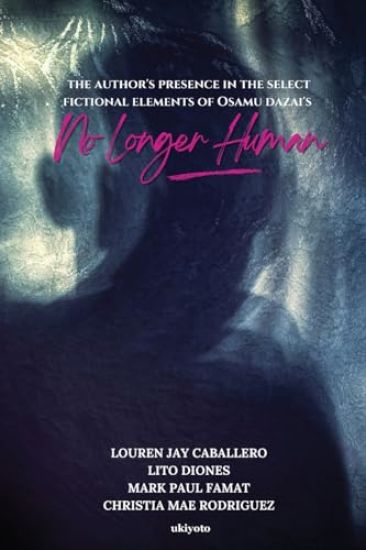
The Author's Presence in the Select Fictional Elements of Osamu Dazai's No Longer Human (Edition1)
A footprint of reality dwells in every pen a writer holds. Whenever it inks from one page to the next, it is inevitable for him to contribute a piece of himself to the narrative. The resemblance stays uncanny to the writer who writes from the heart and unconsciously reveals himself in his work. This research paper wanders beyond the walls of fiction as it exposes the reality of the dark life of the author, evident in every flip of his book, every plot in motion, every character in conflict, and every milieu in sight.
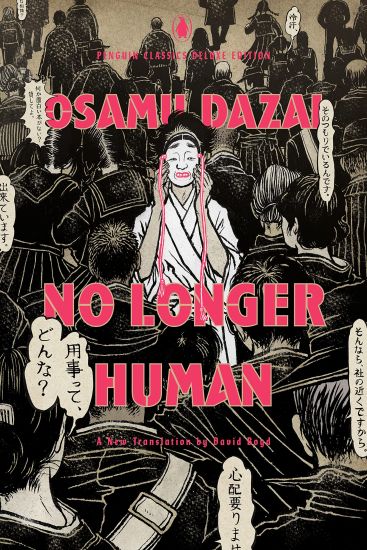
No Longer Human: (Penguin Classics Deluxe Edition)
The classic Japanese novel of alienation and the search for meaning and connection in the modern world, in a brilliant new translation--for fans of Salinger, Camus, Sartre, Hesse, and the hit anime series Bungo Stray Dogs and No Longer Allowed in Another World, both of which feature a character based on No Longer Human's author, Osamu Dazai A Penguin Classics Graphic Deluxe Edition, with flaps, deckle-edged paper, and specially commissioned cover art by award-winning illustrator Yuko Shimizu featuring neon pink ink Portraying himself as a failure, the protagonist of Osamu Dazai's No Longer Human narrates a seemingly normal life even while he feels himself incapable of understanding human beings. Oba Yozo's attempts to reconcile himself to the world around him begin in early childhood, continue through high school, where he becomes a "clown" to mask his alienation, and eventually lead to a failed suicide attempt as an adult. Without sentimentality, he records the casual cruelties of life and its fleeting moments of human connection and tenderness. Semi-autobiographical, No Longer Human is the final completed work of one of Japan's most important writers. It has come to "echo the sentiments of youth" (The Mainichi Daily News) from postwar Japan to the postmodern society of technology. Still one of the ten bestselling books in Japan, No Longer Human is a powerful exploration of an individual's alienation from society.
Schoolgirl

Schoolgirl

Osamu Dazai

PENGUIN BOOKS LTD
2026
nidottu
An adolescent girl narrates her day in an existential masterpiece that plumbs the depths of what it means to be a forming person in a fomenting society. A woman writes a farewell note to her husband, an artist who has driven her away with his counterfeit profundity and naked ambition. A plain young woman steals a bathing suit for a handsome friend, only to find herself ostracised by her neighbours for her boy-crazed behaviour - and her refusal to be shamed. These six stories by Osamu Dazai are among his finest. Written during the Second World War, into a period of intense nationalism, they unpick the concept of the patriotic, productive or moral self. Including the novella 'Schoolgirl', which rocketed Dazai to fame on initial publication in 1939, this collection, newly translated by Polly Barton, is a perfect introduction to Dazai's work.
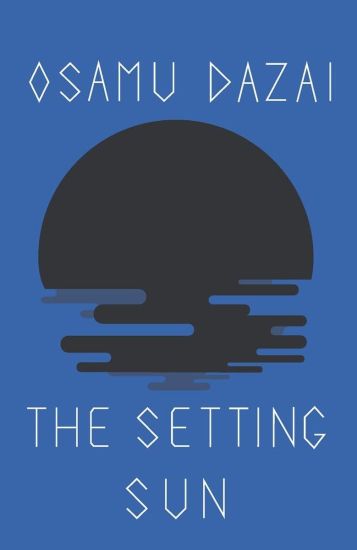
The Setting Sun

The Setting Sun

Osamu Dazai

New Directions Publishing Corporation
1968
nidottu
Set in the early postwar years, it probes the destructive effects of war and the transition from a feudal Japan to an industrial society. Ozamu Dazai died, a suicide, in 1948. But the influence of his book has made "people of the setting sun" a permanent part of the Japanese language, and his heroine, Kazuko, a young aristocrat who deliberately abandons her class, a symbol of the anomie which pervades so much of the modern world.
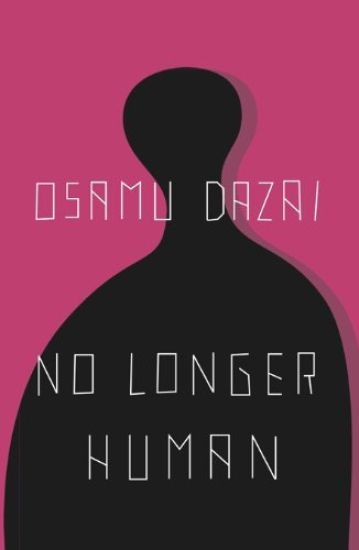
No Longer Human

No Longer Human

Osamu Dazai

New Directions Publishing Corporation
1973
nidottu
Portraying himself as a failure, the protagonist of Osamu Dazai's No Longer Human narrates a seemingly normal life even while he feels himself incapable of understanding human beings. Oba Yozo's attempts to reconcile himself to the world around him begin in early childhood, continue through high school, where he becomes a "clown" to mask his alienation, and eventually lead to a failed suicide attempt as an adult. Without sentimentality, he records the casual cruelties of life and its fleeting moments of human connection and tenderness.
Early Light

Early Light

Osamu Dazai

NEW DIRECTIONS PUBLISHING CORPORATION
2022
sidottu
Early Light offers three very different aspects of Osamu Dazai's genius: the title story relates his misadventures as a drinker and a family man in the terrible fire bombings of Tokyo at the end of WWII. Having lost their own home, he and his wife flee with a new baby boy and their little girl to relatives in Kofu, only to be bombed out anew. "Everything's gone," the father explains to his daughter: "Mr. Rabbit, our shoes, the Ogigari house, the Chino house, they all burned up," "Yeah, they all burned up," she said, still smiling. "One Hundred Views of Mount Fuji," another autobiographical tale, is much more comic: Dazai finds himself unable to escape the famous views, the beauty once immortalized by Hokusai and now reduced to a cliche. In the end, young girls torment him by pressing him into taking their photo before the famous peak: "Goodbye," he hisses through his teeth, "Mount Fuji. Thanks for everything. Click." And the final story is "Villon's Wife," a small masterpiece, which relates the awakening to power of a drunkard's wife. She transforms herself into a woman not to be defeated by anything, not by her husband being a thief, a megalomaniacal writer, and a wastrel. Single-handedly, she saves the day by concluding that "There's nothing wrong with being a monster, is there? As long as we can stay alive."
Self-Portraits

Self-Portraits

Osamu Dazai

NEW DIRECTIONS PUBLISHING CORPORATION
2024
nidottu
"Art dies the moment it acquires authority." So said Japan's quintessential rebel writer Osamu Dazai, who, disgusted with the hypocrisy of every kind of establishment, from the nation's obsolete aristocracy to its posturing, warmongering generals, went his own way, even when that meant his death—and the death of others. Faced with pressure to conform, he declared his individuality to the world—in all its self-involved, self-conscious and self-hating glory. "Art", he wrote, "is 'I'." In these short stories, collected and translated by Ralph McCarthy, we can see just how closely Dazai's life mirrored his art and vice versa, as the writer/narrator falls from grace, rises to fame and falls again. Addiction, debt, shame and despair dogged Dazai until his self-inflicted death and yet despite all the lies and deception he resorted to in life, there is an almost fanatical honesty to his writing. And that has made him a hero to generations of readers who see laid bare, in his works, the painful, impossible contradictions inherent in the universal commandment of social life—fit in and do as you are told—as well as the possibility, however desperate, of defiance. Long out of print, these stories will be a revelation to the legions of new fans of No Longer Human, The Setting Sun and The Flowers of Buffoonery.
No Longer Human

No Longer Human

Osamu Dazai

NEW DIRECTIONS PUBLISHING CORPORATION
2022
sidottu
Mine has been a life of much shame. I can’t even guess myself what it must be to live the life of a human being. Portraying himself as a failure, the protagonist of Osamu Dazai’s No Longer Human narrates a seemingly normal life even while he feels himself incapable of understanding human beings. His attempts to reconcile himself to the world around him begin in early childhood, continue through high school, where he becomes a “clown” to mask his alienation, and eventually lead to a failed suicide attempt as an adult. Without sentimentality, he records the casual cruelties of life and its fleeting moments of human connection and tenderness. Still one of the ten bestselling books in Japan, No Longer Human is an important and unforgettable modern classic: “The struggle of the individual to fit into a normalizing society remains just as relevant today as it was at the time of writing.” (The Japan Times)
The Setting Sun

The Setting Sun

Osamu Dazai

NEW DIRECTIONS PUBLISHING CORPORATION
2022
sidottu
This powerful novel of a nation in social and moral crisis was first published by New Directions in 1956. Set in the early postwar years, The Setting Sun probes the destructive effects of war and the transition from a feudal Japan to an industrial society. The influence of Osamu Dazai’s novel has made “people of the setting sun” a permanent part of the Japanese language, and his heroine, Kazuko, a young aristocrat who deliberately abandons her class, a symbol of the anomie which pervades so much of the modern world.
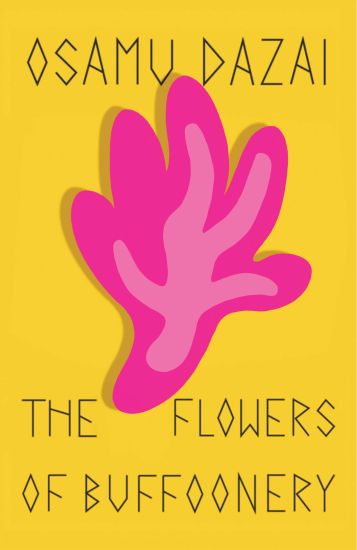
The Flowers of Buffoonery

The Flowers of Buffoonery

Osamu Dazai

NEW DIRECTIONS PUBLISHING CORPORATION
2023
nidottu
The Flowers of Buffoonery opens in a seaside sanatorium where Yozo Oba—the narrator of No Longer Human at a younger age—is being kept after a failed suicide attempt. While he is convalescing, his friends and family visit him, and other patients and nurses drift in and out of his room. Against this dispiriting backdrop, everyone tries to maintain a light-hearted, even clownish atmosphere: playing cards, smoking cigarettes, vying for attention, cracking jokes and trying to make each other laugh. While No Longer Human delves into the darkest corners of human consciousness, The Flowers of Buffoonery pokes fun at these same emotions: the follies and hardships of youth, of love and of self-hatred and depression. A glimpse into the lives of a group of outsiders in pre-war Japan, The Flowers of Buffoonery is a darkly humorous and fresh addition to Osamu Dazai’s masterful and intoxicating oeuvre.
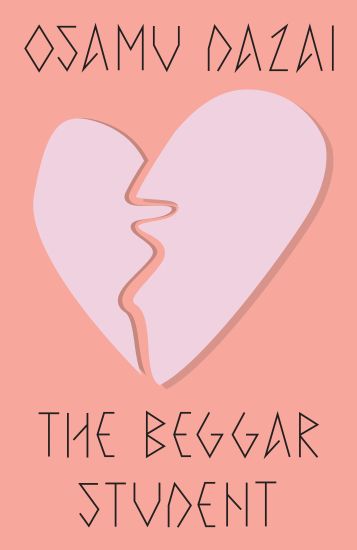
The Beggar Student

The Beggar Student

Osamu Dazai

NEW DIRECTIONS PUBLISHING CORPORATION
2024
nidottu
A fictional writer in his thirties named Osamu Dazai has just sent his publisher a terrible manuscript, filling him with dread and shame. Shortly afterward, while moping around a park in suburban Tokyo, he spots someone drowning in a nearby aqueduct. He doesn’t want to become a witness to a suicide and eventually decides to flee the park. But as he is leaving, he trips over the boy who had been drowning, and the two begin an unlikely conversation that turns into an intellectual spat. Hoping to ingratiate himself with the boy—a high-school dropout—Dazai finds himself agreeing to perform in the boy’s stead that very night as the live narrator of a film screening... So begins the madcap adventure of The Beggar Student, where there is glamor in destitution, and intellectual one-upmanship reveals glimmers of truth. Replete with settings incorporated into the popular anime Bungo Stray Dogs and with echoes of No Longer Human, this biting novella captures the infamous Japanese writer at his mordant best.
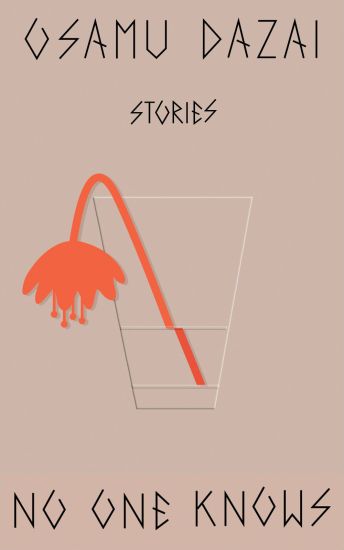
No One Knows

No One Knows

Osamu Dazai

NEW DIRECTIONS PUBLISHING CORPORATION
2025
nidottu
No one really understands how we suffer. One day, when we’re adults, we may come to recall this suffering, this misery, as silly and laughable, but how are we to get through the long, hateful period until then? No one bothers to teach us that. Osamu Dazai was a master raconteur who plumbed—in an addictive, easy style—the absurd complexities of life in a society whose expectations cannot be met without sacrificing one's individual ideals on the altar of conformity. The gravitational pull of his prose is on full display in these stories. In “Lantern,” a young woman, in love with a well-born but impoverished student, shoplifts a bathing suit for him—and ends up in the local newspaper indicted as a crazed, degenerate communist. In “Chiyojo,” a high-school girl shows early promise as a writer, but as her uncle and mother relentlessly push her to pursue a literary career, she must ask herself: is this what I really want? Or am I supposed to fulfill their own frustrated ambitions? In “Shame,” a young reader writes a fan letter to a writer she admires, only to find out, upon visiting him, that he’s a bourgeoise sophisticate nothing like the desperate rebels he portrays, and decides (in true Dazai style): “Novelists are human trash. No, they’re worse than that; they’re demons. . . They write nothing but lies.” This collection of 14 tales—a half-dozen of which have never before appeared in English—is based on a Japanese collection of, as Dazai described them, “soliloquies by female narrators.” No One Knows includes the quietly brilliant long story “Schoolgirl” and shows the fiction of this 20th-century genius in a fresh light.
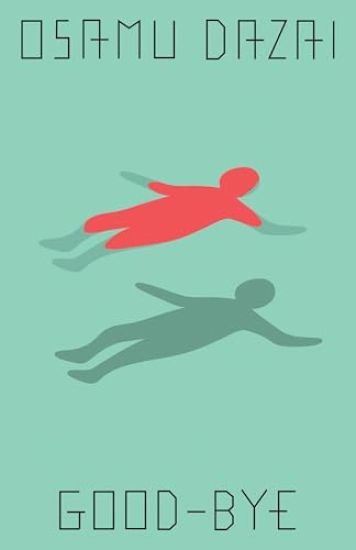
Good-Bye

Good-Bye

Osamu Dazai

NEW DIRECTIONS PUBLISHING CORPORATION
2026
nidottu
Here to slake the unquenchable thirst of Dazai’s legions of loyal fans are eleven works of short fiction and vignettes, most of which have never before appeared in English. Beginning with “Memories” (which tells a tale of teenage love, based on the autobiographical events that inspired Dazai’s famed No Longer Human), and ending with “Good-Bye” (the chapters of a comic romance that the author left unfinished when he took his own life), the short works here show the range and breadth of an author best known for his meditations on squalor and despair. But there is laughter here too, as in “Tengu,” a tongue-in-cheek critique of august hucksters of haiku. And there is also suspense on display: “A Bluff Illusion” presents a literary murder story in which a harmless prank escalates into a deadly pose. “A Warning on Worldly Pleasures” retells Saikaku’s famous story about the temptation of a holy ascetic, and “A: Autumn” unfolds a quiver of epigrams (seemingly) drawn at random from the author’s notes. All are masterfully translated by Ralph McCarthy. Spanning the breadth of Dazai’s delightfully multifaceted, if tragically foreshortened, career, Good-Bye is a must-have for any Dazai fan.
Ningen Shikkaku

Ningen Shikkaku

Osamu Dazai

Lulu.com
2011
nidottu
From Wikipedia: No Longer Human (a e-"a ae Ningen Shikkaku) is a Japanese novel by Osamu Dazai. Published after "Run Melos" and "The Setting Sun", "No Longer Human" is considered Dazai's masterpiece and ranks as the second-best selling novel in Japan, behind Kokoro.
Shayou

Shayou

Osamu Dazai

Lulu.com
2011
nidottu
From Wikipedia: The Setting Sun (ae-ue' Shayo) is a Japanese novel by Osamu Dazai. It was published in 1947 and is set in Japan after World War II. Principal characters are the siblings Kazuko and Naoji, and their elderly mother. The story shows a family in decline and crisis, like many other families during this period of transition between traditional Japan and a more advanced, industrial society. Many families needed to leave their old lives behind and start anew. Throughout the story, mostly through the character Naoji, the author brings up a number of social and philosophical problems of that time period.
A Shameful Life

A Shameful Life

Osamu Dazai

Stone Bridge Press
2019
pokkari
Osamu Dazai is one of the most famous--and infamous--writers of 20th-century Japan. A Shameful Life (Ningen shikkaku) is his final published work and has become a bestselling classic for its depiction of the tortured struggle of a young man to survive in a world that he cannot comprehend. Paralleling the life and death of Dazai himself, the delicate weaving of fact and fiction remorselessly documents via journals the life of Yozo, a university student who spends his time in increasing isolation and debauchery. His doomed love affairs, suicide attempts, and constant fear of revealing his true self haunt the pages of the book and reveal a slow descent into madness. This dark tale nevertheless conveys something authentic about the human heart and its inability to find its true bearing.
Schoolgirl

Schoolgirl

Osamu Dazai

Social Club Books
2024
sidottu
Essentially the start of Dazai's career, Schoolgirl gained notoriety for its ironic and inventive use of language. Now it illuminates the prevalent social structures of a lost time, as well as the struggle of the individual against them-a theme that occupied Dazai's life both personally and professionally. This new translation preserves the playful language of the original and offers the reader a new window into the mind of one of the greatest Japanese authors of the 20th century.