
Kirjahaku
Etsi kirjoja tekijän nimen, kirjan nimen tai ISBN:n perusteella.
1000 tulosta hakusanalla Owen Chadwick
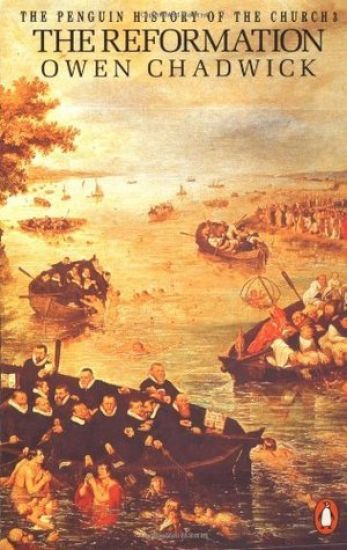
The beginning the sixteenth century brought growing pressure within the Western Church for Reformation. The popes could not hold Western Christendom together and there was confusion about Church reform. What some believed to be abuses, others found acceptable. Nevertheless over the years three aims emerged: to reform the exactions of churchmen, to correct errors of doctrines and to improve the moral awareness of society. As a result, Western Europe divided into a Catholic South and Protestant North. Across the no man's land between them were fought the bitterest wars of religion in Christian historyThis third volume of ‘The Penguin History of the Church’ deals with the formative work of Erasmus, Luther, Zwingli and Calvin, and analyses the special circumstances of the English Reformation as well as the Jesuits and the Counter-Reformation
This is a biography of Hensley Henson, one of the most controversial religious figures in England during the late nineteenth and early twentieth centuries. This book examines Henson's education at Oxford University and describes the highlights of his career as pastor of Ilford and Barking Church, as canon of Westminster Abbey, and as bishop of Hereford and Durham. It explores his involvement in political issues and his controversial views on such issues as divorce, the Italian invasion of Abyssinia, and the anti-Semitic policies of Nazi Germany.
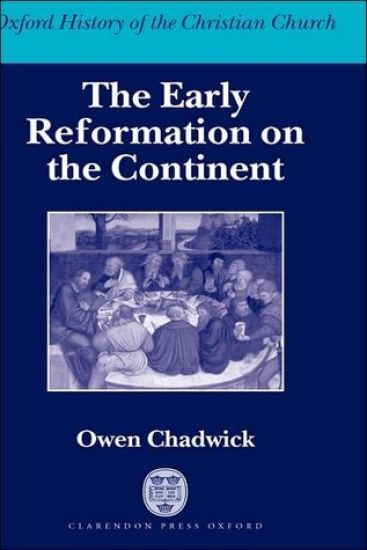
The Early Reformation on the Continent offers a fresh look at the formative years of the European Reformation and the origins of Protestant faith and practice. Taking into account recent work on Erasmus and Luther, Owen Chadwick handles these and numerous other figures and with sensitivity and understanding. Emphasis on the context provides a balanced view of the raison d'être for the changes which the reforming communities sought to introduce and the difficulties and disagreements concerning these. The structure of the book is distinctively original. Rather than following a conventional chronological progression, Owen Chadwick takes a much broader perspective and arranges his material thematically. Whatever the topic - the Bible, clerical celibacy, moral questions of adultery and divorce, purgatory, hymns, excommunication, the role of the State in worship and pastoral activity, education, the Eucharist - the reader is taken back to its origins and development through the history of the western Church and given an authoritative, accessible, and informative account.
Owen Chadwick describes the effects of the European Revolution of 1789 to 1815 on the Papacy, and compares Catholic Church of the ancient régime to that of the early nineteenth century. The book shows how strongly the Counter-Reformation still worked in Italy during the eighteenth century; how it was the constitutional development of states, rather than the incoming of new ideas, which forced change; how traditional was the Catholic world even in the age of the Enlightenment. It shows reform at work, and the fierce pressure on the Papacy marked first in the forced suppression of the Jesuits and afterwards in the kidnapping of two successive Popes by French governments. It shows how revolution in Italy affected church structures and brought on peasant war, yet encouraged, in a radical form, some improvements of church life towards which the earlier reformers had striven. Finally, it shows the political swing of the Restoration after the fall of Napoleon, the way in which the Church was already associated with the political right, the great difficulties of restoring church life after the evolutionary years, and the persistence, half unnoticed, of the earlier reforming ideas among Catholics.
Could a Pope ever consent to be the subject of a political power? Owen Chadwick presents an analysis of the causes and consequences of the end of the historic Papal State, and the psychological pressures upon old Rome as it came under attack from the Italian Risorgimento; and not only from Italy, but from liberal movements in Germany, France, Spain, and Portugal, as well as Tsarist Russia as it oppressed its Polish subjects. If a united Italy was to be achieved, the State must disappear. These pressures caused Popes to resist 'the world' rather than to try to influence it, to make the Vatican more of a sanctuary behind high walls, and to preach the more otherworldly aspects of Catholic faith. At the same time they met new moral demands: the rights of the labourer in industry, divorce, toleration, which they could confront because the Revolution had destroyed the powers of the Catholic kings over their churches, and therefore Catholic authority could be far more centralized in Rome.
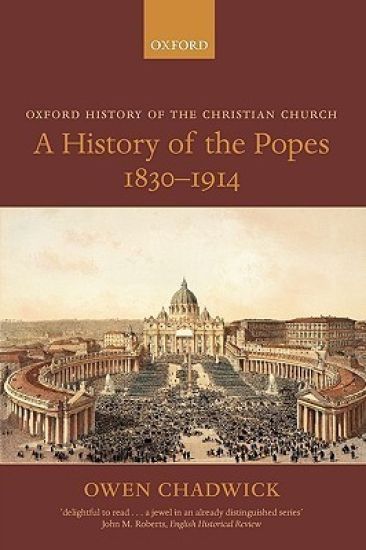
Could a Pope ever consent to be the subject of a political power? Owen Chadwick presents an analysis of the causes and consequences of the end of the historic Papal State, and the psychological pressures upon old Rome as it came under attack from the Italian Risorgimento; and not only from Italy, but from liberal movements in Germany, France, Spain, and Portugal, as well as Tsarist Russia as it oppressed its Polish subjects. If a united Italy was to be achieved, the State must disappear. These pressures caused Popes to resist 'the world' rather than to try to influence it, to make the Vatican more of a sanctuary behind high walls, and to preach the more otherworldly aspects of Catholic faith. At the same time they met new moral demands - the rights of the labourer in industry, divorce, toleration - which they could confront because the Revolution had destroyed the powers of the Catholic kings over their churches, and therefore Catholic authority could be far more centralized in Rome.
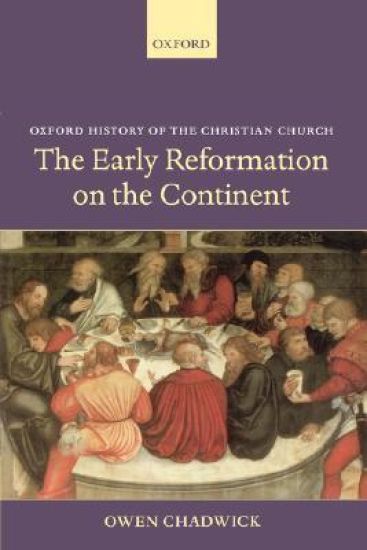
Offers a fresh look at the formative years of the European Reformation and the origins of Protestant faith and practice. Taking into account work on Erasmus and Luther, Owen Chadwick provides a balanced view of the raison d'etre for the changes which the reforming communities sought to introduce and the difficulties and disagreements arising.

The religious leader John Henry Newman (1801-1890) started his long career as a devout Protestant; he later became the head of a new movement of Catholic ideas within the Church of England, and finally joined the Catholic Church. He began a new epoch in the study of religious faith. In this classic short study, reissued with a new preface to celebrate Newman's beatification, Owen Chadwick examines the many aspects of Newman's thought and writings, especially his views about faith, knowledge, and education.

Eminent church historian Owen Chadwick has written this original, sweeping history of the Christian faith. Using layman's language, he surveys the lives of Christians over two millennia. A" History of Christianity" is essential reading for anyone interested in one of the most powerful influences on global civilization.
A classic work of ecclesiastical history, exercising original and independent judgement. Volume II also available.
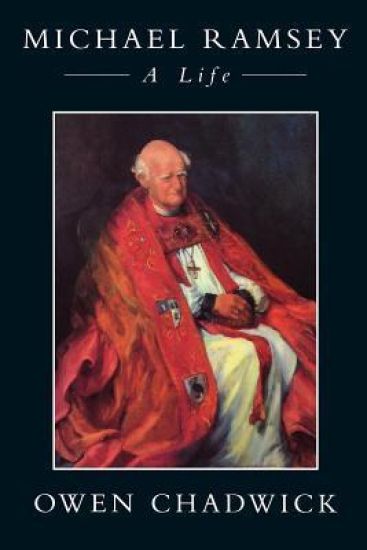
To write this life of Michael Ramsey, Archbishop of Canterbury, Owen Chadwick had unrestricted access to the archives of Lambeth Palace and materials formerly in Lord Ramsey's possession. The resulting biography gives a uniquely perceptive account of Ramsey's life and work and, through them, his time. 'judicially selective and elegantly written...The book will repay several readings by all who are especially concerned with life in the Church of England and life in this country today' (David Jenkins, Bishop of Durham, in The Guardian). 'What will no doubt be his definitive Life, a fine gift to us all' (Archbishop Donald Coggan in The Church of England Newspaper). 'A triumph of the biographer's art' (Church Times). 'A splendidly unstately portrait of a highly unorthodox Prince of the Church' (Anthony Howard in The Independent on Sunday).
John Cassian is a study of the fifth-century monk who was one of the founders of western monasticism. Christian monasticism flowered in Egypt during the fourth century. Cassias spent several years in Egypt and his writings are important evidence of the earliest period of monastic life. Later in life Cassian came to Provence and adapted the Egyptian ideals and methods for Latin use. The Benedictine Rule owes much to his influence. Benedictine monks still look back upon Cassian as an authority for their way of life. He was the first guide to the contemplative ideal in the history of western thought. Cassias questioned the doctrine of predestination taught by Augustine. Dr Chadwick shows how this argument gave him an ambiguous reputation in medieval history. The first edition of this book was published in 1950. It established itself as a contribution to the history of monasticism and to the origins of the contemplative ideal in Christianity. This is a reprint of the 1968 second edition in which Dr Chadwick made changes to take account of important work published since the first edition.
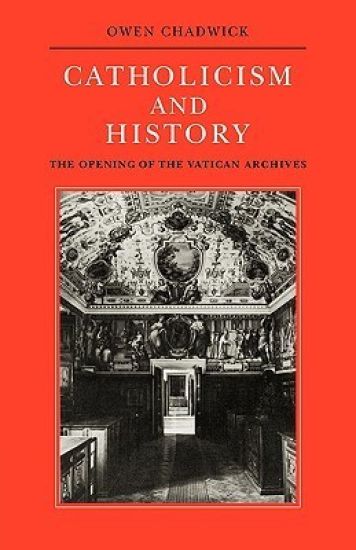
Continual and sometimes heated interest is shown in the control by governments over documents in their possession, and in the time during which access to them is denied - and not only on the part of the historians to whom the documents are of prime concern. Professor Chadwick summarises the gradual establishment of the papal records down to the beginning of the nineteenth century, when they were carried off to Paris on the orders of Napolean. Their return (for the most part) to Rome and the subsequent history of the relationship between their guardians and would-be users provide a lively narrative of human as well as historical interest. The author shows how an argument developed within the Vatican itself between the statesmen who wished rigourously to restrict what was released to the public and the historians who wanted free access. This important study of how new attitudes and techniques of history affected the Church is based upon the author's Herbert Hensley Henson Lectures in Oxford 1976, and will interest documentalists and general readers as well as ecclesiastical and general historians.

The coming of modern historical research had religious consequences, especially in the more traditional churches to which history was very important and which themselves helped to create the historical sense. In this classic work, long unobtainable but now revised with a new introduction, Owen Chadwick traces the development of the notion that change in Christian doctrine was both possible and legitimate. Bossuet in the seventeenth century represented the opinion that Christian doctrine never or hardly changed: Newman in the second half of the nineteenth century saw that its expression necessarily changed in a changing society. This book shows how one opinion changed into the other, and explains the difficulties and tensions behind Newman’s attempt to persuade an inherently conservative institution to face reality. In so doing it thus illuminates one vital aspect of the arrival into European thought of a distinct historical sensibility.
Britain and the Vatican during the Second World War
Owen Chadwick
Cambridge University Press
1988
pokkari
The book studies the use made by the British government of its envoy, immured inside the Vatican from 1940 to 1944, and what the envoy made of such opportunities during the Second World War to help the Allied cause. We see the Vatican, the Fascist Italy, from ‘inside’, and so gain a new and rare perspective into the predicament of the papacy. Owen Chadwick gives insight into the workings of the Vatican, including such questions as the struggle to keep Italy out of the war, the relations between the Vatican and the Fascist government, the use which the British sought to make of Vatican radio, the question of condemning atrocities, the bombing of Rome, the fall of Fascism, the armistice between the Allies and Italy, the German occupation of Rome, and the escape line for British prisoners of war. The author has used several groups of hitherto unexplored archives, and makes a fresh contribution both to the history of the Second World War and to the modern history of the papacy.
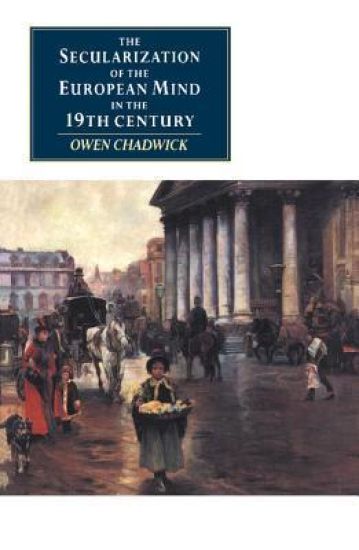
The Secularization of the European Mind in the Nineteenth Century
Owen Chadwick
Cambridge University Press
1990
pokkari
The declining hold of the Church and its doctrines on European society represents a major shift in Western life and thought. Owen Chadwick’s acclaimed lectures on the secularisation of the European mind trace this movement in the nineteenth century, identifying and exploring both the social and the intellectual aspects of this momentous change. The rise of technology, the growth of big cities and a cheap press take their place alongside evolutionary science and Marxism in this fascinating analysis of the erosion of the Church’s power. Woven into its brilliant discussion are brief but very illuminating studies of familiar major thinkers, including Marx, Darwin, Mill and Comte.
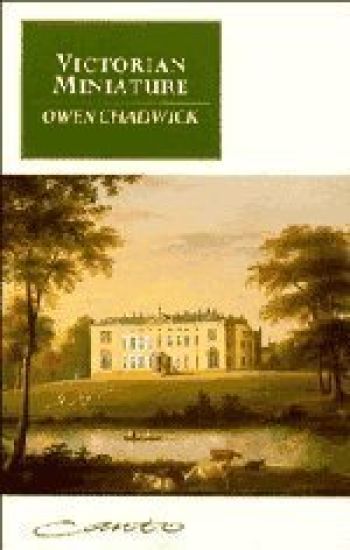
Nancy Mitford once observed that some of the most bitter personal clashes of all time have been ‘between the Manor and the Vicarage’. Owen Chadwick’s Victorian Miniature paints a detailed cameo of nineteenth-century English rural life, in the extraordinary battle of wills between squire and parson in a Norfolk village. Both the evangelical clergyman and the squire, proudly conscious of his Huguenot ancestry, were passionate diarists, and their two journals open up a fascinating double perspective on the events which exposed their clash of personalities. The result is a narrative that is at once deeply informative about Victorian class distinctions, rural customs and festivities, and richly entertaining in a manner worthy of Trollope.
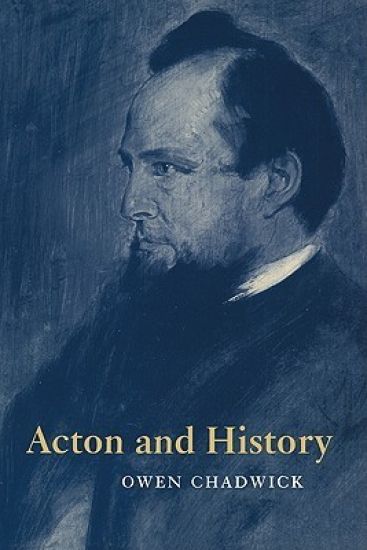
This is an edited collection of Owen Chadwick’s principal writings on Lord Acton, the distinguished Victorian historian and founder of The Cambridge Modern History. Some of the pieces are no longer readily available, while one has never before appeared in English. All have been revised, sometimes extensively. Acton (1834–1902) was born in Naples, the grandson of the Neapolitan prime minister Sir John Acton. Educated at Munich University, he sat as a Liberal MP 1859–64, was created a baron in 1869, and in 1895 was appointed Regius Professor of Modern History at Cambridge. This book explains the important aspects of Acton’s complex mind and his great contribution to historical studies. Professor Chadwick, himself a former holder of Acton’s Regius Chair, is the leading senior authority both on Acton and on matters of church and state in the nineteenth century.
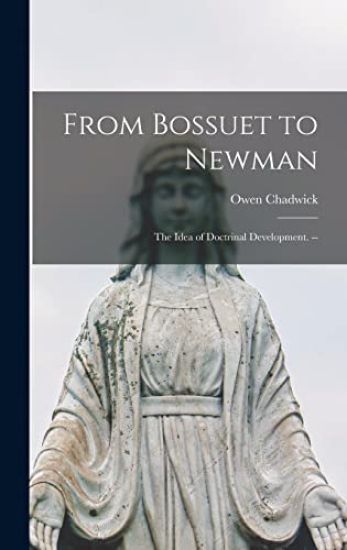
From Bossuet to Newman; the Idea of Doctrinal Development. --
Owen Chadwick
Hassell Street Press
2021
sidottu