

Kirjahaku
Etsi kirjoja tekijän nimen, kirjan nimen tai ISBN:n perusteella.
1000 tulosta hakusanalla P H Brazier; Murray Rae

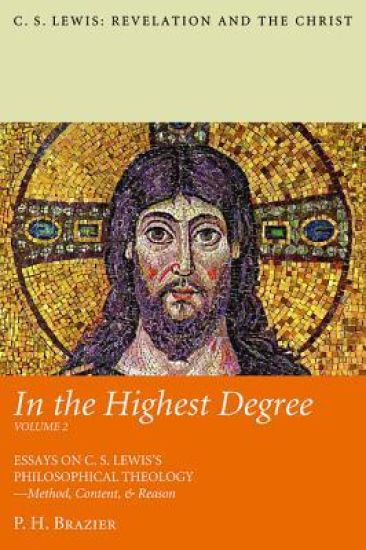
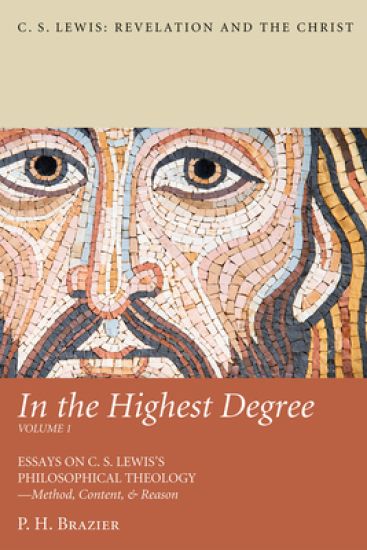
The theological and philosophical works of C. S. Lewis were grounded in the argument from reason (being a form of revelation that predates nature and relates to the divine; i.e., the Word of God, Christ the Logos). These essays provide some understanding of the essentials to Lewis's philosophical theology--that is, the essentia, ""in the highest degree."" Lewis's corpus can seem disparate, but here we find unity in his aims, objectives, and methodology, a consistency that demonstrates the deep roots of his philosophical theology in Scripture, Greek philosophy, patristic and medieval theology, and some of the Reformers, all framed by a reasoned discipline from a perceptive and critical mind: method and form, content and reason, for the glory of God. From an analysis of reason to the evidence of Christ as the light of the world across human endeavors and religions, a doctrine of election, and an understanding of Scripture (""the Philosophy of the Incarnation,"" as Lewis termed it), in fundamental arguments with various modern/liberal theologians, we find evidence for the actuality of the incarnation: the divinity of Christ. ""For many years, Paul Brazier has made a significant contribution to the advancement of C. S. Lewis studies. . . . In this, the second volume of his collected essays on philosophical theology, Brazier brings together six of his writings, five of which having been previously published, while one, on the doctrine of election and predestination, is entirely new. Students of Lewis's theology (broadly considered) will be grateful that these informative essays are now available in a single two-volume source, which collectively comprise one of the most detailed attempts to address this critical area of Lewis studies."" --Grayson Carter, Fuller Theological Seminary ""C.S. Lewis's writings are as numerous as they are deep, full of references to classical writers and ideas unfamiliar to most moderns. Brazier properly situates Lewis's articles within their historical setting, identifies the key issues, and carefully evaluates Lewis's thought. Theologians wrestling with concepts of sensus plenior, story and myth, the incarnation, unity of the triune will, and free-will and predestination should not ignore this book."" --Stephen M. Vantassel, King's Evangelical Divinity School, Broadstairs, UK P. H. Brazier is an independent theologian and scholar living in London. He holds degrees in Fine Art (BA), Education (MPhil), and Systematic Theology (MA and PhD). Paul has published widely in theology and philosophy, including an in-depth systematic analysis of C. S. Lewis's theology; he has also published on Fyodor Mikhailovich Dostoevsky, Karl Barth, and Colin E. Gunton. A retired teacher, the author is caregiver for his wife, Hilary, who has severe epilepsy.

C.S. Lewis: Revelation, Conversion, and Apologetics
P H Brazier; Stephen R Holmes
Pickwick Publications
2012
sidottu
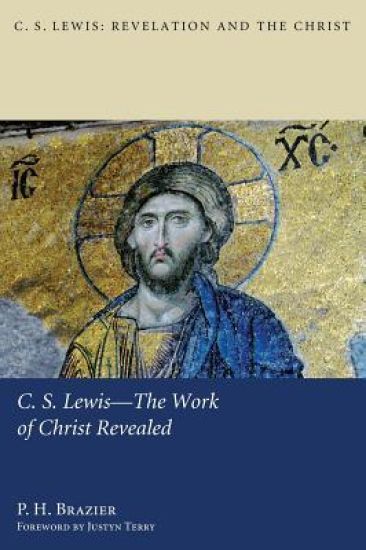
C.S. Lewis--The Work of Christ Revealed
P H Brazier; Justyn Terry
Pickwick Publications
2012
sidottu

C.S. Lewis-On the Christ of a Religious Economy, 3.2
P H Brazier; Brendan N Wolfe
Pickwick Publications
2014
sidottu
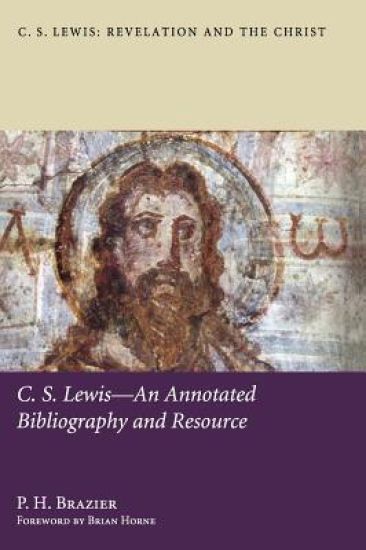
C.S. Lewis--An Annotated Bibliography and Resource
P H Brazier; Brian Horne
Pickwick Publications
2012
sidottu

C.S. Lewis--On the Christ of a Religious Economy, 3.1
P H Brazier; Judith Wolfe
Pickwick Publications
2013
sidottu

The theological and philosophical works of C. S. Lewis were grounded in the argument from reason. As such reason is a form of revelation that predates nature and relates to the divine: the Word of God, Christ the Logos. These essays provide some understanding of the essentials to Lewis's philosophical theology, that is, the essentia, ""in the highest degree."" Lewis's corpus can seem disparate, but here we find unity in his aims, objectives, and methodology, a consistency that demonstrates the deep roots of his philosophical theology in Scripture, in Greek philosophy, patristic and medieval theology, and in some of the Reformers, all framed by a reasoned discipline from a perceptive and critical mind: method and form; content and reason--for the glory of God. Here is the essentia of Lewis's thinking. From an analysis of reason, through a theoretically unified proposition for atonement, to the evidence of Christ as the light of the world across human endeavors and religions, to a doctrine of election, to an understanding of Scripture, to ""the Philosophy of the Incarnation"" (as Lewis termed it, ) through fundamental arguments with various modern/liberal theologians, we find evidence for the actuality of the incarnation: the divinity of Christ. ""I really like Brazier's historically contextual style He gives us prominent aspects of Lewis' thinking as they emerge within the failures, criticisms, and hardships that confront and mold this extraordinary twentieth-century philosopher-theologian. Whether it be in the integral relationships of reason and revelation, the Bible and the Word, humanity and divinity, preeminent by Brazier's clear analysis is Lewis' consistent ordering of thought from the unique reference point of Jesus Christ, the God who descends to re-ascend."" --Jeff McSwain, author of Simul Sanctification ""This book is a tour de force: it is replete with observations and reflections on C. S. Lewis as a philosopher-theologian. Brazier does not duck the limitations of Lewis's philosophical method. . . . Treating Lewis as a practitioner of philosophical theology is inspired, for it gives an insight to his strengths and weaknesses as a Christian apologist that other collections rarely do. In short, don't take my word for the excellence of this book: buy it now and see for yourselves."" --Andrew Walker, author of Notes from a Wayward Son P. H. Brazier is an independent theologian and scholar living in London. He holds degrees in Fine Art (B.A.), Education (M.Phil), and Systematic Theology (M.A. and Ph.D.). Paul has published widely in theology and philosophy including an in-depth systematic analysis of C. S. Lewis's theology; he has also published on Fyodor Mikhailovich Dostoevsky, Karl Barth and Colin E. Gunton. A retired teacher, the author is the care-giver for his wife Hilary who has severe epilepsy.
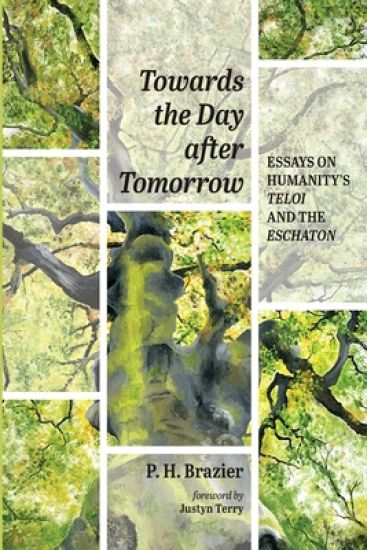
Humanity is moving ever towards its final destination without knowing why, when, where: teloi, multiple paths, leading towards God's eschaton. These essays examine the movement towards this day of reckoning, and how such eschatological events are projected back into time. Towards the Day after Tomorrow, or the one after that, or months, decades--centuries--away, often we behave as though the end is upon us. These essays start with the beginning of the end: the incarnation. We examine the origins of Karl Barth's realized eschatology in Expressionism. We consider death and judgment, as usurped by humanity, an eschaton without God's forgiving judgment: multiple Holocausts. War ushers in the eschaton, but how do Christians handle conflict in the light of a redefined just war theory? We analyze the eschatological insights into humanity's end in The Simpsons--post mortem. Consider the issue of atheistic human authorities usurping God's judgment. Finally crisis and judgment are glimpsed in the mindset of people who suffer seizures--postlapsarian exile, the sufferance of salvation: how God blesses us despite the chaos of our human-generated teloi, in preparation for the end. As the end approaches, events become darker, chaotic, confusion reigns: "Judas immediately went out. And it was night."

C.S. Lewis-On the Christ of a Religious Economy, 3.2
P H Brazier; Brendan N Wolfe
Pickwick Publications
2014
pokkari
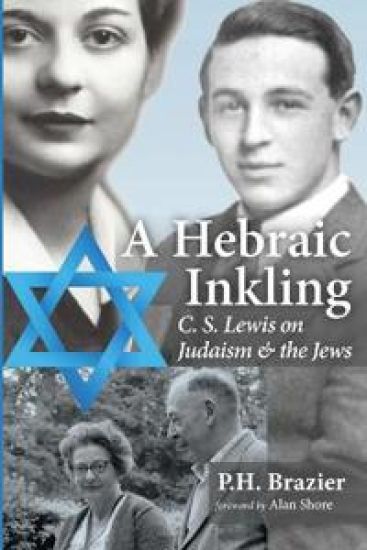
An apologist, philosophical theologian, and Oxford academic, C. S. Lewis valued the Jewish religious tradition. Underpinning Lewis's corpus is an enlightened, foundational respect for the Jews as God's chosen people. Much of Lewis's mature understanding came from his wife, Joy Davidman (Lewis referred to her as a Jewish Christian), born to American Jewish parents; she was an adult convert to Yeshua Ha Mashiach--Jesus Christ. A Hebraic Inkling, examines this Jewish-Hebrew heritage in Lewis's life and works, by analyzing key texts: theological and philosophical, literary and apologetic, biblical. As a boy and young man he reflected much of the implicit anti-Semitism inherent to the public school educated Edwardian establishment; this is replaced by deep respect when he became a Christian. Along with the Hebrew Scriptures, we examine Lewis on Hebraic poetry (Reflections on the Psalms), the ""The Incarnation Nation,"" the Messiah in the Hebrew scriptures, supersessionism, Israel, his rigorous stand against anti-Semitism, and how Christians are enfolded into the chosen people. With marriage revelation gets deeply personal: a familial witness. When one of Joy's children--David--sought to return to his mother's birth-faith, Lewis moved all to accommodate his wishes and raise him as a Jew, after Joy's untimely death.

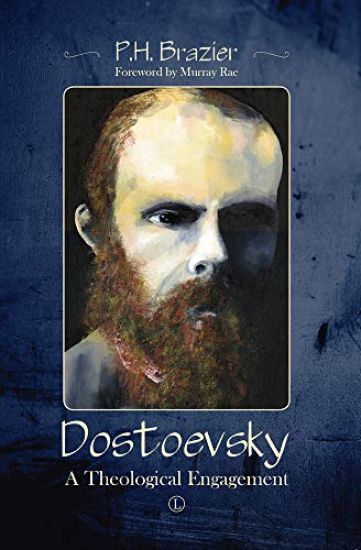
As a writer and prophet Dostoevsky was no academic theologian, yet his writings are deeply theological: his life, beliefs, even his epilepsy, all had a role in generating histheology and eschatology. Dostoevsky's novels are riven with paradoxes, are deeply dialectical, and represent a criticism of religion, offered in the service of the gospel. In this task he presented a profound understanding and portrait of humanity. Dostoevsky's novels chart the movement of the human into death: either the movement through paradox and Christlikeness into Christ's cross (a soteriology often characterized by the apophatic negation and self-denial; what we may term 'the Mark of Abel') leading to salvation and resurrection; or, conversely, the movement of those who refuse Christ's invitation to be redeemed, and continue to fall into a self-willed death and a selfgenerated hell ('the Mark of Cain'). This eschatology becomes a theological axiom which he unceasingly warned people of in his mature works. Startlingly original, stripped of all religious pretence, Dostoevsky as a prophet forewarned of the politicized humanistic delusions of the twentieth century: a prophet crying out through the wilderness.
C.S. Lewis's enlightened, foundational respect for the Jews as God's chosen people is a feature in much of his apologetic and theological writing. Although as a boy and young man Lewis reflected much of the implicit anti-Semitism inherent in the public-school-educated Edwardian establishment, this was replaced by deep respect when he became a Christian. Later on, Lewis's understanding was much enhanced by his wife, Joy Davidman (m. 1956); born to American Jewish parents, she was an adult convert to Yeshua Ha Mashiach - Jesus Christ - and Lewis referred to her as a Jewish Christian. A Hebraic Inkling examines in depth this Jewish-Hebrew influence in Lewis' life and works. Analysing some of his key writings in theology, philosophy, literature and apologetics, his rigorous stand against anti-Semitism and affinity for Jewish literature and culture is outlined, as well as his vision of how Christians are enfolded into the chosen people. This respect and affinity extended to Lewis' own family; when one of Joy's children sought to return to his mother's birth-faith, Lewis moved all to accommodate his wishes and raise him as a Jew, after Joy's untimely death.
A work of historic and systematic theology, Barth and Dostoevsky, examines the influence of the Russian writer and prophet Fyodor Mikhailovich Dostoevsky on the Swiss theologian Karl Barth. This is a study that demonstrates that the writings of Dostoevsky affected the development of the theology of Karl Barth. This was an influence mediated by his friend and colleague Eduard Thurneysen and was in the form of a key element of Barth's thought: his understanding of sin and grace. Therefore, this study explicates first, the reading of Dostoevsky by Barth, 1915-1916, and the influence on this understanding of sin and grace; second, a study of Eduard Thurneysen in so far as his life and work complements and influences Barth; third, Barth's illustrative use of Dostoevsky, around 1918-1921, the period of the rewriting of his seminal commentary on Romans--"the bombshell on the playground of the theologians," as Karl Adams put it.