Kirjojen hintavertailu. Mukana 11 244 527 kirjaa ja 12 kauppaa.

Kirjahaku

Etsi kirjoja tekijän nimen, kirjan nimen tai ISBN:n perusteella.

1000 tulosta hakusanalla Pablo A. Goloboff

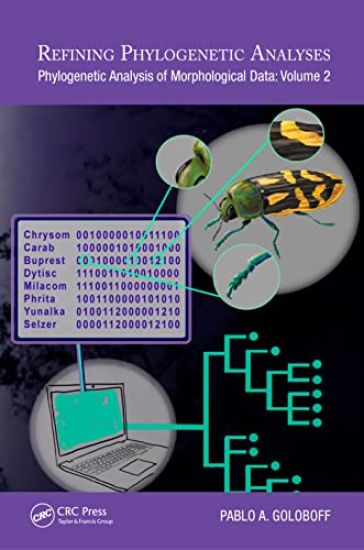
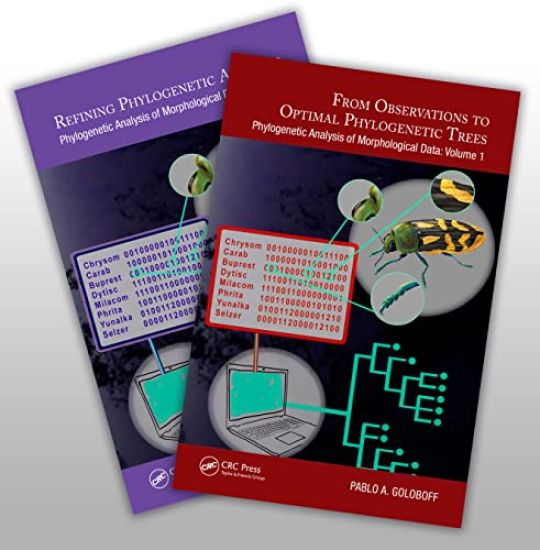
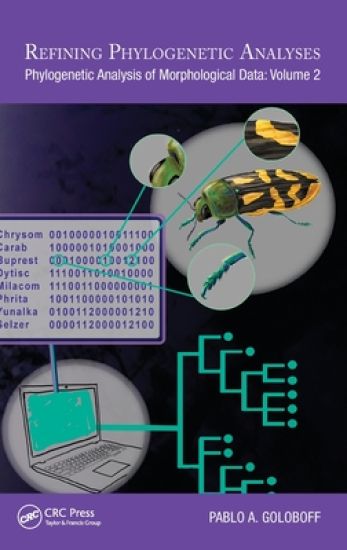
Refining Phylogenetic Analyses

Refining Phylogenetic Analyses

Pablo A. Goloboff

TAYLOR FRANCIS LTD
2022
sidottu
This volume discusses the aspects of a phylogenetic analysis that go beyond basic calculation of most parsimonious trees. Practical application of all principles discussed is illustrated by reference to TNT, a freely available software package that can perform all the steps needed in a phylogenetic analysis. The first problem considered is how to summarize and compare multiple trees (including identification and handling wildcard taxa). Evaluation of the strength of support for groups, another critical component of any phylogenetic analysis, is given careful consideration. The different interpretations of measures of support are discussed and connected with alternative implementations. The book reviews rationales for estimating character reliability on the basis of homoplasy, with particular attention to morphological characters. The main methods for character weighting and their practical implementation, several of them unique to TNT, are discussed ad libitum. Also unique to TNT is the ability to directly analyze morphometric data (including landmarks), on the same footing as discrete characters. Finally, the scripting language of TNT is introduced. With scripting, it is possible to "program" TNT to create personalized routines and automate complex calculations, taking analyses to the next level and allowing exploration of new methods and ideas.Key FeaturesDiscusses the treatment of ambiguity in phylogenetic analyses in depth, for summarizing results or comparing treesReviews literature on arguments and methods for weighting morphological characters and their practical applicationDescribes theory and application of methods for evaluating strength of group support, based on either resampling or comparisons with suboptimal treesDiscusses the use of morphometric characters in phylogenetic analysisPresents extensive information on commands and options of the TNT computer program, including the use and creation of scripts
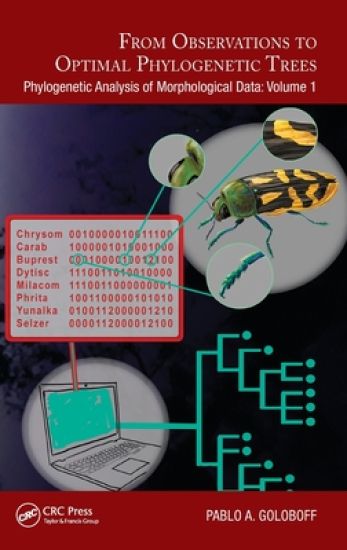
From Observations to Optimal Phylogenetic Trees

From Observations to Optimal Phylogenetic Trees

Pablo A. Goloboff

TAYLOR FRANCIS LTD
2022
sidottu
Taxonomists specializing in different groups once based phylogenetic analysis only on morphological data; molecular data was used more rarely. Although molecular systematics is routine today, the use of morphological data continues to be important, especially for phylogenetic placement of many taxa known only from fossils and rare or difficult to collect species. In addition, morphological analyses help identify potential biases in molecular analyses. And finally, scenarios with respect to morphology continue to motivate biologists: the beauty of a cheetah or a baobab does not lie in their DNA sequence, but instead on what they are and do! This book is an up-to-date revision of methods and principles of phylogenetic analysis of morphological data. It is also a general guide for using the computer program TNT in the analysis of such data. The book covers the main aspects of phylogenetic analysis and general methods to compare classifications derived from molecules and morphology. The basic aspects of molecular analysis are covered only as needed to highlight the differences with methods and assumptions for analysis of morphological datasets.
From Observations to Optimal Phylogenetic Trees

From Observations to Optimal Phylogenetic Trees

Pablo A. Goloboff

TAYLOR FRANCIS LTD
2024
nidottu
Taxonomists specializing in different groups once based phylogenetic analysis only on morphological data; molecular data was used more rarely. Although molecular systematics is routine today, the use of morphological data continues to be important, especially for phylogenetic placement of many taxa known only from fossils and rare or difficult to collect species. In addition, morphological analyses help identify potential biases in molecular analyses. And finally, scenarios with respect to morphology continue to motivate biologists: the beauty of a cheetah or a baobab does not lie in their DNA sequence, but instead on what they are and do! This book is an up-to-date revision of methods and principles of phylogenetic analysis of morphological data. It is also a general guide for using the computer program TNT in the analysis of such data. The book covers the main aspects of phylogenetic analysis and general methods to compare classifications derived from molecules and morphology. The basic aspects of molecular analysis are covered only as needed to highlight the differences with methods and assumptions for analysis of morphological datasets.
Refining Phylogenetic Analyses

Refining Phylogenetic Analyses

Pablo A. Goloboff

TAYLOR FRANCIS LTD
2024
nidottu
This volume discusses the aspects of a phylogenetic analysis that go beyond basic calculation of most parsimonious trees. Practical application of all principles discussed is illustrated by reference to TNT, a freely available software package that can perform all the steps needed in a phylogenetic analysis. The first problem considered is how to summarize and compare multiple trees (including identification and handling wildcard taxa). Evaluation of the strength of support for groups, another critical component of any phylogenetic analysis, is given careful consideration. The different interpretations of measures of support are discussed and connected with alternative implementations. The book reviews rationales for estimating character reliability on the basis of homoplasy, with particular attention to morphological characters. The main methods for character weighting and their practical implementation, several of them unique to TNT, are discussed ad libitum. Also unique to TNT is the ability to directly analyze morphometric data (including landmarks), on the same footing as discrete characters. Finally, the scripting language of TNT is introduced. With scripting, it is possible to "program" TNT to create personalized routines and automate complex calculations, taking analyses to the next level and allowing exploration of new methods and ideas.Key FeaturesDiscusses the treatment of ambiguity in phylogenetic analyses in depth, for summarizing results or comparing treesReviews literature on arguments and methods for weighting morphological characters and their practical applicationDescribes theory and application of methods for evaluating strength of group support, based on either resampling or comparisons with suboptimal treesDiscusses the use of morphometric characters in phylogenetic analysisPresents extensive information on commands and options of the TNT computer program, including the use and creation of scripts
Phylogenetic Analysis of Morphological Data

Phylogenetic Analysis of Morphological Data

PABLO A. GOLOBOFF

TaylorFrancis Ltd
2022
muu
This two-volume book is a revision of methods and principles of phylogenetic analysis of morphological data. It is also a general guide for using the computer program TNT in the analysis of such data. The book covers the main aspects of phylogenetic analysis, and general methods to compare classifications derived from molecules and morphology.
Phylogenetic Analysis of Morphological Data

Phylogenetic Analysis of Morphological Data

Pablo A. Goloboff

TAYLOR FRANCIS LTD
2024
muu
This two-volume book is an up-to-date revision of methods and principles of phylogenetic analysis of morphological data. It is also a general guide for using the computer program TNT in the analysis of such data. The book covers the main aspects of phylogenetic analysis, and general methods to compare classifications derived from molecules and morphology. Practical application of all principles discussed is illustrated by reference to TNT, a freely available software package that can perform all the steps needed in a phylogenetic analysis. Key Features Provides in depth discussion of the connections between hypotheses of homology and the parsimony criterion Helps understand the basis for designing different aspects of a morphological study, from hints on delimiting the problem and data collecting, to character definitions and analysis Discusses the applicability of statistical models coopted from sequence analysis to the analysis of morphological data Gives detailed descriptions of the principles behind algorithms for evaluating and searching phylogenetic trees Presents extensive information on commands and options of the TNT computer program
Pablo a los Romanos: La Vida Victoriosa

Pablo a los Romanos: La Vida Victoriosa

Editorial Universitaria Libertad

Createspace Independent Publishing Platform
2016
nidottu
Muchas cosas motivaron a Pablo a escribir su carta a los romanos. La raz n principal, tal vez, era informar de su intenci n de visitarlos. Por cuanto l nunca hab a visitado Roma, la mayor a de los creyentes romanos lo conoc an solamente de nombre. l quer a hablarles acerca de s mismo, y acerca de su llamado, metas y mensaje. Sus amigos y anteriores colegas en Roma se deleitar an al conocer sus planes.La fe de los romanos era bien conocida, y Pablo anhelaba ver a los creyentes en Roma fortalecerse a n m s. Por lo tanto, bajo la inspiraci n del Esp ritu, l escribi esta exposici n del evangelio. Esta forma escrita fortalecer a a n m s la fe de los creyentes y al mismo tiempo dificultar a que los falsos maestros distorsionaran el mensaje de Cristo.Por alg n tiempo Pablo hab a querido visitar a los creyentes romanos por los que hab a orado continuamente (1:9-10). Agradece a Dios por ellos y desea impartirles "alg n don espiritual" (1:11). Pero con el fin de evitar un aire de superioridad, sin demora a ade: "para ser mutuamente confortados por la fe que nos es com n a vosotros y a m " (1:12).Por cuanto Pablo enfrentar a retos tremendos en los d as siguientes, l apel a los romanos para que lo apoyaran en oraci n. l se sinti "ligado en esp ritu," para ir a Jerusal n, aun cuando el Esp ritu le daba testimonio de que lo esperaban prisiones y tribulaciones (Hechos 20:22-24). Tambi n inst a los creyentes romanos a un rsele en su lucha orando por l. Por ejemplo, l escribi "Os ruego... para que sea librado de los rebeldes que est n en Judea, y que la ofrenda de mi servicio a los santos en Jerusal n sea acepta" (Romanos 15:31).La raz n m s importante para la carta de Pablo a los romanos, por supuesto, es que el Esp ritu Santo lo inspir a escribirla. No era simplemente un impulso humano. M s bien, fue divinamente motivado.Romanos es la ltima carta que Pablo escribi antes de su encarcelamiento. Ahora, cerca de los sesenta a os de edad, Pablo env a su presentaci n del evangelio de Jesucristo a la iglesia en Roma.
Epístola del Apóstol Pablo a los Romanos

Epístola del Apóstol Pablo a los Romanos

The Aguillon Family Foundation

Editorial Palabra Pura
2024
pokkari
El libro de Romanos en uno de los libros de la Biblia m s ricos en promesas y doctrina que se pueden encontrar en las Escrituras. Este comentario es fruto de dedicados escritores seleccionados de todo el mundo hispano, de reconocida experiencia pastoral, erudici n y capacidad literaria, los cuales han proporcionado un entendimiento muy poderoso de cada uno de los pasajes contenidos en este libro. Este comentario contiene un formato bastante amigable y preguntas que le hacen apto para ser utilizado como libro de texto en institutos b blicos y seminarios, y su contenido es de profundidad inagotable.
Bosquejos en la Epistola del Apostol Pablo a los Efesios

Bosquejos en la Epistola del Apostol Pablo a los Efesios

Alex Embiridis

Createspace Independent Publishing Platform
2014
nidottu
La Ep stola a los Efesios es, junto con la Ep stola a los Romanos y la Ep stola a los Hebreos, una de las torres doctrinales m s importantes del Nuevo Testamento y, a pesar que es mucho m s breve que los otros dos libros, contiene muchas de las doctrinas m s importantes de la fe cristiana. Es un libro tanto de instrucci n teol gica como pr ctica. Los primeros tres cap tulos siendo la parte doctrinal y los ltimos tres la parte pr ctica. Las doctrinas sobre Dios Padre, Dios Hijo, Dios Esp ritu Santo, la Trinidad, la salvaci n por gracia, el sacrificio vicario del Se or Jesucristo, el pecado del hombre, Satan s, la iglesia, son, entre otras, algunas de las doctrinas ense adas aqu . Efesios es contempor nea de Colosenses y Filem n, habiendo sido escritas las tres al mismo tiempo desde la c rcel de Roma. Efesios enfatiza la iglesia como cuerpo de Cristo, quien es Su cabeza. Colosenses enfatiza a Cristo como Cabeza de la iglesia quien es Su cuerpo. Es por estas y otras razones que el creyente debe familiarizarse con esta ep stola para crecer, madurar espiritualmente, y andar "digno de la vocaci n con que fue llamado".
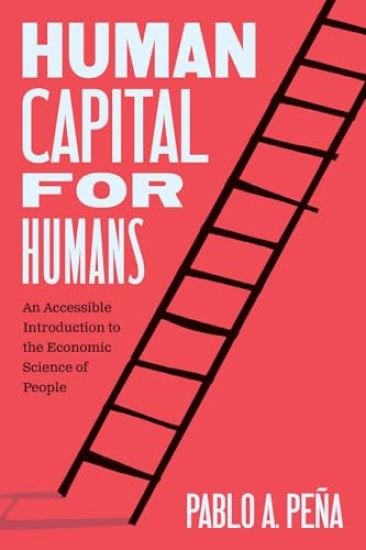
Human Capital for Humans

Human Capital for Humans

Pablo A. Peña

THE UNIVERSITY OF CHICAGO PRESS
2025
nidottu
An everyday introduction to the most consequential science of modern life. University of Chicago economist Gary Becker won the Nobel Prize largely for his advancement of human capital theory—the idea that investing in a person’s knowledge and skills has a wide range of economic effects. Becker’s writing on the subject was technical, but his teaching, especially in his famous doctoral course at Chicago, remains legendary for its accessibility, brilliance, and applications to everyday life. In Human Capital for Humans, economist and former Becker student Pablo A. Peña channels this classroom approach to produce an accessible, essential guide to understanding the science that has become synonymous with modern life and the economy. With an illustrative and immersive style, Peña unpacks the human capital approach to domains such as parenting, aging, marriage, health, and household labor. The result is not only intellectually elevated, but an essential introduction for learners and teachers of this subject across business, management, economics, policy, and beyond.
Human Capital for Humans

Human Capital for Humans

Pablo A. Peña

THE UNIVERSITY OF CHICAGO PRESS
2025
sidottu
An everyday introduction to the most consequential science of modern life. University of Chicago economist Gary Becker won the Nobel Prize largely for his advancement of human capital theory—the idea that investing in a person’s knowledge and skills has a wide range of economic effects. Becker’s writing on the subject was technical, but his teaching, especially in his famous doctoral course at Chicago, remains legendary for its accessibility, brilliance, and applications to everyday life. In Human Capital for Humans, economist and former Becker student Pablo A. Peña channels this classroom approach to produce an accessible, essential guide to understanding the science that has become synonymous with modern life and the economy. With an illustrative and immersive style, Peña unpacks the human capital approach to domains such as parenting, aging, marriage, health, and household labor. The result is not only intellectually elevated, but an essential introduction for learners and teachers of this subject across business, management, economics, policy, and beyond.
Supporting Civics Education with Student Activism

Supporting Civics Education with Student Activism

Pablo A. Muriel; Alan J. Singer

Routledge
2020
nidottu
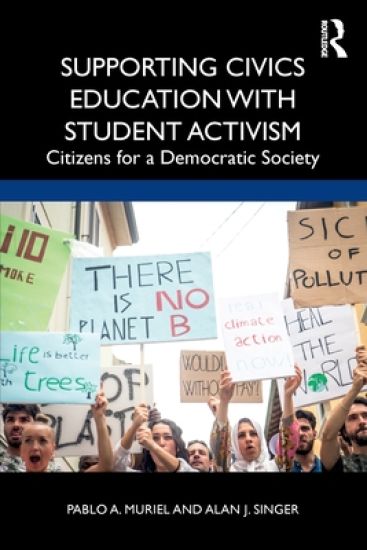
This book empowers teachers to support student activists. The authors examine arguments for promoting student activism, explore state and national curriculum standards, suggest activist projects, and report examples of student individual and group activism. By offering suggestions for engaging students as activists across the K-12 curriculum and by including the stories of student activists who became lifetime activists, the book demonstrates how activism can serve to bolster democracy and be a component of rich, experiential learning. Including interviews with student and teacher activists, this volume highlights issues such as racial and immigrant justice, anti-gun violence, and climate change.
Supporting Civics Education with Student Activism

Supporting Civics Education with Student Activism

Pablo A. Muriel; Alan J. Singer

Routledge
2020
sidottu
This book empowers teachers to support student activists. The authors examine arguments for promoting student activism, explore state and national curriculum standards, suggest activist projects, and report examples of student individual and group activism. By offering suggestions for engaging students as activists across the K-12 curriculum and by including the stories of student activists who became lifetime activists, the book demonstrates how activism can serve to bolster democracy and be a component of rich, experiential learning. Including interviews with student and teacher activists, this volume highlights issues such as racial and immigrant justice, anti-gun violence, and climate change.
Principios De Educacion Cristiana

Principios De Educacion Cristiana

Pablo A. Jiménez

Abingdon Press
2003
pokkari
This book invites anyone, regardless of their profession, to participate in the great adventure of teaching Scripture. It stresses the importance of Christian education as it relates to the church's mission, and provides a profile that Sunday school teachers should strive toward. It also provides instruction for developing an effective and attractive class plan, as well as techniques and activities that make the gatherings more interesting and transformational.
Principios De La Predicacion

Principios De La Predicacion

Pablo A. Jiménez

Abingdon Press
2003
pokkari
Se requiere una habilidad poco usual en el manejo del idioma literario para combinar profundidad y sencillez para definir terminos profesionales en lenguaje laico y a la vez hacer un libro de texto y manual de inspiracion. Pablo Jimenez tiene esa capacidad. Su tratado sobre la predicacion esta redactado en lenguaje sencillo y ampliamente ilustrado. Es suficientemente ameno como para servir de material suplementario o de inspiracion a quienes solo quieren disfrutar un poco de buena lectura y de la cual sacar ideas para su uso personal. Sin embargo a la vez esta obra es suficientemente profunda como para convertirse en libro de texto para institutos teologicos, colegios o seminarios."
Violence, Discourse, and Politics in China’s Uyghur Region

Violence, Discourse, and Politics in China’s Uyghur Region

Pablo A. Rodríguez-Merino

TAYLOR FRANCIS LTD
2022
sidottu
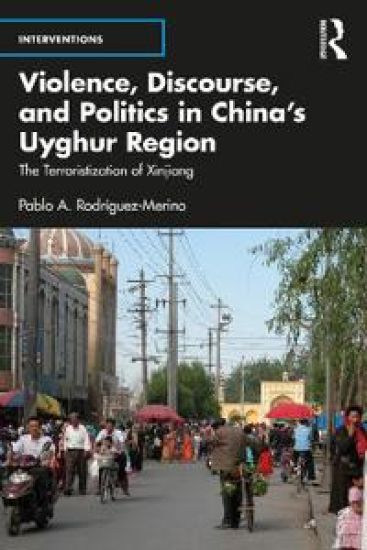
This book investigates how Uyghur-related violent conflict and Uyghur ethnic minority identity, religion, and the Xinjiang region, more broadly, became constituted as a ‘terrorism’ problem for the Chinese state. Building on securitization theory, Critical Terrorism Studies (CTS), and the scholarly definitional debate on terrorism, it develops the concept of terroristization as a critical analytical framework for the study of historical processes of threat construction. Investigating the violent events reported in Xinjiang since the early 1980s, the evolving discursive patterns used by the Chinese state to make sense of violent incidents, and the crackdown policies that the official terrorism discourse has legitimized, the book demonstrates how the securitization, and later terroristization, of Xinjiang and the Uyghurs, is the result of a discursive and political choice of the Chinese state. The author reveals the contingent and unstable nature of such construction, and how it problematizes the inevitability of the rationale behind China’s ‘war on terror’, that has prescribed a brutal crackdown as the most viable approach to governing the tensions that have historically characterized China’s rule over the Turkic Muslim ethnic minorities in Xinjiang. This book will be of interest to scholars and students of the politics of contemporary China, security and ethnic minority issues, International Relations and Security, as well as those adopting discursive approaches to the study of security, notably those within the critical security and terrorism studies fields.
Violence, Discourse, and Politics in China’s Uyghur Region

Violence, Discourse, and Politics in China’s Uyghur Region

Pablo A. Rodríguez-Merino

TAYLOR FRANCIS LTD
2022
nidottu
This book investigates how Uyghur-related violent conflict and Uyghur ethnic minority identity, religion, and the Xinjiang region, more broadly, became constituted as a ‘terrorism’ problem for the Chinese state. Building on securitization theory, Critical Terrorism Studies (CTS), and the scholarly definitional debate on terrorism, it develops the concept of terroristization as a critical analytical framework for the study of historical processes of threat construction. Investigating the violent events reported in Xinjiang since the early 1980s, the evolving discursive patterns used by the Chinese state to make sense of violent incidents, and the crackdown policies that the official terrorism discourse has legitimized, the book demonstrates how the securitization, and later terroristization, of Xinjiang and the Uyghurs, is the result of a discursive and political choice of the Chinese state. The author reveals the contingent and unstable nature of such construction, and how it problematizes the inevitability of the rationale behind China’s ‘war on terror’, that has prescribed a brutal crackdown as the most viable approach to governing the tensions that have historically characterized China’s rule over the Turkic Muslim ethnic minorities in Xinjiang. This book will be of interest to scholars and students of the politics of contemporary China, security and ethnic minority issues, International Relations and Security, as well as those adopting discursive approaches to the study of security, notably those within the critical security and terrorism studies fields.