
Kirjahaku
Etsi kirjoja tekijän nimen, kirjan nimen tai ISBN:n perusteella.
1000 tulosta hakusanalla Pam Morris Hanckel

Grits God Reigns In The south
Pam Morris Hanckel
Createspace Independent Publishing Platform
2012
nidottu
Coming to prominence with the nineteenth-century novel, literary realism has most often been associated with the insistence that art cannot turn away from the more sordid and harsh aspects of human existence. However, because realism is unavoidably tied up with the gnarly concept of 'reality' and 'the real', it has been one of the most widely debated terms in the New Critical Idiom series.This volume offers a clear, reader-friendly guide to debates around realism, examining:*ideas of realism in nineteenth-century French and British fiction*the twentieth-century formalist reaction against literature's status as 'truth'*realism as a democratic tool, or utopian form.This volume is vital reading for any student of literature, in particular those working on the realist novel.
Coming to prominence with the nineteenth-century novel, literary realism has most often been associated with the insistence that art cannot turn away from the more sordid and harsh aspects of human existence. However, because realism is unavoidably tied up with the gnarly concept of 'reality' and 'the real', it has been one of the most widely debated terms in the New Critical Idiom series.This volume offers a clear, reader-friendly guide to debates around realism, examining:*ideas of realism in nineteenth-century French and British fiction*the twentieth-century formalist reaction against literature's status as 'truth'*realism as a democratic tool, or utopian form.This volume is vital reading for any student of literature, in particular those working on the realist novel.
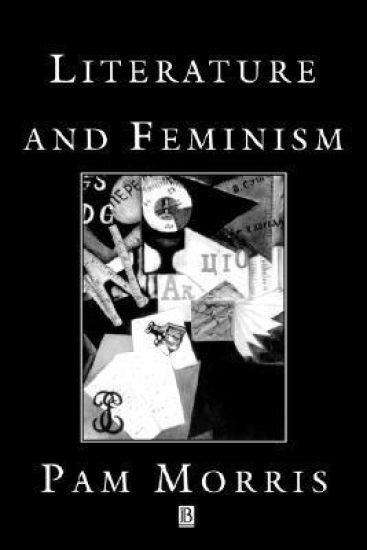
Literature and Feminism is an exemplary new introduction to feminist literary criticism and theory which assumes no previous knowledge of the field. Clear, informative and carefully structured, it provides a thorough guide to, and path through, one of the most important, but also most difficult, areas of contemporary literary studies.
Imagining Inclusive Society in Nineteenth-Century Novels
Pam Morris
Johns Hopkins University Press
2004
sidottu
In Imagining Inclusive Society in Nineteenth-Century Novels, Pam Morris traces a dramatic transformation of British public consciousness that occurred between the Reform Acts of 1832 and 1867. This brief period saw a shift from a naturalized acceptance of social hierarchy to a general imagining of a modern mass culture. Central to this collective revisioning of social relations was the pressure to restyle political leadership in terms of popular legitimacy, to develop a more inclusive mode of discourse within an increasingly heterogeneous public sphere and to find new ways of inscribing social distinctions and exclusions. Morris argues that in the transformed public sphere of mid-nineteenth-century Britain, the urbane code of civility collapsed under the strain of the conflicting interests that constitute mass society. It was replaced by a "code of sincerity," often manipulative and always ideological in that its inclusiveness was based upon a formally egalitarian assumption of mutual interiorities. The irresistible movement toward mass politics shifted the location of power into the public domain. Increasingly, national leaders sought to gain legitimacy by projecting a performance of charismatic "sincerity" as a flattering and insinuating mode of address to mass audiences. Yet, by the latter decades of the century, while the code of sincerity continued to dominate popular and political culture, traditional political and intellectual elites were reinscribing social distinctions and exclusions. They did so both culturally-by articulating sensibility as skepticism, irony, and aestheticism-and scientifically-by introducing evolutionist notions of sensibility and attaching these to a rigorous disciplinary code of bodily visuality. Through an intensive, intertextual reading of six key novels (Bronte's Shirley, Thackeray's Henry Esmond, Dickens's Bleak House and Our Mutual Friend, Gaskell's North and South, and Eliot's Romola) and an array of Victorian periodicals and political essays, Morris analyzes just how actively novelists engaged in these social transformations. Drawing on a wide range of literary, cultural, and historical thinkers-Jurgen Habermas, Michel Foucault, Benedict Anderson, Mary Poovey, and Charles Tilly-Morris makes an original and highly sophisticated contribution to our understanding of the complex and always contested processes of imagining social inclusiveness.
The material presented in this six-volume set moves away from courtly etiquette, adopting a more middle-class, domestic focus, and includes facsimile reproductions of sermons, poems, narratives and cookery books.
The material presented in this six-volume set moves away from courtly etiquette, adopting a more middle-class, domestic focus, and includes facsimile reproductions of sermons, poems, narratives and cookery books.

The material presented in this six-volume set moves away from courtly etiquette, adopting a more middle-class, domestic focus, and includes facsimile reproductions of sermons, poems, narratives and cookery books.
The material presented in this six-volume set moves away from courtly etiquette, adopting a more middle-class, domestic focus, and includes facsimile reproductions of sermons, poems, narratives and cookery books.
The material presented in this six-volume set moves away from courtly etiquette, adopting a more middle-class, domestic focus, and includes facsimile reproductions of sermons, poems, narratives and cookery books.
The material presented in this six-volume set moves away from courtly etiquette, adopting a more middle-class, domestic focus, and includes facsimile reproductions of sermons, poems, narratives and cookery books.
This collection aims to give a chronological insight into the evolution of conduct literature, from its early roots in the Renaissance period through to the dramatically different role that women played at the emergence of the 20th century. The material presented in this six-volume set moves away from courtly etiquette, adopting a more middle-class, domestic focus, and includes facsimile reproductions of sermons, poems, narratives and cookery books.Social and literary historians recognise the 1790s as a moment of political crisis and turbulence in British history: the intense reactions in Britain to increasing revolutionary violence in France politicised almost every aspect of cultural life. At the centre of discursive hostilities was the opposition between sentimentality, on the one hand, and rationality, on the other. Two of the most important literary forms utilised for expressing these polemics were novels and treatises on education, as well as conduct writing. Conduct Literature for Women IV, 1770-1830 makes available this body of writing, which has been less well studied in respect to the war of ideas than the former two.
This collection aims to give a chronological insight into the evolution of conduct literature, from its early roots in the Renaissance period through to the dramatically different role that women played at the emergence of the 20th century. The material presented in this six-volume set moves away from courtly etiquette, adopting a more middle-class, domestic focus, and includes facsimile reproductions of sermons, poems, narratives and cookery books.Social and literary historians recognise the 1790s as a moment of political crisis and turbulence in British history: the intense reactions in Britain to increasing revolutionary violence in France politicised almost every aspect of cultural life. At the centre of discursive hostilities was the opposition between sentimentality, on the one hand, and rationality, on the other. Two of the most important literary forms utilised for expressing these polemics were novels and treatises on education, as well as conduct writing. Conduct Literature for Women IV, 1770-1830 makes available this body of writing, which has been less well studied in respect to the war of ideas than the former two.
This collection aims to give a chronological insight into the evolution of conduct literature, from its early roots in the Renaissance period through to the dramatically different role that women played at the emergence of the 20th century. The material presented in this six-volume set moves away from courtly etiquette, adopting a more middle-class, domestic focus, and includes facsimile reproductions of sermons, poems, narratives and cookery books.Social and literary historians recognise the 1790s as a moment of political crisis and turbulence in British history: the intense reactions in Britain to increasing revolutionary violence in France politicised almost every aspect of cultural life. At the centre of discursive hostilities was the opposition between sentimentality, on the one hand, and rationality, on the other. Two of the most important literary forms utilised for expressing these polemics were novels and treatises on education, as well as conduct writing. Conduct Literature for Women IV, 1770-1830 makes available this body of writing, which has been less well studied in respect to the war of ideas than the former two.
This collection aims to give a chronological insight into the evolution of conduct literature, from its early roots in the Renaissance period through to the dramatically different role that women played at the emergence of the 20th century. The material presented in this six-volume set moves away from courtly etiquette, adopting a more middle-class, domestic focus, and includes facsimile reproductions of sermons, poems, narratives and cookery books.Social and literary historians recognise the 1790s as a moment of political crisis and turbulence in British history: the intense reactions in Britain to increasing revolutionary violence in France politicised almost every aspect of cultural life. At the centre of discursive hostilities was the opposition between sentimentality, on the one hand, and rationality, on the other. Two of the most important literary forms utilised for expressing these polemics were novels and treatises on education, as well as conduct writing. Conduct Literature for Women IV, 1770-1830 makes available this body of writing, which has been less well studied in respect to the war of ideas than the former two.
This collection aims to give a chronological insight into the evolution of conduct literature, from its early roots in the Renaissance period through to the dramatically different role that women played at the emergence of the 20th century. The material presented in this six-volume set moves away from courtly etiquette, adopting a more middle-class, domestic focus, and includes facsimile reproductions of sermons, poems, narratives and cookery books.Social and literary historians recognise the 1790s as a moment of political crisis and turbulence in British history: the intense reactions in Britain to increasing revolutionary violence in France politicised almost every aspect of cultural life. At the centre of discursive hostilities was the opposition between sentimentality, on the one hand, and rationality, on the other. Two of the most important literary forms utilised for expressing these polemics were novels and treatises on education, as well as conduct writing. Conduct Literature for Women IV, 1770-1830 makes available this body of writing, which has been less well studied in respect to the war of ideas than the former two.
This collection aims to give a chronological insight into the evolution of conduct literature, from its early roots in the Renaissance period through to the dramatically different role that women played at the emergence of the 20th century. The material presented in this six-volume set moves away from courtly etiquette, adopting a more middle-class, domestic focus, and includes facsimile reproductions of sermons, poems, narratives and cookery books.Social and literary historians recognise the 1790s as a moment of political crisis and turbulence in British history: the intense reactions in Britain to increasing revolutionary violence in France politicised almost every aspect of cultural life. At the centre of discursive hostilities was the opposition between sentimentality, on the one hand, and rationality, on the other. Two of the most important literary forms utilised for expressing these polemics were novels and treatises on education, as well as conduct writing. Conduct Literature for Women IV, 1770-1830 makes available this body of writing, which has been less well studied in respect to the war of ideas than the former two.

Border Politics in Novels by European Women in Translation
Pam Morris
BLOOMSBURY PUBLISHING PLC
2024
sidottu
Is conflict inherent to the politics of borders? Recent global events, erupting from national, religious, class, racial and gender boundaries would suggest it is. From the inhumanity of post-Brexit British immigration policy to the violent suppression of women’s freedom in Iran, to Russia’s territorial invasion of Ukraine, and most immediately to the violent conflagration engulfing Palestine, border hostilities seem everywhere characterised by fearful and toxic intolerance of what is deemed other.This book examines the writing of award-winning European novelists to suggest an alternative perspective, one that redresses time-sanctioned hierarchies of mind over body, of ideals over physical reality. It explores novelistic representations of power, war, sacrifice, heroism, national history and identity, all issues more conventionally viewed within a male consensus. The fiction offers a cultural and imaginative response to border conflicts of all kinds, ethical, bodily, religious, and geographical, often drawing upon the writers’ own personal experience of threatening divisions. Examining works by Virginia Woolf, Jenny Erpenbeck, Olga Tokarczuk, Herta Müller, Anna Burns, Chika Unigwe, Maylis de Kerangal, Magda Szabó, Elena Ferranti, Alki Zei, Elif Shafak, and Oksana Zabuzhko, it uses an integrated interdisciplinary approach to combine literary readings with detailed historical and political understanding of cultural context. Coming from many different cultures and histories, these writers speak a common condemnation of all hierarchies of worth and of exceptionalist identities whether sanctified by religion, nature, or tradition. Morris shows how their stories, read here in translation, also articulate a strikingly unified vision of a radical ecological understanding of human relations based on physical continuity and co-existence rather than borders dividing an idealised 'us' from a denigrated 'them'.