Kirjahaku
Etsi kirjoja tekijän nimen, kirjan nimen tai ISBN:n perusteella.
1000 tulosta hakusanalla Pamela H Bare
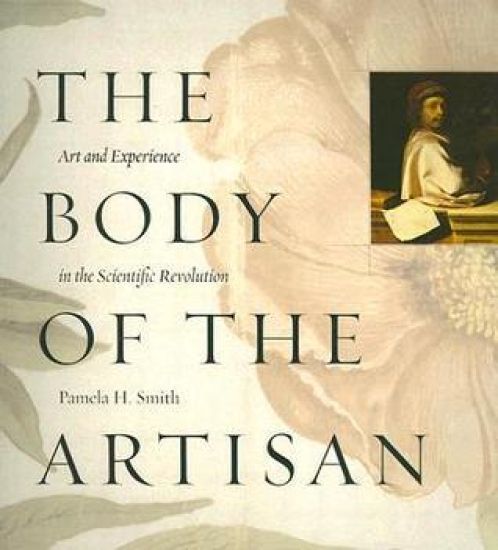
In "The Body of the Artisan", Pamela H. Smith demonstrates how much early modern science owed to an unlikely source: artists and artisans. Goldsmiths, locksmiths, carpenters, and painters were all sought after by early scientists for their intimate, hands-on knowledge of natural materials, as well as their ability to manipulate them. Drawing on a fascinating array of new evidence from northern Europe, and including nearly 200 images of artisans' objects alongside their writings, "The Body of the Artisan" convincingly demonstrates that artisans viewed knowledge as throughly rooted in matter and nature. "The Body of the Artisan" provides astonishingly vivid examples of this Renaissance synergy among art, craft, and science, recovering a forgotten episode of the Scientific Revolution - an episode that forever altered the way we see the natural world, and science too.
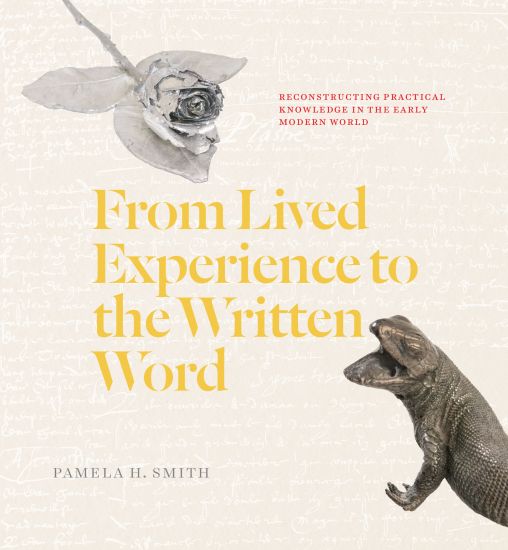
From Lived Experience to the Written Word
Pamela H. Smith
THE UNIVERSITY OF CHICAGO PRESS
2022
nidottu
How and why early modern European artisans began to record their knowledge. In From Lived Experience to the Written Word, Pamela H. Smith considers how and why, beginning in 1400 CE, European craftspeople began to write down their making practices. Rather than simply passing along knowledge in the workshop, these literate artisans chose to publish handbooks, guides, treatises, tip sheets, graphs, and recipe books, sparking early technical writing and laying the groundwork for how we think about scientific knowledge today. Focusing on metalworking from 1400-1800 CE, Smith looks at the nature of craft knowledge and skill, studying present-day and historical practices, objects, recipes, and artisanal manuals. From these sources, she considers how we can reconstruct centuries of largely lost knowledge. In doing so, she aims not only to unearth the techniques, material processes, and embodied experience of the past but also to gain insight into the lifeworld of artisans and their understandings of matter.

In The Business of Alchemy, Pamela Smith explores the relationships among alchemy, the court, and commerce in order to illuminate the cultural history of the Holy Roman Empire in the sixteenth and seventeenth centuries. In showing how an overriding concern with religious salvation was transformed into a concentration on material increase and economic policies, Smith depicts the rise of modern science and early capitalism. In pursuing this narrative, she focuses on that ideal prey of the cultural historian, an intellectual of the second rank whose career and ideas typify those of a generation. Smith follows the career of Johann Joachim Becher (1635-1682) from university to court, his projects from New World colonies to an old-world Pansophic Panopticon, and his ideas from alchemy to economics. Teasing out the many meanings of alchemy for Becher and his contemporaries, she argues that it provided Becher with not only a direct key to power over nature but also a language by which he could convince his princely patrons that their power too must rest on liquid wealth. Agrarian society regarded merchants with suspicion as the nonproductive exploiters of others' labor; however, territorial princes turned to commerce for revenue as the cost of maintaining the state increased. Placing Becher's career in its social and intellectual context, Smith shows how he attempted to help his patrons assimilate commercial values into noble court culture and to understand the production of surplus capital as natural and legitimate. With emphasis on the practices of natural philosophy and extensive use of archival materials, Smith brings alive the moment of cultural transformation in which science and the modern state emerged.
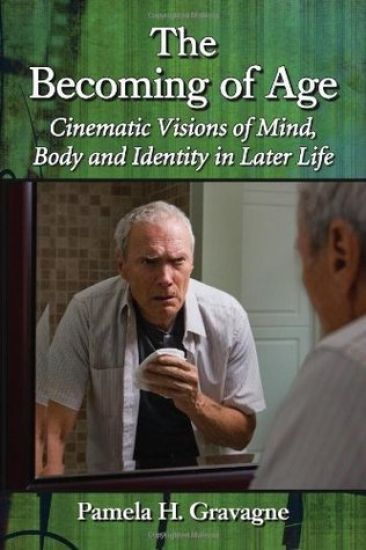
The Becoming of Age is an examination of the ways that aging and old age are represented in popular film. Arguing that the ideas behind cinematic depictions of aging are historical and open to revision, the author looks at how movies both promote negative portrayals of aging and challenge its persistent cultural devaluation. Movies are a site of struggle where the representation and the reality of aging intertwine, and they have the power not only to reflect but to reconstruct our understanding.
Librarians must know how to provide essential programs and services that make a difference for the people they serve if libraries are going to survive. It is no longer realistic for librarians to rely on the idea that “people love libraries, so they will fund them” in this economic climate. Librarians must be able to prove that their programs and services are making a difference if they want to compete for funding in their municipalities, schools, corporations, colleges, institutions and organizations. Meeting Community Needs: A Practical Guide for Librarians presents a process that librarians of all kinds can use to provide effective programs and services. This requires being in close touch with your community, whether it is a city, town, or village; college or university; public or private school; or corporation, hospital, or business. Understanding what information people need, how they access it, how they use it, how it benefits them, and how they share it is paramount. The process in this book covers community assessment, designing programs and services to meet needs, implementing and evaluating programs and services, and funding options. Providing library programs and services for your entire population - not just library users - is more important than ever. Librarians working in libraries of all types must provide programs and services that meet community needs if libraries are to stay relevant and survive in the long run. Librarians must be able to measure their success and demonstrate the library’s worth with verifiable proof if they are going to be competitive for available funds in the future. Meeting Community Needs will make you take a serious look at how well your library programs and services are meeting your community’s needs, and it will show you the way to success.
Librarians must know how to provide essential programs and services that make a difference for the people they serve if libraries are going to survive. It is no longer realistic for librarians to rely on the idea that “people love libraries, so they will fund them” in this economic climate. Librarians must be able to prove that their programs and services are making a difference if they want to compete for funding in their municipalities, schools, corporations, colleges, institutions and organizations. Meeting Community Needs: A Practical Guide for Librarians presents a process that librarians of all kinds can use to provide effective programs and services. This requires being in close touch with your community, whether it is a city, town, or village; college or university; public or private school; or corporation, hospital, or business. Understanding what information people need, how they access it, how they use it, how it benefits them, and how they share it is paramount. The process in this book covers community assessment, designing programs and services to meet needs, implementing and evaluating programs and services, and funding options. Providing library programs and services for your entire population - not just library users - is more important than ever. Librarians working in libraries of all types must provide programs and services that meet community needs if libraries are to stay relevant and survive in the long run. Librarians must be able to measure their success and demonstrate the library’s worth with verifiable proof if they are going to be competitive for available funds in the future. Meeting Community Needs will make you take a serious look at how well your library programs and services are meeting your community’s needs, and it will show you the way to success.

As Christians we are living far below what God has provided for us in this life. Christians should be a bright light everywhere we go and this is why in the latter part of John 10:10 But I have come that they might have Life, and may have it MORE ABUNDANTLY. Jesus brought us life and life more abundantly. I was blown away when I studied the word Abundantly. This is what Jesus brought us in More Abundantly- exceeding abundant, super added, more than necessary, something more than we have, overflowing, excessive, surplus the list goes on, but we have neglected or didn't know that kind of living was possible. We are just missing out on what God wants for our lives and our families. There was a comedy show back in the 70s and 80s their theme song was "Gloom, despair and agony on me, if it weren't for bad luck I'd have no luck at all". That seems to be the theme song for a lot of Christians, that should not be. I believe the word of God rightly dividing the scripture. How about you God said it, so like a child we must believe it, regardless of situations because we have a Heavenly Father that cares about our every need. Abraham believe God and it was accounted unto him for righteousness.
Pocahontas: Peacemaker and Friend to the Colonists
Pamela H. Nettleton; Jeff Yesh
Picture Window Books
2003
nidottu
A brief biography that highlights some important events in the life of the woman who helped to bring about peace and friendship between English settlers in Virginia and the native Powhatan people.
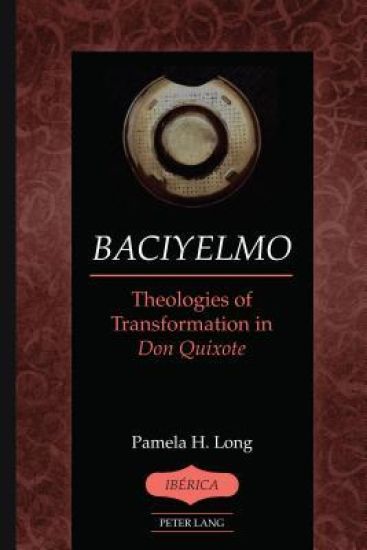
This text examines the character of Don Quixote, the book describing his fictional exploits, and their implications in the theological realm as well as in the fictive, using Gónzalez and Maldonado’s definition of theology as "la explicación de la realidad cósmica" ["the explanation of cosmic reality"], including the identity and nature of God. The first chapter examines the implications of the basin-helmet in El ingenioso hidalgo Don Quixote de La Mancha, in context with the historical and theological developments of the end of the sixteenth century. The second chapter looks first at the religious climate of the sixteenth and early seventeenth centuries in Spain and the rest of Europe to tease-out the theological and ecclesiastical preoccupations that undergird much of the content in Don Quixote. The third chapter examines a few details from the life of Miguel de Cervantes in order to place him within the historical and literary context examined in the second chapter, and the fourth chapter examines chivalry as a mode of religious life. The fifth chapter then approaches various other characters, events, and discussions in the novel that carry religious content, and the sixth considers transformation, transubstantiation, and translation, using the topos of the baciyelmo as a metaphor for Cervantes.

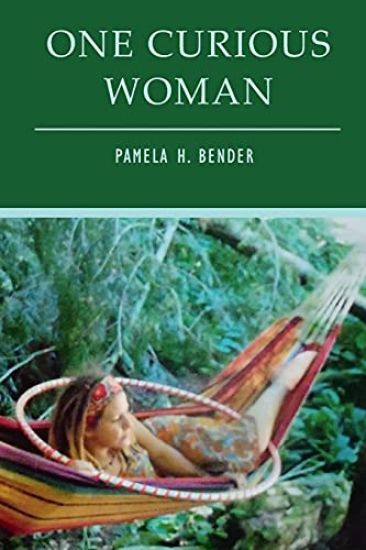
Until There Was Usby Pamela H BenderWhen a newborn loses her mother the same day she is given the gift of life, she finds herself shuffled amongst different family members for years on end. Coming of age in the Roaring Twenties and the Depression thirties, she struggles to find connection, adventure, and true happiness while becoming involved in a dark world of speakeasies and deadly bosses. The story of a strong, resilient woman ahead of her time, Pamela Bender's first installment of the Dennison family trilogy is a surprising, heartfelt, and absorbing saga that depicts a young woman's tumultuous journey into adulthood to stunning effect.Mimi Dennison loses her mother the day she is born. Her father unable to care for her or her two year-old sister, she becomes a vagabond ward of the extended family. Separated from her sister and passed from family to family, Mimi develops her own unique blend of survival skills, personality quirks, and thirst for adventure. Once reunited with her sister in Boston, the two search for whatever excitement the world has to offer as they enter the confusing and exhilarating world of young adulthood.Working as a switchboard operator, Mimi segues into the competitive world of 1930's fashion where her sense of adventure and naivete prove to be a dangerous combination. Quickly drawn into a deadly world of Depression-era speakeasies and gangsters, she makes all the wrong decisions and gets in deeper than she ever imagined possible. When she decides to leave that world behind, however, she finds it isn't that easy and it will take the friendship-and love-from a surprising source to help her find the happiness she has been searching for her whole life.Capturing the nuances and emotional landscape of her heroine with extraordinary depth and sincerity, Bender's debut weaves together the dark and light of life as it explores a time and place unique in the collective American psyche. Uninhibited romanticism at its finest, Until There Was Us reminds us all that life is what you make it.
A dramatic family saga continues, as Ron and Mimi Dennison welcome the arrival of their second daughter, Anna, along with a stream of returning GIs moving in to join their fledgling Long Island neighborhood at the close of World War II. Here, on former farmland in a stone and brick house on the corner, Anna and her sister, Shirley, will enjoy an idyllic postwar childhood, surrounded by their grandparents, aunts, uncles, and cousins. However, perhaps these pleasant early years will prove to have made Anna too trusting for what life holds in store for her.Rising Up is a heartbreaking yet beautiful story about surviving abuse. The second book of the Dennison saga, this compelling novel is a vibrant celebration of the ability of women to survive and flourish in spite of monumental challenges. As the story advances to Anna's adult life, she finds herself married to a man, Bruce, whose abuse threatens her very survival. With Bruce raging ever more as their children grow older, Anna takes their daughters and son and finds refuge with her parents. After seeking both spiritual and legal counsel, Anna files for divorce, even though it means giving up the comfortable lifestyle she has come to know.As Anna's new beginning starts to take shape, her life takes on unexpected dimensions. Anna and her mother grow closer in the days that follow Ron's succumbing to a tragic battle with cancer, but little can prepare her for the shock and pain that is about to echo through all three generations in the wake of startling revelations and long-hidden secrets becoming a shared, undeniable reality. Rich in drama, exacting with detailed information, and ultimately triumphant, Rising Up draws together the stories of each generation as they overlap, demonstrating the empowerment associated with refusing to let endured experiences define one's own being. Rising Up gives voice to a powerful anthem that rails against violence and victimization as it embraces the process of freeing oneself from abuse.
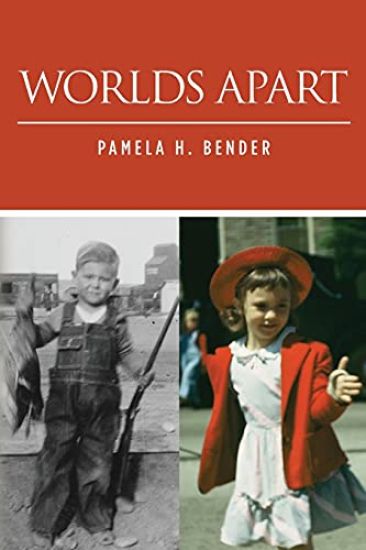
Worlds Apartby Pamela H. BenderThe Dennison saga continues with Anna and her mother, Mimi, settling into a quieter life. Anna has sworn off dating until she runs into an old friend. Jeb Derben, a retired elementary principal, is newly widowed and shares Anna's friends, contacts and core values. Taking one last leap of faith, Anna marries Jeb and starts a new chapter in her life.Jeb was raised very differently from Anna, Montana versus Long Island, NY. He calls silverware tools; three shirts, pants, and one suit a wardrobe; it's fine--all the compliment a person needs. He knows herding cattle, crops, tractors, livestock, hunting, and butchering. He likes the simple life with no frills. Jeb's a straight talker who learned life lessons while growing up in a house attached to the family bar and dance hall. He tells Anna stories of what made some men fools, others heroes; some brave, others cowards; some leaders, others followers. Anna's the youngest of two girls; Jeb's the oldest of four boys. They were wild, fearless, athletic, and town leaders with snakes, magpies, owls, dogs, horses, kangaroo rats, and cats for pets. Jeb uses humor, common sense, clear talk, and honest appraisal to empower those around him; Anna uses the written word. Jeb takes Anna out West. With the beauty of nature surrounding her, she understands life is best lived uncluttered by extra baggage or the past. Observing western dynamics, she learns plain-spoken folks are true to their word. Join Anna as Jeb teaches her what true love really is. We find that Pamela H. Bender's readers often find it difficult to leave the Dennison family. Consider reading Book One, Until There Was Us, and Book Two, Rising Up. The prequel to the series, The Beat Goes On, is currently being written at the request of her readers.
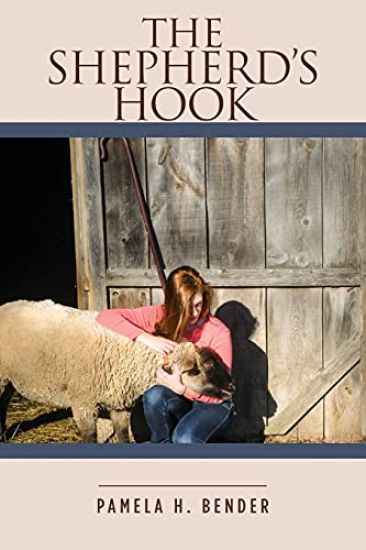
THE SHEPHERD'S HOOK Live Passionately Book Two in Bender's new series takes her readers into the world of a multitalented mother, shepherd, and fiberista. Bess, a young widow, is determined to focus only on six-year-old Sadie. Relocating to Pennsylvania, Bess teaches spinning at a yarn shop. Just when they are settling into their new life, fate and three circling vultures instantly change everything. Join Bess and Sadie as they meet James, a retired Army Captain, who is keeping his promise to his surviving soldiers and their fallen brothers. James, an artist at heart, finds himself on a farm surrounded by hundreds of animals he knows little about. Bess and Sadie meet the decorated veterans and their families on their first trip to the farm. Sadie bonds with Millie, a kitten, Rascal, a baby donkey, Dipsy, a goat, and Judy, a daughter of one veteran. Bess bonds with the two hundred sheep that are about to give birth. Bender gently weaves the lives of wounded souls together to make a captivating tale of love, healing, devotion, commitment, and servitude. The Shepherd's Hook honors our shepherds, fiber artists, returning soldiers, and those who cling to their farms as a way to make sense of a world gone wild.
"I woke up one morning and could not get out of bed - literally. Every time I attempted to raise myself to a sitting position, pain shot through my lower back and into my left hip and buttock..."Does this sound familiar to you?That was 6 years ago when I first experienced the shocking sciatica pain. Horror could not begin to describe how I felt that day. For the next 12 weeks I went through hell and back. Through a series of non-surgical treatments, exercises, and stretches, I have been back pain free & have not needed to see a healthcare professional for sciatica since then. I continue to care for my back with stretching, walking and sometimes back strengthening exercises. Oh, and every now and then, I also treat my back to spinal decompression at the chiropractor's office.The single most important thing I learned through my ordeal with sciatica is that there is no way any doctor can tell every patient everything he or she needs to know and, unfortunately, most patients don't know what questions to ask.This is why I wrote "Sciatica No More." I am hoping that this book will help people learn about their conditions, learn of the many treatment options, learn to live within the limitations of their bodies and learn to live free from sciatica pain.In this book, you will learn: - What is sciatica & sciatic nerve pain - Sciatica diagnostic processes, sciatica symptoms - Common causes of sciatica - Non-surgical treatment options - Natural remedies for sciatica pain - Exercises for sciatica relief - Surgical treatment options - Working with sciatica pain - Travelling with sciatica pain - Sleeping with sciatica pain - Myths and facts about sciatica - Learn to say sayonara sciatica - And much more...

In His Grip: Please be encouraged and strengthened and know that he has you in his grip!
Pamela H. Tashne
Createspace Independent Publishing Platform
2017
nidottu
This book will help you attain victory and overcome sickness, disease, depression, and financial problems. You will learn how God protects, delivers, strengthens and takes away fear and anxiety. You will learn how to trust God, and see His goodness, favor, love, comfort and His restoration power in your life.
Writing Successful Technology Grant Proposals
Pamela H. MacKellar
Neal-Schuman Publishers Inc
2011
nidottu
When you win a grant, you help your community by providing great technology-driven services. Technology grants provide the crucial funding to implement the latest technology projects so you can meet your community’s needs. But how can you write a successful grant proposal? How can you be sure that your technology grant will be approved? Here is the only book that covers technology grants for libraries. This comprehensive book on grants for libraries focuses on technology, technology planning, designing technology projects, specific sources and resources for technology grants, how to create a technology budget, and technology project success stories so you get real life examples of how others like you made their libraries stronger through technology grants. Pamela MacKellar shows you easy-to-understand graphics and examples that make writing proposals for technology projects simple and easy. You get chapters explaining how to design your project, work with a team to save time and money, and, of course, how to write and submit your project. This one-stop shop is both a guide and a resource, with sources for technology projects and helpful hints on finding the right technology grants for you. This is your step-by-step guide to turning your library into your community’s technology hub.
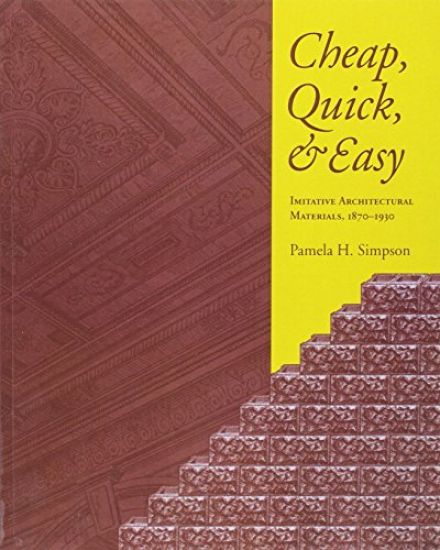
In this innovative study, Pamela H. Simpson examines the architectural materials that proliferated between 1870 and 1930. Produced by new technology, promoted by new forms of advertising, and eagerly adopted by a new middle class, these “cheap, quick, and easy” materials helped to transform building practices in the United States and Great Britain.As Simpson shows in fascinating detail, rockface concrete blocks, pressed metal imitations of stone, linoleum “marble” and “parquet,” and embossed wall coverings made available to the masses a host of ornamental effects that only the wealthy could previously have afforded. But, she notes, wherever these new materials appeared, a heated debate over the appropriateness of imitation followed. Were these materials merely tasteless shams? Or were they economical, durable alternatives that democratically extended the possibilities of ornamentation?Simpson devotes chapters to each of the various ornamental materials, considering its precursors, invention, production, and distribution. In her final chapter, she traces the history of the aesthetic debate over imitation and analyzes the social meaning of the materials. Far from being “bad taste,” she concludes, these new ornamental forms reflected modernism, democracy, and progress—some of the most deeply held values of the period.