

Kirjahaku
Etsi kirjoja tekijän nimen, kirjan nimen tai ISBN:n perusteella.
1000 tulosta hakusanalla Pamela M Miles

"Choose Life!": The Rev. Pamela M. Pinkney Butts Story Part I
Pamela M. Pinkneybutts
Createspace Independent Publishing Platform
2017
nidottu

My Mummy Milkies is a bedtime story depicting the breastfeeding journey of a child through different scenarios. As the child explores the world, Pamela Nievas captures the heartwarming bond a mother has with their child through breastfeeding wherever they go, whether it be a caf , public place or mode of transport. The use of different ethnicities is embraced throughout the book to normalize breastfeeding in all aspects.

My Mummy Milkies is a bedtime story depicting the breastfeeding journey of a child through different scenarios. As the child explores the world, Pamela Nievas captures the heartwarming bond a mother has with their child through breastfeeding wherever they go, whether it be a caf , public place or mode of transport. The use of different ethnicities is embraced throughout the book to normalize breastfeeding in all aspects.

Saint-Simonians were a group of young engineers and doctors who proposed original solutions to the social and banking crises of the early nineteenth century. Through an examination of the lives, ideals and activities of these men and women, the book analyses the influence of the Saint-Simonians on nineteenth-century French society.
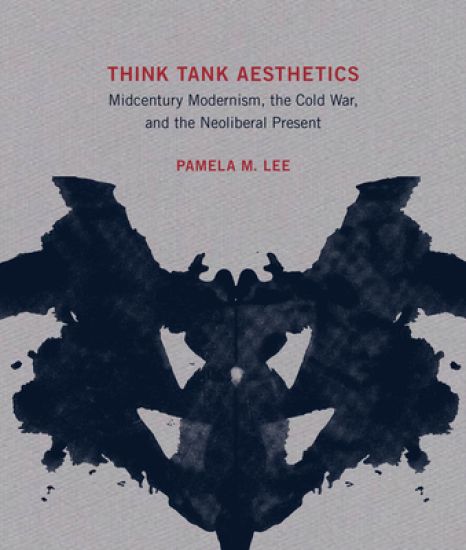
How the approaches and methods of think tanks—including systems theory, operational research, and cybernetics—paved the way for a peculiar genre of midcentury modernism.In Think Tank Aesthetics, Pamela Lee traces the complex encounters between Cold War think tanks and the art of that era. Lee shows how the approaches and methods of think tanks—including systems theory, operations research, and cybernetics—paved the way for a peculiar genre of midcentury modernism and set the terms for contemporary neoliberalism. Lee casts these shadowy institutions as sites of radical creativity and interdisciplinary practice in the service of defense strategy. Describing the distinctive aesthetics that emerged from such institutions as the RAND Corporation, she maps the multiple and overlapping networks that connected nuclear strategists, mathematicians, economists, anthropologists, artists, designers, and art historians.Lee recounts, among other things, the decades-long colloquy between Albert Wohlstetter, a RAND analyst, and his former professor, the famous art historian Meyer Schapiro; the anthropologist Margaret Mead's deployment of innovative visual aids that recall midcentury abstract art; and the combination of cybernetics and modernist design in an “Opsroom” for the short-lived socialist government of Salvador Allende in 1970s Chile (and its restaging many years later as a work of art). Lee suggests that we think of these connections less as disciplinary border crossings than as colonization of the specific interests of arts by the approaches and methods of the sciences. Hearing the echoes of think tank aesthetics in today's pursuit of the interdisciplinary and in academia's science-infused justification of the humanities, Lee wonders what territory has been ceded in a laboratory approach to the arts.
The work of art's mattering and materialization in a globalized world, with close readings of works by Takahashi Murakami, Andreas Gursky, Thomas Hirschhorn, and others.It may be time to forget the art world-or at least to recognize that a certain historical notion of the art world is in eclipse. Today, the art world spins on its axis so quickly that its maps can no longer be read; its borders blur. In Forgetting the Art World, Pamela Lee connects the current state of this world to globalization and its attendant controversies. Contemporary art has responded to globalization with images of movement and migration, borders and multitudes, but Lee looks beyond iconography to view globalization as a world process. Rather than think about the "global art world" as a socioeconomic phenomenon, or in terms of the imagery it stages and sponsors, Lee considers "the work of art's world" as a medium through which globalization takes place. She argues that the work of art is itself both object and agent of globalization.Lee explores the ways that art actualizes, iterates, or enables the processes of globalization, offering close readings of works by artists who have come to prominence in the last two decades. She examines the "just in time" managerial ethos of Takahashi Murakami; the production of ethereal spaces in Andreas Gursky's images of contemporary markets and manufacture; the logic of immanent cause dramatized in Thomas Hirschhorn's mixed-media displays; and the "pseudo-collectivism" in the contemporary practice of the Atlas Group, the Raqs Media Collective, and others.To speak of "the work of art's world," Lee says, is to point to both the work of art's mattering and its materialization, to understand the activity performed by the object as utterly continuous with the world it at once inhabits and creates.
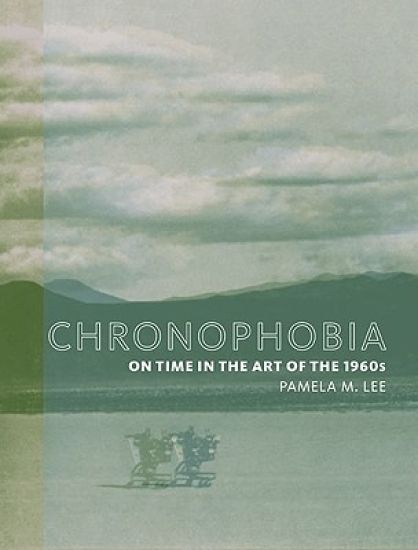
An examination of the pervasive anxiety about and fixation with time seen in 1960s art.In the 1960s art fell out of time; both artists and critics lost their temporal bearings in response to what E. M. Cioran called "not being entitled to time." This anxiety and uneasiness about time, which Pamela Lee calls "chronophobia," cut across movements, media, and genres, and was figured in works ranging from kinetic sculptures to Andy Warhol films. Despite its pervasiveness, the subject of time and 1960s art has gone largely unexamined in historical accounts of the period. Chronophobia is the first critical attempt to define this obsession and analyze it in relation to art and technology.Lee discusses the chronophobia of art relative to the emergence of the Information Age in postwar culture. The accompanying rapid technological transformations, including the advent of computers and automation processes, produced for many an acute sense of historical unknowing; the seemingly accelerated pace of life began to outstrip any attempts to make sense of the present. Lee sees the attitude of 1960s art to time as a historical prelude to our current fixation on time and speed within digital culture. Reflecting upon the 1960s cultural anxiety about temporality, she argues, helps us historicize our current relation to technology and time.After an introductory framing of terms, Lee discusses such topics as "presentness" with repect to the interest in systems theory in 1960s art; kinetic sculpture and new forms of global media; the temporality of the body and the spatialization of the visual image in the paintings of Bridget Riley and the performance art of Carolee Schneemann; Robert Smithson's interest in seriality and futurity, considered in light of his reading of George Kubler's important work The Shape of Time: Remarks on the History of Things and Norbert Wiener's discussion of cybernetics; and the endless belaboring of the present in sixties art, as seen in Warhol's Empire and the work of On Kawara.
With Narrative and the Natural Law Pamela Hall brings Thomistic ethics into conversation with ongoing debates in contemporary moral philosophy, especially virtue theory and moral psychology, and with current trends in narrative theory and the philosophy of history. Pamela M. Hall's study offers a solid, challenging alternative to rigid, legalistic interpretations of the substantial discussion of law in Aquinas's Summa theologiae and defends Aquinas's ethics from charges of excessive legalism. Hall argues that Aquinas's characterization of the content and relationship of natural, human and divine law indicates that his understanding of the quest for the human good is practical, communal, and historical. Hall maintains that natural law, the ongoing inquiry into what is the human good, is narrative both in terms of its internal structure and its being informed by the specific story of Scripture. According to Aquinas the discovery of natural law is enacted historically and progressively within communities and by individuals through a process of practical reasoning. Hall then goes on to show how natural law requires articulation by human law, and how both are connected to divine law (salvation history) as Aquinas understands it. Aquinas represents inquiry into the human good as a kind of historical narrative or story with stages or "chapters"; thus knowledge of natural law requires time and experience, as well as sustained reflection by individuals and by whole communities. Such learning of natural law implies the operation of prudence and the assistance of the moral virtues.
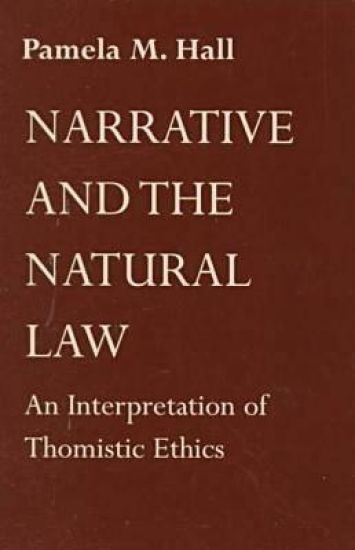
With Narrative and the Natural Law Pamela Hall brings Thomistic ethics into conversation with ongoing debates in contemporary moral philosophy, especially virtue theory and moral psychology, and with current trends in narrative theory and the philosophy of history. Pamela M. Hall's study offers a solid, challenging alternative to rigid, legalistic interpretations of the substantial discussion of law in Aquinas's Summa theologiae and defends Aquinas's ethics from charges of excessive legalism. Hall argues that Aquinas's characterization of the content and relationship of natural, human and divine law indicates that his understanding of the quest for the human good is practical, communal, and historical. Hall maintains that natural law, the ongoing inquiry into what is the human good, is narrative both in terms of its internal structure and its being informed by the specific story of Scripture. According to Aquinas the discovery of natural law is enacted historically and progressively within communities and by individuals through a process of practical reasoning. Hall then goes on to show how natural law requires articulation by human law, and how both are connected to divine law (salvation history) as Aquinas understands it. Aquinas represents inquiry into the human good as a kind of historical narrative or story with stages or "chapters"; thus knowledge of natural law requires time and experience, as well as sustained reflection by individuals and by whole communities. Such learning of natural law implies the operation of prudence and the assistance of the moral virtues.
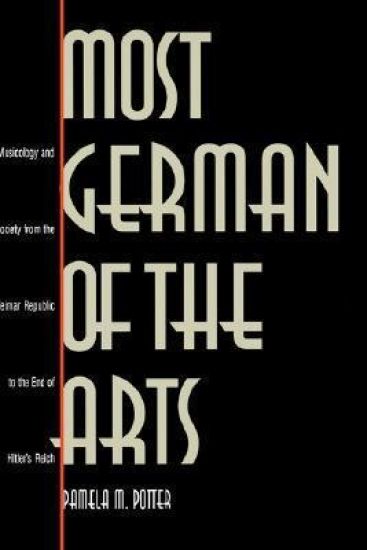
This important book investigates the role played by German musicology in buttressing Nazi institutions and ideology. Pamela Potter examines the social, economic, and intellectual factors that caused some German musical scholars to support with such fervor the ideological aims of the Nazis. She argues convincingly that many of the ideas that served the regime not only predated Hitler’s rise to power but survived the Nazi period to influence the conception of music history—including that of American musical scholarship—down to the present time. Potter reveals that prominent German musicologists went beyond other scholars in serving the state by publicizing the German musical legacy as a source of national pride; exploring politically relevant research topics, including pseudo-scientific race theories; and participating in the Germanization of occupied and annexed territories during World War II. Nazi leaders recognized musicology’s potential service to Nazi causes, says Potter, and musicological ventures enjoyed generous support from the government, party, and SS. Scrutinizing private papers, archives, and rare publications, Potter breaks the silence imposed by the postwar German musicological establishment and demonstrates the extent to which the entire profession was politicized during the Nazi era.
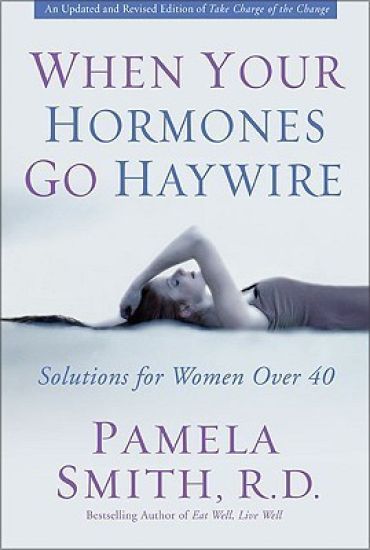
You Can Feel Good Again A great book, loaded with practical information from an author I love and respect. If Pam Smith said it, I believe it. She’s the best!––DR. KEVIN LEMAN, Author of The Birth Order Book and Sex Begins in the KitchenIn When Your Hormones Go Haywire Pam Smith draws on breakthrough research to provide you with proven step-by-step solutions that will help you regain hormonal balance as you choose how to navigate the challenges of midlife. It includes:• Help in deciding how to respond to the latest research on hormone replacement therapy. • Natural solutions for: ? Fatigue ? Weight Gain ? Anxiety ? Hot Flashes ? Irritability ? Low Libido ? Fuzzy Thinking ? Memory Loss ? Insomnia ? Depression ? Headaches ? Achy Joints • A 12 Week Action Plan to achieve hormone balance and nourish yourself, body and soul. • Recipes to help you increase daily energy and feel healthy again. Pam Smith knows that midlife transition can sometimes be tough. In When Your Hormones Go Haywire she helps you discover how it can also be an opportunity for personal growth and renewal, a time in which you emerge as a stronger, healthier woman in every respect.
Republicanism in Nineteenth-Century France, 1814–1871
Pamela M. Pilbeam
Red Globe Press
1995
sidottu
This book is a fascinating survey of nineteenth-century republicanism, the first of its kind this century. It investigates why it was that although France was one of the first countries in modern Europe to become a republic in 1792, it was nearly a hundred years before a republic was acceptable to the majority. Pamela Pilbeam suggests that republicanism was a witch's brew of Enlightenment rationality, bloody memories and conflicting socialist expectations. The book concludes that the successful republic of 1871 used the rhetoric of democracy to conceal persistent elitism.
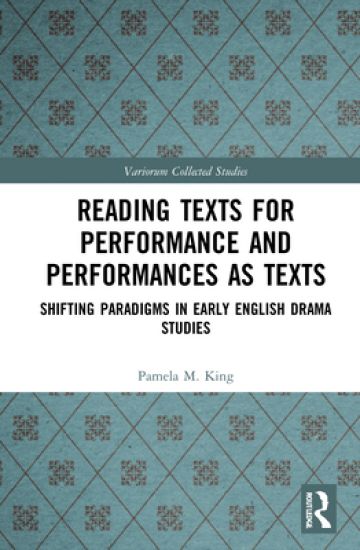
This volume brings together nineteen important articles by Pamela M. King, one of the foremost British scholars working on Early English Drama. Unique to this collection are five articles on the ‘living’ traditions of performances in Spain, discussing their origins and the modes of production that are used. Several articles use modern literary theory on aspects of early drama, whilst others consider drama in the context of late medieval poetry. The volume also includes a rich collection of articles on English scriptural plays from surviving manuscripts.
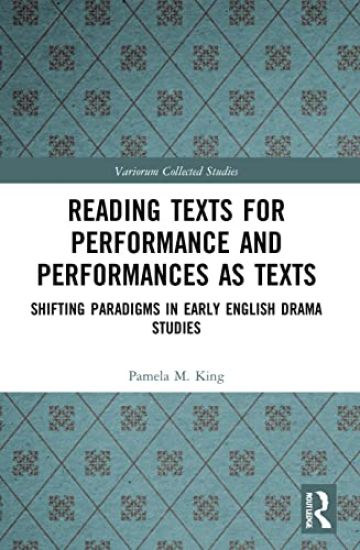
Reading Texts for Performance and Performances as Texts
Pamela M. King
TAYLOR FRANCIS LTD
2023
nidottu
This volume brings together nineteen important articles by Pamela M. King, one of the foremost British scholars working on Early English Drama. Unique to this collection are five articles on the ‘living’ traditions of performances in Spain, discussing their origins and the modes of production that are used. Several articles use modern literary theory on aspects of early drama, whilst others consider drama in the context of late medieval poetry. The volume also includes a rich collection of articles on English scriptural plays from surviving manuscripts.
Pamela M. Lee’s New Games revisits postmodernism in light of art history's more recent embrace of "the contemporary." What can the theories and practices associated with postmodernism tell us about the obsession with the contemporary in both the academy and the art world? In looking at work by Dara Birnbaum, Öyvind Fahlström and Richard Serra, among others, Lee returns to Jean-Francois Lyotard's canonical text The Postmodern Condition as a means to understand more recent art-critical interests in interactivity, collectivism and neo-liberalism. She reads Lyotard's well-known treatment of language games relative to the game theory associated with the Cold War and the rise of the information society. New Games asks readers to think critically about our recent past and the embattled state of our contemporary preoccupations.With a critical introduction by Johanna Burton, New Games is the fourth and penultimate volume in Routledge’s series of short books on the theories of modernism by leading art historians on twentieth-century art and art criticism.
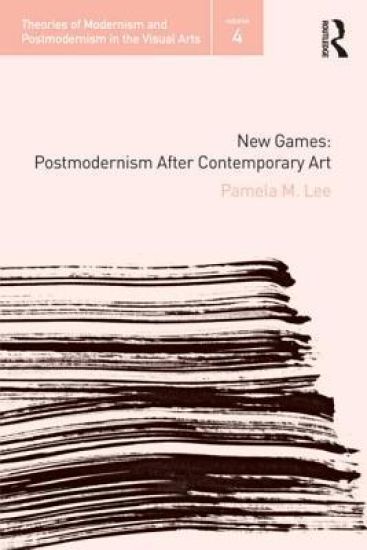
Pamela M. Lee’s New Games revisits postmodernism in light of art history's more recent embrace of "the contemporary." What can the theories and practices associated with postmodernism tell us about the obsession with the contemporary in both the academy and the art world? In looking at work by Dara Birnbaum, Öyvind Fahlström and Richard Serra, among others, Lee returns to Jean-Francois Lyotard's canonical text The Postmodern Condition as a means to understand more recent art-critical interests in interactivity, collectivism and neo-liberalism. She reads Lyotard's well-known treatment of language games relative to the game theory associated with the Cold War and the rise of the information society. New Games asks readers to think critically about our recent past and the embattled state of our contemporary preoccupations.With a critical introduction by Johanna Burton, New Games is the fourth and penultimate volume in Routledge’s series of short books on the theories of modernism by leading art historians on twentieth-century art and art criticism.
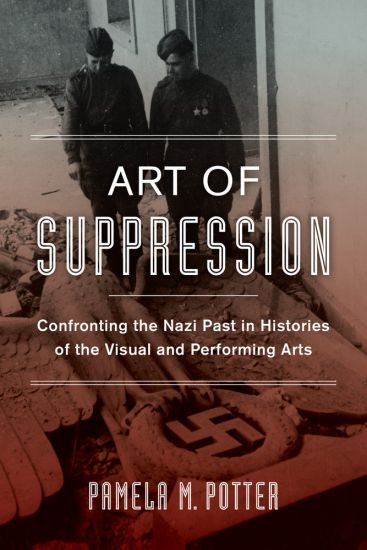
This provocative study asks why we have held on to vivid images of the Nazis' total control of the visual and performing arts, even though research has shown that many artists and their works thrived under Hitler. To answer this question, Pamela M. Potter investigates how historians since 1945 have written about music, art, architecture, theater, film, and dance in Nazi Germany and how their accounts have been colored by politics of the Cold War, the fall of communism, and the wish to preserve the idea that true art and politics cannot mix. Potter maintains that although the persecution of Jewish artists and other "enemies of the state" was a high priority for the Third Reich, removing them from German cultural life did not eradicate their artistic legacies. Art of Suppression examines the cultural histories of Nazi Germany to help us understand how the circumstances of exile, the Allied occupation, the Cold War, and the complex meanings of modernism have sustained a distorted and problematic characterization of cultural life during the Third Reich.
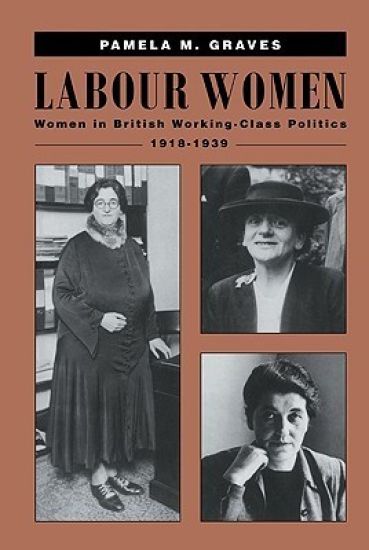
After winning the vote in 1918, many thousands of working class women joined the Labour Party and Co-operative Movement. This book is about their struggle to find a place in the male world of organised labour politics. In the twenties, labour women challenged male leaders to give them equal status and support for their reform programmes, but the ideas were rejected. For most labour women, dedication to the class cause far outweighed their desire for power, and the struggle for 'women-power' was abandoned. Consequently, despite the common reform agendas of labour women and the middle class feminists of the era, a working alliance was never achieved. Labour Women uses oral and questionnaire testimony to draw a portrait of grass-roots activists. It contrasts labour women's failure to win power in the national organisations with their great achievements in community politics, poor law administration and municipal government.
After winning the vote in 1918, many thousands of working class women joined the Labour Party and Co-operative Movement. This book is about their struggle to find a place in the male world of organised labour politics. In the twenties, labour women challenged male leaders to give them equal status and support for their reform programmes, but the ideas were rejected. For most labour women, dedication to the class cause far outweighed their desire for power, and the struggle for ‘women-power’ was abandoned. Consequently, despite the common reform agendas of labour women and the middle class feminists of the era, a working alliance was never achieved. Labour Women uses oral and questionnaire testimony to draw a portrait of grass-roots activists. It contrasts labour women's failure to win power in the national organisations with their great achievements in community politics, poor law administration and municipal government.