

Kirjahaku
Etsi kirjoja tekijän nimen, kirjan nimen tai ISBN:n perusteella.
1000 tulosta hakusanalla Pamela O Guidry

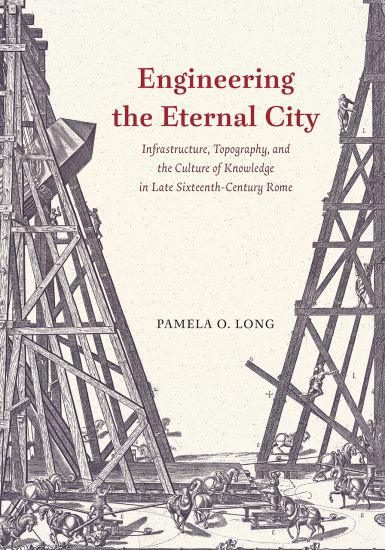
Between the catastrophic flood of the Tiber River in 1557 and the death of the "engineering pope" Sixtus V in 1590, the city of Rome was transformed by intense activity involving building construction and engineering projects of all kinds. Using hundreds of archival documents and primary sources, Engineering the Eternal City explores the processes and people involved in these infrastructure projects--sewers, bridge repair, flood prevention, aqueduct construction, the building of new, straight streets, and even the relocation of immensely heavy ancient Egyptian obelisks that Roman emperors had carried to the city centuries before. This portrait of an early modern Rome examines the many conflicts, failures, and successes that shaped the city, as decision-makers tried to control not only Rome's structures and infrastructures but also the people who lived there. Taking up visual images of the city created during the same period--most importantly in maps and urban representations, this book shows how in a time before the development of modern professionalism and modern bureaucracies, there was far more wide-ranging conversation among people of various backgrounds on issues of engineering and infrastructure than there is in our own times. Physicians, civic leaders, jurists, cardinals, popes, and clerics engaged with painters, sculptors, architects, printers, and other practitioners as they discussed, argued, and completed the projects that remade Rome.
In today's world of intellectual property disputes, industrial espionage, and book signings by famous authors, one easily loses sight of the historical nature of the attribution and ownership of texts. In Openness, Secrecy, Authorship: Technical Arts and the Culture of Knowledge from Antiquity to the Renaissance, Pamela Long combines intellectual history with the history of science and technology to explore the culture of authorship. Using classical Greek as well as medieval and Renaissance European examples, Long traces the definitions, limitations, and traditions of intellectual and scientific creation and attribution. She examines these attitudes as they pertain to the technical and the practical. Although Long's study follows a chronological development, this is not merely a general work. Long is able to examine events and sources within their historical context and locale. By looking at Aristotelian ideas of Praxis, Techne, and Episteme. She explains the tension between craft and ideas, authors and producers. She discusses, with solid research and clear prose, the rise, wane, and resurgence of priority in the crediting and lionizing of authors. Long illuminates the creation and re-creation of ideas like "trade secrets," "plagiarism," "mechanical arts," and "scribal culture." Her historical study complicates prevailing assumptions while inviting a closer look at issues that define so much of our society and thought to this day. She argues that "a useful working definition of authorship permits a gradation of meaning between the poles of authority and originality," and guides us through the term's nuances with clarity rarely matched in a historical study.
In today's world of intellectual property disputes, industrial espionage, and book signings by famous authors, one easily loses sight of the historical nature of the attribution and ownership of texts. In Openness, Secrecy, Authorship: Technical Arts and the Culture of Knowledge from Antiquity to the Renaissance, Pamela Long combines intellectual history with the history of science and technology to explore the culture of authorship. Using classical Greek as well as medieval and Renaissance European examples, Long traces the definitions, limitations, and traditions of intellectual and scientific creation and attribution. She examines these attitudes as they pertain to the technical and the practical. Although Long's study follows a chronological development, this is not merely a general work. Long is able to examine events and sources within their historical context and locale. By looking at Aristotelian ideas of Praxis, Techne, and Episteme. She explains the tension between craft and ideas, authors and producers. She discusses, with solid research and clear prose, the rise, wane, and resurgence of priority in the crediting and lionizing of authors. Long illuminates the creation and re-creation of ideas like "trade secrets," "plagiarism," "mechanical arts," and "scribal culture." Her historical study complicates prevailing assumptions while inviting a closer look at issues that define so much of our society and thought to this day. She argues that "a useful working definition of authorship permits a gradation of meaning between the poles of authority and originality," and guides us through the term's nuances with clarity rarely matched in a historical study.
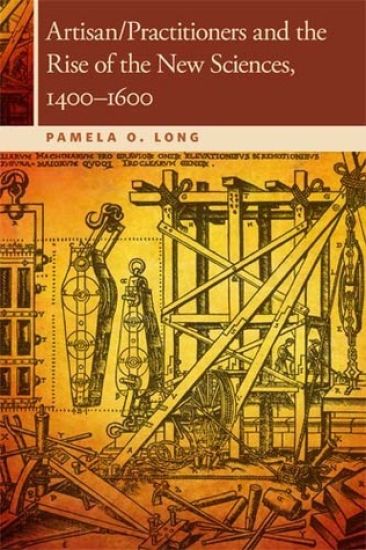
Artisan/Practitioners and the Rise of the New Sciences, 1400-1600
Pamela O. Long
Oregon State University
2011
nidottu
This book provides the historical background for a central issue in the history of science: the influence of artisans, craftsmen, and other practitioners on the emergent empirical methodologies that characterized the "new sciences" of the late sixteenth and seventeenth centuries. Long offers a coherent account and critical revision of the "Zilsel thesis," an influential etiological narrative which argues that such craftsmen were instrumental in bringing about the "Scientific Revolution."Artisan/Practitioners reassesses the issue of artisanal influence from three different perspectives: the perceived relationships between art and nature; the Vitruvian architectural tradition with its appreciation of both theory and practice; and the development of "trading zones" —arenas in which artisans and learned men communicated in substantive ways. These complex social and intellectual developments, the book argues, underlay the development of the empirical sciences.This volume provides new discussion and synthesis of a theory that encompasses broad developments in European history and study of the natural world. It will be a valuable resource for college-level teaching, and for scholars and others interested in the history of science, late medieval and early modern European history, and the Scientific Revolution.
Technology, Society, and Culture in Late Medieval and Renaissance Europe, 1300-1600
Pamela O. Long
American Historical Association
2000
nidottu
This work presents an overview of technology as intrinsic to the culture of late medieval and Renaissance Europe. It includes discussion of agriculture, textiles such as wool, crafts such as ceramics and leatherwork, painting, architecture, mining and metallurgy, printing, military technology, and clocks. It discusses the details of both traditional and innovative technological processes. It also treats the relationships of technology to labor, class, gender, and other aspects of society. It points to significant historiographic issues and includes a bibliography.
Technology and Society in the Medieval Centuries: Byzantine, Islam, and the West, 500-1300
Pamela O. Long
American Historical Association
2003
nidottu
Pamela Long considers the ways in which different medieval cultures, from the Byzantine empire to northern Europe, adopted and transformed technologies according to their own needs. Long introduces readers to recent scholarship and to some of the significant issues in the historiography of medieval technology.
These poems are moments in my life, I estimate, between the ages of 23 and 28. These were not the good old days. These were just days when I didn't know what to do with myself. I went from one thing to the next, and changed my mind as frequently as I took a breath of air. The only important thing that existed in my life was my daughter, and trying to find a way to make something out of nothing. Poetry for me is like therapy; it helps me rationalize and work through all the confusion in my mind. I have a love of the written word, and poetry is an entertaining and memorable means of communicating my ideas. This book is a collection of my emotions: these are my innermost thoughts about relationships, friendships, sorrow, pain, anger, frustration, and confusion.
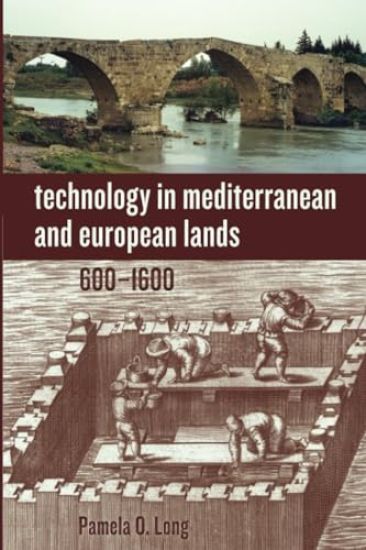
Technology in Mediterranean and European Lands, 600–1600
Pamela O. Long
Johns Hopkins University Press
2025
pokkari
How medieval and Renaissance technology shaped Mediterranean and European society across a millennium.In Technology in Mediterranean and European Lands, 600-1600, Pamela O. Long explores the intricate web of technological advancements that shaped Mediterranean and European societies during the medieval and early modern periods. From the essential crafts of ploughing and tailoring to the sophisticated hydraulic systems and monumental building constructions, Long illuminates how ordinary people harnessed and transformed their world.Drawing on recent scholarship on environmental history and the history of technology—as well as materials, object biographies, and the circulation of objects—Long examines the circulation of ideas and technologies in Europe and the Mediterranean. The book covers the evolution of food production, transportation, and communication, as well as the crafting of pottery, weapons, and machines. This in-depth historical analysis shows how these technological advancements had profound social and economic impacts on everyday life. Long's meticulous research and engaging narrative bring to light the interconnectedness of various crafts and their contributions to the broader tapestry of human history. By integrating archaeological findings, historical texts, and modern scientific methods, the book offers an interdisciplinary perspective on the technological practices of the pre-modern world. Perfect for scholars, students, and history enthusiasts, Technology in Mediterranean and European Lands, 600-1600 emphasizes the ingenuity and resilience of past civilizations and the enduring legacy of technological innovation.

Manna from the Sky: A Reawakening
Pamela O'Neil
Createspace Independent Publishing Platform
2013
nidottu



"I'm toxic, but maybe she's the antidote." Callous, calculating, and controlled, I'm a man with no one to care for and nothing to lose.A man to reckon with. At least until my carefully emotionless life is upended when she's placed under my protection. Wren Caputo.The off-limits daughter of my dead best friend. From the moment she looks up at me with those pretty gray eyes, she owns me.Even as I fight it.Even when I push her away.When I hurt her with venomous words.And unforgivable actions. Somehow, she sees past the man I present to the world.She doesn't flinch when faced with my worst self. Instead, she unlocks a side of me that I didn't know existed anymore. She makes me feel.More than I'd ever believed possible. I'm falling for her, forbidden or not.Right or wrong.She's destined to be mine. Until the reason she came into my life becomes the very reason she may be driven from it.And I'll do everything in my power to keep her safe from forces that would drive us apart. Because even though I don't deserve her...I'm taking her anyway. Rogue Villain contains several darker themes, including on-page death, kidnapping, gun violence, stalking, and graphic sexual scenes.


'A pillar curiously engraven; with some inscription upon it': What is the Ruthwell Cross
Pamela O'Neill
BAR Publishing
2005
nidottu