Kirjojen hintavertailu. Mukana 11 244 527 kirjaa ja 12 kauppaa.

Kirjahaku

Etsi kirjoja tekijän nimen, kirjan nimen tai ISBN:n perusteella.

1000 tulosta hakusanalla Pamela R. Ferguson

Breach of the Peace

Breach of the Peace

Pamela R. Ferguson

Discovery Press
2013
nidottu
Critiques the common-law crime of breach of the peace in Scots law Despite the number of prosecutions, and the appeal court's attempts to narrow its ambit in recent years, breach of the peace remains ill-defined in Scotland. Describing its development from the mid-19th century to the present day, Pamela Ferguson criticises the breach of the peace on several fronts. Ferguson also considers related statutory offences, such as those created by the Criminal Justice and Licensing (Scotland) Act 2010 and the Offensive Behaviour at Football and Threatening Communications (Scotland) Act 2012, and considers how effective these new offences have been at supplanting the common-law crime.
Inspiring a Medico-Legal Revolution

Inspiring a Medico-Legal Revolution

Pamela R. Ferguson; Graeme T. Laurie

Routledge
2020
nidottu
This book marks the retirement of Professor Sheila McLean, whose contribution to the discipline of medical law has been truly ground breaking. As one of the pioneers of the discipline, Sheila McLean inspired a revolution in the ways in which lawyers, doctors, courts and patients perceive the relationship between medicine and the law. The first International Bar Association Professor of Law and Ethics in Medicine, she has worked tirelessly to champion the importance of law’s role in regulating medicine and protecting patients’ rights. The span in content of this book reflects the range of contributions that Professor McLean has herself made. Her work gave direction and shape to a new field of study at a time when few questioned the authority of medicine or thought much about the plight of the patient. This collection brings together 21 leading scholars in healthcare law and ethics to honour the depth and significance of her contribution. Including authors from the US, Australia, Canada and New Zealand, the contributions cover areas as diverse as start and end of life, reproductive rights and termination of pregnancy, autonomy of patients, the protection of vulnerable patient groups, and the challenges posed by new technologies.
Inspiring a Medico-Legal Revolution

Inspiring a Medico-Legal Revolution

Pamela R. Ferguson; Graeme T. Laurie

Routledge
2015
sidottu
This book marks the retirement of Professor Sheila McLean, whose contribution to the discipline of medical law has been truly ground breaking. As one of the pioneers of the discipline, Sheila McLean inspired a revolution in the ways in which lawyers, doctors, courts and patients perceive the relationship between medicine and the law. The first International Bar Association Professor of Law and Ethics in Medicine, she has worked tirelessly to champion the importance of law’s role in regulating medicine and protecting patients’ rights. The span in content of this book reflects the range of contributions that Professor McLean has herself made. Her work gave direction and shape to a new field of study at a time when few questioned the authority of medicine or thought much about the plight of the patient. This collection brings together 21 leading scholars in healthcare law and ethics to honour the depth and significance of her contribution. Including authors from the US, Australia, Canada and New Zealand, the contributions cover areas as diverse as start and end of life, reproductive rights and termination of pregnancy, autonomy of patients, the protection of vulnerable patient groups, and the challenges posed by new technologies.
Scots Criminal Law

Scots Criminal Law

Pamela R. Ferguson; Claire McDiarmid

Discovery Press
2014
nidottu
This is an up-to-date, theoretical and critical focus on Scots criminal law for students and practitioners. Now in its second edition, Scots Criminal Law - A Critical Analysis provides a clear statement of the current law and, retaining the theoretical and critical focus of the first edition, considers what behaviours are subject to the criminal law sanction and why. In the four years since the first edition, the courts have redefined the crimes of murder and breach of the peace; and broadened the application of the necessity defence. Key statutory developments include the enactment of the Criminal Arstice and Licensing (Scotland) Act 2010, and the Offensive Behaviour at Football and Threatening Communications (Scotland) Act 2012. This second edition has been updated throughout to reflect these changes.
Scots Criminal Law

Scots Criminal Law

Pamela R. Ferguson; Claire McDiarmid

EDINBURGH UNIVERSITY PRESS
2025
sidottu
Now in its third edition, Scots Criminal Law: A Critical Analysis provides a clear statement of the current law, updated to reflect changes in the law which have occurred in the past 11 years. Retaining the theoretical and critical focus of its previous editions, it also considers what types of behaviours should be subject to the criminal sanction, and why. More than 100 new cases have been referenced, as have dozens of new statutory offences, including those created by the Human Trafficking and Exploitation (Scotland) Act 2015, the Abusive Behaviour and Sexual Harm (Scotland) Act 2016, the Domestic Abuse (Scotland) Act 2018, and the Hate Crime and Public Order (Scotland) Act 2021. While the book is suitable for use by students and practitioners alike, it is also stimulating for anyone with an interest in the future development of criminal law.
Scots Criminal Law

Scots Criminal Law

Pamela R. Ferguson; Claire McDiarmid

EDINBURGH UNIVERSITY PRESS
2025
nidottu
Now in its third edition, Scots Criminal Law: A Critical Analysis provides a clear statement of the current law, updated to reflect changes in the law which have occurred in the past 11 years. Retaining the theoretical and critical focus of its previous editions, it also considers what types of behaviours should be subject to the criminal sanction, and why. More than 100 new cases have been referenced, as have dozens of new statutory offences, including those created by the Human Trafficking and Exploitation (Scotland) Act 2015, the Abusive Behaviour and Sexual Harm (Scotland) Act 2016, the Domestic Abuse (Scotland) Act 2018, and the Hate Crime and Public Order (Scotland) Act 2021. While the book is suitable for use by students and practitioners alike, it is also stimulating for anyone with an interest in the future development of criminal law.
Japanese Diplomats and Jewish Refugees

Japanese Diplomats and Jewish Refugees

Pamela R. Sakamoto

Praeger Publishers Inc
1998
sidottu
In the late 1930s and early 1940s, European Jews traveled east to seek refuge in the West. Three thousand refugees transited Japan and China, and more than 21,000 spent the war in Japanese-occupied Shanghai. Japanese diplomats in Europe were caught off guard by the flood of visa applicants, and the Foreign Ministry belatedly confronted a refugee problem. Unexpected visitors became uninvited guests. Vice Consul Sugihara Chiune might have faded into history as a minor diplomat in Lithuania had he not issued thousands of transit visas to refugees, including those who fulfilled few visa requirements. Sakamoto demonstrates how he helped thousands escape Europe; in the end, as she points out, a number of Japanese diplomats saved Jews by issuing visas, but very few issued visas to save Jews. Sakamoto focuses on the extensive archives of the Ministry of Foreign Affairs, which have not been treated at length before. By examining the cable traffic between diplomats and the ministry headquarters, she reveals the uncensored reactions of Japanese diplomats to Jewish refugees. Through the files of Jewish organizations and the American government, she presents the dimensions of the crisis as Germany's emphasis on emigration changed to extermination. Interviews with former diplomats, refugees, and those who knew Sugihara give human dimensions to a fascinating and little-known episode of the war.
Daily Life of the Inuit

Daily Life of the Inuit

Pamela R. Stern

Greenwood Press
2010
sidottu
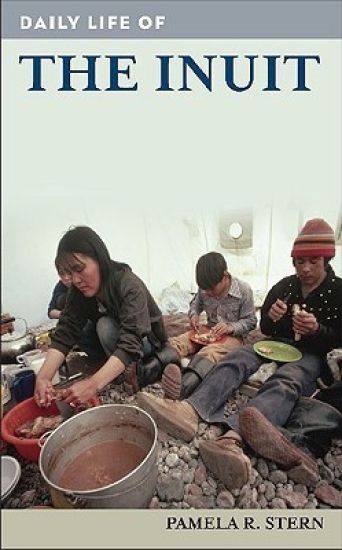
This wide-ranging treatment of daily life in the contemporary Inuit communities of Alaska, Canada, and Greenland reveals the very modern ways of being Inuit. Daily Life of the Inuit is the first serious study of contemporary Inuit culture and communities from the post-World War II period to the present. Beginning with an introductory essay surveying Inuit prehistory, geography, and contemporary regional diversity, this exhaustive treatment explores the daily life of the Inuit throughout the North American Arctic—in Alaska, Canada, and Greenland. Twelve thematic chapters acquaint the reader with the daily life of the contemporary Inuit, examining family, intellectual culture, economy, community, politics, technology, religion, popular culture, art, sports and recreation, health, and international engagement. Each chapter begins with a discussion of the historical and cultural underpinnings of Inuit life in the North American Arctic and describes the issues and events relevant to the contemporary Inuit experience. Leading sources are quoted to provide analysis and perspective on the facts presented.
Surviving, Existing, or Living

Surviving, Existing, or Living

Pamela R. Fuller

Routledge
2013
sidottu
For professionals working with people who experience severe psychosis, increasing empirical evidence for the benefits of psychotherapy for psychosis has been especially welcome. Given the limitations of medication-only approaches and the need for an expanded perspective, including for those diagnosed with schizophrenia, Surviving, Existing, or Living takes a fresh look at severe psychosis, offering a heuristic model for understanding psychosis along a continuum of severity, from the extreme experience of acutely impairing psychosis to a more enriched life experience.Pamela Fuller emphasizes that facilitating recovery from psychosis requires appropriately and effectively matching the type and timing of interventions to client readiness and capabilities. The need to consider each individual according to which of three primary issues/phases preoccupy the person with psychosis is essential for tailoring treatment. She identifies these phases as:Surviving Phase – preoccupation with survivalExisting Phase – preoccupation with restriction of life experiences in order to copeLiving Phase – preoccupation with quality of life and relationships Surviving, Existing, or Living examines the rationale for these three phases, and provides details of phase-specific treatment interventions as well as a 'how to' guide for facilitating engagement and for determining 'what to do when,' including with those experiencing acute, severe psychosis. Rich clinical case examples are provided to highlight concepts and the types of interventions. Trauma-specific and group interventions for psychosis are also described, as well as ways to foster resilience in the professional who works with individuals with psychosis.Surviving, Existing, or Living offers a detailed guide to help individuals experiencing psychosis move from suffering to recovery, beyond surviving or existing toward more fully living. The book will be essential reading for professionals in the fields of psychology, psychiatry, counseling, medicine, social work, nursing, occupational, recreational, and vocational therapies, experience-based experts, and students.
Surviving, Existing, or Living

Surviving, Existing, or Living

Pamela R. Fuller

Routledge
2013
nidottu
For professionals working with people who experience severe psychosis, increasing empirical evidence for the benefits of psychotherapy for psychosis has been especially welcome. Given the limitations of medication-only approaches and the need for an expanded perspective, including for those diagnosed with schizophrenia, Surviving, Existing, or Living takes a fresh look at severe psychosis, offering a heuristic model for understanding psychosis along a continuum of severity, from the extreme experience of acutely impairing psychosis to a more enriched life experience.Pamela Fuller emphasizes that facilitating recovery from psychosis requires appropriately and effectively matching the type and timing of interventions to client readiness and capabilities. The need to consider each individual according to which of three primary issues/phases preoccupy the person with psychosis is essential for tailoring treatment. She identifies these phases as:Surviving Phase – preoccupation with survivalExisting Phase – preoccupation with restriction of life experiences in order to copeLiving Phase – preoccupation with quality of life and relationships Surviving, Existing, or Living examines the rationale for these three phases, and provides details of phase-specific treatment interventions as well as a 'how to' guide for facilitating engagement and for determining 'what to do when,' including with those experiencing acute, severe psychosis. Rich clinical case examples are provided to highlight concepts and the types of interventions. Trauma-specific and group interventions for psychosis are also described, as well as ways to foster resilience in the professional who works with individuals with psychosis.Surviving, Existing, or Living offers a detailed guide to help individuals experiencing psychosis move from suffering to recovery, beyond surviving or existing toward more fully living. The book will be essential reading for professionals in the fields of psychology, psychiatry, counseling, medicine, social work, nursing, occupational, recreational, and vocational therapies, experience-based experts, and students.
The Evolution of Modern Humans in Africa

The Evolution of Modern Humans in Africa

Pamela R. Willoughby

AltaMira Press,U.S.
2006
sidottu
Pamela Willoughby provides a wide-ranging synthesis of current knowledge about the evolution of fully modern humans in Africa during the Middle Palaeolithic / Middle Stone Age. According to most scholars, our modern ancestors first emerged in Africa and then spread throughout the habitable world. Willoughby brings evidence from mitochondrial DNA, ancient fossils, and archaeological remains (including her own research in Tanzania) to bear on questions regarding the place of human species in nature, the specific origins of Homo Sapiens, and the dispersal of these modern humans throughout Africa and around the globe. She confronts straightforwardly the problems of dating the earliest modern humans, and she discusses the various alternative models of modern human origins, which will be debated for years to come. The Evolution of Modern Humans in Africa is a compelling, thought-provoking book for both students and scholars.
The Evolution of Modern Humans in Africa

The Evolution of Modern Humans in Africa

Pamela R. Willoughby

AltaMira Press,U.S.
2006
nidottu
Pamela Willoughby provides a wide-ranging synthesis of current knowledge about the evolution of fully modern humans in Africa during the Middle Palaeolithic / Middle Stone Age. According to most scholars, our modern ancestors first emerged in Africa and then spread throughout the habitable world. Willoughby brings evidence from mitochondrial DNA, ancient fossils, and archaeological remains (including her own research in Tanzania) to bear on questions regarding the place of human species in nature, the specific origins of Homo Sapiens, and the dispersal of these modern humans throughout Africa and around the globe. She confronts straightforwardly the problems of dating the earliest modern humans, and she discusses the various alternative models of modern human origins, which will be debated for years to come. The Evolution of Modern Humans in Africa is a compelling, thought-provoking book for both students and scholars.
The Underground Railroad in Floyd County, Indiana

The Underground Railroad in Floyd County, Indiana

Pamela R. Peters

McFarland Co Inc
2001
pokkari
Floyd County, Indiana, and its county seat, New Albany, are located directly across the Ohio River from Louisville, Kentucky. Louisville was a major slave-trade center, and Indiana was a free state. Many slaves fled to Floyd County via the Underground Railroad, but their fight for freedom did not end once they reached Indiana. Sufficient information on slaves coming to and through this important area may be found in court records, newspaper stories, oral history accounts, and other materials that a full and fascinating history is possible, one detailing the struggles that runaway slaves faced in Floyd County, such as local, state, and federal laws working together to keep them from advancing socially, politically, and economically. This work also discusses the attitudes, people, and places that help in explaining the successes and heartaches of escaping slaves in Floyd County. Included are a number of freedom and manumission papers, which provided court certification of the freedom of former slaves.