Kirjojen hintavertailu. Mukana 11 244 527 kirjaa ja 12 kauppaa.

Kirjahaku

Etsi kirjoja tekijän nimen, kirjan nimen tai ISBN:n perusteella.

1000 tulosta hakusanalla Pamela Scully

Ellen Johnson Sirleaf

Ellen Johnson Sirleaf

Pamela Scully

Ohio University Press
2016
pokkari
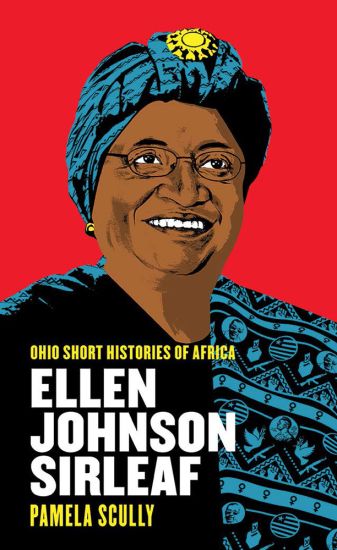
In this timely addition to the Ohio Short Histories of Africa series, Pamela Scully takes us from the 1938 birth of Nobel Peace Prize winner and two-time Liberian president Ellen Johnson through the Ebola epidemic of 2014–15. Charting her childhood and adolescence, the book covers Sirleaf's relationship with her indigenous grandmother and urban parents, her early marriage, her years studying in the United States, and her career in international development and finance, where she developed her skill as a technocrat. The later chapters cover her years in and out of formal Liberian politics, her support for women's rights, and the Ebola outbreak. Sirleaf's story speaks to many of the key themes of the twenty-first century. Among these are the growing power of women in the arenas of international politics and human rights; the ravaging civil wars in which sexual violence is used as a weapon; and the challenges of transitional justice in building postconflict societies. Ellen Johnson Sirleaf is an astute examination of the life of a pioneering feminist politician.
Sara Baartman and the Hottentot Venus

Sara Baartman and the Hottentot Venus

Clifton Crais; Pamela Scully

Princeton University Press
2010
pokkari
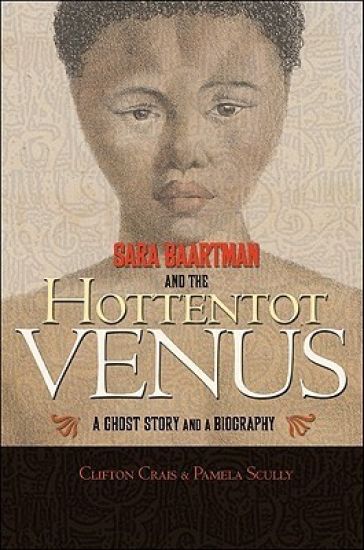
Displayed on European stages from 1810 to 1815 as the Hottentot Venus, Sara Baartman was one of the most famous women of her day, and also one of the least known. As the Hottentot Venus, she was seen by Westerners as alluring and primitive, a reflection of their fears and suppressed desires. But who was Sara Baartman? Who was the woman who became the Hottentot Venus? Based on research and interviews that span three continents, Sara Baartman and the Hottentot Venus tells the entwined histories of an illusive life and a famous icon. In doing so, the book raises questions about the possibilities and limits of biography for understanding those who live between and among different cultures. In reconstructing Baartman's life, the book traverses the South African frontier and its genocidal violence, cosmopolitan Cape Town, the ending of the slave trade, the Industrial Revolution, the French Revolution, the Napoleonic Wars, London and Parisian high society, and the rise of racial science. The authors discuss the ramifications of discovering that when Baartman went to London, she was older than originally assumed, and they explore the enduring impact of the Hottentot Venus on ideas about women, race, and sexuality. The book concludes with the politics involved in returning Baartman's remains to her home country, and connects Baartman's story to her descendants in nineteenth- and twentieth-century South Africa. Sara Baartman and the Hottentot Venus offers the authoritative account of one woman's life and reinstates her to the full complexity of her history.
Writing Transnational History

Writing Transnational History

Fiona Paisley; Pamela Scully

Bloomsbury Academic
2019
sidottu
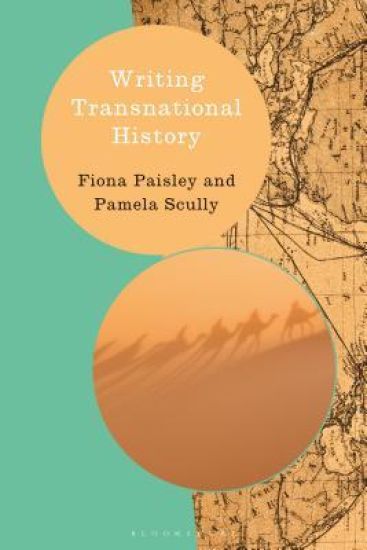
Over the past two decades, transnational history has become an established term describing approaches to the writing of world or global history that emphasise movement, dynamism and diversity. This book investigates the emergence of the ‘transnational’ as an approach, its limits, and parameters.It focuses particular attention on the contributions of postcolonial and feminist studies in reformulating transnational historiography as a move beyond the national to one focusing on oceans, the movement of people, and the contributions of the margins. It ends with a consideration of developing approaches such as translocalism. The book considers the new kinds of history that need to be written now that the transnational perspective has become widespread. Providing an accessible and engaging chronology of the field, it will be key reading for students of historiography and world history.
Writing Transnational History

Writing Transnational History

Fiona Paisley; Pamela Scully

Bloomsbury Academic
2019
nidottu
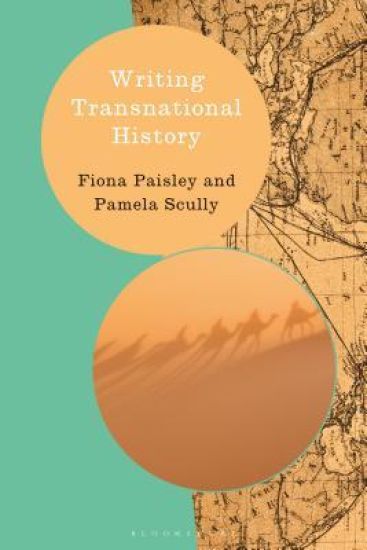
Over the past two decades, transnational history has become an established term describing approaches to the writing of world or global history that emphasise movement, dynamism and diversity. This book investigates the emergence of the ‘transnational’ as an approach, its limits, and parameters.It focuses particular attention on the contributions of postcolonial and feminist studies in reformulating transnational historiography as a move beyond the national to one focusing on oceans, the movement of people, and the contributions of the margins. It ends with a consideration of developing approaches such as translocalism. The book considers the new kinds of history that need to be written now that the transnational perspective has become widespread. Providing an accessible and engaging chronology of the field, it will be key reading for students of historiography and world history.
African Leaders of the Twentieth Century, Volume 2

African Leaders of the Twentieth Century, Volume 2

Allen F. Isaacman; Barbara S. Isaacman; Peter Karibe Mendy; Sue Onslow; Martin Plaut; Pamela Scully

OHIO UNIVERSITY PRESS
2022
pokkari
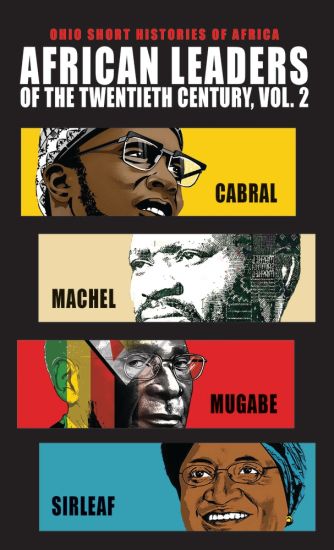
This omnibus edition brings together concise and up-to-date biographies of Amílcar Cabral, Samora Machel, Robert Mugabe, and Ellen Johnson Sirleaf. African Leaders of the Twentieth Century, Volume 2 complements courses in history and political science and is an informative collection for general readers. Amílcar Cabral: A Nationalist and Pan-Africanist Revolutionary, by Peter Karibe Mendy Amílcar Cabral's charismatic and visionary leadership, his pan-Africanist solidarity and internationalist commitment to "every just cause in the world," remain relevant to contemporary struggles for emancipation and self-determination. This concise biography is an ideal introduction to his life and legacy. Mozambique's Samora Machel: A Life Cut Short, by Allen F. Isaacman and Barbara S. Isaacman From his anti-colonial military leadership to the presidency of independent Mozambique, Samora Machel held a reputation as a revolutionary hero to the oppressed. Although killed in a 1987 plane crash, for many Mozambicans his memory lives on as a beacon of hope for the future. Robert Mugabe, by Sue Onslow and Martin Plaut For some, Zimbabwe's Robert Mugabe was a liberation hero who confronted white rule and oversaw the radical redistribution of land. For others, he was a murderous dictator who drove his country to poverty. This concise biography reveals the complexity of the man who led Zimbabwe for its first decades of independence. Ellen Johnson Sirleaf, by Pamela Scully Nobel Peace Prize–winner and two-time Liberian president Ellen Johnson Sirleaf speaks to many of the key themes of the twenty-first century. Among these are the growing power of women in the arenas of international politics and human rights; the ravaging civil wars of the post–Cold War era in which sexual violence is used as a weapon; and the challenges of transitional justice in building postconflict societies.
Flunkeys and Scullions

Flunkeys and Scullions

Pamela Horn

Sutton Publishing Ltd
2004
sidottu
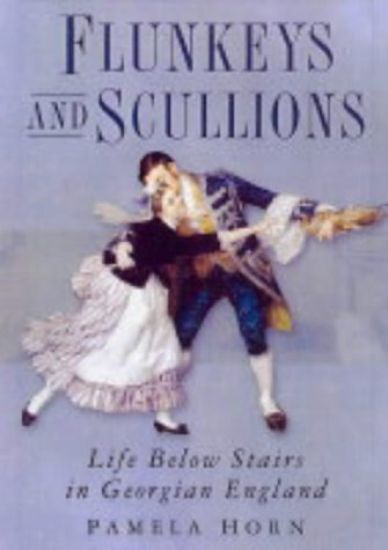
Who were the servants who kept the great houses and the middle class homes of Georgian England running? What kinds of work did they do? How were they treated? What did they think of their masters and mistresses upstairs? Pamela Horn has mined the archives of stately homes, Poor Law institutions, churches, charities, courts, contemporary newspapers and journals, as well as diaries and letters of the period to present a richly detailed, entertaining and often moving account of these essential, if usually invisible people. She brings to life the personal lives of these serving men and women: the London-born servants who would briefly leave the capital before returning, usually with false character references, to obtain a post as a country-born servant, as these were thought to be more honest and harder working than those from the towns; or young women such as Mary Woodward, who left for the country in order to conceal an illegitimate child, returning under another name to service in London in a new post without disclosing the birth of the child.
Pamela

Pamela

Samuel Richardson

Penguin Classics
1980
pokkari
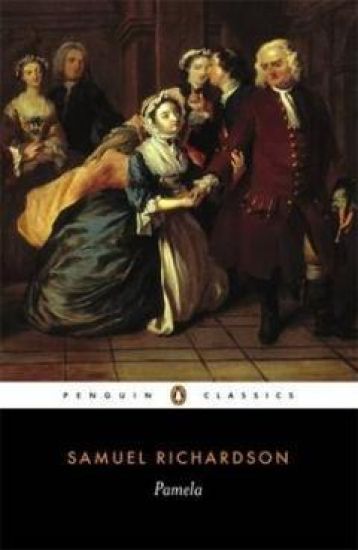
Samuel Richardson's Pamela is a captivating story of one young woman's rebellion against the social order, edited by Peter Sabor with an introduction by Margaret A. Doody in Penguin Classics.Fifteen-year-old Pamela Andrews, alone in the world, is pursued by her dead mistress's son. Although she is attracted to Mr B, she holds out against his demands and threats of abduction and rape, determined to protect her virginity and abide by her moral standards. Psychologically acute in its explorations of sex, freedom and power, Richardson's first novel caused a sensation when it was published, with its depiction of a servant heroine who dares to assert herself. Richly comic and full of lively scenes and descriptions, Pamela contains a diverse cast of characters ranging from the vulgar and malevolent Mrs Jewkes to the aggressive but awkward country squire who serves this unusual love story as both its villain and hero.In her introduction, Margaret Ann Doody discusses the epistolary genre of novels and examines the role of women and class differences. This edition, based on the 1801 text and incorporating corrections made in 1810, makes Richardson's final version of the two-volume generally available for the first time.Samuel Richardson (1689-1761) was born in Derbyshire, the son of a joiner. He received little formal education, but in 1706 was apprenticed to a London printer, going on to become a leading figure of the trade in the capital. Pamela originated as a volume of model letters for unskilled letter-writers, but as Richardson became more fascinated by the characters in his letters than the letters themselves, the germ of a novel began to emerge. Upon its publication in 1740 Pamela; or, Virtue Rewarded became a national sensation.If you enjoyed Pamela, you might like Daniel Defoe's Moll Flanders, also available in Penguin Classics.
Pamela

Pamela

Samuel Richardson

Oxford University Press
2008
nidottu
'Pamela under the Notion of being a Virtuous Modest Girl will be introduced into all Familes,and when she gets there, what Scenes does she represent? Why a fine young Gentleman endeavouring to debauch a beautiful young Girl of Sixteen.' (Pamela Censured, 1741) One of the most spectacular successes of the burgeoning literary marketplace of eighteeent-century London, Pamela also marked a defining moment in the emergence of the modern novel. In the words of one contemporary, it divided the world 'into two different Parties, Pamelists and Antipamelists', even eclipsing the sensational factional politics of the day. Preached up for its morality, and denounced as pornography in disguise, it vividly describes a young servant's long resistance to the attempts of her predatory master to seduce her. Written in the voice of its low-born heroine, but by a printer who fifteen years earlier had narrowly escaped imprisonment for the seditious output of his press, Pamela is not only a work of pioneering psychological complexity, but also a compelling and provocative study of power and its abuse. Based on the original text of 1740, from which Richardson later retreated in a series of defensive revisions, this edition makes available the version of Pamela that aroused such widespread controversy on its first appearance. ABOUT THE SERIES: For over 100 years Oxford World's Classics has made available the widest range of literature from around the globe. Each affordable volume reflects Oxford's commitment to scholarship, providing the most accurate text plus a wealth of other valuable features, including expert introductions by leading authorities, helpful notes to clarify the text, up-to-date bibliographies for further study, and much more.
Pamela

Pamela

Samuel Richardson

WW Norton Co
1958
nidottu
Unfolding through letters, the novel depicts with much feeling Pamela's struggles to decide how to respond to her would-be seducer and to determine her place in society. Samuel Richardson (1689–1761), a prominent London printer, is considered by many the father of the English novel, and Pamela the first modern novel. Following its hugely successful publication in 1740, it went on to become one of the most influential books in literary history, setting the course for the novel for the next century and beyond. Pamela reflects changing social roles in the late seventeenth and early eighteenth centuries, as a rising middle class offered women more choices and as traditional master-servant relationships underwent change.
Pamela

Pamela

Samuel Richardson

Gale Ecco, Print Editions
2018
sidottu
The 18th century was a wealth of knowledge, exploration and rapidly growing technology and expanding record-keeping made possible by advances in the printing press. In its determination to preserve the century of revolution, Gale initiated a revolution of its own: digitization of epic proportions to preserve these invaluable works in the largest archive of its kind. Now for the first time these high-quality digital copies of original 18th century manuscripts are available in print, making them highly accessible to libraries, undergraduate students, and independent scholars.Western literary study flows out of eighteenth-century works by Alexander Pope, Daniel Defoe, Henry Fielding, Frances Burney, Denis Diderot, Johann Gottfried Herder, Johann Wolfgang von Goethe, and others. Experience the birth of the modern novel, or compare the development of language using dictionaries and grammar discourses. ++++The below data was compiled from various identification fields in the bibliographic record of this title. This data is provided as an additional tool in helping to insure edition identification: ++++British LibraryT111393Anonymous. By Samuel Richardson.London: printed for C. Rivington; and J. Osborn, 1741. 2v.; 12
Pamela

Pamela

Samuel Richardson

Gale Ecco, Print Editions
2018
sidottu
The 18th century was a wealth of knowledge, exploration and rapidly growing technology and expanding record-keeping made possible by advances in the printing press. In its determination to preserve the century of revolution, Gale initiated a revolution of its own: digitization of epic proportions to preserve these invaluable works in the largest archive of its kind. Now for the first time these high-quality digital copies of original 18th century manuscripts are available in print, making them highly accessible to libraries, undergraduate students, and independent scholars.Western literary study flows out of eighteenth-century works by Alexander Pope, Daniel Defoe, Henry Fielding, Frances Burney, Denis Diderot, Johann Gottfried Herder, Johann Wolfgang von Goethe, and others. Experience the birth of the modern novel, or compare the development of language using dictionaries and grammar discourses. ++++The below data was compiled from various identification fields in the bibliographic record of this title. This data is provided as an additional tool in helping to insure edition identification: ++++British LibraryT128629Anonymous. By Samuel Richardson. Vols.III and IV are of the third edition: "The third edition of Vols.III and IV was published with the sixth edition of Vols.I and II in May, 1742" (Sale).London: printed for S. Richardson; and sold by J. Osborn; and John Rivington, 1742. 4v., plates; 8
Pamela

Pamela

Samuel Richardson

Gale Ecco, Print Editions
2018
sidottu
The 18th century was a wealth of knowledge, exploration and rapidly growing technology and expanding record-keeping made possible by advances in the printing press. In its determination to preserve the century of revolution, Gale initiated a revolution of its own: digitization of epic proportions to preserve these invaluable works in the largest archive of its kind. Now for the first time these high-quality digital copies of original 18th century manuscripts are available in print, making them highly accessible to libraries, undergraduate students, and independent scholars.Western literary study flows out of eighteenth-century works by Alexander Pope, Daniel Defoe, Henry Fielding, Frances Burney, Denis Diderot, Johann Gottfried Herder, Johann Wolfgang von Goethe, and others. Experience the birth of the modern novel, or compare the development of language using dictionaries and grammar discourses. ++++The below data was compiled from various identification fields in the bibliographic record of this title. This data is provided as an additional tool in helping to insure edition identification: ++++British LibraryT128629Anonymous. By Samuel Richardson. Vols.III and IV are of the third edition: "The third edition of Vols.III and IV was published with the sixth edition of Vols.I and II in May, 1742" (Sale).London: printed for S. Richardson; and sold by J. Osborn; and John Rivington, 1742. 4v., plates; 8
Pamela

Pamela

Samuel Richardson

Digireads.com
2019
pokkari
Hailed as the world's first novel, "Pamela: Or Virtue Rewarded" by Samuel Richardson is a gripping tale about a beautiful young maidservant in England during the middle of the 18th century. After her employer dies, the employer's son begins making advances toward her. The virtuous girl tries to stave off his advances, but Mr. B's desperation eventually causes him to kidnap her in a misguided attempt to try and make her understand how much he loves her. When he realizes that Pamela is truly a chaste and innocent girl, he begins to treat her in a new and more respectful manner. In return, Pamela forgives her oppressor and tries to show him how to lead a more virtuous life. Upon its original publication, "Pamela" shocked audiences with its lurid plot. Richardson used the shock value of Mr. B's actions to call awareness to the hypocritical differences in expectations society placed on women and men in 18th century England. Also present in the novel are themes of virtuosity, morality, and class differences during the Georgian Era in which the novel is set. Whether one is reading "Pamela" for pure pleasure or as an in-depth look at the public climate of 18th century England, it will most assuredly not be a disappointment. This edition is printed on premium acid-free paper.
Pamela

Pamela

Paul Stuart McCormick

Independently Published
2019
nidottu
"Pamela" is a collection of writings blurring a distinction between love and despair. Paul S. McCormick guides the reader through a myriad of emotions while challenging the basic construct of intimate expression. He and Pamela meander through an abstraction of personal reflection and anguish while finding solace with one another, and we (the reader) are fortunate enough to be invited into their most genuine of emotion - love.
Pamela

Pamela

Samuel Richardson

Createspace Independent Publishing Platform
2018
nidottu
Samuel Richardson (19 August 1689 - 4 July 1761) was an 18th-century English writer and printer. He is best known for his three epistolary novels: Pamela: Or, Virtue Rewarded (1740), Clarissa: Or the History of a Young Lady (1748) and The History of Sir Charles Grandison (1753). Richardson was an established printer and publisher for most of his life and printed almost 500 different works, including journals and magazines. He was also known to collaborate closely with the London bookseller Andrew Millar on several occasions.