

Kirjahaku
Etsi kirjoja tekijän nimen, kirjan nimen tai ISBN:n perusteella.
1000 tulosta hakusanalla Pamela Swyers
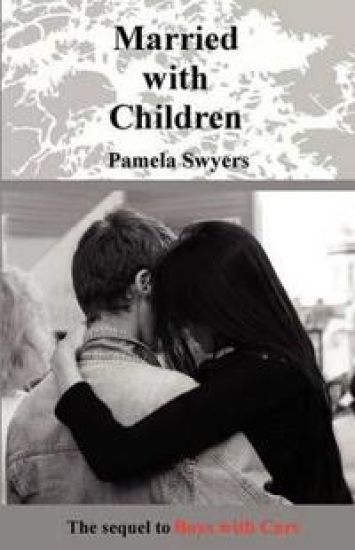


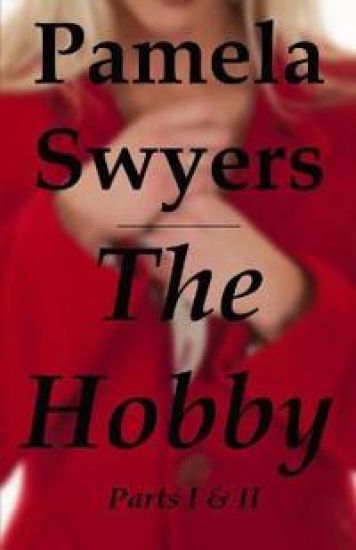
As a teen, fitness instructor Haley Jo Smith was brutally attacked. Years later she seems to have the perfect life, but what secrets lie beneath the surface? Haley Jo continues her search for peace while dealing with some tough consequences.

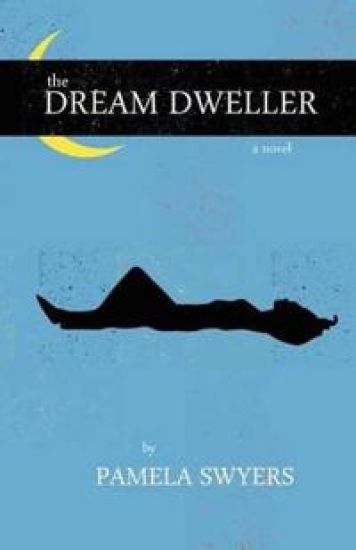
The year was 2723. The year time stopped. The calendar was re-set.Troy Collier emerges from a government bunker and goes to work rebuilding after World War III. He finds himself married at nineteen, and working at Compound One, the seat of new power in what is left of the Eastern US.The new mandate is to procreate for the survival of the human race. The community is infiltrated with spies, and there is rumor of a secret society of "evolvers" as people go missing.Faced with numerous challenges, Troy navigates his way, as humanity struggles to survive, and some to transcend.
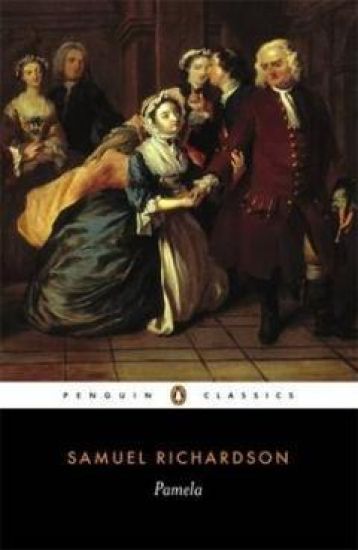
Samuel Richardson's Pamela is a captivating story of one young woman's rebellion against the social order, edited by Peter Sabor with an introduction by Margaret A. Doody in Penguin Classics.Fifteen-year-old Pamela Andrews, alone in the world, is pursued by her dead mistress's son. Although she is attracted to Mr B, she holds out against his demands and threats of abduction and rape, determined to protect her virginity and abide by her moral standards. Psychologically acute in its explorations of sex, freedom and power, Richardson's first novel caused a sensation when it was published, with its depiction of a servant heroine who dares to assert herself. Richly comic and full of lively scenes and descriptions, Pamela contains a diverse cast of characters ranging from the vulgar and malevolent Mrs Jewkes to the aggressive but awkward country squire who serves this unusual love story as both its villain and hero.In her introduction, Margaret Ann Doody discusses the epistolary genre of novels and examines the role of women and class differences. This edition, based on the 1801 text and incorporating corrections made in 1810, makes Richardson's final version of the two-volume generally available for the first time.Samuel Richardson (1689-1761) was born in Derbyshire, the son of a joiner. He received little formal education, but in 1706 was apprenticed to a London printer, going on to become a leading figure of the trade in the capital. Pamela originated as a volume of model letters for unskilled letter-writers, but as Richardson became more fascinated by the characters in his letters than the letters themselves, the germ of a novel began to emerge. Upon its publication in 1740 Pamela; or, Virtue Rewarded became a national sensation.If you enjoyed Pamela, you might like Daniel Defoe's Moll Flanders, also available in Penguin Classics.

'Pamela under the Notion of being a Virtuous Modest Girl will be introduced into all Familes,and when she gets there, what Scenes does she represent? Why a fine young Gentleman endeavouring to debauch a beautiful young Girl of Sixteen.' (Pamela Censured, 1741) One of the most spectacular successes of the burgeoning literary marketplace of eighteeent-century London, Pamela also marked a defining moment in the emergence of the modern novel. In the words of one contemporary, it divided the world 'into two different Parties, Pamelists and Antipamelists', even eclipsing the sensational factional politics of the day. Preached up for its morality, and denounced as pornography in disguise, it vividly describes a young servant's long resistance to the attempts of her predatory master to seduce her. Written in the voice of its low-born heroine, but by a printer who fifteen years earlier had narrowly escaped imprisonment for the seditious output of his press, Pamela is not only a work of pioneering psychological complexity, but also a compelling and provocative study of power and its abuse. Based on the original text of 1740, from which Richardson later retreated in a series of defensive revisions, this edition makes available the version of Pamela that aroused such widespread controversy on its first appearance. ABOUT THE SERIES: For over 100 years Oxford World's Classics has made available the widest range of literature from around the globe. Each affordable volume reflects Oxford's commitment to scholarship, providing the most accurate text plus a wealth of other valuable features, including expert introductions by leading authorities, helpful notes to clarify the text, up-to-date bibliographies for further study, and much more.

Unfolding through letters, the novel depicts with much feeling Pamela's struggles to decide how to respond to her would-be seducer and to determine her place in society. Samuel Richardson (1689–1761), a prominent London printer, is considered by many the father of the English novel, and Pamela the first modern novel. Following its hugely successful publication in 1740, it went on to become one of the most influential books in literary history, setting the course for the novel for the next century and beyond. Pamela reflects changing social roles in the late seventeenth and early eighteenth centuries, as a rising middle class offered women more choices and as traditional master-servant relationships underwent change.
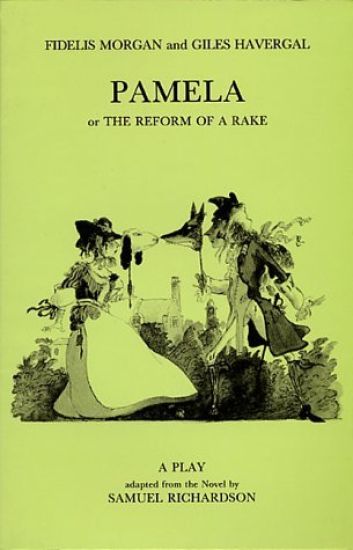


The 18th century was a wealth of knowledge, exploration and rapidly growing technology and expanding record-keeping made possible by advances in the printing press. In its determination to preserve the century of revolution, Gale initiated a revolution of its own: digitization of epic proportions to preserve these invaluable works in the largest archive of its kind. Now for the first time these high-quality digital copies of original 18th century manuscripts are available in print, making them highly accessible to libraries, undergraduate students, and independent scholars.Western literary study flows out of eighteenth-century works by Alexander Pope, Daniel Defoe, Henry Fielding, Frances Burney, Denis Diderot, Johann Gottfried Herder, Johann Wolfgang von Goethe, and others. Experience the birth of the modern novel, or compare the development of language using dictionaries and grammar discourses. ++++The below data was compiled from various identification fields in the bibliographic record of this title. This data is provided as an additional tool in helping to insure edition identification: ++++British LibraryT111393Anonymous. By Samuel Richardson.London: printed for C. Rivington; and J. Osborn, 1741. 2v.; 12

The 18th century was a wealth of knowledge, exploration and rapidly growing technology and expanding record-keeping made possible by advances in the printing press. In its determination to preserve the century of revolution, Gale initiated a revolution of its own: digitization of epic proportions to preserve these invaluable works in the largest archive of its kind. Now for the first time these high-quality digital copies of original 18th century manuscripts are available in print, making them highly accessible to libraries, undergraduate students, and independent scholars.Western literary study flows out of eighteenth-century works by Alexander Pope, Daniel Defoe, Henry Fielding, Frances Burney, Denis Diderot, Johann Gottfried Herder, Johann Wolfgang von Goethe, and others. Experience the birth of the modern novel, or compare the development of language using dictionaries and grammar discourses. ++++The below data was compiled from various identification fields in the bibliographic record of this title. This data is provided as an additional tool in helping to insure edition identification: ++++British LibraryT128629Anonymous. By Samuel Richardson. Vols.III and IV are of the third edition: "The third edition of Vols.III and IV was published with the sixth edition of Vols.I and II in May, 1742" (Sale).London: printed for S. Richardson; and sold by J. Osborn; and John Rivington, 1742. 4v., plates; 8

The 18th century was a wealth of knowledge, exploration and rapidly growing technology and expanding record-keeping made possible by advances in the printing press. In its determination to preserve the century of revolution, Gale initiated a revolution of its own: digitization of epic proportions to preserve these invaluable works in the largest archive of its kind. Now for the first time these high-quality digital copies of original 18th century manuscripts are available in print, making them highly accessible to libraries, undergraduate students, and independent scholars.Western literary study flows out of eighteenth-century works by Alexander Pope, Daniel Defoe, Henry Fielding, Frances Burney, Denis Diderot, Johann Gottfried Herder, Johann Wolfgang von Goethe, and others. Experience the birth of the modern novel, or compare the development of language using dictionaries and grammar discourses. ++++The below data was compiled from various identification fields in the bibliographic record of this title. This data is provided as an additional tool in helping to insure edition identification: ++++British LibraryT128629Anonymous. By Samuel Richardson. Vols.III and IV are of the third edition: "The third edition of Vols.III and IV was published with the sixth edition of Vols.I and II in May, 1742" (Sale).London: printed for S. Richardson; and sold by J. Osborn; and John Rivington, 1742. 4v., plates; 8