Kirjojen hintavertailu. Mukana 11 699 587 kirjaa ja 12 kauppaa.

Kirjahaku

Etsi kirjoja tekijän nimen, kirjan nimen tai ISBN:n perusteella.

298 tulosta hakusanalla Pasolini-Zanelli Giuseppe Conte

Pasolini

Pasolini

Stefania Benini

University of Toronto Press
2015
sidottu
Poet, novelist, dramatist, polemicist, and filmmaker Pier Paolo Pasolini continues to be one of the most influential intellectuals of post-war Italy. In Pasolini: The Sacred Flesh, Stefania Benini examines his corporeal vision of the sacred, focusing on his immanent interpretation of the Christian doctrine of the Incarnation and the “sacred flesh” of Christ in both Passion and Death as the subproletarian flesh of the outcast at the margins of capitalism. By investigating the many crucifixions within Pasolini’s poems, novels, films, cinematic scripts and treatments, as well as his subversive hagiographies of criminal or crazed saints, Benini illuminates the radical politics embedded within Pasolini’s adoption of Christian themes. Drawing on the work of theorists such as Ernesto De Martino, Mircea Eliade, Jean-Luc Nancy, Alain Badiou, Giorgio Agamben, and Slavoj Žižek, she shows how Pasolini’s meditation on the disappearance of the sacred in our times and its return as a haunting revenant, a threatening disruption of capitalist society, foreshadows current debates on the status of the sacred in our postmodern world.
Pasolini

Pasolini

Jeremy Mark Robinson

CRESCENT MOON PUBLISHING
2022
sidottu
PASOLINIIL CINEMA DI POESIA/ THE CINEMA OF POETRY By Jeremy Mark RobinsonA new critical study of the Italian filmmaker and poet Pier Paolo Pasolini (1922-1975). The focus is the cinema of Pasolini, which includes The Gospel According To Matthew (his best-known film), the controversial Salo, the 'trilogy of life' movies based on Middle Ages texts (Chaucer, Boccaccio and the 1001 Nights), adaptations of ancient world plays (Medea and Oedipus Rex), and poetic portraits of contemporary Roman life (Accattone, Mamma Roma and The Hawks and the Sparrows). Pasolini: Il Cinema di Poesia/ The Cinema of Poetry considers all of Pier Paolo Pasolini's work in cinema, with a chapter on each feature-length movie, plus the short episodes he made for anthology films, all of his documentaries, and his unmade film projects. There is a biography of Pasolini, an exploration of aspects of his cinema, and topics related to Pasolini's life and interests such as religion, poetry, homosexuality, his colleagues, Marxist politics, modern Italy, and the Third World. Pier Paolo Pasolini was born on March 5, 1922, in Bologna, Italy. He died on November 2, 1975, in Ostia, Rome (he was buried in Casarca, in his beloved Friuli). When he was a film director, Pier Paolo Pasolini was certainly an intimidating presence, with a formidable reputation - like Cecil B. DeMille, D.W. Griffith or Jean-Luc Godard. Very confident, very smart, a great talker and interviewee, a leader on set, with no doubts from anyone about who was the primary creator and author. The appendices include entries on the work of Pier Paolo Pasolini's collaborators, such as Bernardo Bertolucci and Sergio Citti, and films made from Pasolini's fiction (such as A Violent Life and The Big Night). Fully illustrated with images from all of Pasolini's works in cinema. Bibliography, appendices, filmography and notes. 536 pages. Full colour cover, in hardcover with a jacket (flyleaf). www.crmoon.com
Pasolini

Pasolini

Jeremy Mark Robinson

CRESCENT MOON PUBLISHING
2024
pokkari
PASOLINIIL CINEMA DI POESIA/ THE CINEMA OF POETRY By Jeremy Mark RobinsonA new critical study of the Italian filmmaker and poet Pier Paolo Pasolini (1922-1975). The focus is the cinema of Pasolini, which includes The Gospel According To Matthew (his best-known film), the controversial Salo, the 'trilogy of life' movies based on Middle Ages texts (Chaucer, Boccaccio and the 1001 Nights), adaptations of ancient world plays (Medea and Oedipus Rex), and poetic portraits of contemporary Roman life (Accattone, Mamma Roma and The Hawks and the Sparrows). Pasolini: Il Cinema di Poesia/ The Cinema of Poetry considers all of Pier Paolo Pasolini's work in cinema, with a chapter on each feature-length movie, plus the short episodes he made for anthology films, all of his documentaries, and his unmade film projects. There is a biography of Pasolini, an exploration of aspects of his cinema, and topics related to Pasolini's life and interests such as religion, poetry, homosexuality, his colleagues, Marxist politics, modern Italy, and the Third World. Pier Paolo Pasolini was born on March 5, 1922, in Bologna, Italy. He died on November 2, 1975, in Ostia, Rome (he was buried in Casarca, in his beloved Friuli). When he was a film director, Pier Paolo Pasolini was certainly an intimidating presence, with a formidable reputation - like Cecil B. DeMille, D.W. Griffith or Jean-Luc Godard. Very confident, very smart, a great talker and interviewee, a leader on set, with no doubts from anyone about who was the primary creator and author. The appendices include entries on the work of Pier Paolo Pasolini's collaborators, such as Bernardo Bertolucci and Sergio Citti, and films made from Pasolini's fiction (such as A Violent Life and The Big Night). Fully illustrated with images from all of Pasolini's works in cinema. Bibliography, appendices, filmography and notes. 536 pages. Full colour cover. www.crmoon.com
Pasolini

Pasolini

Donatella Maraschin

Peter Lang AG, Internationaler Verlag der Wissenschaften
2014
nidottu
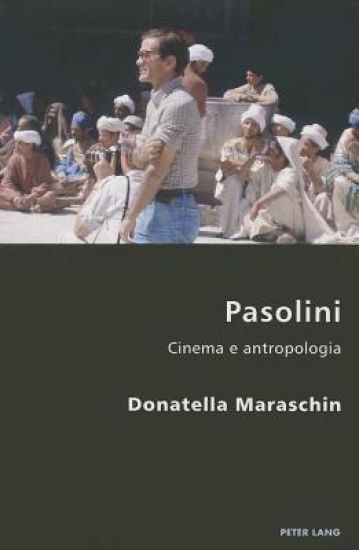
Questo e il primo libro che esplora sistematicamente le strategie discorsive e le metodologie antropologiche adottate da Pier Paolo Pasolini nei suoi film. L'analisi delle intersezioni tra discorso antropologico, documentario e finzione rivela i modi attraverso cui il cinema di Pasolini sia profondamente correlato all'antropologia visuale, nei modi concettualizzati negli anni Ottanta dalla New Ethnography, sia in termini di pratica che di ricerca teorica. Una delle tesi del libro e che i film di Pasolini contengano ricorsi antropologici che emergono da una discorsivita percettiva che li avvicina a uno dei piu interessanti indirizzi dell'antropologia visuale anglosassone, quello dell'antropologia dei sensi, rendendo manifesto il loro valore pionieristico e visionario. L'analisi delle categorie corporali, topografiche, ritualistiche e identitarie presenti nei film di Pasolini svela inoltre istanze discorsive che si spingono oltre le ideologie coloniali e moderne spesso attribuitegli dalla critica tradizionale.
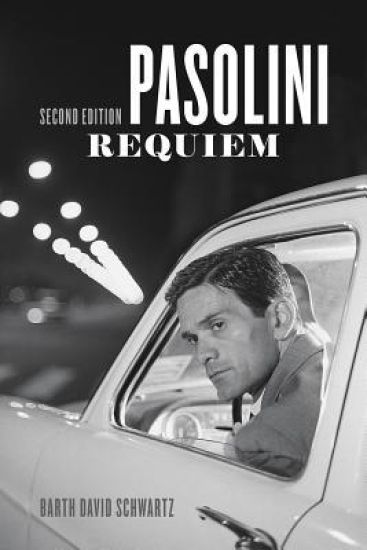
Pasolini Requiem

Pasolini Requiem

Barth David Schwartz

University of Chicago Press
2017
nidottu
Pier Paolo Pasolini (1922 75) was one of the most important Italian intellectuals of the post World War II era. An astonishing polymath poet, novelist, literary critic, political polemicist, screenwriter, and film director he exerted profound influence on Italian culture up to his untimely death at the age of fifty-three. This revised edition of what the New York Times Book Review has called "the standard Pasolini biography" introduces the artist to a new generation of readers. Based on extensive interviews with those who knew Pasolini, both friends and enemies, admirers and detractors, Pasolini Requiem chronicles his growth from poet in the provinces to Italy's leading "civil poet"; his flight to Rome in 1950; the scandalous success of his two novels and political writing; and his transition to film, where he started as a contributor to the golden age of Italian cinema and ended with the shocking Salo, or the 120 Days of Sodom. Pasolini's tragic and still unsolved murder has remained a subject of contentious debate for four decades. The enduring fascination with who committed the crime and why reflects his vital stature in Italy's political and social history. Updated throughout and with a new afterword covering the efforts to reopen the investigation and the legal maelstrom surrounding his demise this edition of Pasolini Requiem is a riveting account of one of the twentieth century's most controversial, ever-present iconoclasts.
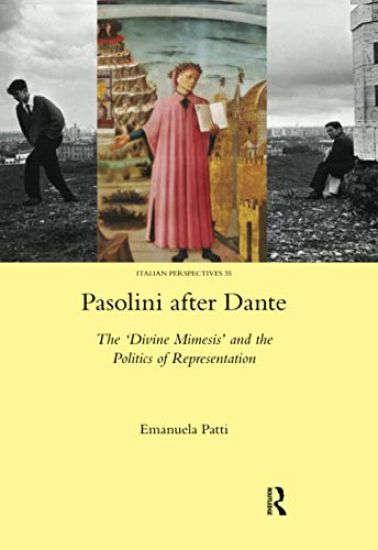
Pasolini after Dante

Pasolini after Dante

Emanuela Patti

Routledge
2020
nidottu
What role did Dante play in the work of Pier Paolo Pasolini (1922-1975)? His unfinished and fragmented imitation of the Comedia, La Divina Mimesis, is only one outward sign of what was a sustained dialogue with Dante on representation begun in the early 1950s. During this period, the philologists Gianfranco Contini (1912-1990) and Erich Auerbach (1892-1957) played a crucial role in Pasolini’s re-thinking of ‘represented reality’, suggesting Dante as the best literary, authorial and political model for a generation of postwar Italian writers. This emerged first as ‘Dantean realism’ in Pasolini’s prose and poetry, after Contini’s interpretation of Dante and of his plurilingualism, and then as ‘figural realism’ in his cinema, after Auerbach’s concepts of Dante’s figura and ‘mingling of styles’. Following the evolution of Pasolini’s mimetic ideal from these formative influences through to La Divina Mimesis, Emanuela Patti explores Pasolini’s politics of representation in relation to the ‘national-popular’, the ‘questione della lingua’ and the Italian post-war debates on neorealism, while also providing a new interpretation of some of his major literary and cinematic works.
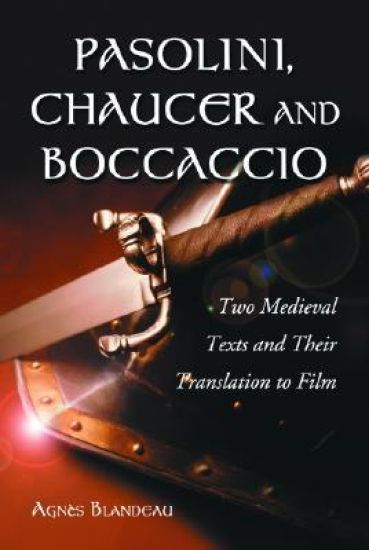
Pasolini, Chaucer and Boccaccio

Pasolini, Chaucer and Boccaccio

Agnès Blandeau

McFarland Co Inc
2006
pokkari
"The book first studies the two films and puts them in perspective. Next, it interprets both films from a wider perspective, recounting misinterpretations, expounding upon Pasolini's ideological vision, and defending the oft-criticized adaptations. Finally, the conclusion discusses how the films represent innovation over strict adaptation, and considers the paradox of rendering, non-realistically, the essence of original works"--Provided by publisher.