
Kirjahaku
Etsi kirjoja tekijän nimen, kirjan nimen tai ISBN:n perusteella.
1000 tulosta hakusanalla Patrice Bracey
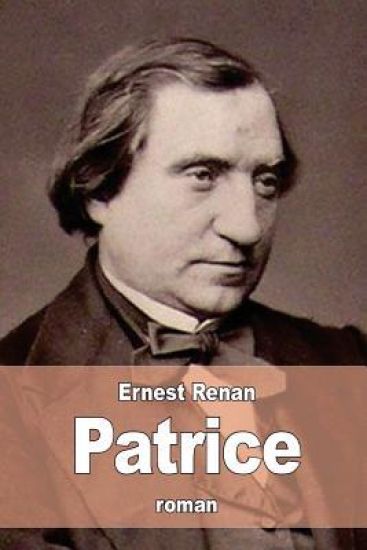
Patrice a t crit Rome en 1849, au cours d'un voyage qu'Ernest Renan fit en Italie l' ge de vingt-six ans, et qui exer a sur sa mani re de sentir et de voir une d cisive influence. C'est une sorte d'autobiographie morale; le portrait intellectuel d'Ernest Renan lui-m me, sous le nom de Patrice, les impressions de Rome, presque identiques aux lettres Berthelot de la m me poque, occupent une grande place dans ce fragment de roman. Une jeune fille pieuse, C cile, crit de Bretagne un jeune homme qui l'aime, mais qui est s par d'elle par un abandon total de la foi et un tat d' me d'une grande complexit . Plus tard, Rome, la Rome de 1849, aujourd'hui abolie, Patrice s'adresse un ami; la trame l g re du roman par lettres dispara t presque compl tement, et la r flexion philosophique s' l ve des hauteurs que Renan lui-m me n'a pas d pass es. Des confidences personnelles, avec un rappel de la figure id ale de jeune fille du d but, terminent cette esquisse si curieuse et si achev e, malgr son caract re fragmentaire.

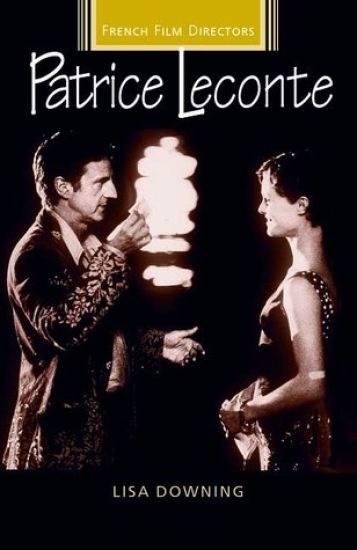
Lisa Downing's comprehensive study of the films of Patrice Leconte traces lines of continuity and revision through a body of apparently disparate films whose "messages" often appear both contradictory and controversial. Pursuing a close reading of the recurrent themes, styles, intertexts and techniques which structure Leconte's filmmaking, Downing re-evaluates Leconte's status as an enigmatic artist offering complex and paradoxical commentary on contemporary questions of sexuality, ethics and identity. This book is the first full-length critical work in English on Leconte's cinema. It provides essential reading for both enthusiasts of French cinema and for those fascinated by the relationship between popular culture and theory.
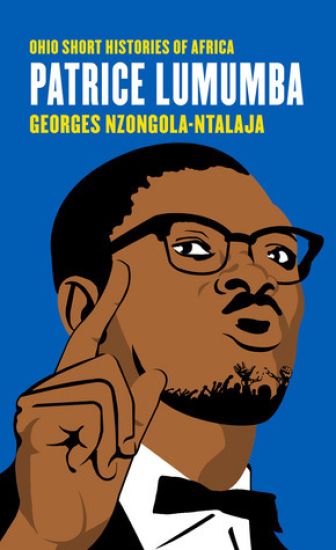
Patrice Lumumba was a leader of the independence struggle in what is today the Democratic Republic of the Congo, as well as the country's first democratically elected prime minister. After a meteoric rise in the colonial civil service and the African political elite, he became a major figure in the decolonization movement of the 1950s. Lumumba's short tenure as prime minister (1960–1961) was marked by an uncompromising defense of Congolese national interests against pressure from international mining companies and the Western governments that orchestrated his eventual demise. Cold war geopolitical maneuvering and well-coordinated efforts by Lumumba's domestic adversaries culminated in his assassination at the age of thirty-five, with the support or at least the tacit complicity of the U.S. and Belgian governments, the CIA, and the UN Secretariat. Even decades after Lumumba's death, his personal integrity and unyielding dedication to the ideals of self-determination, self-reliance, and pan-African solidarity assure him a prominent place among the heroes of the twentieth-century African independence movement and the worldwide African diaspora. Georges Nzongola-Ntalaja's short and concise book provides a contemporary analysis of Lumumba's life and work, examining both his strengths and his weaknesses as a political leader. It also surveys the national, continental, and international contexts of Lumumba's political ascent and his swift elimination by the interests threatened by his ideas and practical reforms.
Patrice Lumumba
ZED BOOKS LTD
1998
nidottu
PATRICE LUMUMBA In this important biography, the great contribution of Lumumba to the process of the African Revolution is analysed and assessed.
Every ten years, Patrice, a 500-year-old woman, travels to a new city to pose nude on a red velvet couch for a painter. It's 1939 and Patrice is tired of being immortal. She longs to release her wisdom and secrets, and escape years of captivity. She arrives in New York City and meets the suffering Louis. His Jewish family and friends were taken by train to concentration camps and Louis himself was smuggled out of Vienna in a coffin. Except for his lover Hadrian, all he has ever loved has died. His only reason for continuing to live is to see his paintings hang in the museum alongside the Old Masters. Against the backdrop of horrific war, Patrice teaches Louis to paint the inside of her heart and her soul, and inspires him to create the masterpieces he's destined for.Patrice is about the myth of art and artist and how a woman and man during wartime pull truth and art from pain, passion, and desire.

The Key to the Meadow: Patrice de Chauncy
Patrice De Chauncy
Createspace Independent Publishing Platform
2011
nidottu

Patrice's Pocket Posh Journal, Chevron
Andrews McMeel Publishing
2016
pokkari
Patrice's Pocket Posh Journal, Mum
Andrews McMeel Publishing
2016
pokkari

Patrice's Pocket Posh Journal, Polka Dot
Andrews McMeel Publishing
2016
pokkari

Patrice's Pocket Posh Journal, Tulip
Andrews McMeel Publishing
2016
pokkari
Patrice Ou Les Pionniers de l'Amérique Du Nord
Hippolyt De Chavannes De La Giraudiere
Createspace Independent Publishing Platform
2016
nidottu
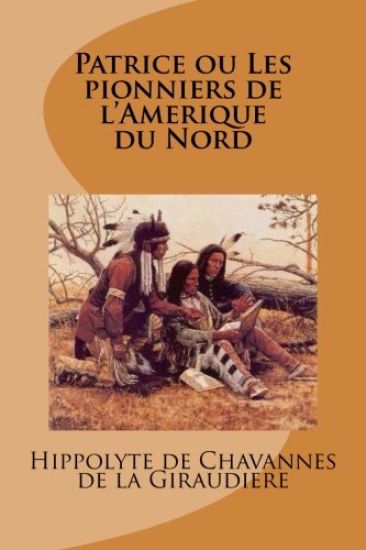
Patrice ou Les pionniers de l'Amerique du Nord
Hippolyte de Chavannes de la Giraudiere
Createspace Independent Publishing Platform
2016
nidottu
On tait la fin du mois d'octobre; il avait plu toute la journ e, et vers les huit heures du soir, au moment o Mme la Place versait une tasse de th son mari assis au coin du feu en lisant son journal, une furieuse rafale s' leva tout coup, s'engouffra dans la chemin e avec le bruit du tonnerre, et remplit toute la maison de sifflements tranges. Henri, le fils de M. la Place, jeune gar on de douze ans qui faisait une partie de dominos avec sa soeur H l ne, un peu plus g e que lui, s' cria aussit t en entendant le fracas de la temp te; Quel temps, mon Dieu pour ma tante et mes cousines
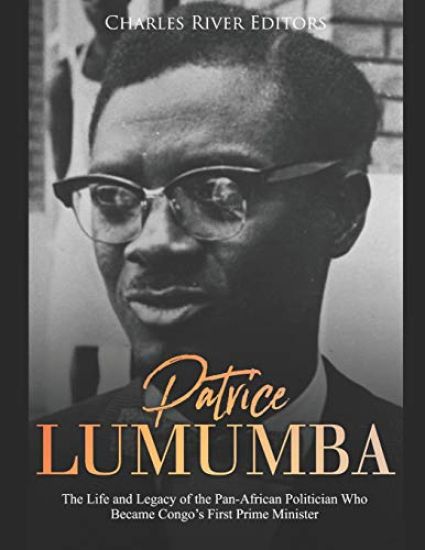
Patrice Lumumba: The Life and Legacy of the Pan-African Politician Who Became Congo's First Prime Minister
Charles River
Independently Published
2019
nidottu
*Includes pictures*Includes online resources and a bibliography for further reading "Without dignity there is no liberty, without justice there is no dignity, and without independence there are no free men." - Patrice LumumbaThe modern history of Africa was, until very recently, written on behalf of the indigenous races by the white man, who had forcefully entered the continent during a particularly hubristic and dynamic phase of European history. In 1884, Prince Otto von Bismarck, the German chancellor, brought the plenipotentiaries of all major powers of Europe together, to deal with Africa's colonization in such a manner as to avoid provocation of war. This event-known as the Berlin Conference of 1884-1885-galvanized a phenomenon that came to be known as the Scramble for Africa. The conference established two fundamental rules for European seizure of Africa. The first of these was that no recognition of annexation would granted without evidence of a practical occupation, and the second, that a practical occupation would be deemed unlawful without a formal appeal for protection made on behalf of a territory by its leader, a plea that must be committed to paper in the form of a legal treaty.One of the most controversial colonization efforts took place in the Congo, which still conjures up contrasting images of jungles, wildlife, warlords, civil wars, blood diamonds, and the ongoing anarchy of ethnic and tribal warfare. Indeed, the vast expanse of Congo remains one of the most enigmatic and little-known regions of Africa. It is also, undeniably, the original African failed state. It has suffered generations of warlord rule, inter-ethnic violence and insecurity, particularly in the remote and isolated east of the country. The original name of the region derives from the Kingdom of Kongo, a pre-colonial power that ruled a limited region surrounding, and extended south of, the mouth of the Congo River. The first Europeans to discover the mouth of the Congo River were the Portuguese, who incrementally explored the coast of Africa throughout the late 15th century and established diplomatic and trade relations with the Kongo Kingdom before assuming control of what later became Portuguese West Africa, and later still Angola. At that point in history, the European trading powers were only really interested in trade, most particularly the Atlantic Slave Trade, and there was little incentive to penetrate the interior to any depth. The Portuguese made no particular effort, therefore, to explore the Congo River any further inland than the Crystal Mountains or the extensive region of rapids that tended to shield the interior from the coast. For generations the Portuguese simply traded off the coast, while what lay beyond in the dark interior remained a matter of myth and speculation.It was in the nature of Belgium's withdrawal from Africa that power was essentially handed over to the first in line to receive it. Very little of the careful preparation that characterized the British withdrawal from Africa was evident in Congo, in major part due to the fact that the Belgian system of administration allowed for no phased entry of Congolese employees into the executive level, so there was no one trained or experienced in running a government who was in a position to take over from the departing Belgians. The same, indeed, was true in the armed forces.As it turned out, the first in line to take power was a tall, stern-featured ideologue by the name of Patrice Lumumba. Though he was still just 35, his life story was already one full of ideology, politics, and chaos, and things would only get more turbulent once he became the Congo's leader. Patrice Lumumba: The Life and Legacy of the Pan-African Politician Who Became Congo's First Prime Minister looks at one of the most important African leaders of the 20th century.