Kirjojen hintavertailu. Mukana 11 342 296 kirjaa ja 12 kauppaa.

Kirjahaku

Etsi kirjoja tekijän nimen, kirjan nimen tai ISBN:n perusteella.

1000 tulosta hakusanalla Patrice Elizabeth Olsen

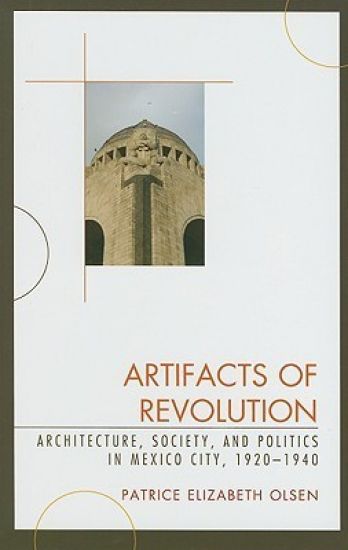
Artifacts of Revolution

Artifacts of Revolution

Patrice Elizabeth Olsen

Rowman Littlefield Publishers
2008
sidottu
This innovative history argues that we can understand important facets of the Mexican Revolution by analyzing the architecture designed and built in Mexico City during the formative years from 1920 to 1940. These artifacts allow us to trace and understand the path of the consolidation of the Mexican Revolution. Each individual building or development, by providing indelible evidence of the process by which the revolution evolved into a government, offers important insights into Mexican history. Seen in aggregate, they reveal an ongoing urban process at work; seen as a "composition," they reveal changes over time in societal values and aspirations and in the direction of the revolution. This book focuses on structure, change, and process for this remarkable city "in the true image of the gigantic heaven." The changes described in Fuentes' narrative are man-made, not wrought by impersonal or natural forces except on the rare occasions of earthquake and flood. Patrice Elizabeth Olsen views Mexico City as an artifact of those who created it—representing their ardor, humanity, and religion, as well as their politics. Individual chapters detail the expression of revolutionary values and aims in the physical form of Mexico City's built environment between 1920 and 1940, examining direction and meaning in terms of who is given license to design and build structures in the capital city, and equally important, who is excluded. Through the reshaping of the capital the revolution was extended and institutionalized; physical traces of the process of negotiation that enabled the revolution to be "fixed" in the Mexican polity appear in the city's skyline, parks, housing developments, and other new construction, as well as in modifications to existing colonial-era buildings. In this manner, the author argues, Mexico City's urban form crystallized as a product of the revolution as well as a part of the revolutionary process, as it has been of other conquests throughout its history.
A Correct Account of the Trials of Charles m'Manus, John Hauer, Elizabeth Hauer, Patrick Donagan, Francis Cox, and Others; At Harrisburgh June Oyer and Terminer, 1798
The 18th century was a wealth of knowledge, exploration and rapidly growing technology and expanding record-keeping made possible by advances in the printing press. In its determination to preserve the century of revolution, Gale initiated a revolution of its own: digitization of epic proportions to preserve these invaluable works in the largest archive of its kind. Now for the first time these high-quality digital copies of original 18th century manuscripts are available in print, making them highly accessible to libraries, undergraduate students, and independent scholars.This collection reveals the history of English common law and Empire law in a vastly changing world of British expansion. Dominating the legal field is the Commentaries of the Law of England by Sir William Blackstone, which first appeared in 1765. Reference works such as almanacs and catalogues continue to educate us by revealing the day-to-day workings of society.++++The below data was compiled from various identification fields in the bibliographic record of this title. This data is provided as an additional tool in helping to insure edition identification: ++++British LibraryW011939Half-title: Trials and confessions of John Hauer, Charles M'Manus, &c. for the murder of Francis Shitz. Parentheses substituted for square brackets in imprint transcription. "The following is the last speech and dying confession of Charles M'Manus .."-- Harrisburgh]: Printed at Harrisburgh Pa.] by John Wyeth, 1798. (Entered according to law). 2], 163, 1] p.; 8
Queen Elizabeth

Queen Elizabeth

Patrick Auerbach

Createspace Independent Publishing Platform
2017
pokkari
Queen Elizabeth - we have heard her name, and we have heard that she was the virgin Queen. However, what else made her famous enough to go down in history? Elizabeth is the Queen that made a huge impact on her subjects in England. She was a queen who did not take no for an answer, and she did what she thought was best for her people. Her subjects were her entire world, and Elizabeth did not do anything to compromise the trust that they had in her. To learn more about Elizabeth's life, pick up this book, and hopefully, you find out something new about the Last Queen of the Tudor dynasty. Scroll to the top of the page and click Add To Cart to read more about this extraordinary chapter of history
Patrick Henry: Patriot, Orator and Anti-Federalist: Non-Fiction Common Core Readings
The non-fiction Common Core aligned readings and primary source Document Pamphlet series: Discovering America is designed to help students read for information and think critically while forming their own ideas. Students and adults alike will discover history by looking at artifacts constructed by the people who shaped the United States of America. Perfect for any classroom, from Fifth Grade to college, this series engages students and prompts them to think for themselves, question, reflect and gain a deeper understanding of history. In this edition, students discover the prolific Patrick Henry -- who some historians credit as firing the first figurative shot of the Revolution in his fiery "Give Me Liberty or Give Me Death" speech. Read select letters written by Henry, engage in his oratory, learn about his life and decide for yourself the impetus behind a man called one of the greatest Patriots in the history of America.
A Poet in the House: Patrick Kavanagh at Priory Grove

A Poet in the House: Patrick Kavanagh at Priory Grove

Elizabeth O'Toole

THE LILLIPUT PRESS LTD
2021
nidottu
Patrick Kavanagh (1904–67) was one of Ireland’s foremost poets, best known for ‘The Great Hunger’ and novel Tarry Flynn. He is also remembered for his cantankerous, sometimes volatile nature, fuelled by alcohol. In A Poet in the House: Patrick Kavanagh at Priory Grove, a memoir by Elizabeth O’Toole, we encounter a new Patrick Kavanagh. In 1961, the poet lived with the O’Toole family in Stillorgan for six months at a crucial point in his life, when he was sober, industrious and, as the accompanying photographs will show, much loved by her children. Until now, no one has been aware of how close Kavanagh was to O’Toole and to her husband, James Davitt Bermingham O’Toole. Born and raised in China, Jim O’Toole was the author of Man Alive, a play about the inner workings of the ESB that created a storm of controversy in 1961. On the first night, Kavanagh told the audience that the press was ‘lily-livered’. This was not just ‘a local row’. One of the ESB’s top executives, Jim O’Donovan, was the IRA leader who negotiated a deal with the Nazis that threatened the existence of the State in 1940. Kavanagh’s relationship with O’Donovan and Jim O’Toole’s escape from Germany at the outbreak of the war are here revealed for the first time. Amongst many other revelations in the book is a hitherto unknown connection between the poet and Patricia Avis, novelist wife of the poet Richard Murphy, and lover of Philip Larkin and Desmond Williams. Although Elizabeth O’Toole is now ninety-six, her decidedly down-to-earth voice is that of a much younger woman. Her vivid recollections deepen and challenge the way we view Patrick Kavanagh. The influence of her book will tilt our perception of this passionate man. A contextual essay by the editor of the volume, playwright and novelist Brian Lynch, accompanies the memoir along with photographs from the early sixties.
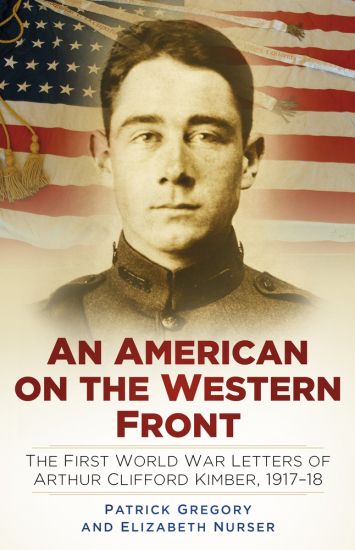
An American on the Western Front

An American on the Western Front

Patrick Gregory; Elizabeth Nurser

The History Press Ltd
2016
sidottu
This is the remarkable story of the American First World War serviceman Arthur Clifford Kimber. When his country entered the Great War in 1917, Kimber left Stanford University to carry the first official American flag to the Western Front. Fired by idealism for the French cause, the young student initially acted as a volunteer ambulance driver, before training as a pilot and taking part in dogfights against ‘the Boche’.His letters home give a vivid picture of what Kimber witnessed on his journey from Palo Alto, California to the front in France: keen-eyed descriptions of New York as it prepared for the forthcoming conflict, the privations of wartime Britain and France, and encounters with former president Theodore Roosevelt and Hollywood actress Lillian Gish. Kimber details his exhilaration, his everyday concerns and his horror as he adapts to an active wartime role.Arthur Clifford Kimber was one of the first Americans on the front line after the entry of the US into the war and, tragically, also one of the last to be buried there – killed in action just a few weeks before the end of the war. Here, his frank letters to his mother and brothers, compiled, edited and put in context by Patrick Gregory and Elizabeth Nurser, are published for the first time.