College basketball experienced its greatest rise in popularity during the eighties, becoming one of the most commercially successful spectator sports in America. With this rise came an era of scandal: recruiting violations, spurious admittance practices, and controversial treatment of student athletes. Within this guarded context of scrutiny, allegations of improprieties, and media celebrity, Patricia and Peter Adler penetrated the public front of a top twenty basketball team. The result of their efforts, Backboards and Blackboards: College Athletes and Role Engulfment, is a compelling inside account of an exciting, intimidating, and glamorous hidden arena.
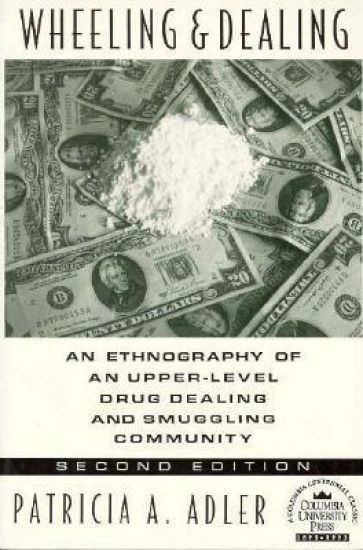
Wheeling and Dealing is a vivid account of the world inhabited by "wholesale" illicit drug traffickers. Based on six years of participant observation, fieldwork, and extensive interviews in an elite Southern California community of dealers, the book gives a rare glimpse into the decadent yet fascinating "subculture of drug trafficking and unending partying, mixed with occasional cloak-and-dagger subterfuge." This second edition brings the story up to date by revealing the fate of several of Adler's key informants. By tracing their lives over a fifteen-year span, Adler offers a unique longitudinal perspective on deviant careers and the reintegration of dealers into conventional society. She also analyzes the unintended consequences of the federal government's war on drugs, tying it to the increasing violence and organizational sophistication of drug traffickers and the rise of international cartels.
Wheeling and Dealing is a vivid account of the world inhabited by "wholesale" illicit drug traffickers. Based on six years of participant observation, fieldwork, and extensive interviews in an elite Southern California community of dealers, the book gives a rare glimpse into the decadent yet fascinating "subculture of drug trafficking and unending partying, mixed with occasional cloak-and-dagger subterfuge." This second edition brings the story up to date by revealing the fate of several of Adler's key informants. By tracing their lives over a fifteen-year span, Adler offers a unique longitudinal perspective on deviant careers and the reintegration of dealers into conventional society. She also analyzes the unintended consequences of the federal government's war on drugs, tying it to the increasing violence and organizational sophistication of drug traffickers and the rise of international cartels.
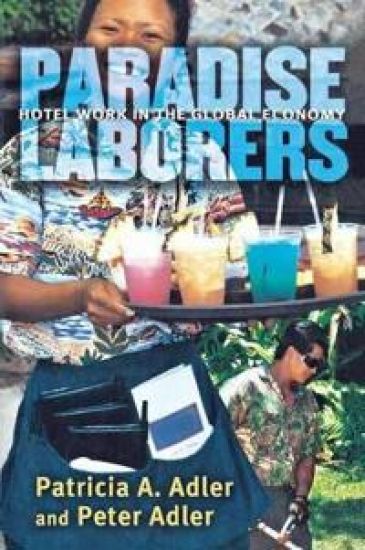
Resorts have become important to American society and its economy; one in eight Americans is now employed by the tourism industry. Yet despite the ubiquity of hotels, little has been written about those who labor there. Drawing on eight years of participant observation and in-depth interviews, the renowned ethnographers Patricia A. Adler and Peter Adler reveal the occupational culture and lifestyles of workers at five luxury Hawaiian resorts. These resorts employ a workforce that is diverse in gender, class, ethnicity, and nationality. Hawaiian resort workers, like those in nearly all resorts, consist of four groups. New immigrants hold difficult and dirty low-status jobs for little pay. Locals provide an authentic Polynesian flavor for guests, a ready pool of youthful high-turnover employees, and a population trapped in a place that offers few occupational alternatives. Managers tend to be middle-class, college-educated young and middle-aged men from the mainland whose lifestyles are occupationally transient. Seekers, mostly young, white, and from the mainland as well, escape to paradise seeking adventure, warmth, extreme sports, or some alternate life experiences. The Adlers describe the work, lives, and careers of these four groups that labor in organizations that never close, with shifts scheduled around the clock and around the year. Paradise Laborers adds to the growing interest in the global flow of labor, as these immigrant workers display different trends in gendered opportunities and mobility than those exhibited by other groups. The authors propose a political economy of tourist labor in which they compare the different expectations and rewards of organizations, employees, and local labor markets.
Resorts have become important to American society and its economy; one in eight Americans is now employed by the tourism industry. Yet despite the ubiquity of hotels, little has been written about those who labor there. Drawing on eight years of participant observation and in-depth interviews, the renowned ethnographers Patricia A. Adler and Peter Adler reveal the occupational culture and lifestyles of workers at five luxury Hawaiian resorts. These resorts employ a workforce that is diverse in gender, class, ethnicity, and nationality. Hawaiian resort workers, like those in nearly all resorts, consist of four groups. New immigrants hold difficult and dirty low-status jobs for little pay. Locals provide an authentic Polynesian flavor for guests, a ready pool of youthful high-turnover employees, and a population trapped in a place that offers few occupational alternatives. Managers tend to be middle-class, college-educated young and middle-aged men from the mainland whose lifestyles are occupationally transient. Seekers, mostly young, white, and from the mainland as well, escape to paradise seeking adventure, warmth, extreme sports, or some alternate life experiences. The Adlers describe the work, lives, and careers of these four groups that labor in organizations that never close, with shifts scheduled around the clock and around the year. Paradise Laborers adds to the growing interest in the global flow of labor, as these immigrant workers display different trends in gendered opportunities and mobility than those exhibited by other groups. The authors propose a political economy of tourist labor in which they compare the different expectations and rewards of organizations, employees, and local labor markets.
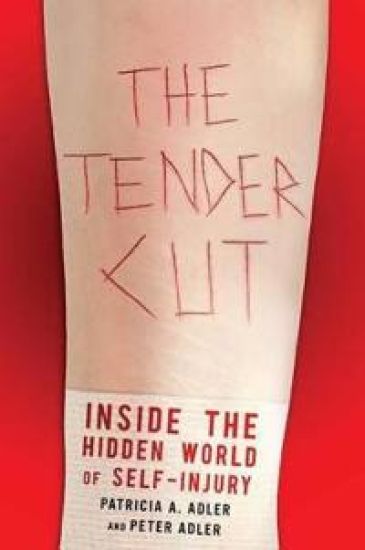
Choice's Outstanding Academic Title list for 2013 2013 Honorable Mention for the Distinguished Book Award presented by the Midwest Sociological Society Honorable Mention for the Charles H. Cooley Award for Outstanding Book from the Society for the Study of Symbolic Interaction Illuminates the misunderstood meaning of self-injury in the 21st century Cutting, burning, branding, and bone-breaking are all types of self-injury, or the deliberate, non-suicidal destruction of one's own body tissue, a practice that emerged from obscurity in the 1990s and spread dramatically as a typical behavior among adolescents. Long considered a suicidal gesture, The Tender Cut argues instead that self-injury is often a coping mechanism, a form of teenage angst, an expression of group membership, and a type of rebellion, converting unbearable emotional pain into manageable physical pain. Based on the largest, qualitative, non-clinical population of self-injurers ever gathered, noted ethnographers Patricia and Peter Adler draw on 150 interviews with self-injurers from all over the world, along with 30,000-40,000 internet posts in chat rooms and communiqués. Their 10-year longitudinal research follows the practice of self-injury from its early days when people engaged in it alone and did not know others, to the present, where a subculture has formed via cyberspace that shares similar norms, values, lore, vocabulary, and interests. An important portrait of a troubling behavior, The Tender Cut illuminates the meaning of self-injury in the 21st century, its effects on current and former users, and its future as a practice for self-discovery or a cry for help.
Choice's Outstanding Academic Title list for 2013 2013 Honorable Mention for the Distinguished Book Award presented by the Midwest Sociological Society Honorable Mention for the Charles H. Cooley Award for Outstanding Book from the Society for the Study of Symbolic Interaction Illuminates the misunderstood meaning of self-injury in the 21st century Cutting, burning, branding, and bone-breaking are all types of self-injury, or the deliberate, non-suicidal destruction of one's own body tissue, a practice that emerged from obscurity in the 1990s and spread dramatically as a typical behavior among adolescents. Long considered a suicidal gesture, The Tender Cut argues instead that self-injury is often a coping mechanism, a form of teenage angst, an expression of group membership, and a type of rebellion, converting unbearable emotional pain into manageable physical pain. Based on the largest, qualitative, non-clinical population of self-injurers ever gathered, noted ethnographers Patricia and Peter Adler draw on 150 interviews with self-injurers from all over the world, along with 30,000-40,000 internet posts in chat rooms and communiqués. Their 10-year longitudinal research follows the practice of self-injury from its early days when people engaged in it alone and did not know others, to the present, where a subculture has formed via cyberspace that shares similar norms, values, lore, vocabulary, and interests. An important portrait of a troubling behavior, The Tender Cut illuminates the meaning of self-injury in the 21st century, its effects on current and former users, and its future as a practice for self-discovery or a cry for help.
Packed with the most recent and relevant articles in the field, CONSTRUCTIONS OF DEVIANCE: SOCIAL POWER, CONTEXT, AND INTERACTION, Eighth Edition, shows readers how to apply the concepts and theories of deviance to the world around them. The book's current, comprehensive coverage includes both theoretical analyses and ethnographic illustrations of how deviance is socially constructed, organized, and managed. Seasoned authors and award-winning professors, Patricia Adler and Peter Adler cover a wide variety of deviant acts-challenging readers to see the diversity and pervasiveness of deviance in society. They present deviance as a component of society, examine the construction of deviance, and explore the processes in society that create deviance. Intriguing selected studies focus on the experiences of deviants, the deviant-making process, and the ways in which people labeled as deviant in society react to that label. The balanced selection of readings is timely and engaging, while in-depth introductions, explanations of theory, and discussion questions guide readers through the fascinating material.
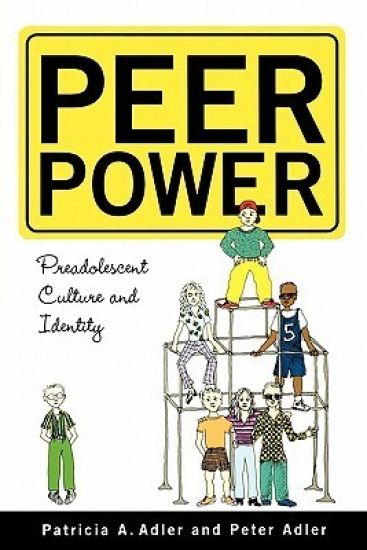
Peer Power seeks to explode existing myths about children's friendships, power and popularity, and the gender chasm between elementary school boys and girls. Based on eight years of intensive insider participant observation in their own children's community, Peter and Patti Adler discuss the vital components of the lives of preadolescents, popularity, friendships, cliques, social status, social isolation, loyalty, bullying, boy-girl relationships, and afterschool activities. They describe how friendships shift and change, how people are drawn into groups and excluded from them, how clique leaders maintain their power and popularity, and how individuals' social experiences and feelings about themselves differ from the top of the pecking order to the bottom. In so doing, the Adlers focus their attention on the peer culture of the children themselves and the way this culture extracts and modifies elements from adult culture. Children's peer culture, as it is nourished in those spaces where grown ups cannot penetrate, stands between individual children and the larger adult society. As such, it is a mediator and shaper, influencing the way children collectively interpret their surroundings and deal with the common problems they face. The Adlers explore some of the patterns that develop in this social space, noting both the differences in boys' and girls' gendered cultures and the overlap in many social dynamics, afterschool activities, role behaviour, romantic inclinations and social stratification. For example, children's participation in adult-organized afterschool activities - a now-prominent feature of many American children's social experience - has profound implications for their socialization and development, moving them away from the negotiated, spontaneous character of play into the formal systems of adult norms and values at ever-younger ages. When they retreat from adults, however, they still display distinctive peer group dynamics, forging strong ingroup/outgroup differentiation, loyalty and identification. Peer culture thus contains informal social mechanisms through which children create their social order, determine their place and identity, and develop positive and negative feelings about themselves. Studying children's peer culture is thus valuable as it reveals not only how this subculture parallels the adult world but also how it differs from it.
A collection of accounts of native American life by twenty-two acclaimed native American writers features tales, remembrances, and thoughts on the future
In Loving Jesus: A 30 Day Devotional, you will be uplifted, inspired, and challenged in your walk with God. We all go through hard times in this life. But, it is in those hard times that we find out where our faith really lies. When we get to the end of ourselves, we discover who Jesus really is. These poems about faith in God come from Patricia's own walk with Jesus. Loving Jesus above things is not always easy in this crazy world. However, you will find inspirational poems and encouragement for everyone no matter what you are going through. "Writing is a way for me to communicate with God. I can just stop for a bit and listen to Him do the talking. I always wanted to do something with my poetry. This devotional book is my prayers and praises to God." Included in this book: 30 Daily DevotionsEach day's devotion addresses a different theme such as fear, faith, or God's purpose.You will be inspired, encouraged, and challenged every day by: Daily ScripturesUplifting Original poems about faith in GodThought-provoking Devotional WritingsPersonal Prayers.Would you like to strengthen your relationship with Jesus? Then take time to be with Him and let this heart-felt devotional be your guide.
Special Edition - Patricia and A long Way from Home. Can a brave bride find evidence of a terrible crime and prevent her marriage to an evil man?In this book, based on a true story, Patricia Smith is the last of her sisters to be married. She is on the hunt for incriminating evidence to make sure that the dastardly Tommy Oliver, son of the Mayor, doesn't gets away with murder.Tommy and his buddies have been robbing stagecoaches for years. They even killed a woman and her child, but no one can prove they did it. Patricia thinks her mother's necklace would be key evidence, after all, one of Tommy's accomplices stole it from them. Investigating is a dangerous business, and Pastor Dale has no desire for Patricia to put herself in harm's way. Afterall, Tommy still thinks he's going to marry her.When Patricia snoops too far and puts herself in harm's way, can Dale figure out where Tommy's taken her? And more importantly, can he get there in time to stop a marriage of an innocent woman to one of the most heinous men in Chinle? A Long Way from Home - Famine has hit a small Japanese village and five sisters wonder how they will survive the winter. One sister takes a brave step to help them by becoming a mail order bride. Can she survive this terrible journey? Will she find love and a new life in this strange new world? If nothing else, she decides that with her gone the burden on her sisters will be reduced. Victor wants a bride to cure his loneliness. To build a future with and to share all that he has. When this couple meet, pride and a lack of understanding threaten to destroy their love. Can they overcome their problems with faith and find true love?
From wondrous fairy-lands to nightmarish hellscapes, the elements that make fantasy worlds come alive also invite their exploration. This first book-length study of critically acclaimed novelist Patricia A. McKillip's lyrical other-worlds analyzes her characters, environments and legends and their interplay with genre expectations. The author gives long overdue critical attention to McKillip's work and demonstrates how a broader understanding of world-building enables a deeper appreciation of her fantasies.
World Fantasy Award winner Patricia A. McKillip (The Forgotten Beasts of Eld) has inspired generations of readers with her enchanting, and subversive fiction. This lovely hardcover career-retrospective edition offers McKillip's finest short stories. Featuring an original introduction by Ellen Kushner (Swordspoint) and cover art from frequent McKillip illustrator Thomas Canty, The Essential Patricia A. McKillip is a must-have for fans of classic fantasy. Patricia A. McKillip has been widely hailed as one of fantasy's most significant authors. She was lauded as "rich and regal" (the New York Times), "enchanting" (the Washington Post), and "luminous" (Library Journal). Within McKillip's magical landscapes, a mermaid statue comes to life; princesses dance with dead suitors; a painting and a muse possess a youthful artist; seductive sea travelers enrapture distant lovers; a time-traveling angel endures religious madness; and an overachieving teenage mage discovers her own true name.
Grab This Deal For The Comics Artist In Your Life For Less Than $10See that girl always doodling and dreaming up stories and plots? She's gonna LOVE the What Happens Next Comic Book For Budding Artists edition, created especially for young artists between 9 and 14 years of age.Bokkaku Dojinshi has created this book as a 6 by 9 inch, perfect pocket book form. Plenty of different templates to explore as well as loads of room to keep track of plot ideas.There is even space for special expression studies of the main characters so the budding artist hits the right emotion in her images every single time.This book is perfect for: mangagraphic novelsSunday funniesanimefan fictionParents and teachers love What Happens Next Comics series for these reasons: helps speech developmentincreases literacydevelops a sense of sequencecreates confidencedevelops an appreciation for artboots creativityOnce you get this book, notice how handy it is - perfect pocket book size means no bulky bags on summer trips or lazy afternoons under a willow tree. All you need is your pencil and ink pen Can't wait to see what you make of your And then... comic book