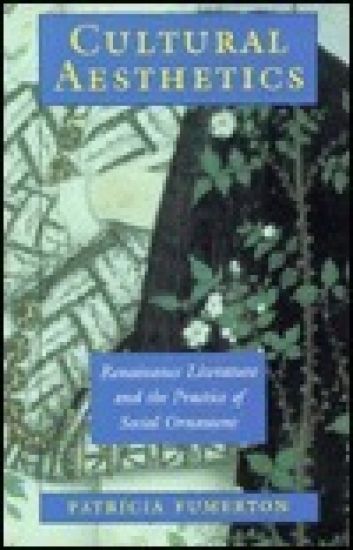
A brilliant postmodern critique of Renaissance subjectivity, Cultural Aesthetics explores the simultaneous formation and fragmentation of aristocratic "selfhood" in the late sixteenth and early seventeenth centuries. Patricia Fumerton situates the self within its sumptuous array of "trivial" arts—including the court literatures of chivalric romance, sonnet, and masque and the arts of architecture, miniature painting, stage design, and cuisine. Her integration of historicist and aesthetic perspectives makes this a provocative contribution to the vigorous field of Renaissance cultural studies.
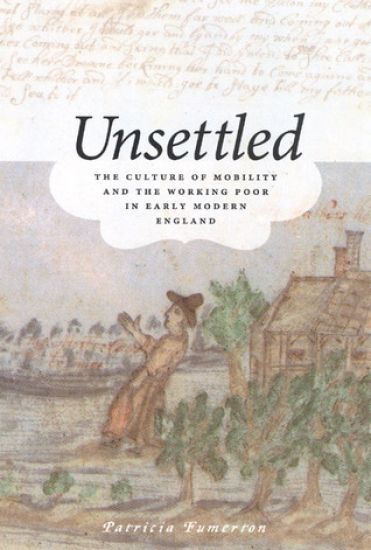
Poor migrants made up a growing class of workers in late sixteenth- and seventeenth-century England. By 1650, half of England's rural population consisted of homeless and itinerant laborers. "Unsettled" is an ambitious attempt to reconstruct the everyday lives of these dispossessed people. Patricia Fumerton offers a portrait of unsettledness in early modern England that includes the homeless and housed alike. Fumerton begins by building on recent studies of vagrancy, poverty, and servants, placing all in the light of a new domestic economy of mobility. She then looks at representations of the vagrant in a variety of pamphlets and literary works of the period. Since seamen were a particularly large and prominent class of mobile wage-laborers in the seventeenth century, Fumerton turns to seamen generally and to an individual poor seaman as a case study of the unsettled subject: Edward Barlow (b. 1642) provides a rare opportunity to see how the laboring poor fashioned themselves because he authored a journal of over 225,000 words and 147 pages of drawings. Barlow's journal, studied extensively here for the first time, vividly charts what he himself termed his "unsettled mind" and the perpetual anxieties of England's working and wayfaring poor.
Poor migrants made up a growing class of workers in late sixteenth- and seventeenth-century England. By 1650, half of England's rural population consisted of homeless and itinerant laborers. "Unsettled" is an ambitious attempt to reconstruct the everyday lives of these dispossessed people. Patricia Fumerton offers a portrait of unsettledness in early modern England that includes the homeless and housed alike. Fumerton begins by building on recent studies of vagrancy, poverty, and servants, placing all in the light of a new domestic economy of mobility. She then looks at representations of the vagrant in a variety of pamphlets and literary works of the period. Since seamen were a particularly large and prominent class of mobile wage-laborers in the seventeenth century, Fumerton turns to seamen generally and to an individual poor seaman as a case study of the unsettled subject: Edward Barlow (b. 1642) provides a rare opportunity to see how the laboring poor fashioned themselves because he authored a journal of over 225,000 words and 147 pages of drawings. Barlow's journal, studied extensively here for the first time, vividly charts what he himself termed his "unsettled mind" and the perpetual anxieties of England's working and wayfaring poor.
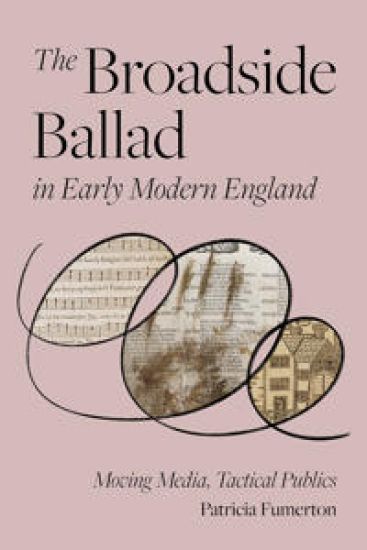
A comprehensive presentation and examination of a popular seventeenth-century genre: the English broadside ballad In its seventeenth-century heyday, the English broadside ballad was a single large sheet of paper printed on one side with multiple woodcut illustrations, a popular tune title, and a poem. Inexpensive, ubiquitous, and fugitive—individual elements migrated freely from one broadside to another—some 11,000 to 12,000 of these artifacts pre-1701 survive, though many others have undoubtedly been lost. Since 2003, Patricia Fumerton and a team of associates at the University of California, Santa Barbara have been finding, digitizing, cataloging, and recording these materials to create the English Broadside Ballad Archive. In this magisterial and long-awaited volume, Fumerton presents a rich display of the fruits of this work. She tracks the fragmentary assembling and disassembling of two unique extant editions of one broadside ballad and examines the loose network of seventeenth-century ballad collectors who archived what were essentially ephemeral productions. She pays particular attention to Samuel Pepys, who collected and bound into five volumes more than 1,800 ballads, and whose preoccupations with black-letter print, gender, and politics are reflected in and extend beyond his collecting practices. Offering an extensive and expansive reading of an extremely popular and sensational ballad that was printed at least 37 times before 1701, Fumerton highlights the ballad genre's ability to move audiences across time and space. In a concluding chapter, she looks to Shakespeare's The Winter's Tale to analyze the performative potential ballads have in comparison with staged drama. A broadside ballad cannot be "read" without reading it in relation to its images and its tune, Fumerton argues. To that end, The Broadside Ballad in Early Modern England features more than 80 illustrations and directs its readers to a specially constructed online archive where they can easily access 48 audio files of ballad music.
A comprehensive presentation and examination of a popular seventeenth-century genre: the English broadside ballad In its seventeenth-century heyday, the English broadside ballad was a single large sheet of paper printed on one side with multiple woodcut illustrations, a popular tune title, and a poem. Inexpensive, ubiquitous, and fugitive—individual elements migrated freely from one broadside to another—some 11,000 to 12,000 of these artifacts pre-1701 survive, though many others have undoubtedly been lost. Since 2003, Patricia Fumerton and a team of associates at the University of California, Santa Barbara have been finding, digitizing, cataloging, and recording these materials to create the English Broadside Ballad Archive. In this magisterial and long-awaited volume, Fumerton presents a rich display of the fruits of this work. She tracks the fragmentary assembling and disassembling of two unique extant editions of one broadside ballad and examines the loose network of seventeenth-century ballad collectors who archived what were essentially ephemeral productions. She pays particular attention to Samuel Pepys, who collected and bound into five volumes more than 1,800 ballads, and whose preoccupations with black-letter print, gender, and politics are reflected in and extend beyond his collecting practices. Offering an extensive and expansive reading of an extremely popular and sensational ballad that was printed at least 37 times before 1701, Fumerton highlights the ballad genre's ability to move audiences across time and space. In a concluding chapter, she looks to Shakespeare's The Winter's Tale to analyze the performative potential ballads have in comparison with staged drama. A broadside ballad cannot be "read" without reading it in relation to its images and its tune, Fumerton argues. To that end, The Broadside Ballad in Early Modern England features more than 80 illustrations and directs its readers to a specially constructed online archive where they can easily access 48 audio files of ballad music.
Have you ever wanted to say something but not had the words to say exactly what you wanted to say? Has God touched your life in a special way but nothing you say expresses the joy you feel? Do you sometimes want to tell that special someone how deep your feelings are for them but you trip over you tongue when speaking? or have you been deep in anger and just wanted to tell that somebody off? This collection of poems can do just that. Whether praising God, expressing love or just telling the World how you feel, "Patricia An Anthology of Poems, Thoughts and Letters" has something for every reader. "Patricia Anthology of Poems, Thoughts and Letters" speaks to the heart and soul of every man, woman and child.
"Patricia," by Emilia Elliott, is a heartwarming exploration of girlhood and the joys and challenges of growing up. This classic work of juvenile fiction delves into the everyday experiences of girls, examining themes of friendship, family life, and self-discovery. As a coming-of-age story, it offers a glimpse into the lives and concerns of young women navigating their place in the world. With its focus on relatable characters and universal themes, "Patricia" resonates as a timeless portrayal of youth. This meticulously prepared print edition allows readers to rediscover this charming story of girls and their journey toward womanhood.This work has been selected by scholars as being culturally important, and is part of the knowledge base of civilization as we know it.This work is in the public domain in the United States of America, and possibly other nations. Within the United States, you may freely copy and distribute this work, as no entity (individual or corporate) has a copyright on the body of the work.Scholars believe, and we concur, that this work is important enough to be preserved, reproduced, and made generally available to the public. We appreciate your support of the preservation process, and thank you for being an important part of keeping this knowledge alive and relevant.
A short story in the tradition of the Victorian Gothic - Christmas Ghost Story /Winter Tale... An eerie silence filled the air as she stood there motionless, frozen in a dark time, staring blankly into the foggy abyss. Tears stained her pale face with sadness, revenge frozen on her icy lips. Unfettered by the curse of time, she stands a silent sentinel over the grave of her beloved...
"Patricia" by Emilya Jacobs is a poignant exploration of self-discovery and personal growth. The novel follows "Patricia" as she navigates complex relationships and family dynamics, all while, embarking on an emotional journey of healing and resilience.The story delves into Patricia's struggles with love and loss, highlighting how these experiences shape her identity and influence her life choices. As she faces challenges and confronts her past, Patricia learns valuable lessons about herself and those around her. The novel portrays her quest for understanding and acceptance, both from others and herself.Through her experiences, Patricia evolves, discovering inner strength and finding new paths to happiness. The themes of romance and emotional healing are woven throughout, creating a narrative that is both touching and relatable. Jacobs uses Patricia's journey to explore broader themes of resilience and the transformative power of love and self-acceptance. As Patricia develops a clearer understanding of herself, she also reassesses her relationships, leading to changes in how she interacts with others and prioritizes her own needs. The novel highlights the dynamic interplay between self-discovery and relationships, showing how the two are intertwined and how one often drives the other.
Two great Patricia Cornwell audio titles for the price of one. All that Remains and Cruel and Unusual. All that Remains: A serial killer is loose in Richmond, specializing in attractive young couples whose bodies are invariably found in the woods months later -- minus their shoes and socks. Chief Medical Officer Dr. Kay Scarpetta finds herself tracking a killer who scrupulously eliminates every clue, rendering all her forensic skills useless. This time it's her courage and intuition on the line in a race against time. Cruel and Unusual: When convicted killer Ronnie Joe Waddell is executed in Virginia's electric chair, he becomes what should be a routine case for Chief Medical Examiner Kay Scarpetta. But after Waddell's execution, everyone connected to him begins to die - including a member of Scarpetta's staff. When crucial records disappear from her files, Scarpetta comes under fire for incomeptence. Caught in a web of political intrigue, she must fight to free herself from murderous insinuations and threats to her own life. She soon finds herself retracing Waddell's bloody footprints, following a trail that might lead to long-hidden secrets deep within the state government. Either the truth will set her free - or unleash upon her a punishment both cruel and unusual.
Whether it's a bustling eatery in the heart of Florence or a tiny alcove tucked away on a side street in Venice, the trattoria is where Italians go for robust flavors, great friendship, and good times. Patricia Wells' Trattoria now feeds America's passion for Italian food with 150 authentic recipes. Savor a Fresh Artichoke Omelet, succulent Lamb Braised in White Wine, Garlic, and Hot Peppers, a hearty portion of Lasagne with Basil, Garlic, and Tomato Sauce, or a luscious Fragrant Orange and Lemon Cake, and much more. This essential cookbook of Italian trattorias presents a full range of homemade recipes for antipasti, soups, dried and fresh pastas, polenta, seafood, poultry, and meat, with special chapters on breads, pizzas, and desserts. Come explore the heart and soul of Italian cooking in Patricia Wells' Trattoria.