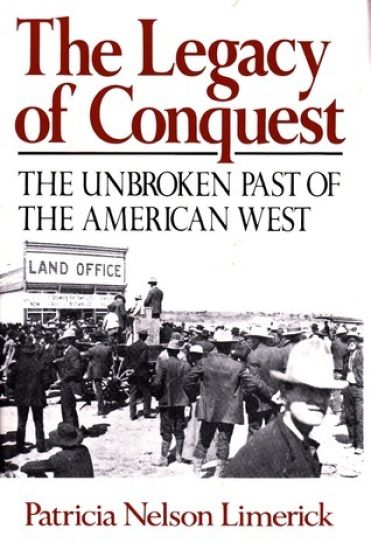
The "settling" of the American West has been perceived throughout the world as a series of quaint, violent, and romantic adventures. But in fact, Patricia Nelson Limerick argues, the West has a history grounded primarily in economic reality; in hardheaded questions of profit, loss, competition, and consolidation. Here she interprets the stories and the characters in a new way: the trappers, traders, Indians, farmers, oilmen, cowboys, and sheriffs of the Old West "meant business" in more ways than one, and their descendents mean business today.
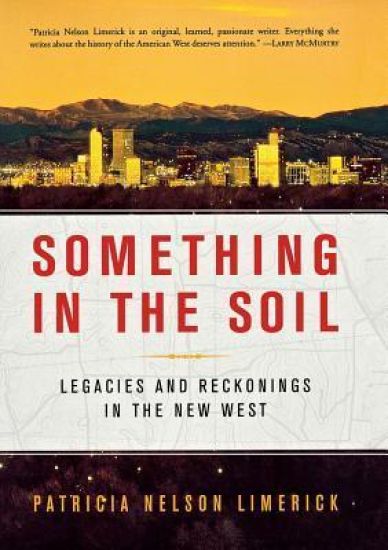
In Something in the Soil, Patricia Nelson Limerick travels far outside the usual academic circles to bring Western past and Western present into a spirited union. Whether her topic is the rapid growth in the West today, the patent awfulness of most academic writing, or struggles over the standing of the "Great White Men" of the region’s past, Limerick operates on the principle that history is an active presence in the West, layers of collective memory that are, quite literally, "something in the soil." Enlightening and always witty, this wide-ranging collection of essays and arguments from the New West’s landmark historian offers an artful journey into its dramatic past and contentious present.
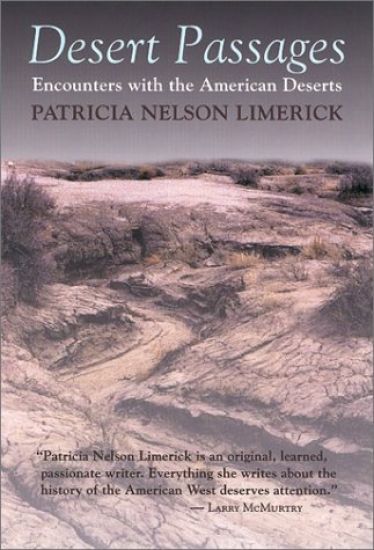
This lively book traces the development of American attitudes toward the desert using case studies from the writings of John C Fr+(c)mont, William Lewis Manly, Mark Twain, William Ellsworth Smythe, John Van Dyke, George Wharton James, Joseph Wood Krutch, and Edward Abbey.
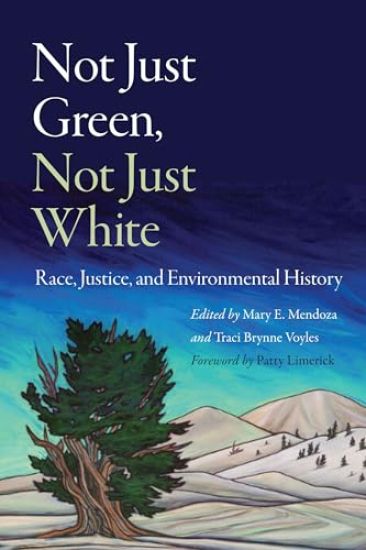
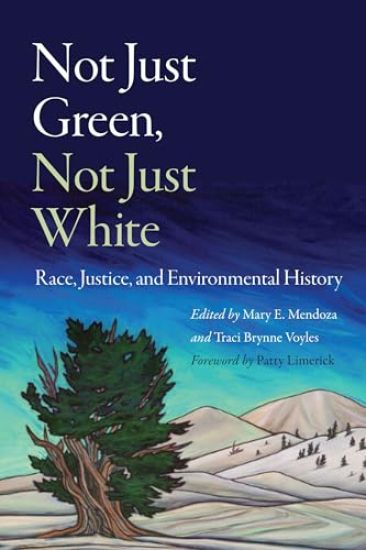
Not Just Green, Not Just White brings together a group of diverse contributors to explore the rich intersections between race and environment. Together these contributors demonstrate that the field of environmental history, with its core questions and critical engagement with the nonhuman world, provides a fertile context for understanding racism and ongoing colonialism as power structures in the United States. Earlier historiography has defined environmental history as the study of the changing relationships between humans and the environment-or nature. This volume aims to redefine the field, arguing that neither humans nor environment is a monolithic actor in any given story. Both humans and the environment are diverse, and often the environment causes conflict between and among peoples, leaving unequal access and power in its wake. Just as important, these histories often reveal how, despite unequal power, those who carry less privilege still persist. Together these essays demonstrate the promise of the field of environmental history and reveal how, when practitioners in the field decide to move away from “green” and “white” topics, they will be able to explain much more about our collective past than anyone ever imagined.
Not Just Green, Not Just White brings together a group of diverse contributors to explore the rich intersections between race and environment. Together these contributors demonstrate that the field of environmental history, with its core questions and critical engagement with the nonhuman world, provides a fertile context for understanding racism and ongoing colonialism as power structures in the United States. Earlier historiography has defined environmental history as the study of the changing relationships between humans and the environment-or nature. This volume aims to redefine the field, arguing that neither humans nor environment is a monolithic actor in any given story. Both humans and the environment are diverse, and often the environment causes conflict between and among peoples, leaving unequal access and power in its wake. Just as important, these histories often reveal how, despite unequal power, those who carry less privilege still persist. Together these essays demonstrate the promise of the field of environmental history and reveal how, when practitioners in the field decide to move away from “green” and “white” topics, they will be able to explain much more about our collective past than anyone ever imagined.
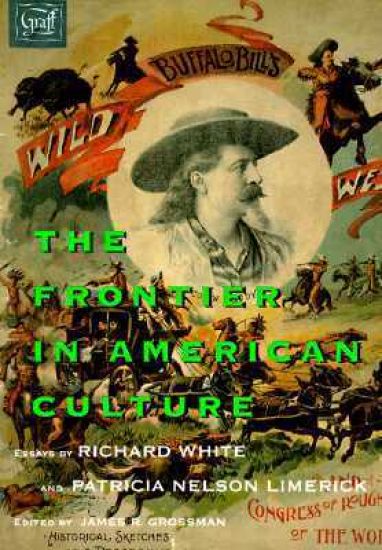
Log cabins and wagon trains, cowboys and Indians, Buffalo Bill and General Custer. These and other frontier images pervade our lives, from fiction to films to advertising, where they attach themselves to products from pancake syrup to cologne, blue jeans to banks. Richard White and Patricia Limerick join their inimitable talents to explore our national preoccupation with this uniquely American image. Richard White examines the two most enduring stories of the frontier, both told in Chicago in 1893, the year of the Columbian Exposition. One was Frederick Jackson Turner's remarkably influential lecture, "The Significance of the Frontier in American History"; the other took place in William 'Buffalo Bill' Cody's flamboyant extravaganza, "The Wild West". Turner recounted the peaceful settlement of an empty continent, a tale that placed Indians at the margins. Cody's story put Indians - and bloody battles - at center stage, and culminated with the Battle of the Little Bighorn, popularly known as 'Custer's Last Stand'. Seemingly contradictory, these two stories together reveal a complicated national identity. Patricia Limerick shows how the stories took on a life of their own in the twentieth century and were then reshaped by additional voices - those of Indians, Mexicans, African-Americans, and others, whose versions revisit the question of what it means to be an American. Generously illustrated, engagingly written, and peopled with such unforgettable characters as Sitting Bull, Captain Jack Crawford, and Annie Oakley, "The Frontier in American Culture" reminds us that despite the divisions and denials the western movement sparked, the image of the frontier unites us in surprising ways.
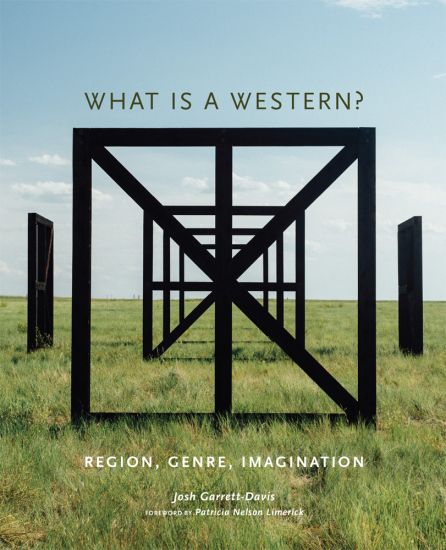
There's "western", and then there's "Western" - and where history becomes myth is an evocative question, one of several questions posed by Josh Garrett-Davis in What Is a Western? Region, Genre, Imagination. Part cultural criticism, part history, and wholly entertaining, this series of essays on specific films, books, music, and other cultural texts brings a fresh perspective to long-studied topics. Under Garrett-Davis's careful observation, cultural objects such as films and literature, art and artifacts, and icons and oddities occupy the terrain of where the West as region meets the Western genre. One crucial through line in the collection is the relationship of regional "western" works to genre "Western" works, and the ways those two categories cannot be cleanly distinguished - most work about the West is tinted by the Western genre, and Westerns depend on the region for their status and power. Garrett-Davis also seeks to answer the question "What is a Western now?" To do so, he brings the Western into dialogue with other frameworks of the "imagined West" such as Indigenous perspectives, the borderlands, and environmental thinking. The book's mosaic of subject matter includes new perspectives on the classic musical film Oklahoma!, a consideration of Native activism at Standing Rock, and surprises like Pee-wee's Big Adventure and Dr. Seuss's The Lorax. The book is influenced by the borderlands theory of Gloria Anzaldúa and the work of the indie rock band Calexico, as well as the author's own discipline of western cultural history. Richly illustrated, primarily from the collection of the Autry Museum of the American West, Josh Garrett-Davis's work is as visually interesting as it is enlightening, asking readers to consider the American West in new ways.
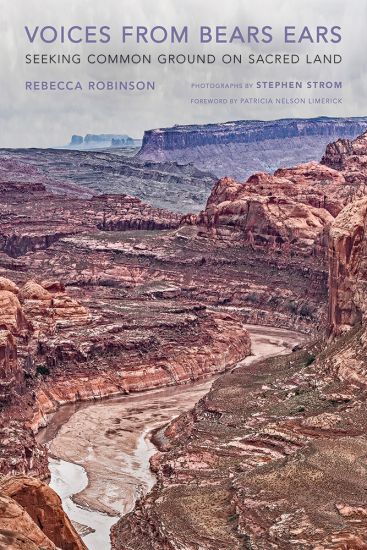
In late 2016, President Barack Obama designated 1.35 million acres of public lands in southeastern Utah as Bears Ears National Monument. On December 4, 2017, President Donald Trump shrank the monument by 85 percent. A land rich in human history and unsurpassed in natural beauty, Bears Ears is at the heart of a national debate over the future of public lands. Through the stories of twenty individuals, and informed by interviews with more than seventy people, Voices from Bears Ears captures the passions of those who fought to protect Bears Ears and those who opposed the monument as a federal ""land grab"" that threatened to rob them of their economic future. It gives voice to those who have felt silenced, ignored, or disrespected. It shares stories of those who celebrate a growing movement by Indigenous peoples to protect ancestral lands and culture, and those who speak devotedly about their Mormon heritage. What unites these individuals is a reverence for a homeland that defines their cultural and spiritual identity, and therein lies hope for finding common ground. Journalist Rebecca Robinson provides context and perspective for understanding the ongoing debate and humanizes the abstract issues at the center of the debate. Interwoven with these stories are photographs of the interviewees and the land they consider sacred by photographer Stephen E. Strom. Through word and image, Robinson and Strom allow us to both hear and see the people whose lives are intertwined with this special place.
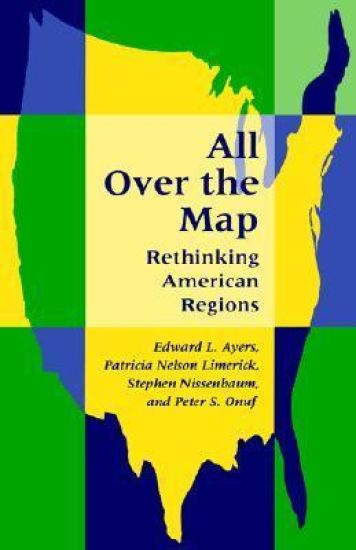
Even as Americans keep moving "all over the map" in the late twentieth century, they cherish memories of the places they come from. But where do these places-these regions-come from? What makes them so real? In this groundbreaking book a distinguished group of historians explores the concept of region in America, traces changes the idea has undergone in our national experience, and examines its meaning for Americans today. Far from diminishing in importance, the authors conclude, regional differences continue to play a significant role in Americans' self-image. Regional identity, in fact, has always been fed by the very forces that many people think threaten its existence today: a central government, an aggressive economy, and connections with places beyond regional boundaries. Calling into question widely held notions about how Americans came to differ from one another and explaining why those differences continue to flourish, this iconoclastic study-by scholars with differing regional ties-will refresh and redirect the centuries-old discussion over Americans' conceptions of themselves.
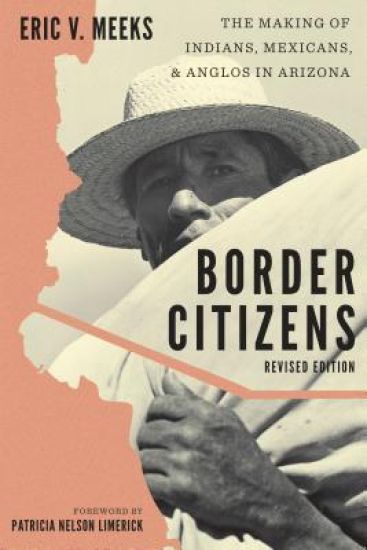
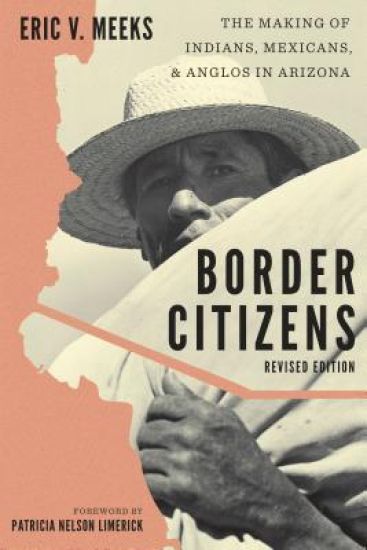
In Border Citizens, historian Eric V. Meeks explores how the racial classification and identities of the diverse indigenous, mestizo, and Euro-American residents of Arizona’s borderlands evolved as the region was politically and economically incorporated into the United States. First published in 2007, the book examines the complex relationship between racial subordination and resistance over the course of a century. On the one hand, Meeks links the construction of multiple racial categories to the process of nation-state building and capitalist integration. On the other, he explores how the region’s diverse communities altered the blueprint drawn up by government officials and members of the Anglo majority for their assimilation or exclusion while redefining citizenship and national belonging.The revised edition of this highly praised and influential study features dozens of new images, an introductory essay by historian Patricia Nelson Limerick, and a chapter-length afterword by the author. In his afterword, Meeks details and contextualizes Arizona’s aggressive response to undocumented immigration and ethnic studies in the decade after Border Citizens was first published, demonstrating that the broad-based movement against these measures had ramifications well beyond Arizona. He also revisits the Yaqui and Tohono O’odham nations on both sides of the Sonora-Arizona border, focusing on their efforts to retain, extend, and enrich their connections to one another in the face of increasingly stringent border enforcement.
In Border Citizens, historian Eric V. Meeks explores how the racial classification and identities of the diverse indigenous, mestizo, and Euro-American residents of Arizona’s borderlands evolved as the region was politically and economically incorporated into the United States. First published in 2007, the book examines the complex relationship between racial subordination and resistance over the course of a century. On the one hand, Meeks links the construction of multiple racial categories to the process of nation-state building and capitalist integration. On the other, he explores how the region’s diverse communities altered the blueprint drawn up by government officials and members of the Anglo majority for their assimilation or exclusion while redefining citizenship and national belonging.The revised edition of this highly praised and influential study features dozens of new images, an introductory essay by historian Patricia Nelson Limerick, and a chapter-length afterword by the author. In his afterword, Meeks details and contextualizes Arizona’s aggressive response to undocumented immigration and ethnic studies in the decade after Border Citizens was first published, demonstrating that the broad-based movement against these measures had ramifications well beyond Arizona. He also revisits the Yaqui and Tohono O’odham nations on both sides of the Sonora-Arizona border, focusing on their efforts to retain, extend, and enrich their connections to one another in the face of increasingly stringent border enforcement.
Designed for teachers and students of the United States history survey course who prefer a larger measure of social history content, along with all the vital materials in political, diplomatic, legal, and economic history. This four-color text is written by four major American historians. Its dramatic, clear prose, aimed at beginning college students, tells the nation's story in a way they will both feel and reflect on. It is a full length, standard-sized textbook that provides a coherent narrative rich in relating history, accomplishing its goals in slightly under a thousand pages of highly readable text, not including the appendices and comprehensive index. Accompanied by abundant ancillary materials: maps, charts, tables, and separate student workbook.
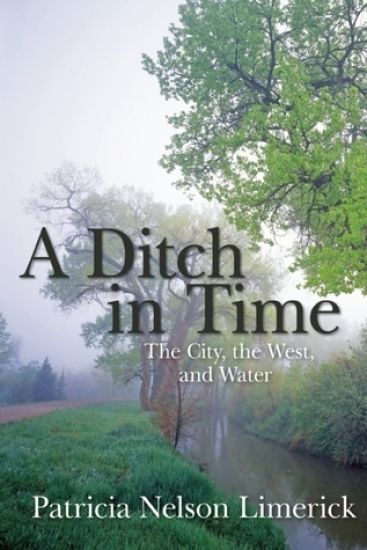
The history of water development ...offers a particularly fine post for observing the astonishing and implausible workings of historical change and, in response, for cultivating an appropriate level of humility and modesty in our anticipations of our own unknowable future. Tracing the origins and growth of the Denver Water Department, this study of water and its unique role and history in the West, as well as in the nation, raises questions about the complex relationship among cities, suburbs, and rural areas, allowing us to consider this precious resource and its past, present, and future with both optimism and realism. Patricia Nelson Limerick is the faculty director and board chair of the Center of the American West at the University of Colorado, where she is also a professor of history and environmental studies. She currently serves as the vice president for the teaching division of the American Historical Association. Her most widely read book, The Legacy of Conquest, is in its twenty-fifth year of publication. Jason L.Hanson is a member of the research faculty at the Center of the American West at the University of Colorado at Boulder, where his work focuses on natural resource use and the environment. He lives in Denver.
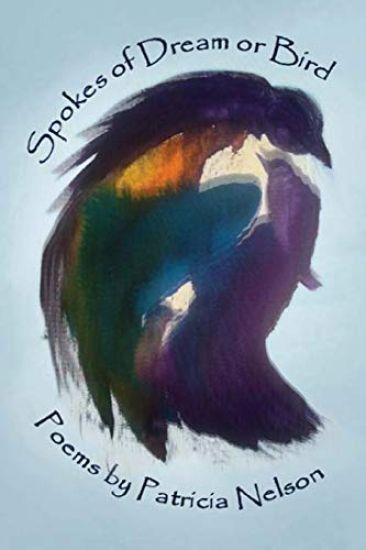
Poetry. "In Patricia Nelson's poems, language is a vessel--sometimes a jeweled container to catch the ineffable, to harness or restrain its power like a djinni; sometimes a boat on the vast sea-surface, catching the winds of exhilarated flight or foundering in storms. This is the vessel with which the poet sets out, and we, her readers, are along for the journey. Through ancient Celtic forests, Dante's landscape of the damned, and the garden of wordless, singing light from which our consciousness exiles us, Nelson's poems offer a riddling map home--a way to reach one another, to counter the loneliness of our human being."--Terry Ehret
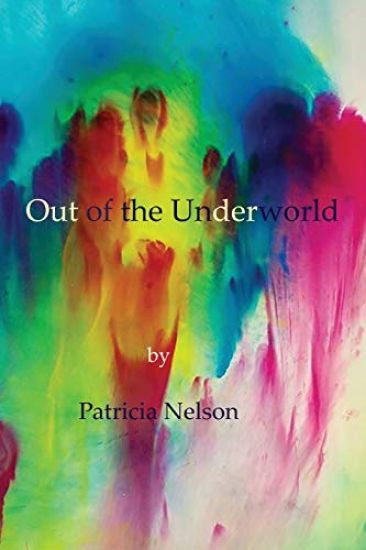
With the poems of Out of the Underworld, Patricia Nelson transports her readers through many realms, from the myths of ancient Greece to tales told by the Tarot. Nelson deftly employs lyric language and assumes personas that immerse us in the "weighted land of words." Invoking disparate voices, ranging from Dante to e e cummings, Nelson is our steady guide out of the underworld.--Jodi Hottel, author of VoyeurFor all her precision and her perfect ear, the paradox of Patricia Nelson's poems is in not knowing exactly what they're about--except that, some¬how, you also do know. You feel what you know about them in a space beyond language, or perhaps just beneath it--exactly, pleasurably, and perfectly. --Meg Scott Copses, Editor, Illuminations.
Affirmative Action Law: An Introduction (Charles V. Dale); Affirmative Action Revisited: A Legal History and Prospectus (Charles V. Dale); The Supreme Court Decision in Adarand Constructors Inc. v. Pena; Disadvantaged Business Enterprises (Charles V. Dale); Small Disadvantaged Business Programs of the Federal Government (Mark Eddy); Higher Education and Affirmative Action; Recent Developments (Steven R. Aleman); Affirmative Action in Washington State: A Discussion and Analysis of Initiative 200 (Andorra Bruno); The Equal Rights Amendment: A Chronology (Leslie W. Gladstone); Affirmative Action and Diversity in Public Education -- Legal Developments (Charles V. Dale); Sex Discrimination and the United States Supreme Court: Recent Developments in the Law (Karen J. Lewis); Affirmative Action: Congressional and Presidential Activity, 1995-1998 (Andorra Bruno)