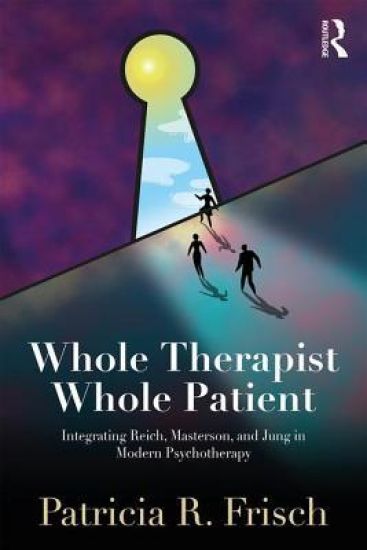
Integrating the work of Reich, Masterson, and Jung, Whole Therapist, Whole Patient is a step-by-step guidebook for professionals to learn about the psychology of their patients and conduct treatment in a dynamic way. This text combines Reich’s character analyses, Masterson’s work on personality disorders, and Jung’s dream analyses to create a clear typology of character types that therapists can use to understand themselves and their patients. Also included are case management techniques and guidance for working with difficult patients. In addition, readers can turn to the book’s online resources to access a downloadable patient package, case presentation guide, and psychological history form.
Integrating the work of Reich, Masterson, and Jung, Whole Therapist, Whole Patient is a step-by-step guidebook for professionals to learn about the psychology of their patients and conduct treatment in a dynamic way. This text combines Reich’s character analyses, Masterson’s work on personality disorders, and Jung’s dream analyses to create a clear typology of character types that therapists can use to understand themselves and their patients. Also included are case management techniques and guidance for working with difficult patients. In addition, readers can turn to the book’s online resources to access a downloadable patient package, case presentation guide, and psychological history form.
Enjoy your kids more and stress less Brain Stages is the ultimate leg up for parents and caregivers in today's complicated, competitive world. A grade-by-grade guide through the formative elementary school years, this book will show you how to have fun with your kids as you help them grow into successful, well-adjusted humans. Drawing from thousands of hours of brain research and decades of childhood education experience, Patricia Wilkinson and Jacqueline Frischknecht offer real-life tools and advice that will boost your child's brainpower, social skills, and love for learning. In Brain Stages, you'll discover: How brains develop and what you can do to help your child succeed The best form of praise that builds confidence and self-esteem Surefire ways to help a struggling child get caught up in math or reading How to get your gifted child's needs met Ideas for helping an anxious child relax for better learning Tips for teaching kids the art of building healthy relationships Over 150 fun games and activities to engage and nurture young minds Whether you have a child who has fallen behind, an extra smart kid you want to keep intrigued, or a grade-schooler who could use some help getting along with others, Brain Stages will give you the information and support you need to be an effective parent and enjoy your child-raising journey.
From award-winning writer, Patricia W. Fischer, Amazed By You is Book #4 of the Tuscany Texas series featuring youngest brother, Joseph Davis and a newcomer, Stephanie Stratford. Responsible Joseph Davis just got dumped...at the altar. With his heart shattered, he decides the best way to heal is a one night stand and the cute brunette he just befriended will do just fine. Especially, when she offers him a deal he can't refuse. One night. Just sex. No names. Against his good-guy nature, he agrees except something about her makes him realize, they've met before. As a pregnant teen, Stephane Stratford stayed in the Pathways Foster Home and gave her daughter up for adoption. During her time there, she had a brief conversation with a young chestnut haired hunk with the cute dimples. He treated her with such kindness, she's always compared every other suitor against him and all have failed miserably to measure up. When she unexpectedly has to return to Tuscany to care for her now, teenage daughter, Stephanie wants one last fling before having to take on the permanent role of mother. This hot cowboy couldn't be a better choice, but their rendez-vous ends too quickly and when they say their good-byes, Stephanie is confident she'll never see him again...until she finds him standing in her sister's kitchen. Joseph can't believe it. The beautiful brunette that's given him more erotic dreams than he cares to admit, is related to a long-time friend. As drawn as he is to her, does he take a chance in trying romance again? With their attraction growing, Stephanie finally realizes that cute boy with dimples from long ago has grown to be one amazing looking man and the keeper of her biggest secret. Should she admit it all and face the fallout? Risk losing the only things she holds dear? Can Joseph work through his broken-heart and learn to trust again? Things are about to get hotter in Tuscany.
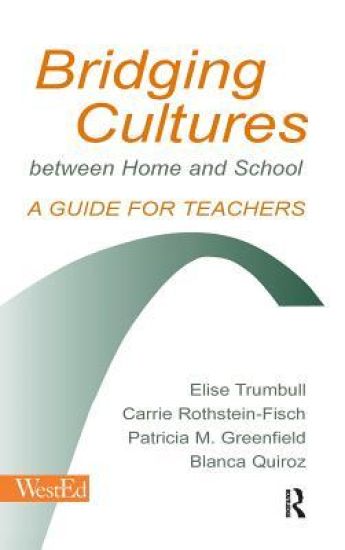
Bridging Cultures Between Home and School: A Guide for Teachers is intended to stimulate broad thinking about how to meet the challenges of education in a pluralistic society. It is a powerful resource for in-service and preservice multicultural education and professional development. The Guide presents a framework for understanding differences and conflicts that arise in situations where school culture is more individualistic than the value system of the home. It shares what researchers and teachers of the Bridging Cultures Project have learned from the experimentation of teacher-researchers in their own classrooms of largely immigrant Latino students and explores other research on promoting improved home-school relationships across cultures. The framework leads to specific suggestions for supporting teachers to cross-cultural communication; organization parent-teacher conferences that work; use strategies that increase parent involvement in schooling; increase their skills as researchers; and employ ethnographic techniques to learn about home cultures. Although the research underlying the Bridging Cultures Project and this Guide focuses on immigrant Latino families, since this is the primary population with which the framework was originally used, it is a potent tool for learning about other cultures as well because many face similar discrepancies between their own more collectivistic approaches to childrearing and schooling and the more individualistic approach of the dominant culture.
Bridging Cultures Between Home and School: A Guide for Teachers is intended to stimulate broad thinking about how to meet the challenges of education in a pluralistic society. It is a powerful resource for in-service and preservice multicultural education and professional development. The Guide presents a framework for understanding differences and conflicts that arise in situations where school culture is more individualistic than the value system of the home. It shares what researchers and teachers of the Bridging Cultures Project have learned from the experimentation of teacher-researchers in their own classrooms of largely immigrant Latino students and explores other research on promoting improved home-school relationships across cultures. The framework leads to specific suggestions for supporting teachers to cross-cultural communication; organization parent-teacher conferences that work; use strategies that increase parent involvement in schooling; increase their skills as researchers; and employ ethnographic techniques to learn about home cultures. Although the research underlying the Bridging Cultures Project and this Guide focuses on immigrant Latino families, since this is the primary population with which the framework was originally used, it is a potent tool for learning about other cultures as well because many face similar discrepancies between their own more collectivistic approaches to childrearing and schooling and the more individualistic approach of the dominant culture.
Mississippi bluesman Robert Johnson died young and left behind just twenty-nine recorded songs. But the legacy, legends, and lore surrounding him loom large in American music history. Merging literary analysis with cultural criticism and biographical study, Patricia R. Schroeder explores Johnson's ongoing role as a cultural icon. Schroeder's detailed analysis engages key images and myths about the blues musician (such as the Faustian crossroads exchange of his soul for guitar virtuosity). Navigating the many competing interpretations that swirl around him, Schroeder reveals the cultural purposes served by the stories and the storytellers. The result is a fascinating examination of the relationships among Johnson's life, its subsequent portrayals, and the forces that drove the representations.Offering penetrating insights into both Johnson and the society that perpetuates him, Robert Johnson, Mythmaking, and Contemporary American Culture is essential reading for blues fans and cultural critics interested in a foundational musical figure.
This is the inspiring story of The Flaherty, one of the oldest continuously running nonprofit media arts institutions in the world, which has shaped the development of independent film, video, and emerging forms in the United States over the past 60 years. Combining the words of legendary independent filmmakers with a detailed history of The Flaherty, Patricia R. Zimmermann and Scott MacDonald showcase its history and legacy, amply demonstrating how the relationships created at the annual Flaherty seminar have been instrumental in transforming American media history. Moving through the decades, each chapter opens with a detailed history of the organization by Zimmermann, who traces the evolution of The Flaherty from a private gathering of filmmakers to a small annual convening, to today's ever-growing nexus of filmmakers, scholars, librarians, producers, funders, distributors, and others associated with international independent cinema. MacDonald expands each chapter by giving voice to the major figures in the evolution of independent media through transcriptions of key discussions galvanized by films shown at The Flaherty. The discussions feature Frances Flaherty, Robert Gardner, Fred Wiseman, Willard Van Dyke, Jim McBride, Michael Snow, Hollis Frampton, Erik Barnouw, Barbara Kopple, Ed Pincus, Trinh T. Minh-ha, Bruce Conner, Peter Watkins, Su Friedrich, Marlon Riggs, William Greaves, Ken Jacobs, Kazuo Hara, Mani Kaul, Craig Baldwin, Bahman Ghobadi, Eyal Sivan, and many others.
In Documentary Across Platforms, noted scholar of film and experimental media Patricia R. Zimmermann offers a glimpse into the ever-evolving constellation of practices known as "documentary" and the way in which they investigate, engage with, and interrogate the world. Collected here for the first time are her celebrated essays and speculations about documentary, experimental, and new media published outside of traditional scholarly venues. These essays envision documentary as a complex ecology composed of different technologies, sets of practices, and specific relationships to communities, engagement, politics, and social struggles. Through the lens of reverse engineering—the concept that ideas just like objects can be disassembled to learn how they work and then rebuilt into something new and better—Zimmermann explores how numerous small-scale documentary works present strategies of intervention into existing power structures. Adaptive to their context, modular, and unfixed, the documentary practices she explores exploit both sophisticated high-end professional and consumer-grade amateur technologies, moving through different political terrains, different platforms, and different exhibition contexts. Together these essays demonstrate documentary's role as a conceptual practice to think through how the world is organized and to imagine ways that it might be reorganized with actions, communities, and ideas.
In Documentary Across Platforms, noted scholar of film and experimental media Patricia R. Zimmermann offers a glimpse into the ever-evolving constellation of practices known as "documentary" and the way in which they investigate, engage with, and interrogate the world. Collected here for the first time are her celebrated essays and speculations about documentary, experimental, and new media published outside of traditional scholarly venues. These essays envision documentary as a complex ecology composed of different technologies, sets of practices, and specific relationships to communities, engagement, politics, and social struggles. Through the lens of reverse engineering—the concept that ideas just like objects can be disassembled to learn how they work and then rebuilt into something new and better—Zimmermann explores how numerous small-scale documentary works present strategies of intervention into existing power structures. Adaptive to their context, modular, and unfixed, the documentary practices she explores exploit both sophisticated high-end professional and consumer-grade amateur technologies, moving through different political terrains, different platforms, and different exhibition contexts. Together these essays demonstrate documentary's role as a conceptual practice to think through how the world is organized and to imagine ways that it might be reorganized with actions, communities, and ideas.
The authors of the essays presented in this collection use selected animal and human models to inquire into the dynamics of hierarchical behavior. The collection begins with a review of the biological parameters of human behavior and suggests that a biological basis can be found in association with general strategies for organizing human behavior. Barchas has organized the essays proceeding from an evolutionary contextual frame through contributions that illuminate the regulation of hierarchical structures, to the final essays that implicate the brain's attentional system as a chief mediator between an individual's position in the group structure and behavior. This provocative volume presents strategies for thinking about some of the issues that necessarily arise when the impact of social behavior, physiology, and evolution on hierarchical behavior is considered.
This self help book will encourage, empower, and arm us with the necessary tools to receive the things of God. Mark 11:24 says, "When we pray believing by faith, whatever we ask for will be given to us." Thus the promise becomes prophecy, and we as believers look for the manifestation. Don't just pray, but expect God to perform His word every time!
An influential New York salon host and perpetual seeker of meaning, Mabel Dodge entered psychoanalysis in 1916 with A.A. Brill, the first American psychoanalyst, continuing until she moved to New Mexico in December 1917. In Taos, she met Antonio Luhan, the Pueblo Indian who became her fourth husband in 1923, a radical union that forever altered her turbulent life. From the beginning of her analysis until 1944, Mabel wrote to Brill and he replied, yielding 122 letters. No other such extensive, elaborate written conversations exist between patient and analyst. This book presents a narrative organized around these letters, featuring the turmoil in Mabel's relationships with others, most notably D. H. Lawrence, as well as her extraordinarily candid memoirs, both published and unpublished, inspired by Brill's fierce insistence upon constructive outlets. In her correspondence, as in life, Mabel was despairing, insightful, insecure, and talented, reporting to Brill her emotional states, seeking his advice. With warmth and frankness, he offered opinions, affection, and interpretations.
Open Space New Media Documentary examines an emerging and significant area of documentary practice in the twenty-first century: community-based new media documentary projects that move across platforms and utilize participatory modalities. The book offers an innovative theorization of these collaborative and collective new media practices, which the authors term "open space," gesturing towards a more contextual critical nexus of technology, form, histories, community, convenings, collaborations, and mobilities. It looks at a variety of low cost, sustainable and scalable documentary projects from across the globe, where new technologies meet places and people in Argentina, Canada, India, Indonesia, Peru, South Africa, Ukraine, and the USA.
A passionate argument for the importance of radical documentary and experimental filmmaking in the face of rapid technological and political change.Today’s political, technological, and aesthetic landscapes are rife with landmines. In this embattled milieu, leftist filmmakers and conservatives struggle for control of the national imaginary. Amid unprecedented mergers and consolidations, political conservatives have launched major attacks against the National Endowment for the Arts, the Public Broadcasting System, state arts councils, and other sponsors of oppositional programming. Meanwhile, developing technologies like satellites and the Internet have not only altered and globalized communication but also offer untapped possibilities for reconstructing democracies. All of these events signal a radical transformation in how we will view the world in the decades to come. In States of Emergency, Patricia R. Zimmermann describes the shifting terrains socially engaged documentary artists and experimental filmmakers encounter in the aftermath of these changes. Public space has been chiseled away and politically conscious documentaries forced to go underground. Viewing an array of subjects (including the wars in Bosnia, Chiapas, and the Persian Gulf; Japanese internment during World War II; homelessness; race; and reproductive rights) through technologies ranging from high-end video, camcorders, cable access, digital imaging systems, and media piracy, Zimmermann creates an explosive montage of colliding ideas and events. In combative terms, she charts the intricately layered relationships between independent documentary, power, money, and culture, and also analyzes how media artists use new technologies and radical media practices to undermine cuts in support and conservative backlash. States of Emergency anchors documentary into a social and historical context that shows the complex connections among audiences, filmmakers, funders, and subjects in the fascinating and fraught milieu in which they coexist. Zimmermann passionately and convincingly argues that the survival of democracies and public spaces is inextricably fueled by the robust endurance of documentary and other insurgent forms of communication.
From Fanatics to Folk rejects conventional understandings of Brazilian millenarianism as exceptional and self-defeating. Considering millenarianism over the long sweep of Brazilian history, Patricia R. Pessar shows it to have been both dominant discourse and popular culture-at different times the inspiration for colonial conquest, for backlanders’ resistance to a modernizing church and state, and for the nostalgic appropriation by today’s elites in pursuit of “traditional” folklore and “authentic” expressions of faith. Pessar focuses on Santa BrÍgida, a Northeast Brazilian millenarian movement begun in the 1930s. She examines the movement from its founding by Pedro Batista-initially disparaged as a charlatan by the backland elite and later celebrated as a modernizer, patriot, and benefactor-through the contemporary struggles of its followers to maintain their transgressive religious beliefs in the face of increased attention from politicians, clergy, journalists, filmmakers, researchers, and museum curators.Pessar combines cultural history spanning the colonial period to the present; comparative case studies of the Canudos, Contestado, Juazeiro, and Santa BrÍgida movements; and three decades of ethnographic research in the Brazilian Northeast. Highlighting the involvement of a broad range of individuals and institutions, the cross-fertilization between movements, contestation and accommodation vis-À-vis the church and state, and matters of spirituality and faith, From Fanatics to Folk reveals Brazilian millenarianism as long-enduring and constantly in flux.