In a lively tour around the world and through the millennia, "Uncorking the Past" tells the compelling story of humanity's ingenious, intoxicating quest for the perfect drink. Following a tantalizing trail of archaeological, chemical, artistic, and textual clues, Patrick E. McGovern, the leading authority on ancient alcoholic beverages, brings us up to date on what we now know about how humans created and enjoyed fermented beverages across cultures. Along the way, he explores a provocative hypothesis about the integral role such libations have played in human evolution. We discover, for example, that the cereal staples of the modern world were probably domesticated for their potential in making quantities of alcoholic beverages. These include the delectable rice wines of China and Japan, the corn beers of the Americas, and the millet and sorghum drinks of Africa. Humans also learned how to make mead from honey and wine from exotic fruits of all kinds - even from the sweet pulp of the cacao (chocolate) fruit in the New World. The perfect drink, it turns out - whether it be mind-altering, medicinal, a religious symbol, a social lubricant, or artistic inspiration - has not only been a profound force in history, but may be fundamental to the human condition itself.
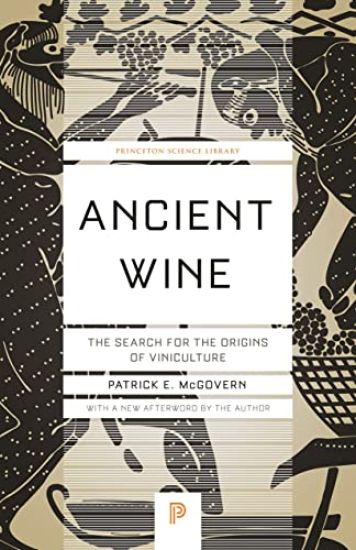
A richly illustrated account of the story of ancient vinicultureThe history of civilization is, in many ways, the history of wine. This book is the first comprehensive account of the earliest stages of the history and prehistory of viniculture, which extends back into the Neolithic period and beyond. Elegantly written and richly illustrated, Ancient Wine opens up whole new chapters in the fascinating story of wine by drawing on recent archaeological discoveries, molecular and DNA sleuthing, and the writings and art of ancient peoples. In a new afterword, the author discusses exciting recent developments in the understanding of ancient wine, including a new theory of how viniculture came to central and northern Europe.
A critical transition period in the archaeology and history of Palestine-the Late Bronze Age and Early Iron Age-is described in detail from the perspective of a group of sites in the Baq'ah Valley. A major emphasis is on how scientific techniques, including magnetic location of undisturbed burial deposits and analytical reconstruction of very early industries, can be effectively integrated into an archaeological project. Contrary to traditional views, the evidence supports a relatively peaceful development within a single cultural tradition rather than the intrusion of a new people or segment of the existing population, by invasion, migration, or revolt.
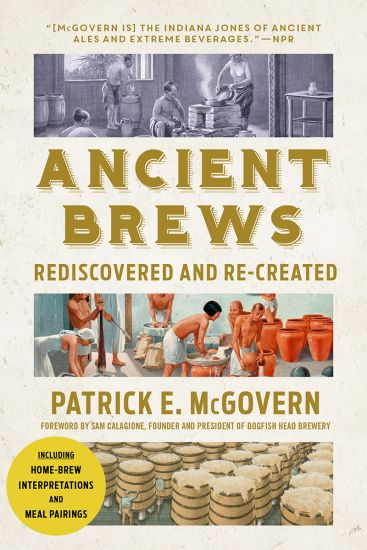
Patrick E. McGovern takes us on a fascinating journey through time to the dawn of brewing when our ancestors might well have made a Palaeo-Brew of fruits, honey, cereals and botanicals. Early beverage-makers must have marvelled at the process of fermentation, their amazement growing as they drank the mind-altering drinks which were to become the medicines, religious symbols and social lubricants of later cultures. McGovern circles the globe—to China, Turkey, Egypt, Italy, Scandinavia, Honduras, Peru and Mexico—interweaving archaeology and science to tell stories of making liquid time capsules. Accompanying homebrew interpretations and matching meal recipes help bring the past alive, as our senses and imaginations travel “Back to the Future”.
The University Museum excavated at Beth Shan from 1921-1934, when stratigraphical methods were first being developed. For this study the two Late Bronze levels (VII and VIII) have been reevaluated by the careful analysis of field records, photographs, and drawings along with the restudy of all artifacts housed in The University Museum and a selection of objects in the Rockefeller Museum in Jerusalem. The structures of these levels have parallels in New Kingdom Egypt and Late Bronze/Early Iron Age sites of southern Levant and the Sinai. Included are contributions by 13 specialists on specific classes of objects and technologies.
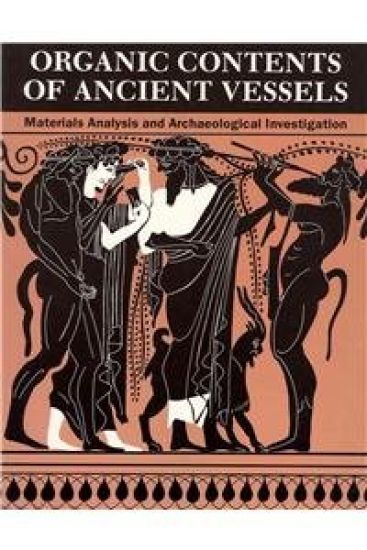
The papers in this volume clearly demonstrate the importance of investigating organic residues to elucidate crucial aspects of ancient life such as agriculture, trade, ritual practice. Much of the information presented here could only have been derived using scientific techniques of analysis.
First published in 1976. This study is perhaps the most comprehensive, objective, and accurate analysis to date of the State Department's Foreign Service personnel system. Largely based on in-depth interviews of 330 Foreign Service officers ranging in rank from career minister to newly appointed officer, and extensively documented, the book examines the needs of the Foreign Service organization and its personnel and presents an analysis of the policies and procedures according to which it operates. Areas covered include recruitment, training, assignments, performance evaluation, promotions, and attrition. Also discussed in detail is the structure and functioning of the informal system of rules and regulations developed by Foreign Service officers; individuals use this system-which is outside of the prescribed channels--in attempting to influence their career development. Despite its specialized orientation, the study utilizes a methodology that can be applied to any large organization.
First published in 1976. This study is perhaps the most comprehensive, objective, and accurate analysis to date of the State Department's Foreign Service personnel system. Largely based on in-depth interviews of 330 Foreign Service officers ranging in rank from career minister to newly appointed officer, and extensively documented, the book examines the needs of the Foreign Service organization and its personnel and presents an analysis of the policies and procedures according to which it operates. Areas covered include recruitment, training, assignments, performance evaluation, promotions, and attrition. Also discussed in detail is the structure and functioning of the informal system of rules and regulations developed by Foreign Service officers; individuals use this system-which is outside of the prescribed channels--in attempting to influence their career development. Despite its specialized orientation, the study utilizes a methodology that can be applied to any large organization.
The Master Managers Handbook is an interrupter of the traditional religious institutions and pastoral rule; it has forgone the norms of editorial grammatical edits. The messenger of truth is a core belief system that is simple, built, and rooted in faith.Everything starts with a belief. Yet, we were born without a manual, but this handbook is an insightful guide filled with nuggets of inspiration and knowledge that addresses real-life situations in real-time.It is a secret to the hidden things and interpretations of reality. It causes pause on the current understanding and questions your knowledge to the right path of your philosophy and ideologies, and it exploits the obvious.It is considered a hundred-year work; it introduces mind fusion and creates enlightenment of higher intelligence's internal energy, accelerating change.From the beginning of this book, the facts are compelling. It completes and fixes the voids and brings focus to the Trinity of man. It breaks down the flow of a living mindset and acts as a "Mind Traffic Flow System," delegating, deleting, and resetting the daily choices for life purposes.The "Mind Traffic Flow Chart" enclosed inside the manual will show how the first and only "Mind Traffic Flow Chart" helps you instantly govern and manage your reactions to situations. It is not a Paradigm Shift, Manifest, The Secret, or Positive Mental Attitude; It is "Mind Fusion." I wish I would have known this truth 51 years ago when I first accepted Jesus Christ as Lord and Savior. I feel robbed of all the benefits I could have had. If only I had known the "whole truth" about engaging the Spirit without religious, church doctrine. Only one fact was sound to this date, Jesus Christ is a personal savior. God did not intend for us to guess our way through life. But, for sure, God is real, and all power is in Jesus Christ, who is alive in us. The Holy Spirit is in us and is our teacher. Our lives here are brief, and I don't want to spend it all on reading instead of being led by the Spirit.Without God, there is no hope; this is what I believe. Following convictions by emotions is not Faith. It is in the knowledge of your Faith in action that is the source of all power. When this truth is understood, your waiting on God is over; he becomes alive and active in you. God himself is your strength because he is already present within you if you truly understand him. Matthew 7:7, God said to ask, and give it to you; seek, and you will find; knock, and it will open the door to you. Everyone who asks receives and seeks finds, and to him who knocks, the door will open. 2 Corinth 1:20 His promises are yes, and amen. But John 14 confirms everything about our relationship with him.Believe it or not, you are already in the mansion. You do not know it yet. When Jesus was on the cross and said, "it is finished," it was finished. All power was in his hands, and he gave this power to you through the crucifixion. We should live by foundational truths provided by our core belief system. With a proper understanding and knowledge of what we truly believe, we have a purpose. Still, it is your responsibility to seek it out, which comes through being led by the Spirit, and you will become hungry for knowledge. A seed in an apple has its DNA to multiply and produce after its kind; its information, "preloaded," from the inception of creation; no one must tell it to become an apple. So, are we?The creator has given navigational tools to every human alive today and critical laws for every life event. These laws are external and cannot be changed, so we must learn to adapt because they are the pathways and the keys to a more productive life. They will develop your core belief system and accelerate immediate responses to any situation. What you believe is the anchor to your truth, and your core belief system.
"We are all torn between tribal moralities, which stress differences and dangers, and imperial ethics, which attempt to overcome differences and defuse dangers. We are all tempted to breakor at least cheat onthe Social Contract." The provocative thesis of Tribe and Empire is that the nation is an unstable halfway house between the paranoid tribe, which sees all other tribes as actual or possible enemies, and the open-ended empire, which sees all people as potential subjects or citizens. Indeed, the modern nation is made up, on the one hand, of increasingly moralistic tribes from the Ku Klux Klan to the National Organization of Women that have rejected the Social Contract, and on the other, of imperial organizations from Amnesty International to Microsoft that seek to expand the Contract beyond the limits of the nation. In order to throw light upon these processes in the modern nation state, the book examines the political development of various North and South American Indian groups from the Social Contract perspective of the 17th century philosophers Thomas Hobbes, John Locke, and Jean-Jacques Rousseau.Author Biography: Patrick E. Kennon, a retired CIA analyst, is the author of The Twilight of Democracy (New York: Doubleday, 1995), Mr. Kennon lives in Falls Church, VA.
"We are all torn between tribal moralities, which stress differences and dangers, and imperial ethics, which attempt to overcome differences and defuse dangers. We are all tempted to breakor at least cheat onthe Social Contract." The provocative thesis of Tribe and Empire is that the nation is an unstable halfway house between the paranoid tribe, which sees all other tribes as actual or possible enemies, and the open-ended empire, which sees all people as potential subjects or citizens. Indeed, the modern nation is made up, on the one hand, of increasingly moralistic tribes from the Ku Klux Klan to the National Organization of Women that have rejected the Social Contract, and on the other, of imperial organizations from Amnesty International to Microsoft that seek to expand the Contract beyond the limits of the nation. In order to throw light upon these processes in the modern nation state, the book examines the political development of various North and South American Indian groups from the Social Contract perspective of the 17th century philosophers Thomas Hobbes, John Locke, and Jean-Jacques Rousseau.Author Biography: Patrick E. Kennon, a retired CIA analyst, is the author of The Twilight of Democracy (New York: Doubleday, 1995), Mr. Kennon lives in Falls Church, VA.