Kirjojen hintavertailu. Mukana 11 244 527 kirjaa ja 12 kauppaa.

Kirjahaku

Etsi kirjoja tekijän nimen, kirjan nimen tai ISBN:n perusteella.

1000 tulosta hakusanalla Patrick H. Bowles

Winter on the P Bar J Ranch

Winter on the P Bar J Ranch

Patrick H. Boles

Createspace Independent Publishing Platform
2013
nidottu
Winter on the P Bar J Ranch is the second novel set on the P Bar J Ranch. It's wintertime in Northern Arizona and longtime Arizona rancher Jeff Dean is looking back at his first winter on the P Bar J Ranch. The story opens in early December 1952 following Jeff Dean's first summer on the P Bar J Ranch in north-central Arizona. Jeff's 12th birthday has come and gone and along with it a lot of the time for playing. Now he is becoming a real cowboy. Jeff and the Howard's twins, Lenny and Lynda, have had to assume more of the day-to-day work on the big cattle ranch run by Jeff's dad, Roy. This is especially true after the old hired hand, Jay, suffers injuries from a fall on a horse while the boys are helping him move a small bunch of cattle. Shortly afterwards Deputy Parker encounters three members of the Owsley family just north of the P Bar J Ranch. The Owsleys are back ... seeking stolen bank money and revenge. The approach of Christmas 1952 is a stressful time for Jeff since he is faced for the first time with the task of buying a present for a girl ... Lynda. Then as the New Year 1953 nears, a severe blizzard is headed for northern Arizona. As part of their cowboy chores Jeff and his friends take part in cattle drives, repair fences, pull stuck cows out of muddy water holes, and ride through snow to chop ice on troughs and tanks so cattle can get to water. Things won't be the same on the P Bar J Ranch after the winter of 1952-'53. Childhood is quickly coming to an end.
Summer on the P Bar J Ranch

Summer on the P Bar J Ranch

Patrick H Boles

Createspace Independent Publishing Platform
2012
pokkari
Get ready to experience an action filled Summer on the P Bar J Ranch. Long time Arizona rancher Jeff Dean is thinking back to a particular summer over 60 years ago. The time is 1952 and 11-year-old Jeff Dean is spending his first summer on the P Bar J Ranch in north central Arizona near Route 66. Jeff's parents are separated and his dad has recently become the manager of this large cattle ranch. The story takes place from June through August of that year and follows the adventures of Jeff (a big fan of Roy Rogers) and his friends, as well as the adults on the ranch, including the parents and cowboys. The summer begins with Jeff getting settled in, meeting & becoming friends with the ranch owners' 11 year old twins (Lenny & Lynda), getting to know the hired hands, and taking a bike ride with Lenny on their Schwinns to fish and explore.Readers will experience an action filled childhood summer on the P Bar J Ranch and in the process will pick up true bits of history, cowboy etiquette, tips on handling horses, and a feeling for the time and place. There are also shoot outs with bank robbers, and a good dose of early '50s nostalgia, e.g. Roy Rogers, cap guns, B westerns, and Schwinn bicycles.
My Reality: A Hero's Story: The Autobiography of Patrick H. Booker
MY REALITY: A HERO'S STORY is the autobiography of young retired United States Army Sergeant Patrick H. Booker as told to fellow author Sheila Kay. It is his incredible life story which includes the challenges he lives with due to his sudden military discharge at 32 due a Post Traumatic Stress Disorder (PTSD) diagnosis. The author uses humor, brutal honesty, and wisdom to tell inspirational stories of courage and triumph that are relatable to anyone whose life is affected by mental health issues.The autobiography is an intimate look into Patrick's triumphs and challenges, including life as a veteran with Post Traumatic Stress Disorder (PTSD). In his desire to encourage others to never give up hope, he narrates his life growing up on the rough streets of Washington, D.C. and shares details of sometimes shocking experiences which led him to strive for a better future. As a true patriot, he reveals his love of serving in the military and relates some memories from those years. Patrick is also brutally honest about how his sudden discharge at the young age of 32 due to a mental health diagnosis deeply affected him and still does to this day.This book is a relatable tale of a man with the survival skills of a true soldier on and off the battlefield. Patrick uses his successes and mistakes to offer help and hope to other people with mental illness due to military combat or many other types of trauma. The author pulls the reader right into the middle of the stories in a conversational writing style that reflects his true life "tell it like it is" confident personality. The book reflects his razor sharp humor and street smarts, combined with his compassionate nature and passion to serve as a beacon of light for the hopeless.MY REALITY: A HERO'S STORY is a unique and unforgettable book that dares to look pain and loss dead in the eye while using courage and hope as weapons of survival. Men or women veterans, anyone affected by mental health, or people who believe in staying in the fight despite all odds will be uplifted and entertained to the very end.
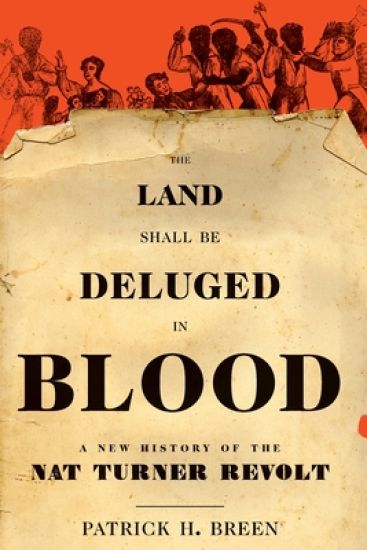
The Land Shall Be Deluged in Blood

The Land Shall Be Deluged in Blood

Patrick H. Breen

Oxford University Press Inc
2019
nidottu
On the evening of August 21, 1831, Nat Turner and six men launched their infamous rebellion against slaveholders. The rebels swept through Southampton County, Virginia, recruiting slaves to their ranks and killing nearly five dozen whites-more than had ever been killed in any slave revolt in American history. Although a hastily assembled group of whites soon suppressed the violence, its repercussions had far-reaching consequences. In The Land Shall Be Deluged in Blood, Patrick H. Breen uses the dramatic events in Southampton to explore the terrible choices faced by members of the local black community as they considered joining the rebels, a choice that would likely cost them their lives, supporting their masters, or somehow avoiding taking sides. Combining fast-paced narrative with rigorous analysis, Breen shows how, as whites regained control, slaveholders created an account of the revolt that saved their slaves from white retribution, the most dangerous threat facing the slaveholders' human property. By probing the stories slaveholders told that allowed them to get non-slaveholders to protect slave property, The Land Shall Be Deluged in Blood reveals something surprising about both the fragility and power of slavery.
The Land Shall Be Deluged in Blood

The Land Shall Be Deluged in Blood

Patrick H. Breen

Oxford University Press Inc
2016
sidottu
On the evening of Sunday, 21 August 1831, Nat Turner and six men launched the most famous slave revolt in American history. The rebels caught Southampton whites flatfooted and killed nearly five dozen whites, more than had been killed by any slave revolt in American history. By the afternoon of the first day, however, the small rebel army encountered hastily assembled white forces, which dispersed the rebels. Efforts to restart the revolt met with little success. By Tuesday, 23 August, the threat that the rebels had posed had dissipated. As whites gained regained control, some advocated for a brutal response, but the slaveholders ultimately were able to check the threat to slave property posed by enraged whites. As a result, far fewer slaves and free blacks in Southampton were killed as whites suppressed the revolt. An original interpretation of the revolt, This Land Shall Be Deluged uses the dramatic events in Southampton to explore both the relationship of the black community to the rebels and whites. Unlike earlier works, which have emphasized the importance of resistance or negotiating to slaves, this work explores the ambiguities faced by members of the black community as they tried to decide if they would join the rebels, support their masters, or try to avoid taking sides. This book also shows how the slaveholders were able to create a hegemonic account of the revolt that saved their slaves from white retribution, which was the most dangerous threat facing the slaveholders' human property. The majority of the book is a close narrative of the events, stressing the characters and motivations of the rebelling slaves and the dynamics of power within and between the white and black communities.
My Own Boss?

My Own Boss?

Patrick H Mooney

Routledge
2019
sidottu
American agriculture has undergone dramatic transformations in the four decades that have passed since the end of World War II. The most obvious is the decline in the number of people living and working on farms. Wisconsin generally reflects many of these national trends. In 1945 the agricultural census reported 177,745 farms in Wisconsin. By 198
My Own Boss?

My Own Boss?

Patrick H Mooney

Routledge
2020
nidottu
This book looks at the technical developments that have facilitated the decline in farm population. It attempts to look behind these more apparent changes and the assumption that these transformations are merely 'adjustments' to the various markets that intersect in the agricultural sector.
Essentials of Comparative Politics with Cases

Essentials of Comparative Politics with Cases

Patrick H. O'Neil; Karl J. Fields; Don Share

WW NORTON CO
2021
muu
Essentials of Comparative Politics with Cases integrates clear, concise, and contemporary coverage of major political concepts with the relevant case studies for the AP® curriculum: the United Kingdom, Russia, China, Iran, Mexico, and Nigeria. A new United States case study provides students with a helpful reference point for comparing and contrasting political institutions and processes across the globe. New AP® resources and InQuizitive, Norton’s adaptive learning tool, support students and instructors with the core concept mastery needed for the AP® exam. AP® is a trademark registered and/or owned by the College Board, which was not involved in the production of, and does not endorse, this product.
Profiting from Intellectual Capital

Profiting from Intellectual Capital

Patrick H. Sullivan

John Wiley Sons Inc
1998
sidottu
Tools and techniques from today's leading intellectual capital innovators: Xerox, Dow Chemical, Hewlett-Packard, Avery Dennison, Eastman Chemical, Rockwell, and Skandia "Patrick Sullivan . . . has brought together some of the best thinkers and best thinking on the subject of intellectual capital. Anyone who hopes to profit from intellectual capital will profit from Profiting from Intellectual Capital."-Thomas A. Stewart Author of Intellectual Capital: The New Wealth of Organizations. "A comprehensive collection of the key ideas for effectively managing intellectual assets in the twenty-first century."-Hubert St. Onge Senior Vice President, Strategic Capability, Mutual Life of Canada. "The first thorough exposition of how companies manage and extract value from their intellectual capital. The discussion of 'best practices,' as well as the high level conceptual examination of various intellectual capital issues, is an important contribution to this fast-growing field."-Baruch Lev, PhD The Philip Bardes Professor of Accounting and Finance, Stern School of Business, New York University, and Director, The Intangibles Research Project at New York University. "This is a remarkable compendium of analytic approaches to that most elusive of management goals-managing intellectual capital. It gives our 'state-of-the-practice' knowledge a most substantial boost."-Larry Prusak Managing Principal, Knowledge Management, IBM Corporation. "Sullivan brings together strategic management and intellectual capital. The combination is powerful."-Russell L. Parr Senior Vice President, AUS Consultants. In today's postindustrial economy, technology and knowledge-based companies are superseding traditional manufacturing enterprises at a rapid rate. But as tangible assets give way to invisible, information-centered ones, most firms still know very little about their intellectual capital and what it can do for them. While a number of books and articles have already been written about the knowledge-creation and information-sharing aspects of intellectual capital management, Profiting from Intellectual Capital takes the next step-examining how companies can develop financial benefits and extract ever more value from their intellectual capital. Divided into three sections, the book is filled with the practices and procedures of companies that are in the vanguard of ICM-Dow Chemical, Xerox, Rockwell International, Skandia, and Hewlett-Packard. The first part of the book presents essential terms and concepts, along with basic material on the principles of value extraction and a discussion of the usefulness of values in the management of intellectual capital. The two subsequent sections offer methods for IC measurement, management, and monitoring, as well as important techniques for extracting value-including such practical initiatives as creating an intellectual property database, patent trees, and more. Profiting from Intellectual Capital is essential reading for today's forward-thinking executives, attorneys, accountants, and other professionals. Because while knowledge is power, knowledge can be profits, too.
Value-Driven Intellectual Capital

Value-Driven Intellectual Capital

Patrick H. Sullivan

John Wiley Sons Inc
2000
sidottu
How do firms like Hewlett-Packard, DuPont, Dow Chemical, IBM, and Texas Instruments routinely convert the ideas of their employees into profits that sustain the corporation? How can buyers and sellers calculate the assets of the acquired firm in a merger or acquisition? How can an organization affect the firm's stock price using the leverage of intellectual assets? Identifying a firm's assets, especially its intellectual assets-the proprietary knowledge expressed as a recipe, formula, trade secret, invention, program, or process-has become critical to a company's overall vision and strategic plan and essential in such transactions as stock offerings or mergers. In the era of the knowledge-based company, where the firm's genius and future lies in its ideas, a firm's collective know-how has become a measurable commodity-and as much a part of its bottom line as the condition of its cash investments, plant, and equipment. Extracting and measuring the real value of knowledge is essential for any corporate head who knows how high the stakes have become for corporate survival in the information age-where the innovative idea is as good as, if not better than, gold! Value-Driven Intellectual Capital is a corporate and financial executives' handbook to the new world of intangible assets-what they are and how to convert them into cash or strategic position. Written by one of the seminal thinkers in the field, and the key organizer of the ICM Gathering, a group of leading-edge knowledge-based companies, Value-Driven Intellectual Capital explains the new, boundary-expanding world of intellectual assets-where translating an innovative idea into bottom-line profits involves a tightly focused strategy with clear directives for making it happen. A blueprint for turning corporate knowledge, know-how, and intellectual property into a sustainable competitive weapon that will build a firm's reputation and market share, this practical, insightful book outlines: * Basic concepts underlying IC (intellectual capital) and corporate value creation * The linkage between IC, business strategy, and profits * The different kinds of value-including qualitative and quantitative -firms realize from their IC * Activities required to produce the value firms desire from their IC * Methods for calculating the dollar value of companies-for market capitalization and mergers or acquisitions * An economic model of an IC company The book's appendix is a valuable distillation for corporate and financial executives, managers, researchers, and analysts of IC's basic working concepts and definitions, including the principles underlying value creation and value extraction, the concepts and strategies used by successful companies, the sources of value for knowledge companies, and the mechanisms used to convert that value into real profits. And since it is managerial talent that turns intellectual property into business assets, the book provides an arsenal of key concepts, methods, and processes for aligning with and using intellectual property as an active element of a firm's business strategies. It concludes with a discussion of how value is extracted from human capital, focusing on its elusive magnetic core: creativity and productivity. In an era in which firms are increasingly accountable to shareholders and success is judged solely by stock price, knowing how to measure and extract the value of a firm's intellectual assets has become one of the most critical and essential skills needed by CEOs today. Reflecting the most innovative thinking from some of the most sophisticated firms in the world, Sullivan's Value-Driven Intellectual Capital is a manifesto, a clarion call to excellence for any corporate or financial executive, merger and acquisition partner or investor who understands how much future corporate survival and success depends on the simple enduring genius of a good idea and the need to convert those ideas into corporate value. Visit our Web site at: www.wiley.com/
Profiting from Intellectual Capital

Profiting from Intellectual Capital

Patrick H. Sullivan

John Wiley Sons Inc
2001
nidottu
Knowledge is more than power. It’s profits, too. Tools and techniques for extracting even more value from your company’s intellectual capital–from today’s leading intellectual capital innovators: Xerox, Dow Chemical, Hewlett-Packard, Avery Dennison, Eastman Chemical, Rockwell, and Skandia "Patrick Sullivan . . . has brought together some of the best thinkers and best thinking on the subject of intellectual capital. Anyone who hopes to profit from intellectual capital will profit from Profiting from Intellectual Capital."–Thomas A. Stewart, author of Intellectual Capital: The New Wealth of Organizations "The first thorough exposition of how companies manage and extract value from their intellectual capital. The discussion of best practices, as well as the high-level conceptual examination of various intellectual capital issues, is an important contribution to this fast-growing field."–Baruch Lev, PhD, The Philip Bardes Professor of Accounting and Finance, Stern School of Business, New York University, and Director, The Intangibles Research Project at New York University "This is a remarkable compendium of analytic approaches to that most elusive of management goals–managing intellectual capital. It gives our state-of-the-practice knowledge a most substantial boost."–Larry Prusak, Managing Principal, Knowledge Management, IBM Corporation
The Cult of the Revolutionary Tradition

The Cult of the Revolutionary Tradition

Patrick H. Hutton

University of California Press
2022
pokkari
This pathbreaking study deals with the thought and activities of the disciples of the renowned revolutionary, Auguste Blanqui, from the later years of the French Second Empire (1860s) through the crisis attending the political campaign of General Boulanger (1880s). It explores the mythological significance of Blanqui for the French Lef, the atheist thoughts of the Blanquists as the foundation of their revolutionary politics, the role of the Blanquists in the Paris Commune of 1871, the relationship between Blanquist and Marxist ideologies, and the influence of the Blanquists as promoters of the cult of the Revolutionary tradition in the early years of the Third Republic. The Cult of the Revolutionary Tradition is the first comprehensive study of the Blanquists to appear in French or English. It is also the first to treat seriously the impact of the legend of Blanqui upon his followers and admirers. In tracing their changing conception of the revolutionary cause--from its sources in the radical thought of a Parisian youth movement to its perversion in the proto-fascist doctrine of some aging Blanquists employed myth and ritual to popularize their ideas, and how in the end their efforts to do so transformed their revolutionary party into a conservative sect. Hutton takes issue with the standard interpretation of the Blanquists as unreflective precursors of the Marxists. Far from contributing to Marxist Socialsim, he contends, the Blanquists began with different theoretical assumption and developed a different model of revolution. In describing the antagonisms between Blanquists, guardians of the French Revolutionary tradition, and Marxists, apostles of a new Socialism, the author reveals the obstacles which stood in the way of a unified revolutionary movement in the Third Republic, and sheds light on the ideological divisions which have plagued the French Left ever since. The study raises issue which transcend the French revolutionary experience. In analyzing the Blanquists's conception of revolution as an ultimate concern, it underscores the parallels between religious and revolutionary consciousness. Through the investigation of the myths and rituals of Blanquist revolutionary practice, it offers some observations on the nature of the revolutionary mentality and some perspective upon the phenomenon of revolution in general. This title is part of UC Press's Voices Revived program, which commemorates University of California Press's mission to seek out and cultivate the brightest minds and give them voice, reach, and impact. Drawing on a backlist dating to 1893, Voices Revived makes high-quality, peer-reviewed scholarship accessible once again using print-on-demand technology. This title was originally published in 1981.
The Cult of the Revolutionary Tradition

The Cult of the Revolutionary Tradition

Patrick H. Hutton

University of California Press
2022
sidottu
This pathbreaking study deals with the thought and activities of the disciples of the renowned revolutionary, Auguste Blanqui, from the later years of the French Second Empire (1860s) through the crisis attending the political campaign of General Boulanger (1880s). It explores the mythological significance of Blanqui for the French Lef, the atheist thoughts of the Blanquists as the foundation of their revolutionary politics, the role of the Blanquists in the Paris Commune of 1871, the relationship between Blanquist and Marxist ideologies, and the influence of the Blanquists as promoters of the cult of the Revolutionary tradition in the early years of the Third Republic. The Cult of the Revolutionary Tradition is the first comprehensive study of the Blanquists to appear in French or English. It is also the first to treat seriously the impact of the legend of Blanqui upon his followers and admirers. In tracing their changing conception of the revolutionary cause--from its sources in the radical thought of a Parisian youth movement to its perversion in the proto-fascist doctrine of some aging Blanquists employed myth and ritual to popularize their ideas, and how in the end their efforts to do so transformed their revolutionary party into a conservative sect. Hutton takes issue with the standard interpretation of the Blanquists as unreflective precursors of the Marxists. Far from contributing to Marxist Socialsim, he contends, the Blanquists began with different theoretical assumption and developed a different model of revolution. In describing the antagonisms between Blanquists, guardians of the French Revolutionary tradition, and Marxists, apostles of a new Socialism, the author reveals the obstacles which stood in the way of a unified revolutionary movement in the Third Republic, and sheds light on the ideological divisions which have plagued the French Left ever since. The study raises issue which transcend the French revolutionary experience. In analyzing the Blanquists's conception of revolution as an ultimate concern, it underscores the parallels between religious and revolutionary consciousness. Through the investigation of the myths and rituals of Blanquist revolutionary practice, it offers some observations on the nature of the revolutionary mentality and some perspective upon the phenomenon of revolution in general. This title is part of UC Press's Voices Revived program, which commemorates University of California Press's mission to seek out and cultivate the brightest minds and give them voice, reach, and impact. Drawing on a backlist dating to 1893, Voices Revived makes high-quality, peer-reviewed scholarship accessible once again using print-on-demand technology. This title was originally published in 1981.
The Meaning of Bumâ in the Old Testament

The Meaning of Bumâ in the Old Testament

Patrick H. Vaughan

Cambridge University Press
2009
pokkari
This monograph is a study of the Hebrew word bama, which is used frequently in the Old Testament to describe cultic sites and has commonly been translated 'high place'. The word however occurs in a variety of contexts, which would indicate a wider range of meanings. By careful analysis of these occurrences in the Old Testament and by comparison with cognate words in Semitic languages and with the translations in the Septuagint, the author attempts to categorise these meanings and to challenge certain current views. Three groups of meanings of bama emerge from this study: topographical, as in 'hillside' and possibly 'grave-mound'; anatomical, as in 'backs' and possible 'beasts'; and cultic senses, as in 'cultic platform' (bamah) and by extension 'altar' and 'sanctuary'. This first book-length study of all aspects of the meaning of bama will be of interest equally to Old Testament scholars and archaeologists of the near East and is likely to be an invaluable monograph on its subject.
Modern Plasma Physics: Volume 1, Physical Kinetics of Turbulent Plasmas

Modern Plasma Physics: Volume 1, Physical Kinetics of Turbulent Plasmas

Patrick H. Diamond; Sanae-I. Itoh; Kimitaka Itoh

Cambridge University Press
2010
sidottu
This three-volume series presents the ideas, models and approaches essential to understanding plasma dynamics and self-organization for researchers and graduate students in plasma physics, controlled fusion and related fields such as plasma astrophysics. Volume I develops the physical kinetics of plasma turbulence through a focus on quasi-particle models and dynamics. It discusses the essential physics concepts and theoretical methods for describing weak and strong fluid and phase space turbulence in plasma systems far from equilibrium. The book connects the traditionally 'plasma' topic of weak or wave turbulence theory to more familiar fluid turbulence theory, and extends both to the realm of collisionless phase space turbulence. This gives readers a deeper understanding of these related fields, and builds a foundation for future applications to multi-scale processes of self-organization in tokamaks and other confined plasmas. This book emphasizes the conceptual foundations and physical intuition underpinnings of plasma turbulence theory.