Kirjojen hintavertailu. Mukana 11 213 693 kirjaa ja 11 kauppaa.

Kirjahaku

Etsi kirjoja tekijän nimen, kirjan nimen tai ISBN:n perusteella.

1000 tulosta hakusanalla Patrick R. Watts

Claiborne County Breakdown

Claiborne County Breakdown

Patrick R. Watts

Patrick Watts
2014
nidottu
Louvin Reilly lives on his farm with his daughter Lucy Lee near Cumberland Gap, Tennessee in the late 1880's. Both wait for Lucy's fianc John Behan to return from working on the flat boats on the Cumberland River. When John returns Louvin plans to spend all his time showing him how to operate his farm. Louvin has two nephews, Matthew and Mark Johnson. The Johnson boys have been living on their own for about twelve years since their parents died in a fire that destroyed their cabin. Louvin wants to see them marry, leave the hills and prosper in the city. They have the wherewithal, but Louvin worries they do not seem the least bit interested in grasping the opportunity. In the meantime a number of tragedies occur and other situations arise that involve Louvin and the Johnson boys to varying degrees. These are told in this book as separate short stories. Each story is based upon an old time folk song. Inspiration came most directly from the songs "Molly and Tenbrooks," "The Oxford Tragedy," "The Wexford Girl," "Molly Bawn," "Polly Vaughn," "The Johnson Boys," "Good Old Mountain Dew," "Dooley," "John Henry," "The Wreck on the C. & O.," "Silver Dagger," "Katy Dear" and "Cumberland Gap." The stories include many allusions to other songs as well, such as "Jimmie Brown the Newsboy" and "Groundhog." Names of most of the characters in the stories are names of characters from even more songs, such as Lucy Lee, Cindy, Katy Daly, Angeline Baker, Willie Moore, Jack Davy and Rattler. Any fan of folk and bluegrass music will recognize many more songs and names. These stories are not straight restatements of the songs. The author developed the situations and characters differently, as Calliope and Euterpe directed. The original songs about the horse race and the train wreck were based upon actual events. However, again, the Muses had their own ideas about things for this collection. One of those ideas was to have a core of characters that appear in all the stories. Some just lend a hand to help develop that particular story. Some have stories of their own that develop and resolve themselves across the entire collection. Although the stories are separate, they are interrelated by setting, characters and events.
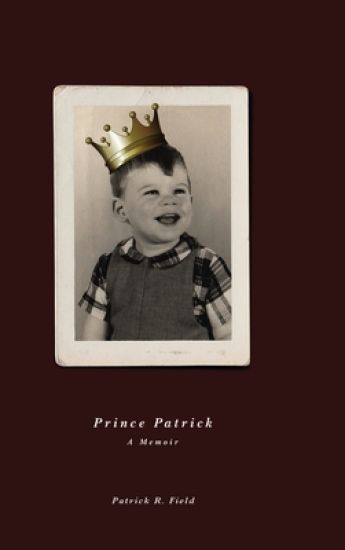
Prince Patrick A Memoir

Prince Patrick A Memoir

Patrick R. Field

Lulu.com
2016
sidottu
"Prince Patrick" was a nick name given to me as a child by my family and parent's friends that reflected my attitude and desire to be treated in a manner befitting a little prince. A sign of endearment to humor my natural, idiosyncratic demeanor. I actually never thought of myself as royalty, rather, that I was "special," destined for greatness or to be famous, and should be treated as an incubating celebrity. But just how was I going to become a figure in history? A doctor or scientist that discovered a cure to a hideous disease or condition? An actor/artist that was going to define my generation? Or would I become infamous? Whereas, my innocent "hijinks" would lead to other more serious acts that would get me recognized for the wrong reasons. These stories of my eccentric exploits, told time and time again at family gatherings, have made both family and friends smile, giggle and laugh hysterically, with the words "no he did not" uttered more than once.
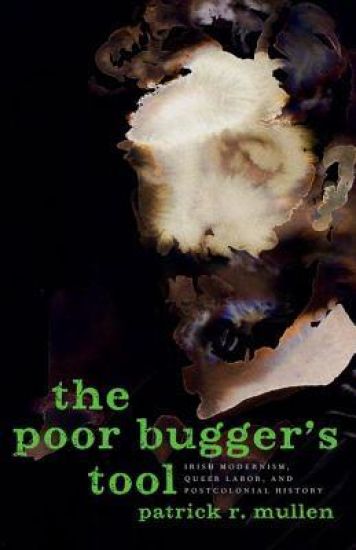
The Poor Bugger's Tool

The Poor Bugger's Tool

Patrick R. Mullen

Oxford University Press Inc
2016
nidottu
With the weakening moral authority of the Catholic Church, the boom ushered in by the Celtic Tiger, and the slow but steady diminishment of the Troubles in the North, Ireland has finally stepped out from the shadows of colonial oppression onto the world stage as a major cosmopolitan country. Taking its title from a veiled reference to Roger Casement-the humanitarian and Irish patriot hanged for treason-in James Joyce's Ulysses, The Poor Bugger's Tool demonstrates how the affective labor of Irish queer culture might contribute to a progressive new national image for the Republic and Northern Ireland. Looking back to the first wave of Irish modernism in the works of Wilde, Synge, Casement, and Joyce, Patrick Mullen reveals how these authors deployed queer aesthetics to shape inclusive forms of national affiliation as well as to sharpen anti-imperialist critiques. In its second half, the monograph turns its attention to Ireland's postmodernist boom in the works of Patrick McCabe, Neil Jordan, and Jamie O'Neill. With readings of The Butcher Boy, Breakfast on Pluto, and At Swim Two Boys, Mullen shows that queer sensibilities and style remain key cultural resources for negotiating the political and economic realities of globalization at the turn of the twenty-first century. Buttressed by writings of theorists like Marx, Foucault, and Antonio Negri, The Poor Bugger's Tool brings Irish literature into a fruitful dialog with queer theory, postcolonial studies, the history of sexuality, and modernist aesthetics.
Maria Montessori's Philosophy

Maria Montessori's Philosophy

Patrick R. Frierson

Oxford University Press
2025
sidottu
Maria Montessori's Philosophy shows how Montessori's commitment to "follow the child" can be understood as a philosophical method for answering the great philosophical questions that confront human beings. Patrick Frierson discusses historical influences on Montessori's philosophical views, focusing on showing how her commitment to children led her to profound insights about a wide range of philosophical questions, from foundational metaphysics to applied ethics and politics. Her metaphysics, grounded in the concept of life as she observes it developing in the child, helps to address fundamental questions about the nature of the universe and the emergence of consciousness and value within it. Her pragmatic empiricist epistemology provides the framework for a sophisticated account of various intellectual virtues conducive to excellent cognitive engagement with reality. Her moral philosophy weaves together a broadly Nietzschean emphasis on self-perfection with respect for all human beings and a strong interest in social solidarity. In her philosophy of religion, she follows children as they guide her to recognize a sense for the divine and the importance of sensorily-informed religious practice. Her politics, informed by lifelong feminism and concern for peace, shows how the education of the child is the key to cosmopolitan solidarity and lasting peace. Her philosophy of technology, while recognizing the dangers of technological development, also sees in children the human potential, and even vocation, to develop technology for the betterment of the world.
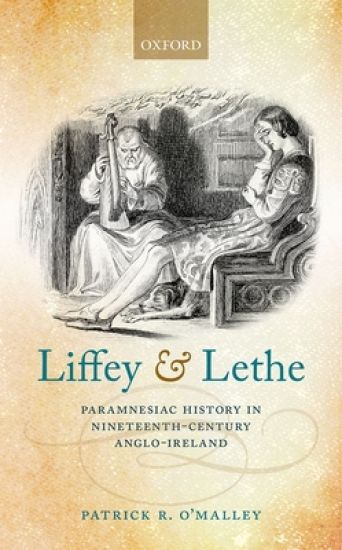
Liffey and Lethe

Liffey and Lethe

Patrick R. O'Malley

Oxford University Press
2017
sidottu
Focusing on literary and cultural texts from the late eighteenth century to the early twentieth, Patrick R. O'Malley argues that in order to understand both the literature and the varieties of nationalist politics in nineteenth-century Ireland, we must understand the various modes in which the very notion of the historical past was articulated. He proposes that nineteenth-century Irish literature and culture present two competing modes of political historiography: one that eludes the unresolved wounds of Ireland's violent history through the strategic representation of a unified past that could be the model for a liberal future; and one that locates its roots not in a culturally triumphant past but rather in an account of colonial and specifically sectarian bloodshed and insists upon the moral necessity of naming that history. From myths of pre-Christian Celtic glories to medieval Catholic scholarship to the rise of the Protestant Ascendancy to narratives of colonial violence against Irish people by British power, Irish historiography strove to be the basis of a new nationalism following the 1801 Union with Great Britain, and yet it was itself riven with contention.
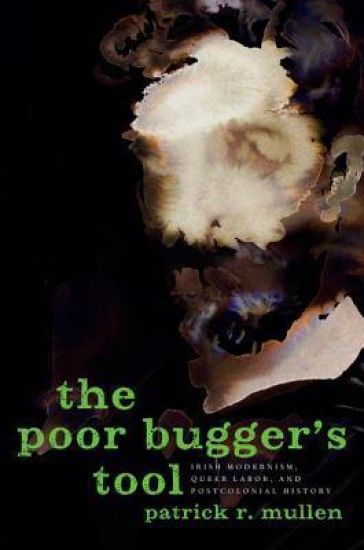
The Poor Bugger's Tool

The Poor Bugger's Tool

Patrick R. Mullen

Oxford University Press Inc
2012
sidottu
The Poor Bugger's Tool(the title taking its name from the veiled but unmistakable reference in the 'Cyclops' episode in Ulysses to Roger Casement, the homosexual humanitarian and Irish patriot hanged for treason in 1916), argues that queer culture has a vital role to play in the creation of a reinvigorated national image, for the Republic and Northern Ireland. Looking back to the first wave of Irish modernism in the works of Oscar Wilde, John Millington Synge, Roger Casement, and James Joyce, Patrick R. Mullen reveals how these writers deployed queer aesthetics to shape inclusive forms of national affiliation as well as to sharpen anti-imperialist critiques. Turning to Ireland's postmodernist boom in the works of Patrick McCabe, Neil Jordan, and Jamie O'Neill, Mullen shows that queer sensibilities and style remain key cultural resources for negotiating the political and economic realities of globalization.
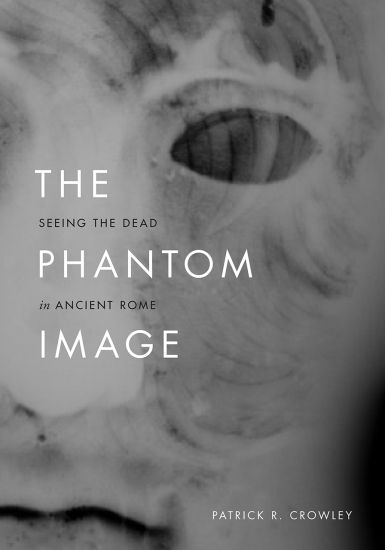
The Phantom Image

The Phantom Image

Patrick R Crowley

University of Chicago Press
2019
sidottu
How could something as insubstantial as a ghost be made visible through the material grit of stone and paint? In this original and wide-ranging study, Patrick R. Crowley uses the figure of the ghost to offer a new understanding of the status of the image in Roman art and visual culture. Tracing the shifting practices and debates in antiquity about the nature of vision and representation, Crowley shows how images of ghosts make visible structures of beholding and strategies of depiction. Yet the figure of the ghost simultaneously contributes to a broader conceptual history that accounts for how modalities of belief emerged and developed in antiquity. Neither illustrations of ancient beliefs in ghosts nor depictions of the afterlife more generally, these images ultimately show us something about the visual event of seeing itself. The Phantom Image will be essential for anyone interested in ancient art, visual culture, and the history of the image.
Medical Microbiology

Medical Microbiology

Patrick R. Murray; Ken S. Rosenthal; Michael A. Pfaller

Elsevier - Health Sciences Division
2020
nidottu
The foremost text in this complex and fast-changing field, Medical Microbiology, 9th Edition, provides concise, up-to-date, and understandable explanations of key concepts in medical microbiology, immunology, and the microbes that cause human disease. Clear, engaging coverage of basic principles, immunology, laboratory diagnosis, bacteriology, virology, mycology, and parasitology help you master the essentials of microbiology?effectively preparing you for your coursework, exams, and beyond. Features significant new information on the human microbiome and its influence on the immune and other body systems, and new developments in microbial diagnosis, treatment, diseases, and pathogens. Updates every chapter with state-of-the-art information and current literature citations. Summarizes detailed information in tabular format rather than in lengthy text. Provides review questions at the end of each chapter that correlate basic science with clinical practice. Features clinical cases that illustrate the epidemiology, diagnosis, and treatment of infectious diseases. Introduces microbe chapters with summaries and trigger words for easy review. Highlights the text with clear, colorful figures, clinical photographs, and images that help you visualize the clinical presentation of infections. Offers additional study features online, including 200 self-assessment questions, microscopic images of the microbes, videos, and a new integrating chapter that provides hyperlinks between the microbes, the organ systems that they affect, and their diseases. Enhanced eBook version included with purchase. Your enhanced eBook allows you to access all of the text, figures, and references from the book on a variety of devices.
Murray's Basic Medical Microbiology

Murray's Basic Medical Microbiology

Patrick R. Murray

Elsevier - Health Sciences Division
2023
nidottu
**Selected for 2025 Doody’s Core Titles® in Microbiology** Concise and easy to read, Murray’s Basic Medical Microbiology: Foundations and Clinical Cases, 2nd Edition, provides a solid foundation in the principles of microbiology, preparing you not only for examinations but also for the transition to clinical application. Authored by Dr. Patrick Murray, the lead author of the bestselling Medical Microbiology, this clearly written, condensed text offers a straightforward, practical introduction to this challenging topic. It provides complete coverage of the most commonly observed organisms and diseases, numerous case studies, review questions, and up-to-date content throughout, including coverage of COVID-19. Features a logical organization by organism, focusing on the association between an organism and disease Provides over 180 clinical cases to strengthen understanding of infectious organisms in a clinical setting Includes a brand new section with devoted chapters on diseases affecting each body system and the multiple organisms that may be responsible to help sharpen clinical reasoning skills Includes differential diagnosis, organism classification overview, and a list of antimicrobials used to treat infections in the introductory chapter of each organism section, reinforcing clinical application and relevance Contains numerous tables and high-quality illustrations that offer visual guidance and an easy review of key material Includes more multiple-choice review questions to aid in self-assessment and examination preparation Enhanced eBook version included with purchase. Your enhanced eBook allows you to access all of the text, figures, and references from the book on a variety of devices
Creating Transformative Online Communities in Higher Education
Creating Transformative Online Communities in Higher Education provides a practical approach for building authentic learning experiences into the design and delivery of online teaching and learning systems. Combining three conceptually related ideas—complexity theory, transformative learning, and the Community of Inquiry—this novel, highly applicable framework enables instructors to create compelling virtual learning experiences for students. As higher education faculty, instructional designers, and graduate students shift from presenting information to creating experiences, the book offers an evidence-based disruption of the current thinking on and practice of course design.
Creating Transformative Online Communities in Higher Education
Creating Transformative Online Communities in Higher Education provides a practical approach for building authentic learning experiences into the design and delivery of online teaching and learning systems. Combining three conceptually related ideas—complexity theory, transformative learning, and the Community of Inquiry—this novel, highly applicable framework enables instructors to create compelling virtual learning experiences for students. As higher education faculty, instructional designers, and graduate students shift from presenting information to creating experiences, the book offers an evidence-based disruption of the current thinking on and practice of course design.
What is the Human Being?

What is the Human Being?

Patrick R. Frierson

Routledge
2013
sidottu
Philosophers, anthropologists and biologists have long puzzled over the question of human nature. It is also a question that Kant thought about deeply and returned to in many of his writings. In this lucid and wide-ranging introduction to Kant’s philosophy of human nature - which is essential for understanding his thought as a whole - Patrick R. Frierson assesses Kant’s theories and examines his critics.He begins by explaining how Kant articulates three ways of addressing the question ‘what is the human being?’: the transcendental, the empirical, and the pragmatic. He then considers some of the great theorists of human nature who wrestle with Kant’s views, such as Hegel, Marx, Darwin, Nietzsche, and Freud; contemporary thinkers such as E.O.Wilson and Daniel Dennett, who have sought biological explanations of human nature; Thomas Kuhn, Michel Foucault, and Clifford Geertz, who emphasize the diversity of human beings in different times and places; and existentialist philosophers such as Sartre and Heidegger.He argues that whilst these approaches challenge and enrich Kant’s views in significant ways, all suffer from serious weaknesses that Kant’s anthropology can address. Taking a core insight of Kant’s - that human beings are fundamentally free but finite - he argues that it is the existentialists, particularly Sartre, who are the most direct heirs of his transcendental anthropology.The final part of the book is an extremely helpful overview of the work of contemporary philosophers, particularly Christine Korsgaard and Jürgen Habermas. Patrick R. Frierson explains how these philosophers engage with questions of naturalism, historicism, and existentialism while developing Kantian conceptions of the human being. Including chapter summaries and annotated further reading, What is the Human Being? is an outstanding introduction to some fundamental aspects of Kant’s thought and a judicious assessment of leading theories of human nature. It is essential reading for all students of Kant and the philosophy of human nature, as well as those in related disciplines such as anthropology, politics and sociology.
What is the Human Being?

What is the Human Being?

Patrick R. Frierson

Routledge
2013
nidottu
Philosophers, anthropologists and biologists have long puzzled over the question of human nature. It is also a question that Kant thought about deeply and returned to in many of his writings. In this lucid and wide-ranging introduction to Kant’s philosophy of human nature - which is essential for understanding his thought as a whole - Patrick R. Frierson assesses Kant’s theories and examines his critics.He begins by explaining how Kant articulates three ways of addressing the question ‘what is the human being?’: the transcendental, the empirical, and the pragmatic. He then considers some of the great theorists of human nature who wrestle with Kant’s views, such as Hegel, Marx, Darwin, Nietzsche, and Freud; contemporary thinkers such as E.O.Wilson and Daniel Dennett, who have sought biological explanations of human nature; Thomas Kuhn, Michel Foucault, and Clifford Geertz, who emphasize the diversity of human beings in different times and places; and existentialist philosophers such as Sartre and Heidegger.He argues that whilst these approaches challenge and enrich Kant’s views in significant ways, all suffer from serious weaknesses that Kant’s anthropology can address. Taking a core insight of Kant’s - that human beings are fundamentally free but finite - he argues that it is the existentialists, particularly Sartre, who are the most direct heirs of his transcendental anthropology.The final part of the book is an extremely helpful overview of the work of contemporary philosophers, particularly Christine Korsgaard and Jürgen Habermas. Patrick R. Frierson explains how these philosophers engage with questions of naturalism, historicism, and existentialism while developing Kantian conceptions of the human being. Including chapter summaries and annotated further reading, What is the Human Being? is an outstanding introduction to some fundamental aspects of Kant’s thought and a judicious assessment of leading theories of human nature. It is essential reading for all students of Kant and the philosophy of human nature, as well as those in related disciplines such as anthropology, politics and sociology.
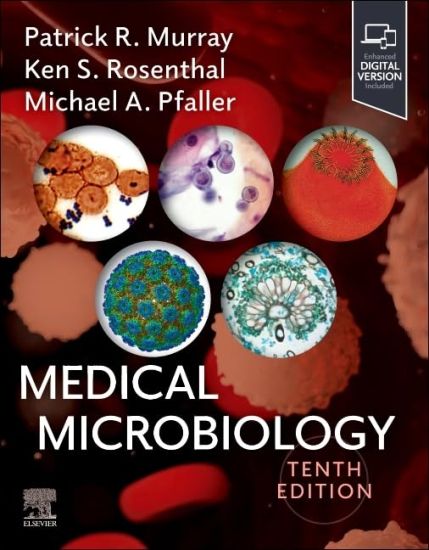
Medical Microbiology

Medical Microbiology

Patrick R. Murray; Ken S. Rosenthal; Michael A. Pfaller

Elsevier Health Sciences
2025
nidottu
**Selected for 2025 Doody’s Core Titles® with "Essential Purchase" designation in Microbiology** Comprehensive, clinically oriented, and practical, Medical Microbiology, Tenth Edition, remains the go-to text for foundational coverage of key interrelated concepts in medical microbiology, immunology, and infectious diseases. Clear and engaging coverage of the microbial world and its interface with our bodies and the environment provides the foundation to understand these roles in individual and public health and disease-helping you master the essentials of microbiology to effectively prepare you for coursework, exams, and your future career. Focuses on helping the scientist-, health professional- and clinician-in-training develop a current, complete, and deeper understanding of bacteriology, immunology, virology, mycology, and parasitology, and answer the question: What information do I need to know that will help me understand how to treat an infected patient? Contains a new section of eight chapters on Infectious Diseases by Organ System for optimized clinical context Includes clinical photographs and cases to correlate basic science with examples of clinical syndromes Provides quick reference for efficient study with excellent illustrations, chapter summaries, key information organized in convenient tables, and review questions Offers additional learning resources online, including over 200 self-assessment questions, microscopic images of the microbes, and more An eBook version is included with purchase. The eBook allows you to access all of the text and figures, with the ability to search, customize your content, make notes and highlights, and have content read aloud Evolve Instructor site with an image and test bank is available to instructors through their Elsevier sales rep or via request at https://evolve.elsevier.com.
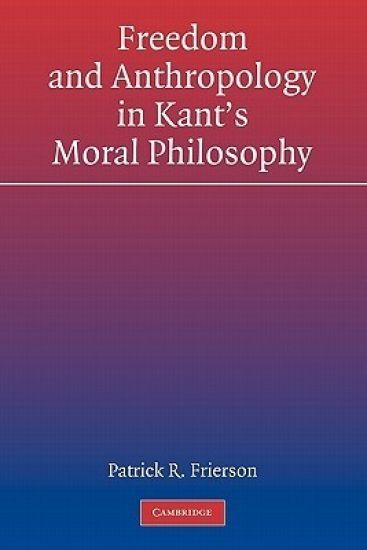
Freedom and Anthropology in Kant's Moral Philosophy

Freedom and Anthropology in Kant's Moral Philosophy

Patrick R. Frierson

Cambridge University Press
2011
pokkari
This book offers a comprehensive account of Kant's theory of freedom and his moral anthropology. The point of departure is the apparent conflict between three claims to which Kant is committed: that human beings are transcendentally free, that moral anthropology studies the empirical influences on human beings, and that more anthropology is morally relevant. Frierson shows why this conflict is only apparent. He draws on Kant's transcendental idealism and his theory of the will and describes how empirical influences can affect the empirical expression of one's will in a way that is morally significant but still consistent with Kant's concept of freedom. As a work which integrates Kant's anthropology with his philosophy as a whole, this book will be an unusually important source of study for all Kant scholars and advanced students of Kant.
Freedom and Anthropology in Kant's Moral Philosophy

Freedom and Anthropology in Kant's Moral Philosophy

Patrick R. Frierson

Cambridge University Press
2003
sidottu
This book offers a comprehensive account of Kant's theory of freedom and his moral anthropology. The point of departure is the apparent conflict between three claims to which Kant is committed: that human beings are transcendentally free, that moral anthropology studies the empirical influences on human beings, and that more anthropology is morally relevant. Frierson shows why this conflict is only apparent. He draws on Kant's transcendental idealism and his theory of the will and describes how empirical influences can affect the empirical expression of one's will in a way that is morally significant but still consistent with Kant's concept of freedom. As a work which integrates Kant's anthropology with his philosophy as a whole, this book will be an unusually important source of study for all Kant scholars and advanced students of Kant.
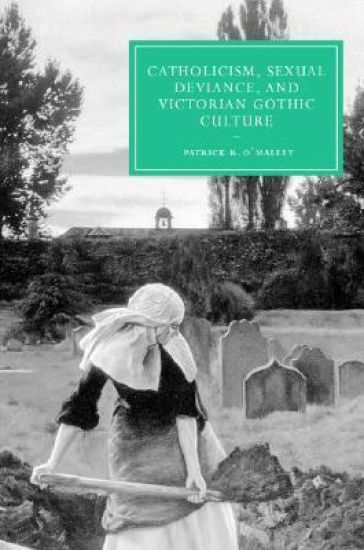
Catholicism, Sexual Deviance, and Victorian Gothic Culture

Catholicism, Sexual Deviance, and Victorian Gothic Culture

Patrick R. O'Malley

Cambridge University Press
2006
sidottu
It has long been recognised that the Gothic genre sensationalised beliefs and practices associated with Catholicism. Often, the rhetorical tropes and narrative structures of the Gothic, with its lurid and supernatural plots, were used to argue that both Catholicism and sexual difference were fundamentally alien and threatening to British Protestant culture. Ultimately, however, the Gothic also provided an imaginative space in which unconventional writers from John Henry Newman to Oscar Wilde could articulate an alternative vision of British culture. Patrick O'Malley charts these developments from the origins of the Gothic novel in the mid-eighteenth century, through the mid-nineteenth-century sensation novel, toward the end of the Victorian Gothic in Bram Stoker's Dracula and Thomas Hardy's Jude the Obscure. O'Malley foregrounds the continuing importance of Victorian Gothic as a genre through which British authors defined their culture and what was outside it.