
Kirjahaku
Etsi kirjoja tekijän nimen, kirjan nimen tai ISBN:n perusteella.
1000 tulosta hakusanalla Patson Kufakunesu; L. Mutonga

J¿zyk oficerów policji w Zimbabwe
Patson Kufakunesu; L. Mutonga
Wydawnictwo Nasza Wiedza
2020
nidottu
De taal van de politieagenten in Zimbabwe
Patson Kufakunesu; L. Mutonga
Uitgeverij Onze Kennis
2020
nidottu
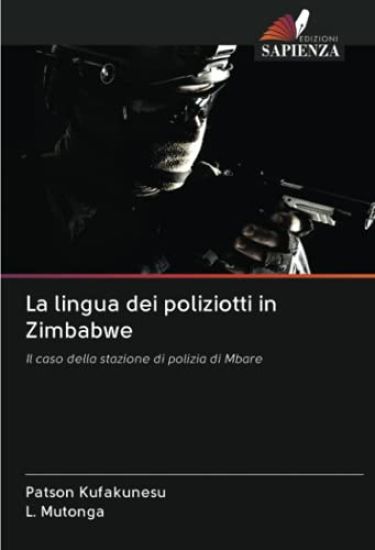

A língua dos agentes da polícia no Zimbabué
Patson Kufakunesu; L. Mutonga
Edições Nosso Conhecimento
2020
nidottu

El idioma de los oficiales de policía en Zimbabwe
Patson Kufakunesu; L. Mutonga
Ediciones Nuestro Conocimiento
2020
nidottu

La langue des officiers de police au Zimbabwe
Patson Kufakunesu; L. Mutonga
Editions Notre Savoir
2020
nidottu
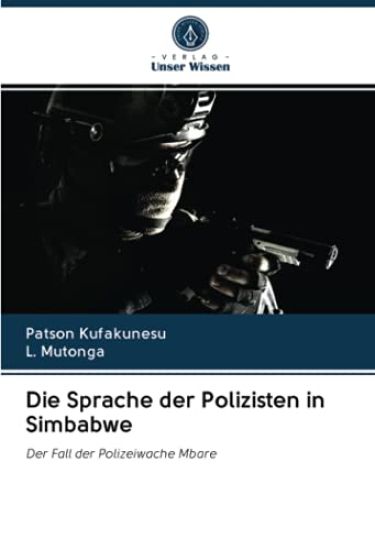
Die Sprache der Polizisten in Simbabwe
Patson Kufakunesu; L. Mutonga
Verlag Unser Wissen
2020
nidottu

The language of police officers in Zimbabwe
Patson Kufakunesu; L Mutonga
LAP Lambert Academic Publishing
2011
pokkari



Risk Allocation in Oil and Gas Service Contracts
Arinaitwe Patson Wilbroad
LAP Lambert Academic Publishing
2014
pokkari
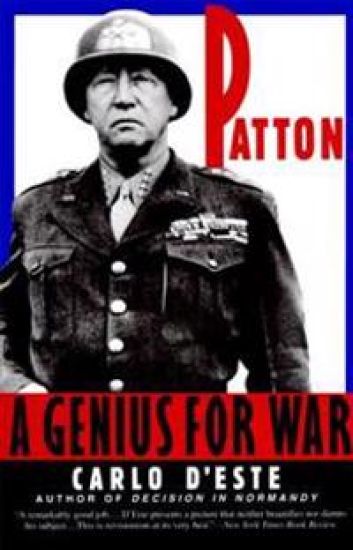
Patton: A Genius for War is a full-fledged portrait of an extraordinary American that reveals the complex and contradictory personality that lay behind the swashbuckling and brash facade. According to Publishers Weekly, the result is "a major biography of a major American military figure." "This massive work is biography at its very best. Literate and meaty, incisive and balanced, detailed without being pedantic. Mr. D'Este's Patton takes its rightful place as the definitive biography of this American warrior." --Calvin L. Christman, Dallas Morning News "D'Este tells this story well, and gives us a new understanding of this great and troubled man."-The Wall Street Journal "An instant classic." --Douglas Brinkley, director, Eisenhower Center

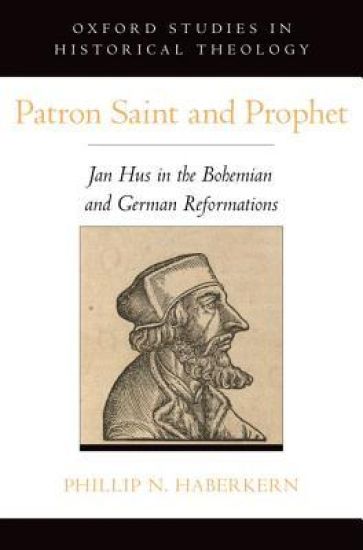
The Bohemian preacher and religious reformer Jan Hus has been celebrated as a de facto saint since being burned at the stake as a heretic in 1415. Patron Saint and Prophet analyzes Hus's commemoration from the time of his death until the middle of the following century, tracing the ways in which both his supporters and his most outspoken opponents sought to determine whether he would be remembered as a heretic or saint. Phillip Haberkern examines how specific historical conflicts and exigencies affected the evolution of Hus's memoryâwithin the militant Hussite movement that flourished until the mid-1430s, within the Czech Utraquist church that succeeded it, and among sixteenth-century Lutherans who viewed Hus as a forerunner and even prophet of their reform. Using close readings of written sources such as sermons and church histories, visual media including manuscript illuminations and monumental art, and oral forms of discourse such as vernacular songs and liturgical prayers, this book offers a fascinating account of how changes in media technology complemented the shifting theology of the cult of saints in order to shape early modern commemorative practices. By focusing on the ways in which the invocation of Hus catalyzed religious dissent within two distinct historical contexts, Haberkern compares the role of memory in late medieval Bohemia with the emergence of history as a constitutive religious discourse in the early modern German land. In this way, he also provides a detailed analysis of the ways in which Bohemian and German religious reformers justified their dissent from the Roman Church by invoking the past.
Paston Letters and Papers of the Fifteenth Century Part I
Oxford University Press
1971
sidottu
The Paston family papers have long been consulted for their information about social history and politics, both within East Anglia and also nationally, in the fifteenth century. Part I of this edition was first published by the Clarendon Press in 1971 [Part II in 1976], but the edition has long been out of print. In addition to the letters and papers, Part I contains biographical sketches of the writers, a full comparative chronological table and the Introduction. The opportunity has been taken in this re-issue to correct minor typographical and editorial errors, but Professor Davis's work has not been otherwise altered. Part III, edited by Dr Richard Beadle and ProfessorColin Richmond, is due to be published in 2005, and will contain the remaining text, and indices. It will complete the series. Norman Davis was formerly Merton Professor of English Language and Literature at the University of Oxford, and Director of the Early English Text Society.
Paston Letters and Papers of the Fifteenth Century Part II
Oxford University Press
1976
sidottu
The Paston family papers have long been consulted for their information about social history and politics, both within East Anglia and also nationally, in the fifteenth century. Part I of this edition was first published by the Clarendon Press in 1971 [Part II in 1976], but the edition has long been out of print. In addition to the letters and papers, Part I contains biographical sketches of the writers, a full comparative chronological table and the Introduction. The opportunity has been taken in this re-issue to correct minor typographical and editorial errors, but Professor Davis's work has not been otherwise altered. Part III, edited by Dr Richard Beadle and ProfessorColin Richmond, is due to be published in 2005, and will contain the remaining text, and indices. It will complete the series. Norman Davis was formerly Merton Professor of English Language and Literature at the University of Oxford, and Director of the Early English Text Society.
Paston Letters and Papers of the Fifteenth Century
Oxford University Press
2005
sidottu
The Paston family papers have long been consulted for their infomation about social history and politics in the fiftenth century, both within East Anglia and also nationally. Parts I and II of Paston Letters and Papers of the Fifteenth Century, edited by Norman Davis, were originally published by the Clarendon Press in 1971 and 1976, and were reissued with corrections by EETS in 2004. Part III completes the edition. It contains the texts of 120 additional letters and papers, many of them relating to Sir John Fastolf and his circle. These texts are previously unprinted, or printed only in part; some only came to light after the publication of Parts I and II. The texts have been edited according to the principles established by Norman Davis, and are accompanied by an Introduction and Bibliography, as well as a consolidated index to all three parts of the edition, a glossary to the entire edition,a concordance of the principal editions and origal sources, and a working chronology of the documents. Richard Beadle is Reader in English Literature and Historical Bibliography at the University of Cambridge; Colin Richmond is Emeritus Professor of Medieval History at the University of Keele.

George S. Patton embodied contradiction: a cavalryman steeped in romantic military tradition, he nevertheless pulled a reluctant American military into the most advanced realms of highly mobile armored warfare. An autocratic snob, Patton created unparalleled rapport and loyalty with the lowliest private in his command; an outspoken racist, he led the only racially integrated U.S. military unit in World War II; an exuberantly profane man, he prayed daily and believed God had destined him for military greatness; a profoundly insecure individual, he made his Third Army the most self-confident and consistently victorious fighting force in the European theater. From Patton's boyhood battling dyslexia and becoming an avid reader, to his leadership strategies that modernized the U.S. army, Alan Axelrod delivers a fascinating account of Patton's life and legacy.
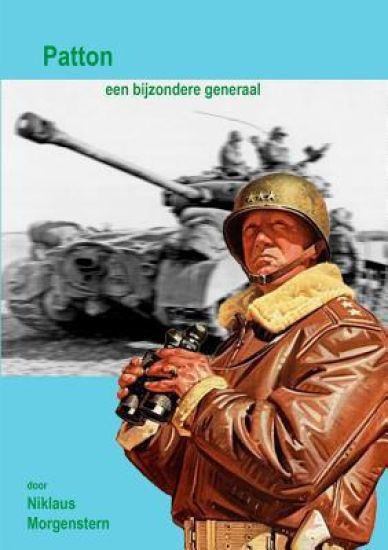
De eigenzinnige Amerikaanse generaal George Patton heeft een groot stempel gedrukt op het bevrijden van Europa van het Nazidom van Hitler. Hij begon in Afrika bij de landingen aldaar om via dat gebied naar Europa te kunnen oversteken. Patton moest erg wennen aan de op andere landen ver vooruitlopende manier van oorlogvoeren door de Duitsers. Daar waar er sprake was van een gelijkwaardige verhouding in wapenen en mankracht, waren het vrijwel altijd die Duitsers die aan het langste eind trokken. De grootste hulp voor de geallieerden was de Duitse leider Hitler die alle leidinggevende macht naar zich toegetrokken had. Naast andere door onkunde ingegeven bevelen was vooral zijn ""stand houden tot de laatste kogel en geen stap terug"" dodelijk voor de Duitse kansen in die oorlog.